
Search Results for: Elf

Cat Lifestyle

Why Do Cats Chirp? What That Tiny Birdlike Sound Means

Why do cats chirp? Cats usually chirp because they are excited, focused, or trying to communicate. The sound often appears when a cat notices birds, squirrels, insects, or moving toys. Cats may also chirp at people as a greeting, an invitation to follow, or a way to ask for attention. Most chirping is harmless and completely normal. The best clue is not the sound by itself, but what your cat is looking at and how the rest of their body is behaving. What Does a Cat Chirp Sound Like? A cat chirping sound is usually short, light, and high-pitched. It may sound like: Some cats make one neat little chirp. Others release an entire string of chirrups while staring through a window. The mouth may stay mostly closed, especially during social chirping. When prey is involved, the chirp may blend into clicking teeth, trembling whiskers, or rapid jaw movements. Cat owners often use the words chirping, trilling, chattering, and twittering interchangeably. The sounds can overlap, but they are not quite the same. Why Do Cats Chirp? There is no single explanation that fits every cat. Chirping is more like a small sound with several possible jobs. The most common reasons


Health & Care

Why Is My Cat Vomiting? 13 Common Causes and When to Worry

Your cat may be vomiting because of something simple, like eating too fast, coughing up a hairball, or reacting to a sudden food change. But cat vomiting can also point to parasites, food intolerance, toxins, kidney disease, diabetes, inflammatory bowel disease, a swallowed object, or another medical problem. A single episode is not always an emergency. Still, vomiting should not be treated as “just a cat thing.” Cornell Feline Health Center notes that cats who vomit more than once a week, or vomit along with weakness, appetite loss, blood, thirst changes, urination changes, or diarrhea, should be checked by a veterinarian promptly. So, if you are standing over the carpet asking, “why is my cat vomiting?”, this guide will help you sort the mild messes from the red-flag moments. Vomiting vs. Regurgitation: They Are Not the Same Before you decide what to do, try to figure out whether your cat is truly vomiting or regurgitating. Catsoria explains that vomiting, regurgitation, and coughing can look similar to cat owners, but they can have different causes. Taking a short video for your vet can help them understand what is really happening. That little video may be gross. It may also be useful.

Cat Nutrition

Can Cats Eat Eggs? Safe Portions and Cooking Tips

can cats eat eggs? Yes. Most healthy cats can eat a small amount of fully cooked egg. It should be plain, cooled, and served as an occasional treat rather than a meal. Knowing how to prepare can cats eat scrambled eggs or can cats eat boiled eggs safely can work well, but can cats eat raw eggs? Absolutely not—raw eggs, runny eggs, heavily seasoned eggs, and buttery breakfast leftovers are poor choices. For most cats, one or two teaspoons is enough. A whole egg is far more than the average cat needs in one sitting. Can Cats Eat Eggs Safely? Cats can eat both cooked egg whites and cooked egg yolks. The important word is cooked. A cat-friendly egg should be: Veterinary nutrition sources generally treat eggs as an occasional extra, not as a replacement for balanced cat food. Eggs provide protein and fat, but they do not contain every nutrient a cat needs in the correct proportions. View cooked egg as a tiny bonus on top of your cat’s regular diet. It is not a complete feline breakfast, no matter how convincingly your cat argues otherwise. Are Eggs Good for Cats? When considering are eggs good for cats, they

Health & Care

12 Interesting Facts About Cat Noses & Their Sense of Smell (Vet Approved)

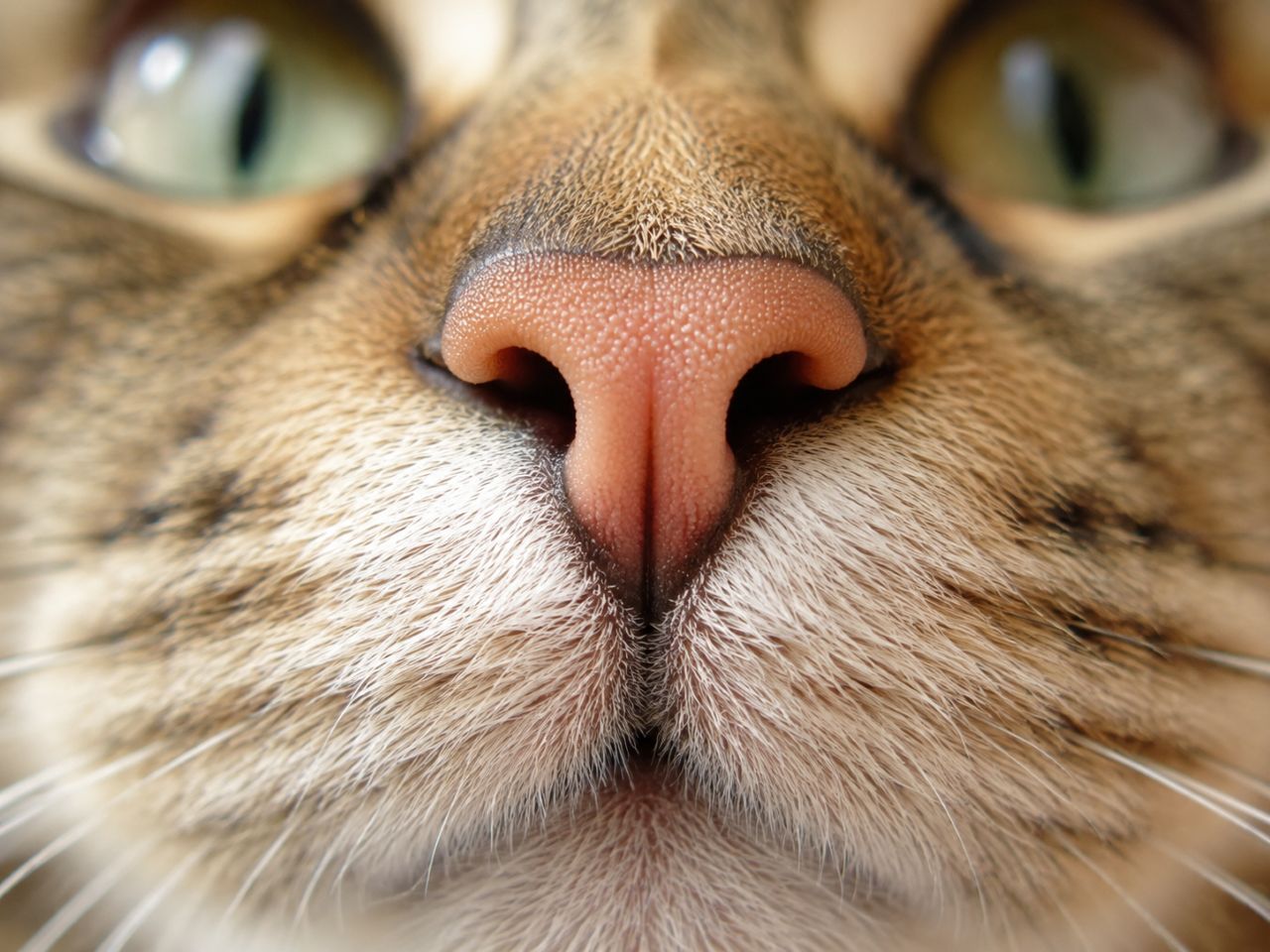
Have you ever watched your cat sniff a grocery bag, your shoes, or one tiny corner of the sofa as if it were reading a secret message? To us, it may look random. To a cat, that little sniff is packed with information. Most people think dogs are the champions of smell, but the cat nose is far more powerful than many pet parents realize. A cat’s nose is not just for finding food. It helps with survival, communication, territory, appetite, comfort, and even recognizing the people they love. Behind that small pink, black, or speckled nose is a highly sensitive feline olfactory system that shapes how cats understand the world. Here are 12 fun and surprising facts about cat noses and cat sense of smell that every cat lover should know. The 12 Facts About Cat Noses 1. Every cat has a unique nose print, just like a fingerprint At first glance, many cat noses seem similar. Some are pink, some are black, some are gray, and some have adorable little spots. But look closer and you’ll find something special. Every cat’s nose has its own pattern of tiny bumps, ridges, lines, and grooves. No two cats have exactly

Cat Lifestyle

Why Do Cats Meow at Night? 9 Common Reasons

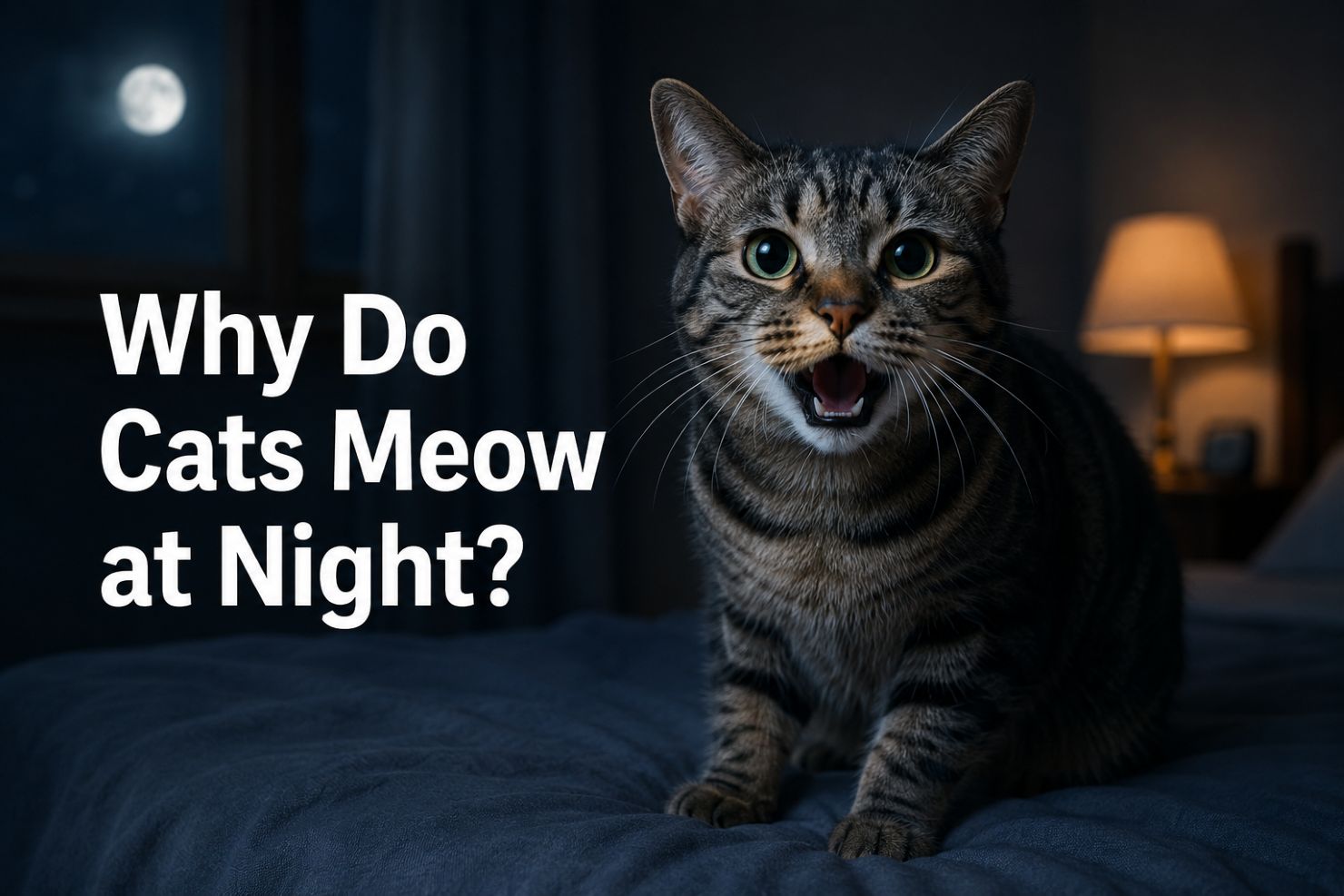
The lights are off. The house is quiet. You have finally found the cool side of the pillow. Then it starts. “Meow.” You wait. “Meeooow.” By the fourth round, your cat is standing in the hallway performing what sounds like a one-animal opera for an audience that did not buy tickets. So, why do cats meow at night? Most nighttime meowing happens because a cat is active, hungry, bored, lonely, stressed, or looking for attention. Cats may also react to animals outside, changes in the home, mating instincts, or a closed door. In older cats, new nighttime yowling can be connected to pain, hearing or vision loss, hyperthyroidism, high blood pressure, kidney disease, or cognitive decline. The sound may be inconvenient, but it is rarely meaningless. Your cat is communicating. The real job is figuring out whether the message is “feed me,” “play with me,” “something scared me,” or “I do not feel right.” Cats Are Not Exactly Nocturnal Cats are often described as nocturnal animals, but that is not quite accurate. They are usually crepuscular, meaning they tend to be most active around dawn and dusk. Those are useful hunting hours for a small predator. Rodents and other prey

Cat Breeds Health & Care

Why Does My Cat Play With Poop?

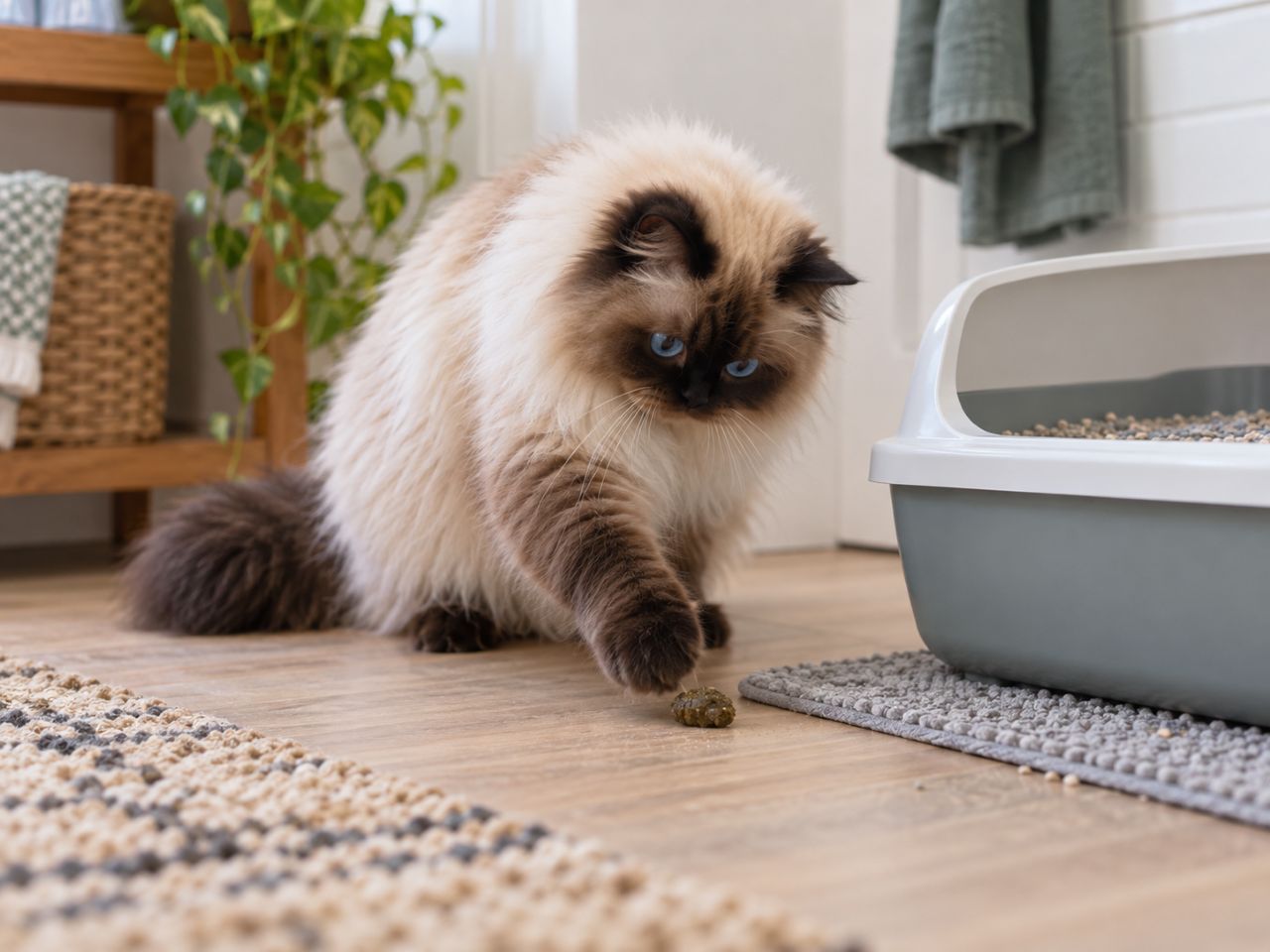
Some cats will pull a firm piece of poop from the litter box and bat it across the floor just as they would a toy mouse. Kittens do this more often because they are still figuring out what is worth chasing and what should be left alone. The poop may not have been taken out on purpose. It can be kicked over the side while your cat is covering it, carried out on a paw, or caught in the fur under the tail. A box that is too small makes all of this more likely. If it happens once and your cat’s stool looks normal, clean it up and keep an eye on the next few litter box visits. If the habit keeps returning—or you notice hard stool, diarrhea, straining, blood, or a sudden change in an adult cat—there may be more going on than simple play. Is Your Cat Actually Playing With Poop? Watch one litter box visit from a distance if you can. What happens before the poop reaches the floor often tells you more than the mess itself. What you see What it may mean What to check Your cat deliberately hooks out a firm piece, then

Cat Lifestyle

Why Do Cats Bite? Causes, Warning Signs, and Solutions

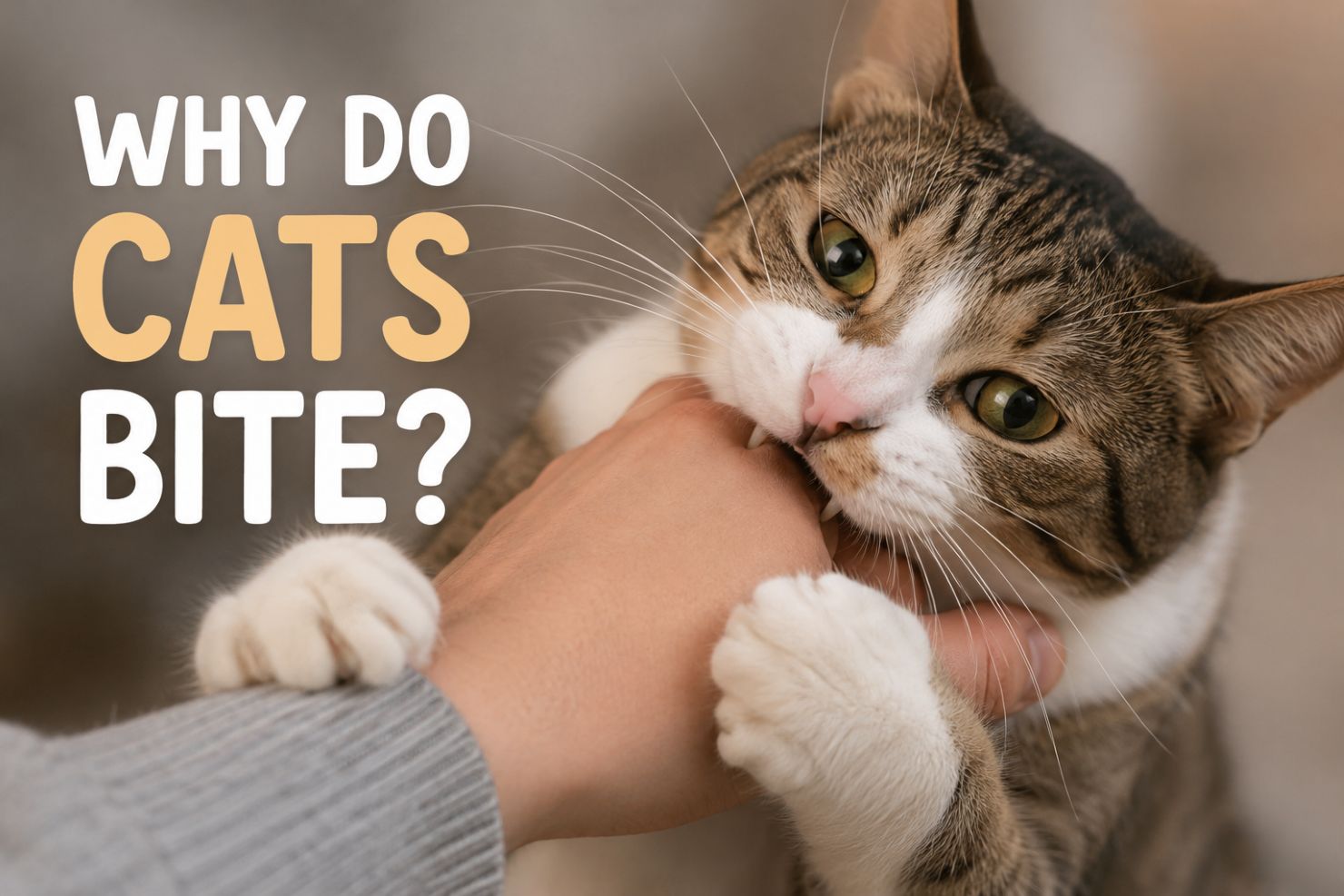
You are petting your cat. They are purring, their eyes are half closed, and everything seems peaceful. Then their teeth close around your hand. The bite may be soft enough to feel almost playful, or sharp enough to send you across the room looking for a bandage. Either way, the sudden switch can feel personal. It usually is not. Cats bite to communicate, play, hunt, defend themselves, stop unwanted contact, or respond to pain. A gentle nibble from a relaxed cat may be a playful or social gesture. A hard bite from a tense cat is more likely to mean fear, frustration, overstimulation, or physical discomfort. The moments before the bite matter. So do the pressure of the bite, your cat’s posture, and what happens next. What Does It Mean When a Cat Bites You? A cat’s mouth is one of the tools they use to explore and control their surroundings. Kittens bite during play. Adult cats may bite when hunting, grooming, defending territory, or ending an interaction. When a cat bites a person, the behavior often falls into one of these categories: Veterinary sources describe cat biting as a form of feline communication rather than proof that a cat

Cat Lifestyle

Why Do Cats Lick You? What Your Cat Is Really Trying to Say

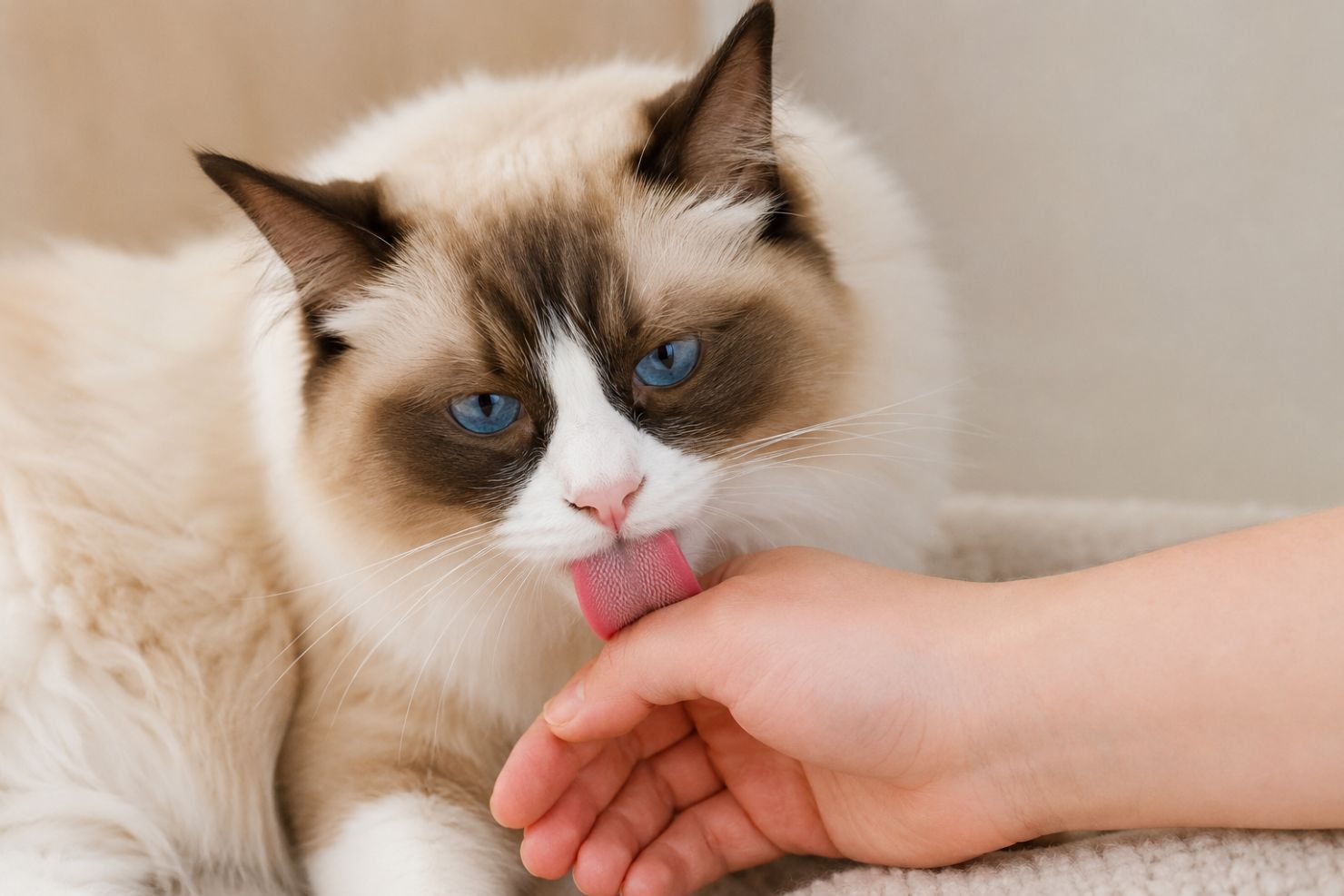
Your cat hops onto the couch, settles beside you, and starts licking your hand. At first, it feels rather sweet. A few seconds later, that tiny sandpaper tongue is scraping the same patch of skin with the focus of someone removing old wallpaper. What is going on? Cats lick people for several reasons. Your cat may be grooming you, showing affection, sharing scent, asking for attention, or investigating something tasty on your skin. Some cats also lick when they feel nervous or overstimulated. When the behavior appears suddenly or becomes difficult to interrupt, pain or illness may be involved. A lick on its own does not reveal the whole message. Look at your cat’s posture, tail, ears, and what happened just before the licking began. Those clues usually tell you far more than the tongue does. Why Does My Cat Lick Me? Cats are dedicated groomers. They lick their coats to remove loose hair and debris, spread natural oils, and keep their fur in good condition. Friendly cats may also groom each other, particularly around the head and neck. When your cat licks you, that normal grooming behavior has been redirected toward a human family member. 7 Common Reasons Cats

Cat Lifestyle

Why Do Cats Knead? 7 Reasons Cats Make Biscuits

Your cat climbs onto your lap, turns in a small circle, and begins pressing one front paw down, then the other. Sometimes there is purring. Sometimes there is drooling. And sometimes those tiny claws go straight through your shirt. This rhythmic paw movement is called cat kneading, although many cat owners affectionately call it “making biscuits.” So, why do cats knead? Cats usually knead because the movement is connected to comfort, safety, and habits formed during kittenhood. An adult cat may also knead to prepare a sleeping area, stretch its body, mark a familiar place with its scent, or calm itself when feeling stressed. In most cases, is cat kneading normal? Yes, it is completely normal. It is often a sign that your cat feels relaxed and secure. However, a sudden or dramatic change in the behavior can occasionally point to stress, pain, or another health concern requiring a trip to the vet. What Is Cat Kneading? Kneading is a repetitive movement in which a cat pushes its front paws against a soft surface, usually alternating between the left and right paw. Cats may knead: Some cats keep their claws tucked away. Others extend their claws with every push, turning

Health & Care

Why Do Cats Scratch Furniture? 8 Reasons and How to Save Your Couch

Your cat is not plotting against your sofa. It may feel personal when you walk into the living room and find fresh claw marks on the armrest, especially if that couch cost more than your first car payment. But cat scratching furniture is not revenge, spite, or bad manners. It is normal feline behavior with a job behind it. Cats scratch to care for their claws, stretch their bodies, mark their space, burn off energy, and feel secure. The problem is not that your cat scratches. The problem is that your cat chose the couch, carpet, curtains, dining chair, or bed frame instead of something you actually want them to scratch. The good news? You usually do not need to “stop” the behavior. You need to redirect it. Let’s unpack why do cats scratch furniture, why they seem to pick your favorite pieces, and how to protect your home without turning your cat into a stressed little gremlin. Why Do Cats Scratch Furniture? Cats scratch furniture because scratching is a natural instinct. It helps them: Furniture often wins because it is sturdy, tall, textured, and placed in important areas of the home. A sofa arm, for example, is almost perfect

Scroll to Top