

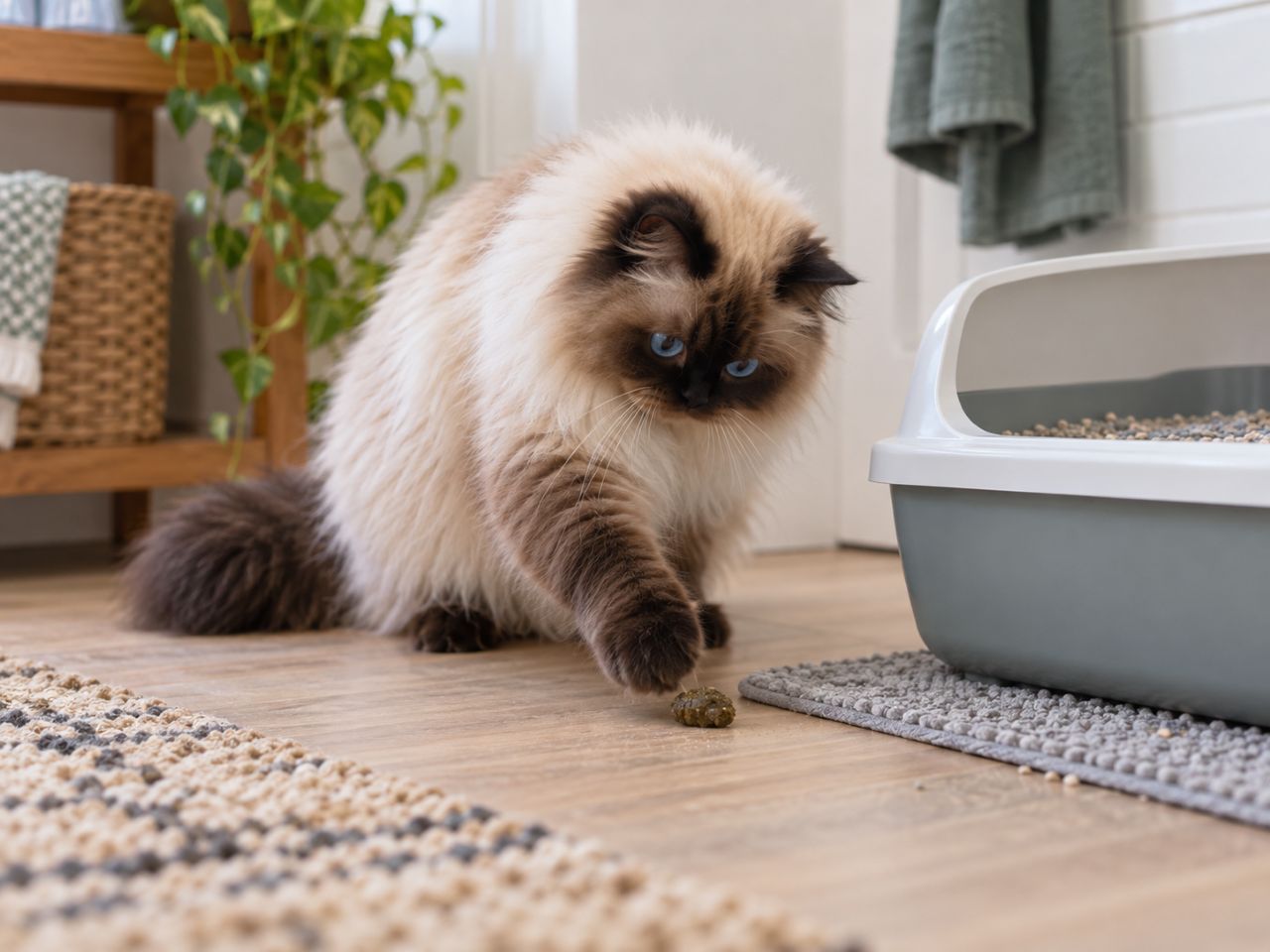
Some cats will pull a firm piece of poop from the litter box and bat it across the floor just as they would a toy mouse. Kittens do this more often because they are still figuring out what is worth chasing and what should be left alone.
The poop may not have been taken out on purpose. It can be kicked over the side while your cat is covering it, carried out on a paw, or caught in the fur under the tail. A box that is too small makes all of this more likely.
If it happens once and your cat’s stool looks normal, clean it up and keep an eye on the next few litter box visits. If the habit keeps returning—or you notice hard stool, diarrhea, straining, blood, or a sudden change in an adult cat—there may be more going on than simple play.
Is Your Cat Actually Playing With Poop?
Watch one litter box visit from a distance if you can. What happens before the poop reaches the floor often tells you more than the mess itself.
| What you see | What it may mean | What to check |
|---|---|---|
| Your cat deliberately hooks out a firm piece, then bats and chases it | Object play or under-stimulation is possible | Age, daily play, toy variety, and how quickly waste is removed |
| Fast digging sends poop over the edge | The cat may be covering waste, not playing with it | Box size, litter depth, and side height |
| Poop drops off after your cat leaves the box | It may be caught in long fur or stuck to a paw | Stool consistency, rear-end fur, mobility, and box space |
| Your cat licks, chews, or swallows poop | This is coprophagia, not simple play | Arrange a veterinary assessment, especially if it happens again |
Scratching, turning, and digging after a bowel movement are ordinary parts of feline toileting. A kitten can look wildly enthusiastic while trying to cover a stool. If the paws stay in the litter and the poop stays in the box, you may be seeing an awkward bathroom routine rather than a behavior problem.
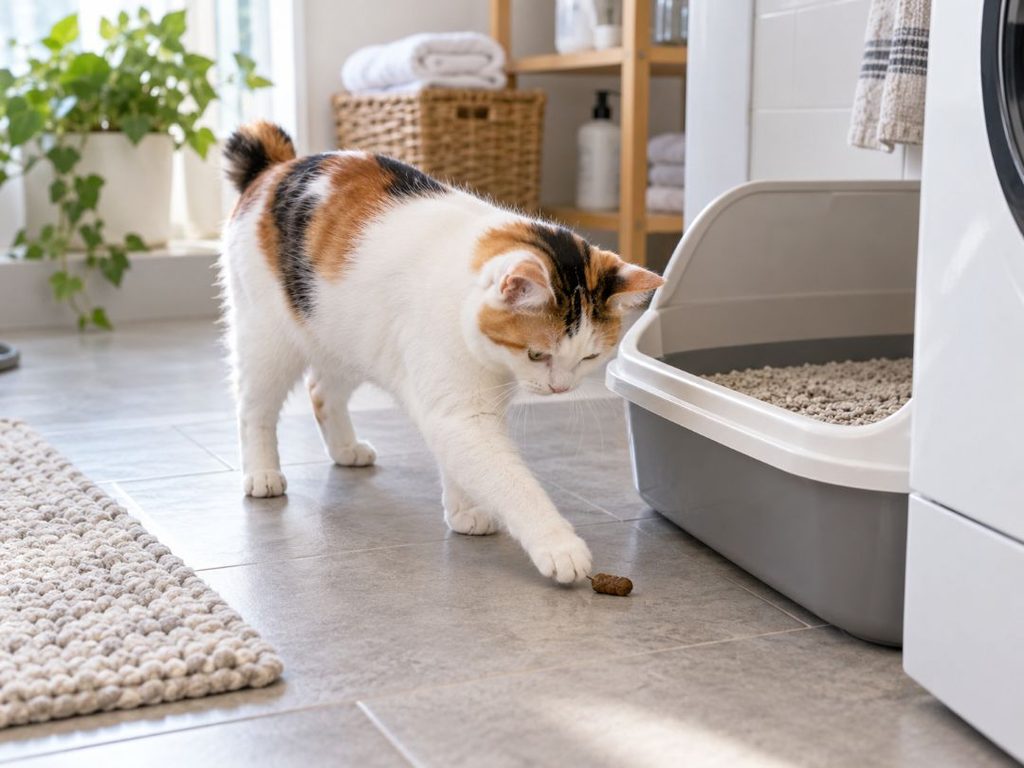
Why Cats Play With Poop
There is little published research devoted specifically to cats batting their own feces. The likely explanation comes from the cat’s age, play pattern, litter box behavior, stool quality, and health. More than one factor can be involved.
Kittens Explore With Their Paws
Kittens test almost everything by sniffing, tapping, chasing, and pouncing. The AAHA/AAFP feline life stage guidelines describe a strong play drive during the first year, with kittens practicing predatory-style movements such as swatting and catching.
A dry piece of stool moves when tapped. To a young cat who has not yet learned which loose objects are off-limits, that response can be enough to start a game. Some kittens are also clumsy in the box. They step on fresh stool, dig in the wrong direction, or turn around in a space that is too tight.
Curiosity may explain the first encounter. Easy access allows the habit to repeat.
The Poop Became an Accidental “Toy”
Sometimes a cat never intended to pull poop from the box. Vigorous covering can launch a piece over a low side. A stool pellet may cling briefly to the fur under the tail, fall onto a hard floor, and skitter when the cat investigates it. Long-haired cats are especially prone to carrying soft stool in their coat.
Look at where the game begins. Poop consistently found just outside one side of the box suggests a containment or digging problem. Pieces that appear farther away, along with a dirty rear or paw, make tracking more likely.
Small, very hard pellets deserve attention. They roll easily, but they can also be a sign of constipation in cats, particularly when paired with straining or fewer bowel movements than usual.
The Litter Box Makes a Messy Exit More Likely
A cramped box leaves little room to turn, squat, and cover waste without stepping in it. FelineVMA guidance recommends a box about one and a half times the cat’s length, measured from the nose to the base of the tail. Many boxes sold for adult cats are smaller than that.
The box may also be dirty, hard to reach, wedged beside a noisy appliance, or blocked by another cat. Those conditions do not automatically cause poop play. They can change the way a cat digs, rushes out, or uses the area, which makes loose stool more accessible.
In a multi-cat home, placing several boxes side by side does not always create several useful bathrooms. A timid cat can still be trapped or watched at that single location.
Your Cat Needs a Better Outlet for Play
A healthy adult cat who deliberately bats dry poop around the house may simply have discovered an object that rolls, smells unusual, and gets an immediate reaction from people.
That does not mean every cat who does this is bored. Look for supporting clues: stalking ankles, waking the household for activity, attacking random objects, or becoming intensely playful around the same time each day. Cats need regular chances to stalk, chase, pounce, and catch. When those outlets are scarce, they may turn unsuitable household objects into prey.
Your response can keep the game interesting too. Chasing the cat, shouting, or turning cleanup into a noisy event adds movement and attention. It may not have started the habit, but it can help maintain it.
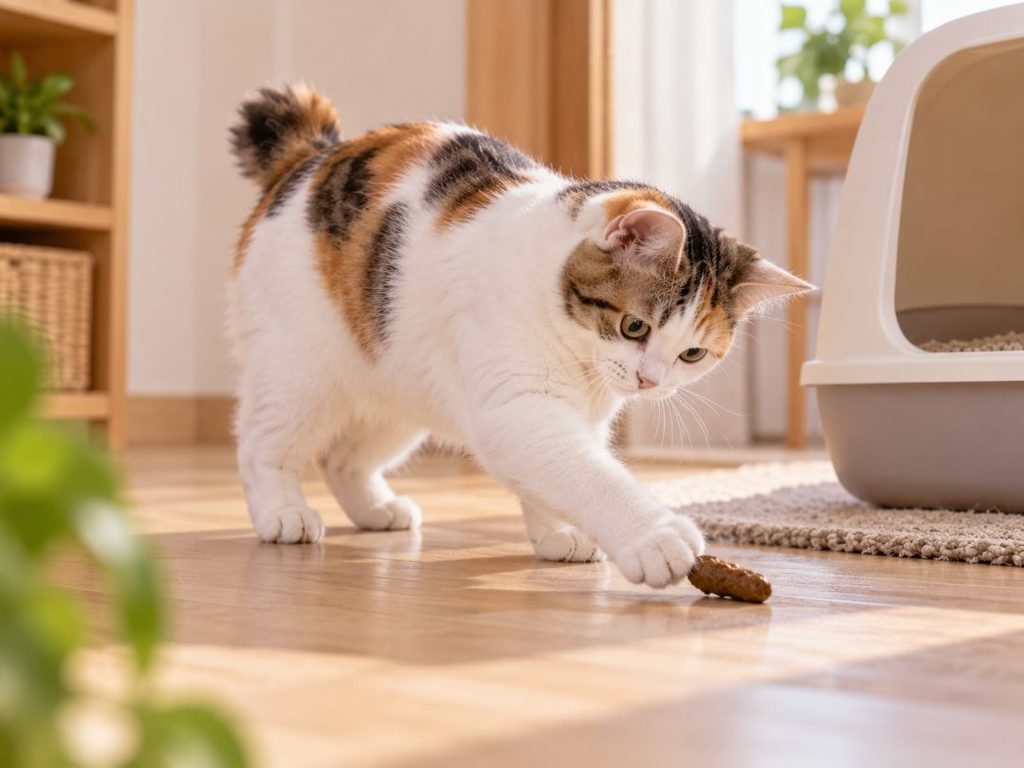
Abnormal Stool or Pain Has Changed the Routine
Medical problems are more likely to change how a cat defecates than to directly create an interest in poop. Diarrhea can stick to fur and paws. Constipation may produce small, dry pieces and make a cat spend longer digging or shifting position. Digestive disease can bring urgency, mucus, blood, unusually strong odor, or accidents near the box.
Arthritis, obesity, an injury, or pain around the rear end can make it hard to enter the box, squat comfortably, groom, or cover stool. An older cat may need a larger box with a low entrance even if the old setup worked for years.
Do not change your cat’s food or add fiber, laxatives, pumpkin, or supplements just because the stool looks dry. Constipation has several possible causes, and the wrong home treatment can delay useful care.
Stress or Tension Between Cats Has Disrupted Litter Box Use
Cats do not need to have loud fights for conflict to affect the litter box. One cat may stare, follow, block a hallway, wait outside the box, or rush another cat as they leave. The cat using the box may dig frantically, exit before finishing, or choose another location.
A move, renovation, new pet, schedule change, or unfamiliar visitor can alter bathroom behavior as well. Stress is more convincing when the poop habit begins after a change and appears with hiding, watchfulness, reduced play, appetite changes, or tension around shared resources.
This is not spite. Litter box behavior is better treated as information about a cat’s physical and social environment.
Does Playing With Poop Mean Worms or a Nutritional Deficiency?
Not by itself. Playing with poop is not a reliable sign of worms, and it does not identify a particular vitamin or mineral deficiency.
Intestinal parasites can cause diarrhea, mucus or blood in the stool, vomiting, poor appetite, a dull coat, or poor growth. Some infected cats show few obvious signs. Your veterinarian may recommend a fecal test based on your cat’s age, history, outdoor access, hunting, preventive care, and stool changes.
Eating feces is a different concern. If your cat mouths or swallows poop, tell your veterinarian exactly what you saw. A video can help distinguish licking a dirty paw from repeated coprophagia. The vet can then look for digestive disease, altered appetite, pica, medication effects, or other medical and behavioral contributors without guessing from one symptom.
How to Stop a Cat From Playing With Poop
The most effective plan removes access to feces while making normal toileting and appropriate play easier.
Remove the Poop Without Creating a Chase
Scoop as soon as practical after a bowel movement, particularly during the time of day when the behavior usually happens. At minimum, scoop every day. Move calmly, guide your cat away with a toy or treat tossed in the opposite direction, and clean up without scolding.
If your cat waits until nighttime to raid the box, scoop before bed and offer an active play session earlier in the evening. This does not guarantee an overnight fix, but it reduces both the available “toy” and pent-up play energy.
Give the Litter Box a Fair Test
Use this setup as a starting point, then pay attention to your cat’s individual preferences:
- Provide one litter box per cat, plus one extra, in separate, easy-to-reach locations.
- Choose a box roughly 1.5 times your cat’s nose-to-tail-base length.
- Start with about two inches of soft, unscented litter unless your cat clearly prefers something else.
- Put the box in a quiet place with a clear exit, away from food, water, and loud appliances.
- Use a low entrance for kittens, senior cats, and cats with limited mobility. Higher sides elsewhere can contain enthusiastic digging.
- Scoop daily and wash the box with a mild, cat-safe product on a regular schedule. Strong fragrances can make the box less appealing.
Avoid replacing every box and changing all the litter overnight. Set up one improved option beside the familiar setup and see which one your cat chooses. That small trial gives you useful information without taking away a known bathroom.
Offer Something Better to Hunt
Try several brief play sessions instead of expecting one long session to hold your cat’s interest. Drag a wand toy away like prey, roll a lightweight ball, or let a toy mouse disappear around a corner. Give the cat chances to catch the toy. Rotate a few options so they regain novelty, and use a food puzzle if your cat enjoys working for part of a meal.
Time one session for the period when poop play tends to occur. For a kitten who raids the box after breakfast, play once the kitten has finished using it and you have scooped. For an adult who causes trouble at night, move the most active session closer to the evening routine.
Check Fur, Paws, and Stool
If feces are sticking to long hair, ask a groomer or veterinary professional about a sanitary trim. Wipe a small dirty area with a soft cloth dampened with warm water or a cat-safe grooming wipe, then dry it gently. Never put household disinfectant, essential oils, or fragranced cleaning spray on your cat.
Make a note of stool shape and consistency before disposal. Repeated soft stool, pebble-like stool, or visible straining is a health clue, not just a housekeeping problem.
Keep a Short Behavior Log
Write down when it happens, which cat used the box, what the stool looked like, where the poop landed, and what happened just before the pawing. In a multi-cat home, a small camera aimed at the litter box area—not inside a private covered box—can reveal accidental tracking or quiet blocking by another cat.
Bring the notes, a video, and a fresh stool sample to your veterinarian if requested. A pattern is far more useful than the broad description “my cat is being weird with poop.”
When Should You Call the Vet?
Book a veterinary visit when an adult or senior cat starts this behavior suddenly, when it keeps happening after basic litter box changes, or when your cat eats feces. Contact the clinic sooner if you notice:
- Repeated straining, frequent box visits, or little to no stool
- Hard, dry pellets or ongoing soft or watery stool
- Blood, black stool, or a large amount of mucus
- Vomiting, poor appetite, weight loss, low energy, or hiding
- Crying, a tense posture, a painful belly, scooting, or constant licking under the tail
- Trouble stepping into the box, squatting, or grooming the rear
- Possible swallowing of litter, string, plastic, or another foreign object
A cat repeatedly straining in the box may be trying to urinate rather than defecate. Passing little or no urine can signal a urinary blockage, particularly in a male cat, and requires emergency veterinary care. Do not wait for a constipation remedy to work if you cannot tell whether urine is coming out.
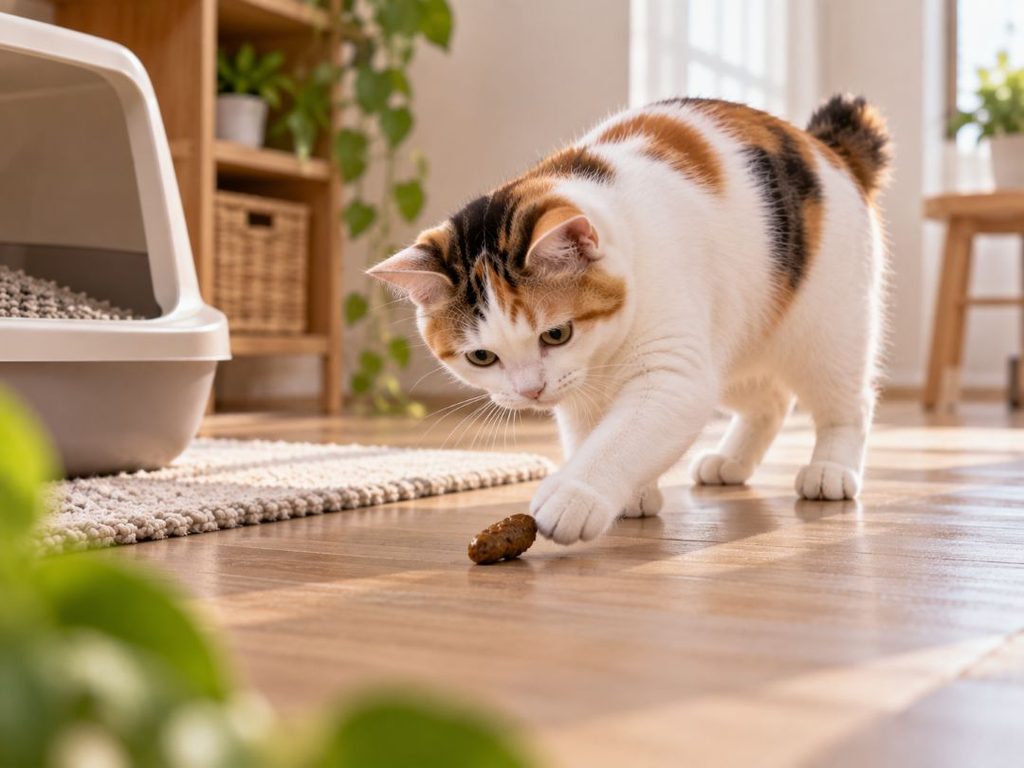
Clean the Area Safely
Cat feces can carry parasites and other germs even when the cat looks healthy. Pick it up promptly, clean and disinfect the contaminated surface with a product appropriate for that material, and keep your cat away until the area is dry. Wash your hands with soap and water afterward.
Keep litter boxes away from kitchens, children’s play areas, and food preparation surfaces. Pregnant people and anyone with a weakened immune system should have another household member handle litter duties when possible. The CDC also recommends daily litter box cleaning as a basic hygiene measure.
A Gross Habit Can Still Be a Useful Clue
Most poop play begins with a simple opportunity: a curious kitten, a rolling dry pellet, a cramped box, or a piece caught in fur. The habit becomes more concerning when it is new, repetitive, paired with abnormal stool, or seen in a cat who appears uncomfortable.
At Catsoria, we treat unusual litter box behavior as a clue rather than a character flaw. Clean up calmly, make the bathroom easier to use, provide a better game, and let your veterinarian investigate anything that does not fit your cat’s normal pattern.
Frequently Asked Questions
1. Is it normal for a kitten to play with poop?
An occasional attempt to bat a firm stool can happen while a kitten is exploring and learning to use the box. It should still be redirected because feces are not a safe toy. Check that the box is roomy, scoop promptly, and give the kitten frequent opportunities to chase appropriate toys. Call your vet if the behavior repeats, the kitten eats the poop, or the stool is abnormal.
2. Why does my cat take poop out of the litter box?
The cat may pull it out deliberately, but poop is often kicked out during covering or carried on a paw or in long fur. Watch where the stool first appears. A larger box, suitable litter depth, higher sides, prompt scooping, and attention to stool consistency can help.
3. Why does my cat fling poop out of the litter box?
Fast digging in a shallow or cramped box can send a firm piece over the edge. Your cat may simply be trying to bury it. Use a longer box with enough room to turn, and consider higher sides while preserving an easy entrance. Sudden frantic digging or signs of discomfort call for a veterinary check.
4. Will my cat grow out of playing with poop?
Many kittens lose interest as they mature, but waiting is not the whole plan. Remove waste, improve the box, and redirect play now so the behavior does not become a practiced routine. Adult cats are less likely to stop if the underlying trigger remains.
5. Should I punish my cat for playing with poop?
No. Yelling, spraying water, or rubbing a cat’s nose near feces can create fear and damage the cat’s association with the litter box. Interrupt quietly, remove the stool, and reward interest in an appropriate toy instead.
6. What should I do if my cat eats poop?
Prevent access and arrange a veterinary appointment. Tell the vet whether your cat swallowed its own stool, another pet’s stool, or litter attached to it, and mention any appetite, weight, or digestive changes. Do not assume a dietary deficiency or start supplements without an examination.
Source
- Feline Veterinary Medical Association: AAFP/ISFM House-Soiling Guidelines
- AAHA/AAFP Feline Life Stage Guidelines: Kitten Behavior and Environmental Needs
- Cornell Feline Health Center: Feline Behavior Problems—House Soiling
- Cornell Feline Health Center: Constipation
- Cornell Feline Health Center: Diarrhea
- Merck Veterinary Manual: Behavior Problems in Cats
- CDC: Cats—Healthy Pets, Healthy People
