


The best place for a cat litter box is a quiet, low-traffic spot your cat can reach at any hour. It should be away from food and water, protected from sudden noise, and open enough for your cat to see what is coming and leave without being cornered.
A spare bathroom, calm bedroom corner, home office, wide hallway landing, or cat-only area can all work. The name of the room matters less than what happens there. A bathroom with a door that is often shut is a poor choice. A discreet living room corner that stays open and calm may be a very good one.
For a multi-story home, keep at least one box on every level your cat uses. In a multi-cat home, start with one box per cat plus one extra, then spread those boxes into separate locations rather than lining them up together.
Privacy Does Not Mean Hiding the Box Far Away
Cats want some privacy while eliminating, but most do not want to disappear into a dark dead end. Using the litter box puts a cat in a vulnerable position. A dog, child, or another cat blocking the doorway can make an otherwise clean box feel unsafe.
Think of a good cat litter box location as calm but observable. Your cat should be able to notice someone approaching. There should also be a simple way out, preferably without squeezing past another pet.
This is why the back of a packed closet, a tight cabinet, or a basement corner is not automatically private in a helpful way. It may be quiet for you while feeling isolated or risky to your cat.
What Makes a Good Litter Box Location?
Before settling on a room, check the actual spot. A practical location usually has most of these qualities:
- Your cat can reach it day and night without waiting for someone to open a door.
- Foot traffic is light and predictable.
- Washers, dryers, furnaces, HVAC vents, and automatic fans will not suddenly start beside it.
- Your cat can look out from the box and leave without being trapped.
- Food, drinking water, and sleeping areas are kept separate.
- The temperature stays comfortable throughout the year.
- There is enough light and floor space for your cat to enter, turn, dig, and step out easily.
- You can reach the box easily enough to scoop it every day.
That last point is easy to overlook. A box hidden so well that you forget to clean it will not remain an appealing bathroom for long.
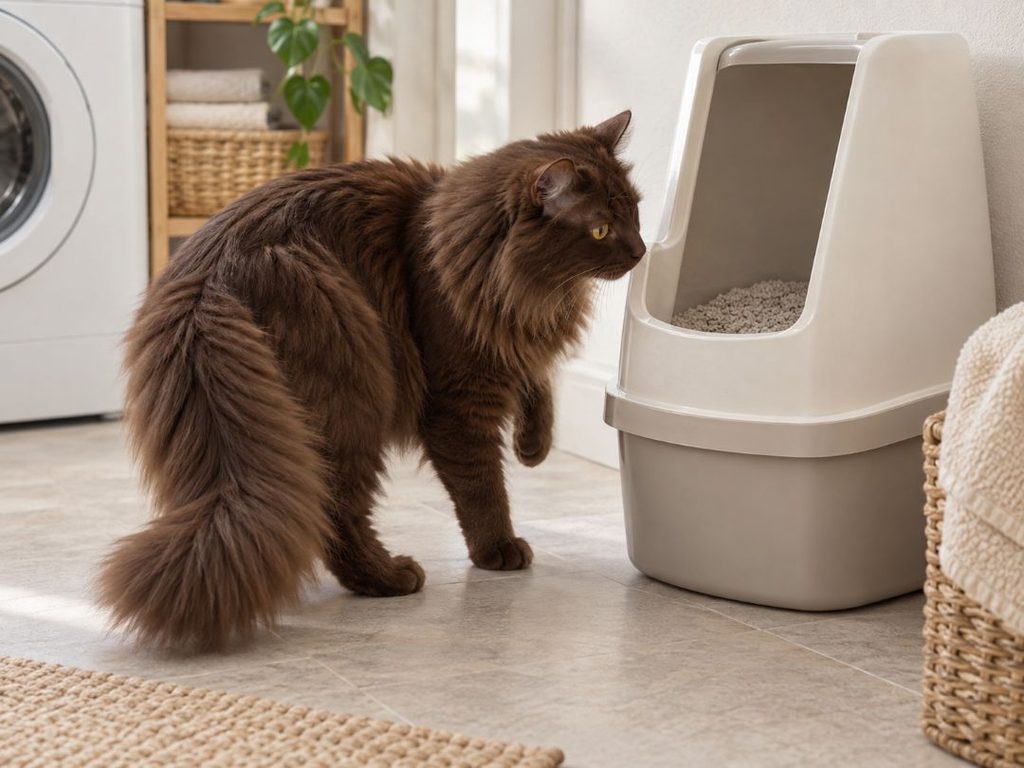
Which Room Is Best for a Cat Litter Box?
There is no single best room for every home. Use the room-by-room guide below to narrow your options.
| Location | When it can work well | What to watch for |
|---|---|---|
| Spare bathroom | Quiet, easy-to-clean floor, dependable access | A closed door, loud shower, automatic fan, or visiting dog |
| Bedroom | Your cat already feels safe there and the box can sit away from the bed | Odor, litter tracking, and a door that gets closed overnight |
| Home office | Low traffic and easy for you to monitor | Rolling chairs, cables, calls, or long periods with the door shut |
| Hallway or landing | Open sightlines and easy access between rooms | Busy entryways, running children, or no protected edge for the box |
| Laundry or utility room | Calm area with washable flooring | Washer spin cycles, dryer buzzers, furnace noise, heat, and vibration |
| Living room corner | Often better than a remote basement in a small home | Heavy foot traffic; use a screen or furniture placement to create space |
| Dedicated cat room | Resources can be planned around the cat | Do not crowd food, water, beds, and every litter box into one small zone |
A quiet bathroom
A bathroom is often convenient because spills are easy to wipe up and ventilation may be better than in a closet. It only works when your cat has reliable access. If family members regularly close the door, choose another room or install a pet door where it is safe and permitted.
Pay attention to the room at busy times. A timid cat may avoid the box while someone showers, runs a hair dryer, or lets the dog follow them inside.
A bedroom or home office
Yes, you can put a litter box in a bedroom. It is not every person’s favorite setup, but it can suit a shy cat who spends much of the day there. Keep the box away from the bed, feeding station, and main walkway. Daily scooping and a litter mat will do more for odor and tracking than trying to seal the box inside a tiny cabinet.
A home office offers similar advantages if the door stays open. Watch how your cat reacts to rolling chairs, printers, or video-call traffic before making it the only bathroom spot.
A calm hallway or open corner
A broad hallway landing can provide a clear view and more than one direction of travel. It is especially useful between the rooms where your cat sleeps and spends time. Avoid a busy front entry or a narrow passage where another animal can block the way.
In a small apartment, an open corner behind a decorative screen may be kinder to the cat than a hidden box in a noisy utility closet. Leave plenty of air around the box and make sure the screen cannot fall.
A laundry room—with conditions
Laundry rooms sound ideal to people because the floors are usually easy to clean. To a noise-sensitive cat, a washer entering its spin cycle can be a reason never to return.
If the laundry room is your best option, put the box as far from the machines as the room allows. Do not wedge it between an appliance and a wall. Run a cycle while watching from a distance to see whether the noise, vibration, or buzzer worries your cat.
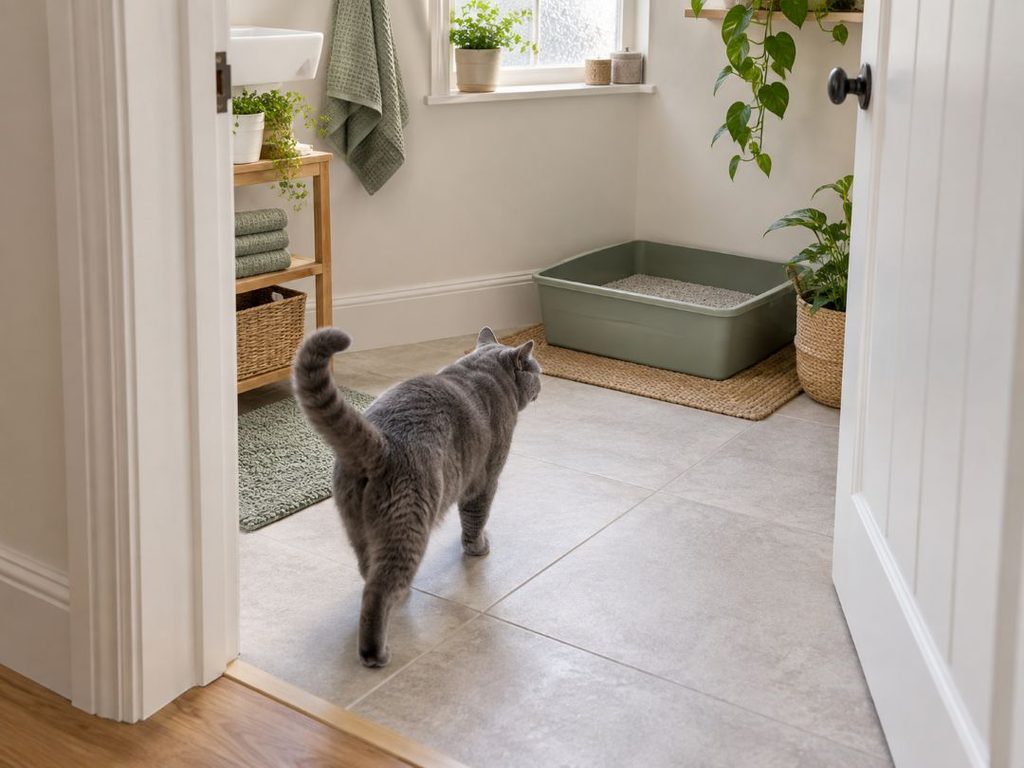
Where Not to Put a Cat Litter Box
Some placements fail because they favor human convenience while making access harder for the cat. Try not to place the only litter box:
- Beside food or water bowls
- Next to a washer, dryer, furnace, loud refrigerator, or air vent
- In a closet, cabinet, or room that can be accidentally closed
- In the middle of a busy kitchen, foyer, or children’s play area
- In a narrow dead end where another pet can guard the exit
- In a damp basement or garage with large temperature changes
- On a different floor from a kitten, senior cat, or cat with limited mobility
- Beside every other litter box in the home
A garage also brings extra concerns. Heat, cold, vehicles, chemicals, and an exterior door can make it unsafe or unpleasant. A basement may be acceptable as an additional location for an active cat who spends time there, but it is rarely a good place for the home’s only box.
How Far Should a Litter Box Be From Food and Water?
Keep the litter box away from food and water, ideally in another part of the room or in a different room. There is no universal number of feet that suits every home. Veterinary environmental guidance focuses on separating key resources, not on a fixed measurement.
In a studio apartment, use distance and a visual divider. Put the feeding station on one wall and the box toward the opposite side of the space. A bookcase, screen, or furniture arrangement can create separation without blocking the cat’s route. Do not place bowls directly beside the box simply because both are “cat supplies.”
Where to Put a Litter Box in a Small Apartment
When space is tight, choose the calmest accessible corner rather than the most hidden one. Common workable spots include a bathroom corner, the end of a bedroom, a quiet part of the living room, or a wide hall nook.
Hidden litter box furniture can help with appearance, but look at it from your cat’s height before buying. The entrance should be large, the inside should allow a full turn, and air should circulate. A single small doorway can also let another pet trap the cat inside. Some cats readily use enclosed furniture; others prefer an open box with a screen placed several feet in front of it.
You can control tracking with a roomy litter mat and regular sweeping. Control odor by scooping, not by spraying fragrance beside the box. Strong air fresheners may make the location less appealing to a cat’s sensitive nose.
Litter Box Placement for Multiple Cats
For most households, a useful starting point is one litter box per cat, plus one. Two cats would have three boxes; three cats would have four. Placement matters just as much as the total.
Three boxes in one laundry room do not provide three truly separate choices. One confident cat can control the doorway, or one startling noise can make the entire setup unattractive. Put boxes in different rooms or well-separated areas so each cat has another route and another place to go.
Look for quiet signs of tension. One cat may sit in a hallway, stare at another near the box, chase after bathroom visits, or claim the route without an obvious fight. A separate box near the less-confident cat’s preferred area can make a big difference.
In a multi-level home, provide at least one litter box on every floor the cats regularly use. Add more where needed to reach the total for your household. A senior cat may need a box close to a favorite sleeping area even when another box is only one flight away.
Make the Location Fit Your Cat’s Age and Mobility
A healthy young adult may cross the house without a second thought. A kitten can get distracted or may not reach a distant box in time. An older cat with arthritis may find stairs, slick floors, or a high box entrance painful.
Place a kitten’s box near the area where the kitten sleeps and plays during the first days at home. Keep it separate from meals, but not at the far end of the house. As the kitten gains access to more rooms, add boxes rather than expecting one long trip.
For a senior or mobility-limited cat, keep a low-entry box on the same level as the cat’s main living space. A nonslip path and a small night-light can help. If your older cat’s litter habits change, do not assume it is stubbornness; pain, urinary disease, constipation, diabetes, kidney disease, or cognitive changes may be involved.
How to Move a Litter Box Without Causing Confusion
Cats often build routines around location. Moving the box from the bathroom to the basement in one day may leave your cat searching for the old toilet.
The gentlest method is to place a second box in the new location while keeping the familiar one available. Use the same type of box and litter at first. Once your cat uses the new box reliably and seems comfortable there, you can phase out the old one if the household still has enough boxes.
If you cannot add a temporary box, move the existing one gradually and keep its path obvious. Avoid changing the location, litter texture, box style, and cleaning product at the same time. When a move causes accidents, return a box to the last reliably used spot and reassess what changed.
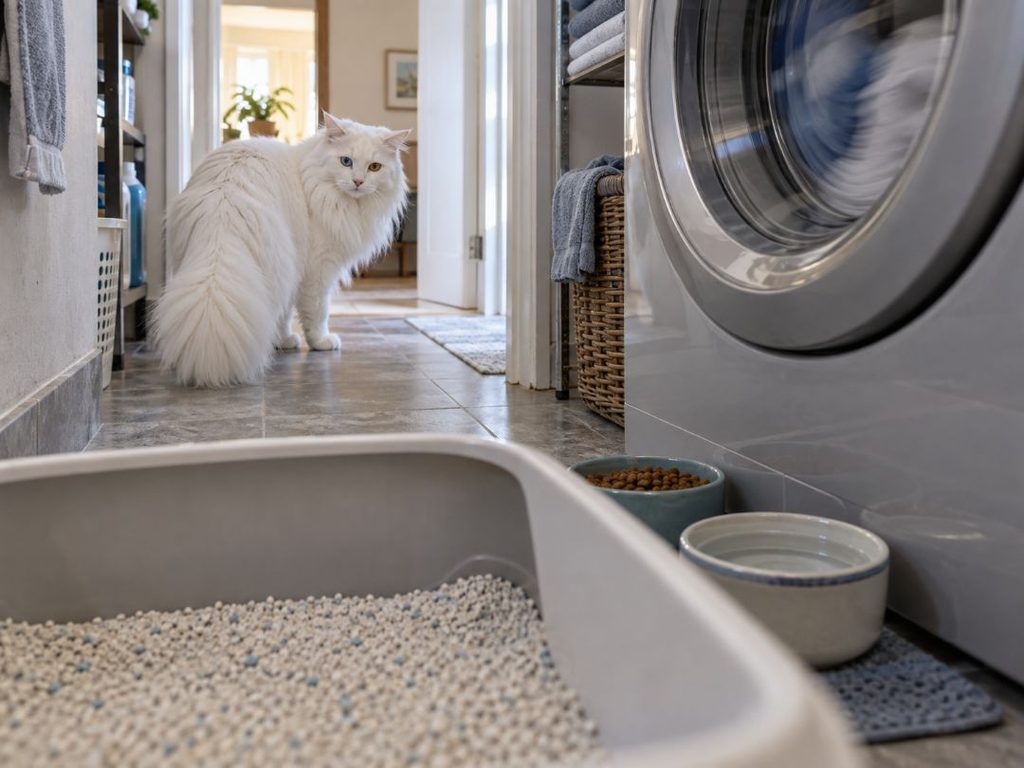
Signs Your Cat Dislikes the Location
A location problem does not always begin with a puddle on the rug. You may notice your cat:
- Pausing at the doorway or checking the room repeatedly
- Running from the box as soon as elimination is finished
- Using the box only when the house is quiet
- Eliminating beside the box or in the same alternate spot
- Using a box on one floor but avoiding an identical one elsewhere
- Being watched, chased, or blocked by another pet
Adding a clean box at the spot your cat already chooses can provide useful information. Once the cat uses it consistently, you can decide whether that location is workable or gradually shift the box to a nearby acceptable area.
Location is only one part of the setup. Box size, entry height, litter texture, cleanliness, past frightening experiences, social tension, and medical problems can all affect litter box use.
When an Accident Needs a Veterinarian
A cat who suddenly urinates or defecates outside the box should be checked by a veterinarian, even if the current location is not perfect. Urinary disease, digestive trouble, arthritis, and other painful conditions can look like a behavior or placement problem.
Seek immediate veterinary care if your cat repeatedly strains to urinate, makes frequent attempts but produces little or no urine, cries in the box, or becomes increasingly distressed. A urethral obstruction is a life-threatening emergency and is especially common in male cats.
Do not punish a cat for an accident. It will not correct pain, fear, or poor access, and it can make the box area feel even less safe.
Final Thoughts
The right location should be easy for your cat to use and easy for you to maintain. Walk the route at your cat’s level. Listen for machines, check which doors close, and notice whether another pet could wait at the exit.
If the spot is quiet without being isolated, open without being busy, and available every hour of the day, you have probably found a good home for the box.
Frequently Asked Questions
1. Can I put my cat’s litter box in the bathroom?
Yes. A quiet bathroom can be a good choice if the door remains open and showers, fans, or other pets do not scare your cat. It should not be the only option when access is unreliable.
2. Is it OK to keep a litter box in the bedroom?
Yes, provided your cat can enter at all times and the box is kept away from the bed, food, and water. Scoop at least daily and use a mat to control litter tracking.
3. Can a litter box go in a closet?
An open, roomy closet may work for some cats, but a cramped closet with a closable door is risky. Make sure there is ventilation, adequate turning room, dependable access, and no chance another pet can block the exit.
4. Can two litter boxes sit next to each other?
They can, but many cats experience side-by-side boxes as one toileting area. Separate locations give cats meaningful choices and reduce the chance that one cat or one frightening event blocks every box.
5. What is the best litter box location for a senior cat?
Choose a quiet spot on the same floor where your senior cat spends most of the day. Provide a low entrance, a nonslip route, gentle lighting, and no stairs between the cat’s resting area and the box.
6. Why is my cat peeing beside a clean litter box?
The cat may dislike the location, box, litter, or entry height, or may have had a frightening experience there. Pain and urinary disease are also possible. Arrange a veterinary check for a new change, especially if you notice straining, frequent attempts, blood, or very little urine.