


Your cat is not plotting against your sofa.
It may feel personal when you walk into the living room and find fresh claw marks on the armrest, especially if that couch cost more than your first car payment. But cat scratching furniture is not revenge, spite, or bad manners. It is normal feline behavior with a job behind it.
Cats scratch to care for their claws, stretch their bodies, mark their space, burn off energy, and feel secure. The problem is not that your cat scratches. The problem is that your cat chose the couch, carpet, curtains, dining chair, or bed frame instead of something you actually want them to scratch.
The good news? You usually do not need to “stop” the behavior. You need to redirect it.
Let’s unpack why do cats scratch furniture, why they seem to pick your favorite pieces, and how to protect your home without turning your cat into a stressed little gremlin.
Why Do Cats Scratch Furniture?
Cats scratch furniture because scratching is a natural instinct. It helps them:
- Remove old outer claw layers
- Stretch their shoulders, back, legs, and paws
- Leave scent from glands in their paw pads
- Mark territory with visible claw marks
- Relieve stress or excitement
- Get attention
- Burn energy when bored
- Use surfaces that feel good under their claws
Furniture often wins because it is sturdy, tall, textured, and placed in important areas of the home. A sofa arm, for example, is almost perfect from a cat’s point of view. It does not wobble. It is easy to grip. It sits right where the family spends time.
That is prime feline real estate.
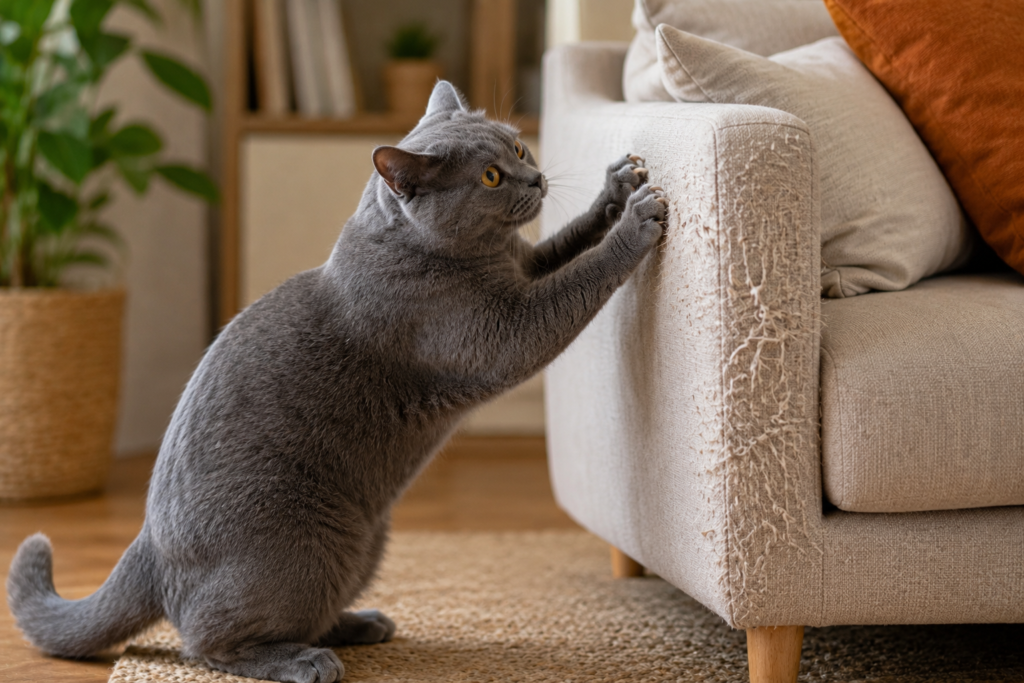
Is Furniture Scratching Normal for Cats?
Yes. Cat scratching behavior is entirely normal, even when it becomes annoying for humans.
A cat’s claws are tools. They help with climbing, balance, stretching, defense, play, and communication. Scratching also leaves behind visual marks and scent, which makes a cat feel more at home in their space.
So when your cat digs into the couch, they are not thinking, “This beige sectional needs chaos.”
They are thinking something closer to:
- “This feels great.”
- “This smells like my people.”
- “This spot matters.”
- “My claws need work.”
- “I woke up and my body wants a stretch.”
That does not mean you should let your furniture become shredded confetti. It just means the solution should work with your cat’s instincts, not against them.
8 Reasons Why Cats Scratch Furniture
1. Cats Scratch Furniture to Keep Their Claws Healthy
One big reason why cats scratch couches and chairs is claw maintenance.
Cats’ claws grow in layers. When they scratch, they help remove the old outer sheath and expose a sharper, healthier claw underneath. You may even find little crescent-shaped claw pieces near your cat’s favorite scratching spot. They can look a bit alarming at first, but they are usually just shed claw sheaths.
Furniture can be tempting because fabric, upholstery, and carpet give claws something to hook into. That pulling motion helps loosen the old layer.
This is why simply telling a cat “no” does not solve much. Their body still needs a legal claw-care station.
The Fix: Give your cat a cat scratching post, scratcher, or board with a texture they actually enjoy.
2. Scratching Gives Cats a Full-Body Stretch
Watch a cat scratch a vertical surface. They reach up, spread their toes, dig in, pull down, and stretch through the shoulders, spine, chest, and front legs.
It is a tiny yoga class with knives.
Many cats scratch after waking up from a nap because their muscles are warm and ready to move. That is also why sofas, bed frames, and curtains get targeted. They are often near sleeping areas and provide enough height for a satisfying stretch.
If your cat scratches the couch every morning, the couch may not be the true problem. The missing piece may be a tall, sturdy post placed near their nap spot. For vertical scratchers, choose one tall enough for your cat to stretch fully. A tiny kitten post may look cute, but an adult cat needs room to reach.
3. Cats Scratch to Mark Territory
Scratching is also communication.
Cats have scent glands in their paw pads. When they scratch, they leave scent behind. The claw marks also create a visual signal. Together, these marks say, “This place belongs in my map.”
This is one reason cats often scratch high-traffic areas. They may target the sofa, hallway carpet, door frame, or your favorite chair because those places carry strong household smells and social meaning. Your cat is not trying to ruin the room. They are adding their signature to the family bulletin board.
This also explains why a cat keeps returning to the same furniture over and over. Their scent fades over time, so they refresh it. The more they scratch a spot, the more familiar and important it becomes.
4. Your Couch Is in the Perfect Spot
A lot of destructive scratching in cats comes down to location.
Humans often hide scratching posts in corners, laundry rooms, or behind furniture because they do not love the look of them. Cats, being honest little interior critics, ignore those posts.
From a cat’s point of view, a good scratching spot is usually:
- Near where people spend time
- Near a favorite sleeping area
- Close to windows or lookout spots
- Along common walking paths
- Beside furniture they already scratch
- Easy to access during play or after naps
So if your cat scratches the sofa, do not place the scratching post across the house and hope for a miracle. Put the post right next to the scratched area at first.
Yes, it may look awkward for a week or two. Your sofa is already wearing claw calligraphy, so the decor battle has technically begun. Once your cat uses the post regularly, you can slowly move it a few inches at a time to a better location.
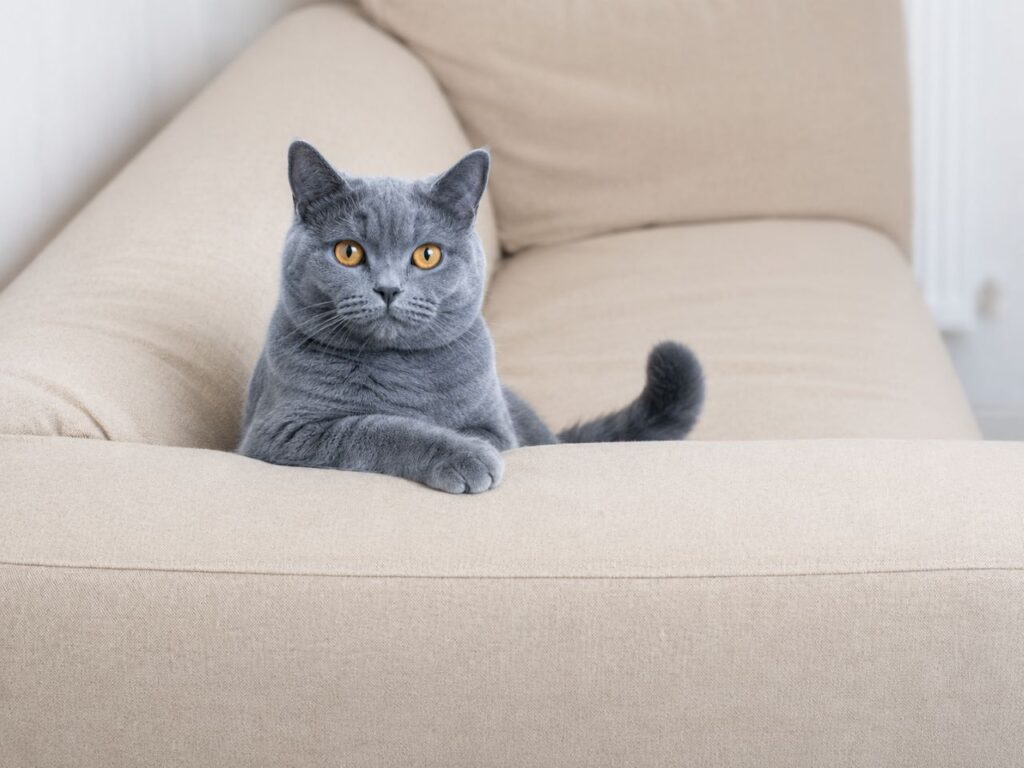
5. The Furniture Texture Feels Better Than the Scratcher
Not all scratchers are equal.
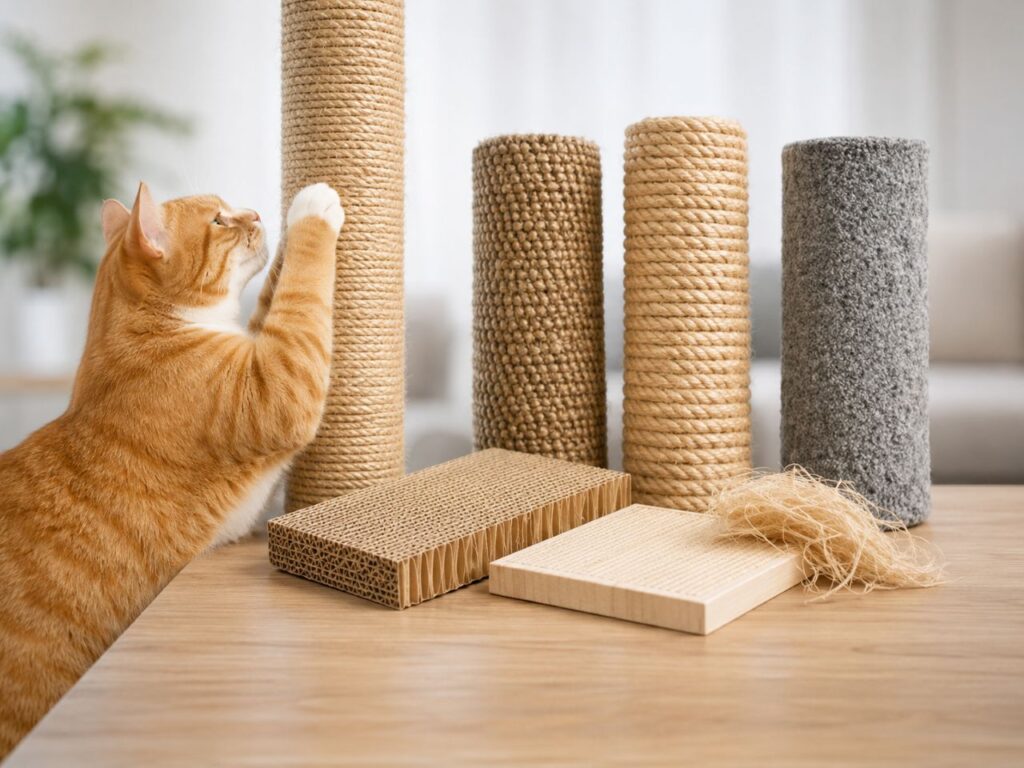
Some cats love sisal rope. Some prefer corrugated cardboard. Some go wild for carpet. Some like rough wood. Some want vertical posts, while others prefer horizontal or angled scratchers.
If your cat ignores the scratching post but attacks the carpet, they may be telling you they prefer a horizontal surface. If they scratch sofa arms or door frames, they may want a vertical scratcher. If they claw the underside of furniture, they may enjoy an angled or low scratcher.
A common mistake is buying one cute scratching post, placing it in the wrong spot, and deciding the cat is stubborn. Try a few textures and shapes before giving up.
6. Cats May Scratch Furniture When They Are Bored
Indoor cats need mental and physical stimulation. When they do not get enough play, climbing, hunting-style activity, or environmental enrichment, they may create their own entertainment.
Unfortunately, their version of entertainment may involve your accent chair.
Cat clawing furniture can increase when a cat has extra energy and nowhere useful to put it. This is especially common with young cats, indoor-only cats, and comics who spend long stretches alone.
A bored cat may also show other signs, such as:
- Night zoomies
- Knocking things off shelves
- Chewing cords or plants
- Overgrooming
- Attention-seeking meows
Daily play helps immensely. Short hunting-style sessions work best for many cats. Use a wand toy, let your cat stalk and chase, then end with a small treat or meal. That “hunt, catch, eat, groom, sleep” rhythm feels natural to them.
7. Stress Can Make Scratching Worse
Some cats scratch more when they feel stressed, tense, or insecure.
Common triggers include:
- Moving to a new home
- New furniture
- A new baby or guests
- Construction noise
- A new pet or outdoor cats near windows
- Conflict between cats
Scratching can help cats feel safer because it spreads their scent and gives them a sense of control. If your cat suddenly starts scratching furniture more than usual, look at what changed in the home.
A single scratcher may not fix a stress problem. Your cat may also need quiet hiding spots, vertical perches, predictable routines, separate resources in multi-cat homes, and calmer introductions to new pets or people.
8. Your Cat May Have Learned That Scratching Gets Attention
Cats are fast learners. Sometimes they scratch furniture because it gets a big reaction.
Think about it. Your cat scratches the couch. You look up. You say their name. You walk over. Maybe you pick them up. Maybe you chase them. Maybe you wave your arms like an inflatable tube person outside a car dealership.
To a cat, that may be attention. Not ideal attention, but attention.
If your cat scratches mainly when you are busy, on the phone, cooking, or trying to sleep, they may be using the furniture as a very effective doorbell. The fix is not to ignore all scratching. The fix is to reward the right scratching before the couch performance begins. Place a scratcher near you, praise them when they use it, and make the legal option pay better than the couch.
Why Do Cats Scratch Couches Specifically?
Cats scratch couches because couches are sturdy, textured, social, and usually placed in important family spaces.
A couch checks many cat-approved boxes:
- It does not tip over
- It has grippy fabric
- The arms are tall enough for stretching
- It smells like humans
- It sits in a central room
This is why a flimsy post hidden behind a plant will lose to the sofa every time. Your couch is not just furniture to your cat. It is a community landmark. To compete with it, the scratching post has to be sturdy, appealing, and close to the action.
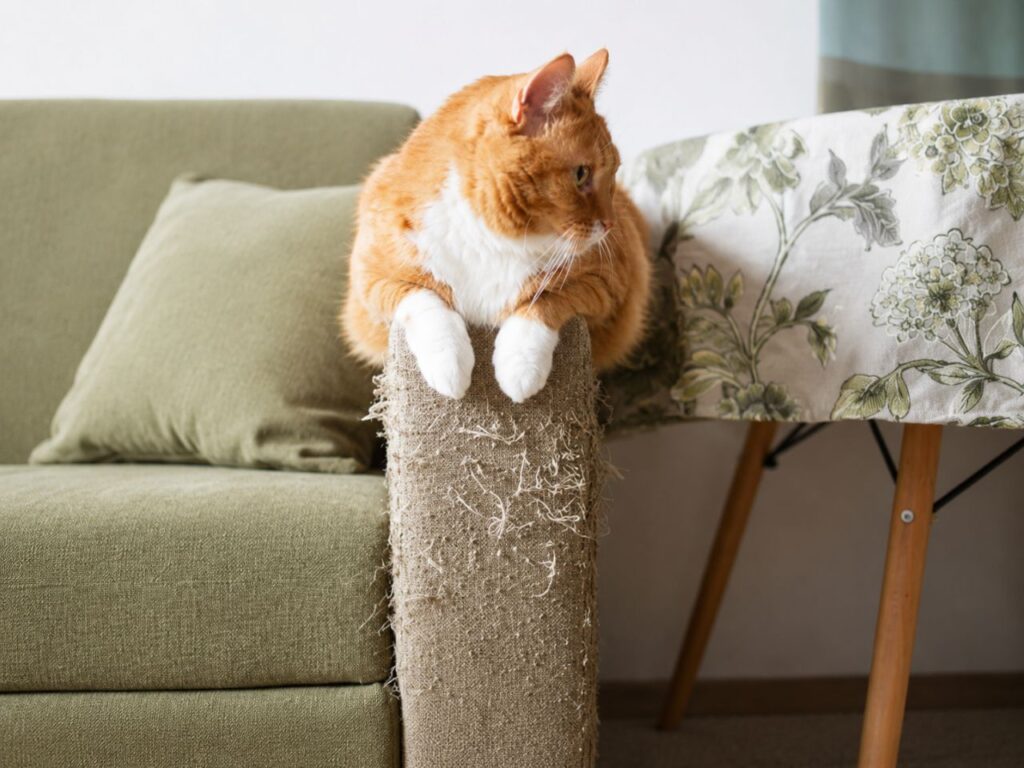
Why Do Cats Scratch Carpet?
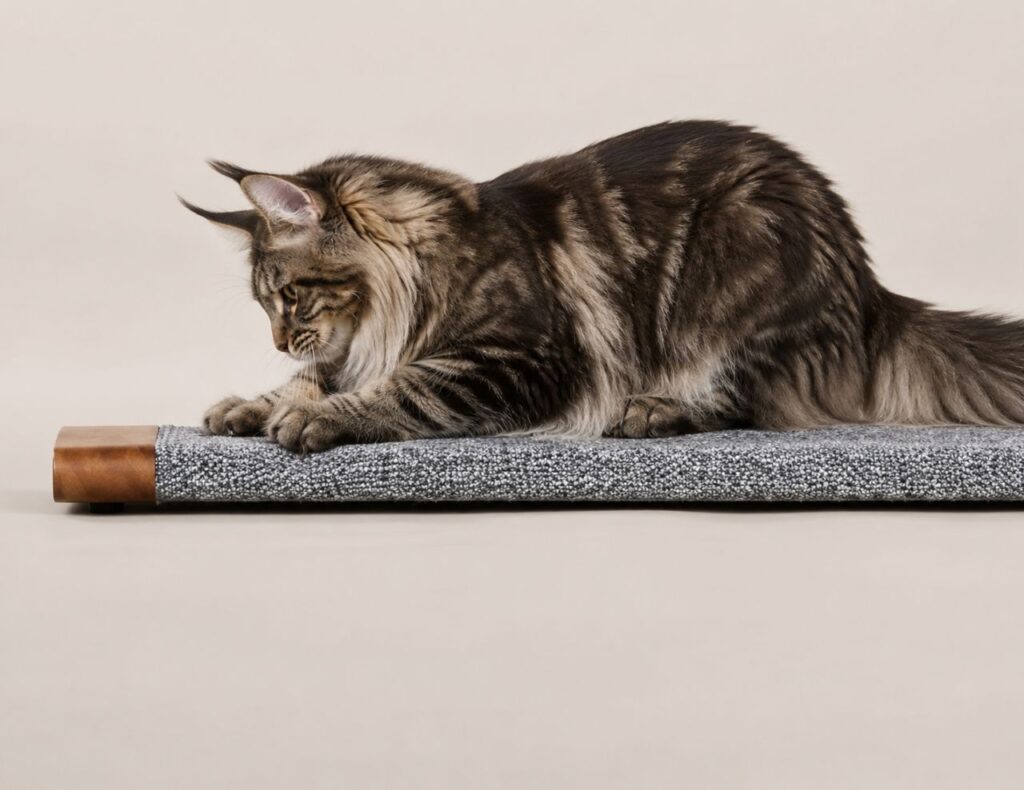
A cat scratching carpet usually means your cat prefers horizontal scratching over a vertical climb.
Carpet gives claws a strong grip. It also lets cats pull backward with their body weight. Some cats prefer this over reaching up a vertical post.
If your cat scratches rugs, stairs, or carpeted corners, try:
- Corrugated cardboard scratchers
- Flat sisal mats
- Angled scratch ramps
- A scratcher placed directly over the favorite carpet spot
Avoid carpet-covered scratchers if your cat already targets household carpet, as it may confuse them into thinking all carpet is now community property.
How to Stop Cats From Scratching Furniture
The real goal is not to stop scratching altogether. The goal is to stop cat scratching couch behavior by giving them a vastly superior place to scratch. Here is a simple step-by-step redirect strategy.
Give Your Cat Better Scratching Options
Start with at least two or three scratchers. One lonely post is not always enough, especially in a larger home. Try a mix of a tall sisal post, corrugated cardboard scratcher, horizontal mat, and angled scratch board.
For multi-cat homes, add more. A good rule is one scratching station per cat, plus one extra. Cats do not always want to share scent-marking spots.
Match the Scratcher to Your Cat’s Current Habit
Look at what your cat already scratches.
- If your cat scratches sofa arms, try a tall vertical post.
- If your cat scratches rugs, try a horizontal scratcher.
- If your cat scratches chair legs, try sisal-wrapped posts.
The closer the legal scratcher feels to the forbidden surface, the easier the switch becomes.
Put Scratchers Where Your Cat Already Scratches
Placement matters more than most people think. Put the scratcher right next to the furniture your cat is targeting. Good spots include beside the couch, near cat beds, near windows, or in rooms where the family spends time. Do not hide scratchers in lonely corners and expect applause.
Make the Scratcher More Appealing
Encourage your cat to investigate the new scratcher. You can sprinkle catnip on it, use silvervine, drag a wand toy around the post, or place treats nearby. Praise your cat when they touch or scratch it.
Note: Do not throw away a scratcher just because it looks shredded. A roughed-up post often smells and feels better to your cat. To humans, it looks ruined. To cats, it has finally become art.
Make the Furniture Less Fun to Scratch
While you teach the new habit, you need to redirect cat scratching away from the old target by making it less rewarding. Try temporary furniture protection like double-sided sticky tape made for pets, furniture guards, washable slipcovers, or plastic couch protectors.
You can also clean scratched areas with a pet-safe cleaner to reduce scent marks. Test cleaners on a hidden area first, especially on delicate fabric.
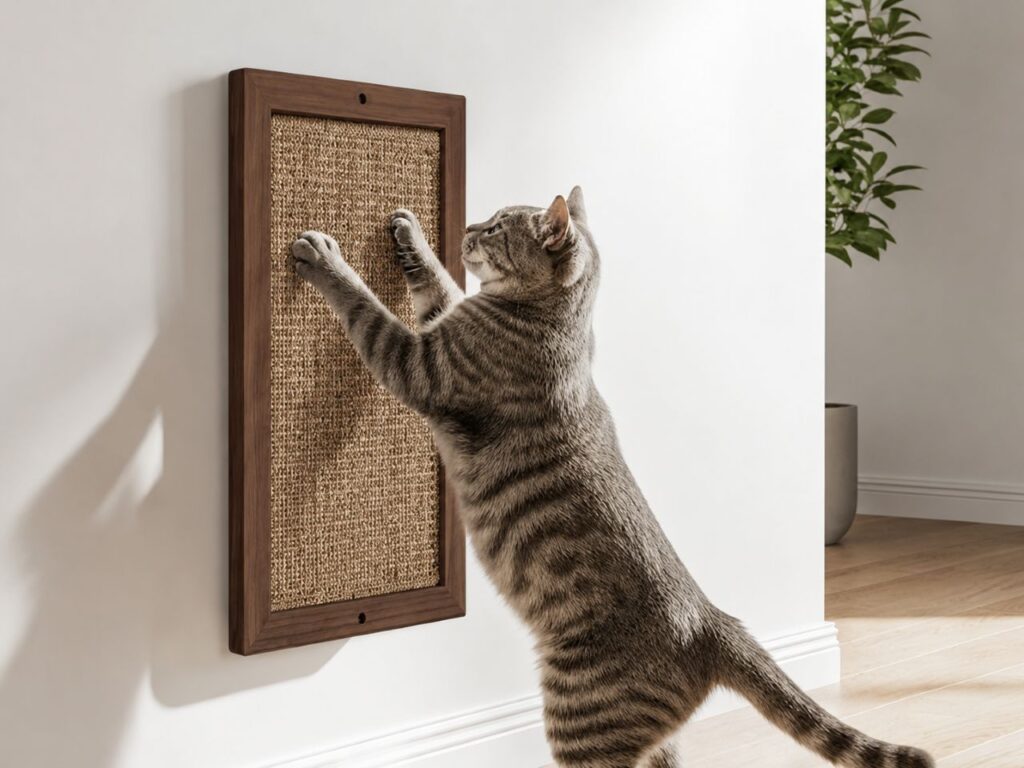
Reward the Behavior You Want
Cats repeat what works. When your cat uses the scratching post, reward them right away with treats, praise, or play. Catch the good behavior in the moment so they make the connection.
Trim Your Cat’s Nails Regularly
Nail trims will not remove the urge to scratch, but they can dramatically reduce damage. If your cat allows paw handling, trim just the sharp tips while avoiding the pink quick inside the claw. Go slowly—one nail at a time with a treat reward works wonders.
Use Nail Caps if Needed
Soft vinyl nail caps can help protect furniture while you work on training. They are glued over the claws and usually need replacement as the nails grow. They are a temporary furniture shield, not a full behavior plan, so your cat still needs quality scratchers.
Do Not Punish Your Cat for Scratching
Punishment rarely solves the problem. Yelling, spraying water, or chasing your cat may make them scared of you or teach them to scratch when you are not looking. Punishment can also increase stress, which inadvertently increases scratching. Instead, interrupt gently, redirect to the scratcher, and reward the correct choice.
Should You Declaw a Cat for Scratching Furniture?
Declawing should not be treated as a simple furniture-saving fix.
Declawing is not just a permanent nail trim; it involves removing the last bone of each toe. Many animal welfare and veterinary organizations discourage elective declawing and recommend non-surgical alternatives such as scratching posts, nail trims, nail caps, environmental enrichment, and behavior support.
If scratching feels unmanageable, talk with your veterinarian or a certified feline behavior professional before considering anything permanent. Your couch matters, but your cat’s paws matter more.
When Furniture Scratching May Signal a Bigger Problem
Most scratching is normal. Still, a sudden change can be a clue that something else is going on. Call your veterinarian or a qualified cat behavior consultant if:
- Scratching suddenly becomes intense or frantic
- Your cat seems anxious, restless, or is overgrooming
- Your cat is also hiding, hissing, or avoiding people
- Multi-cat conflict has increased in the home
- You see broken claws, bleeding, swelling, or limping
- Your cat stops using familiar scratchers entirely
A Simple 7-Day Plan to Save Your Furniture
Here is an easy plan from Catsoria that you can start today.
| Day | Task | Goal |
| Day 1 | Study the Crime Scene | Identify if your cat prefers vertical or horizontal scratching and note the location. |
| Day 2 | Add the Right Scratcher | Buy a sturdy scratcher that matches their preferred style (sisal, cardboard, etc.). |
| Day 3 | Put It in the Right Place | Place the new scratcher directly beside the scratched furniture, not hidden away. |
| Day 4 | Make the Couch Boring | Cover the targeted area with double-sided tape, guards, or a tight blanket. |
| Day 5 | Make the Scratcher Exciting | Use catnip, toys, or treats to encourage interaction. Reward every good scratch. |
| Day 6 | Add Playtime | Provide two short play sessions with a wand toy to burn off excess energy. |
| Day 7 | Adjust and Evaluate | If ignored, tweak the texture, sturdiness, or location of the scratcher. |
Best Scratching Materials for Cats
- Sisal: Rough, durable, and satisfying to rake with claws. Sisal fabric often lasts longer than sisal rope, but both work well.
- Cardboard: Corrugated cardboard is popular, affordable, and great for horizontal scratchers. It can be messy, but cats love the texture.
- Wood: Some cats enjoy natural wood because it feels closer to scratching a tree. Make sure it is safe, untreated, and free from splinters.
- Carpet: Can work, but it may confuse cats who already scratch household rugs. Use carefully if your cat loves your rugs a little too much.
- Upholstery-Style Fabric: Some scratchers use fabric that mimics furniture to help redirect sofa scratchers.
Best Places to Put Cat Scratching Posts
For better results, place scratching posts in meaningful cat zones:
- Next to the couch
- Beside favorite sleeping spots
- Near windows and cat trees
- Along hallways and common walking paths
- Close to areas your cat already marks
A hidden scratching post is just furniture. A well-placed scratching post is a solution.
Why Your Cat Ignores the Scratching Post
If your cat ignores the post, one of these may be the reason:
- It is too short or narrow
- It wobbles when they lean into it
- The texture feels wrong to them
- It is in a boring, isolated location
- Another cat has claimed it
- The couch still feels better and hasn’t been blocked off
The fix is usually not to buy the fanciest post, but to buy the right post and put it where your cat already wants to scratch. Cats do not care that the post matches your walnut bookshelf; they care whether it can survive a dramatic shoulder stretch.
Final Thoughts
So, why do cats scratch furniture?
Because your cat is being a cat. Scratching keeps claws healthy, stretches the body, marks territory, relieves stress, and helps your cat feel at home. The couch just happens to be sturdy, textured, central, and wonderfully scratchable.
The best fix is not to fight the instinct. Give it a better landing place.
Start with a sturdy scratching post near the damaged furniture. Match your cat’s preferred texture and direction. Make the couch less rewarding for a while, and reward every good choice. With the right setup, your cat can scratch, stretch, and mark their space while your sofa lives to see another season.
Catsoria Tip: When in doubt, follow the scratches. Your cat has already marked the exact places where a better scratcher should go.
Frequently Asked Questions
1. Why do cats scratch furniture even when they have a scratching post?
Your cat may dislike the post’s texture, height, stability, or location. Many cats ignore posts that are too short, wobbly, or hidden away. Place a sturdy scratcher near the furniture your cat already scratches and reward your cat for using it.
2. How do I stop my cat from scratching the couch?
Put a tall, sturdy scratching post beside the couch, cover the scratched area with a temporary deterrent like double-sided tape, and reward your cat every time they use the post instead. You may also trim your cat’s nails and add daily play to reduce boredom scratching.
3. Why does my cat scratch furniture when I come home?
Some cats scratch as a greeting behavior. They may be excited, stretching, marking territory, or asking for attention. Keep a scratcher near the door or living area and reward your cat when they use it after you come home.
4. Do cats scratch furniture because they are mad?
Usually, no. Cats scratch because it keeps claws healthy, marks territory, relieves stress, or gets attention. It can feel personal when they scratch your favorite chair, but the behavior is purely instinctive.
5. Does trimming cat nails stop scratching?
No. Nail trimming does not stop the instinct to scratch, but it can significantly reduce furniture damage. Cats still need scratching posts even when their nails are trimmed regularly.
6. What smells stop cats from scratching furniture?
Some cats dislike certain scents like citrus, but scent deterrents can be unreliable and may irritate cats. Avoid strong essential oils because some can be unsafe for cats. Physical deterrents and alternative scratchers are safer and more effective.
