
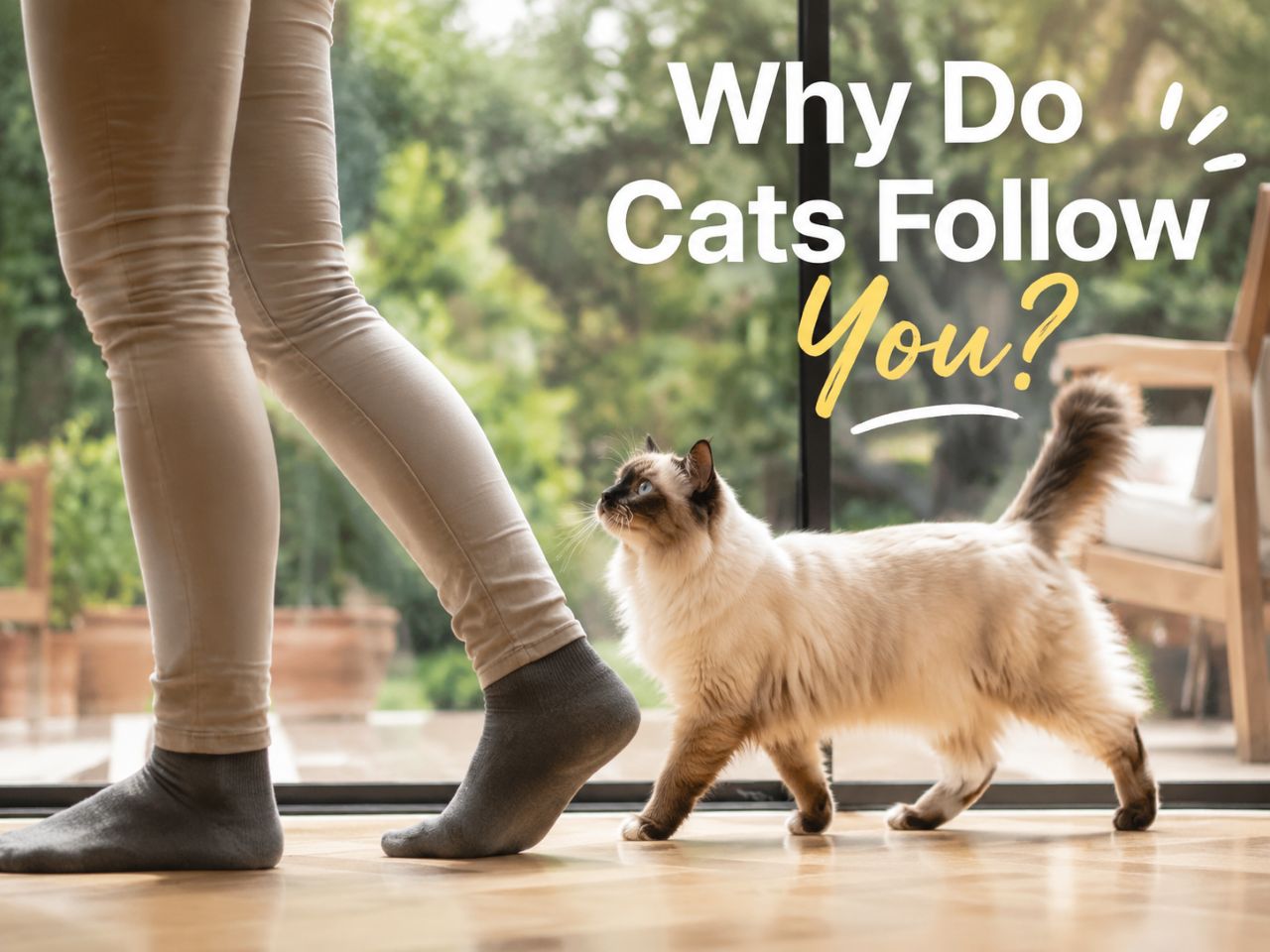
So, why do cats follow you from room to room?
Most cats do it because they feel bonded to you, expect food or attention, enjoy monitoring their surroundings, or have learned that following you leads to something rewarding. A clingy cat or Velcro cat that suddenly becomes much more attentive may also be feeling stressed, insecure, uncomfortable, or unwell.
In most cases, having a furry shadow is perfectly normal. The trick to understanding cat behavior is looking at when the behavior happens, what your cat does while following you, and whether anything else has changed.
What Does It Mean When a Cat Follows You?
A cat walking behind you is not displaying one single message. The meaning changes with the setting.
A relaxed cat with upright ears and a gently raised tail may simply want company. A cat follows me everywhere near the kitchen shortly before dinner probably has a more edible goal in mind. A senior cat that suddenly trails you while crying at night deserves closer attention.
Cats may have a reputation for independence, but independence does not mean emotional indifference. Research has found that many cats develop recognizable attachment patterns with their caregivers and use familiar people as a source of security. Your cat can enjoy doing things alone and still prefer knowing where you are. Feline logic has room for both.
1. Your Cat Feels Safe With You
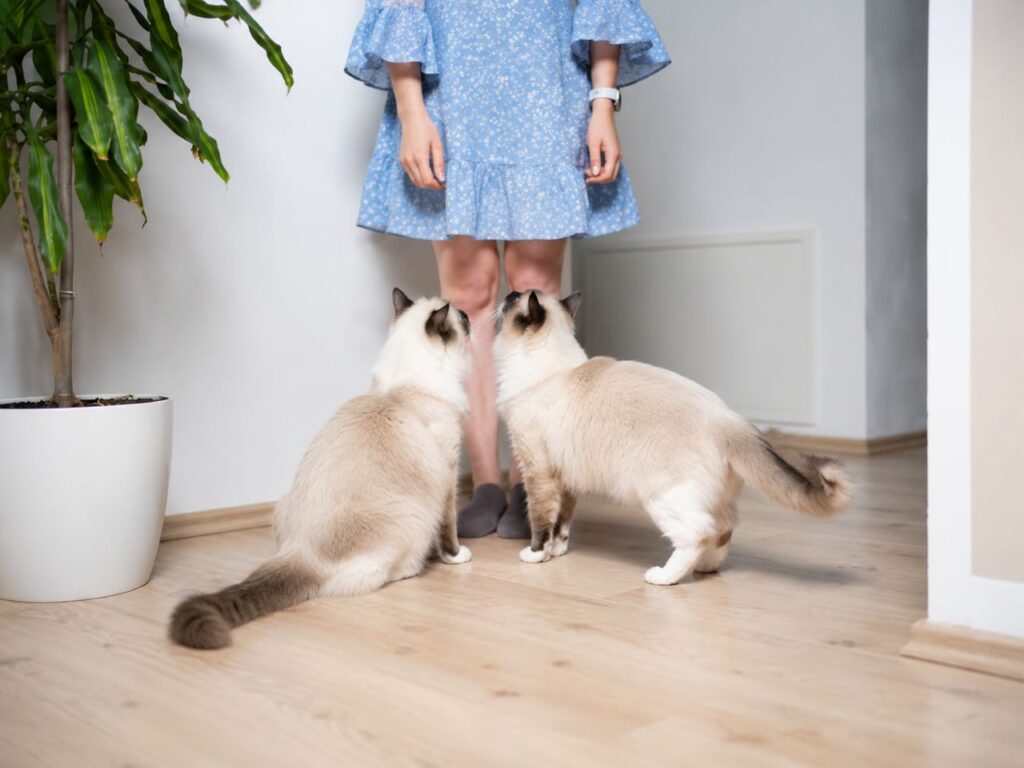
One of the sweetest explanations for this behavior is also one of the most common: does my cat love me? Yes, it means your cat trusts you.
Cats tend to stay near people who make their environment feel safe and predictable. You provide meals, warmth, protection, familiar smells, comfortable resting spots, and a daily rhythm your cat understands.
Following you lets your cat remain close without necessarily asking to be held. Some cats express affection through lap time. Others sit several feet away, escort you down the hallway, or appear in every room moments after you enter it. That quiet companionship is a sign of a secure bond. PetMD, Cats Protection, Purina, and Diamond Pet Foods all identify affection or companionship as a primary reason cats shadow their people.
2. You Control the Food Supply
Your cat may love you deeply, but your ability to open cans is difficult to ignore.
Cats quickly learn why does my cat follow only me or whoever prepares breakfast, hands out treats, or responds fastest to a strategically timed meow. When that person moves toward the kitchen, the cat follows.
Watch the timing. Food-driven following often becomes more intense:
- Shortly before a regular mealtime
- Early in the morning
- When you enter the kitchen
- After you touch the treat container
- When the food bowl is empty
This behavior is partly based on routine and partly shaped by experience. Cats Protection notes that repeatedly feeding a cat when entering the kitchen can teach the cat to follow every time you go there.
Health Note: Persistent hunger can sometimes have a medical cause. Contact your veterinarian when an unusually intense appetite appears alongside weight loss, increased thirst, restlessness, or vomiting.
3. Your Cat Is Curious About What You Are Doing
Cats are tiny household inspectors with no concept of personal business. Opening a closet, carrying a box, moving furniture, or entering a rarely used room can trigger immediate investigation. Your movement suggests that something in the territory has changed, and your cat would like the full report.
This explains why does my cat follow me everywhere even when they aren’t asking for food or affection. They want to sniff the area, watch your hands, inspect the object you moved, and audit the mystery.
Curiosity is especially likely when your cat:
- Keeps a little distance while following
- Sniffs objects you touch
- Watches without vocalizing
- Leaves once the activity stops
- Appears whenever a closed door opens
To your cat, you are not merely walking through the house. You are creating live entertainment.
4. Your Cat Wants Attention
Some cats follow because they would like petting, conversation, play, grooming, or access to your lap.
This is common after you return home, finish working, wake up, or spend several hours focused on something else. Your cat may follow while rubbing against your legs, chirping, head-butting your hand, or walking slightly ahead and looking back. Those behaviors often amount to a polite feline request: “Please stop wandering and focus on the important resident.”
Attention-seeking is not automatically a problem. However, trouble begins when a clingy cat cannot settle without constant engagement. Try offering predictable attention before your cat becomes insistent. A few short play sessions, a grooming ritual, or quiet couch time can meet the need effectively.

5. Your Cat Is Bored
A bored cat will work with whatever entertainment is available. Sometimes that entertainment is you folding laundry.
Indoor cats need regular opportunities to stalk, chase, climb, scratch, search, watch, and solve small problems. Without those outlets, following a person around may become the most interesting activity on the schedule. Cats Protection and Purina both list inadequate stimulation as a key reason cats may become unusually attentive or clingy.
Other signs of boredom may include:
- Attacking ankles
- Excessive nighttime activity
- Repeatedly knocking objects down
- Overeating or constant vocalizing
- Scratching furniture more often
Add variety rather than simply adding more toys to the floor. Rotate toys every few days, hide small portions of food, place a perch near a secure window, provide sturdy climbing spaces, and use wand toys that imitate prey movement.
6. Following You Has Become Part of the Routine
Cats pay close attention to patterns. They learn when you wake up, where you sit, when you shower, which door you open before feeding them, and what usually happens after you turn off the television.
Once following becomes part of that sequence, your cat may continue doing it even when there is no immediate reward. The routine itself feels familiar. This is why your cat might escort you to the bathroom every morning or wait outside the bedroom at the same time each night. You are moving through a shared ritual, and your cat knows the choreography.
A predictable routine helps cats feel secure. It also means that schedule changes, visitors, renovations, a new baby, or a move may temporarily increase clinginess.
7. Your Cat Is Looking for Reassurance
A cat may stay closer when something in their environment feels unfamiliar or threatening.
Common anxiety triggers include:
- A new pet or a visiting person
- Construction noise or loud weather
- Moving to a different home
- Changes in your work schedule
- Conflict with another cat
- Changes in furniture or household scents
A worried cat may follow you because your presence makes the environment feel less uncertain. You might also notice a crouched posture, enlarged pupils, flattened ears, reduced appetite, excessive grooming, or urine marking. Do not punish clinginess caused by fear. Give the cat control over distance and provide accessible hiding spots.
8. Your Cat May Have Separation-Related Distress
Following you around does not automatically prove that your cat has severe anxiety. Many affectionate cats follow their people and remain perfectly calm when left alone. Concern grows when the behavior is paired with distress before, during, or after your absence, signaling cat separation anxiety.
A questionnaire study involving 223 cats found possible separation-related problems in a minority of the sample. Reported behaviors included excessive vocalization, inappropriate urination, destructive behavior, agitation, and aggression.
Signs of separation distress worth discussing with a veterinarian or qualified feline behavior professional include:
- Panicked behavior when you prepare to leave
- Continuous crying after you leave
- Destruction near doors or windows
- Urinating outside the litter box only during absences
- Refusing food when alone
- Frantic greeting behavior when you return
- Being unable to rest unless touching or watching you
9. Sudden Clinginess May Signal a Health Problem
A cat that has always followed you is different from a normally independent cat where you ask: why is my cat suddenly following me?
Cats often hide illness, and behavioral changes may appear before obvious physical symptoms. Some sick cats withdraw, while others become more demanding because they feel vulnerable or uncomfortable. VCA Animal Hospitals notes that illness can cause cats to become clingier, sleep more, play less, act restless, or show changes in appetite, thirst, grooming, and mobility.
Senior cats may also follow more closely due to:
- Reduced vision or hearing
- Arthritis or chronic pain
- Cognitive decline (feline dementia)
- Hyperthyroidism or high blood pressure
- Increased confusion, particularly navigating at night
Arrange a veterinary examination when following begins suddenly or appears with weight loss, vomiting, diarrhea, appetite changes, excessive thirst, or litter box problems.
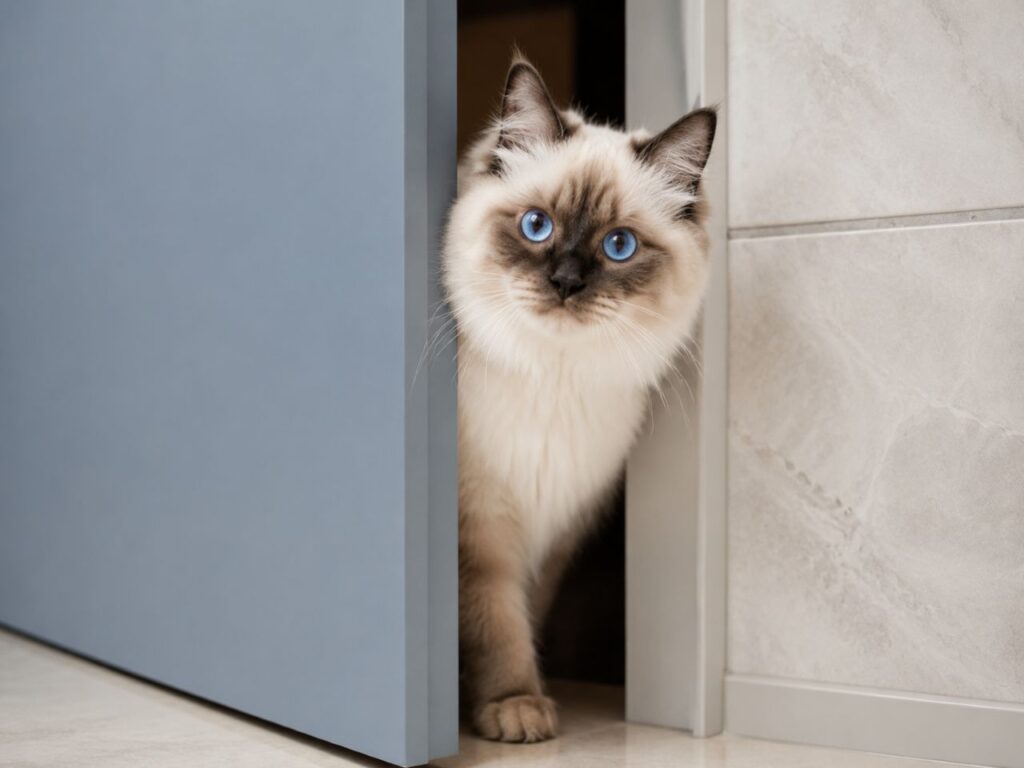
Why Does My Cat Follow Me to the Bathroom?
The bathroom contains nearly everything a curious cat could request: running water, cool surfaces, shelves, towels, interesting scents, a sink shaped like a bed, and a person who cannot wander away immediately.
If you wonder why does my cat follow me to the bathroom, it is usually because:
- The bathroom door is usually closed (cats hate closed doors)
- Running water from the sink or shower is highly interesting
- Your bathroom routine is highly predictable
- Your scent is incredibly strong in that confined room
- You are temporarily stationary and available for attention
Cats Protection describes the bathroom as an intriguing room that cats may have limited chances to explore. Purina also points to routine, water, scent, and access to a captive human audience. The behavior is usually harmless, but keep medications, razors, dental floss, and cleaning products safely out of reach.
Why Does My Cat Follow Me but Not Anyone Else?
Your cat may follow you because you are the person most strongly connected with good things. Perhaps you feed them, play in the way they enjoy, respect their boundaries, speak more softly, or spend the most time at home. Cats often prefer people whose behavior feels predictable and nonthreatening.
Your smell, voice, walking pattern, and daily schedule are familiar. Even the way you pet your cat matters. One person may deliver the perfect cheek rub, while another approaches with the subtlety of a falling bookshelf. Being followed does not always mean you are the only person your cat loves; it may simply mean you are the person most relevant to what they want at that specific moment.
How to Read the Body Language of a Cat Following You
Look at the entire cat rather than the following behavior alone to interpret their intent:
- Relaxed and social: Tail upright, ears forward, soft eyes, loose body, gentle chirps, rubbing against you.
- Food-seeking: Leads you toward the kitchen, meows near the bowl, checks your hands, becomes active around regular mealtimes.
- Playful: Pounces near your feet, darts away, hides around corners, carries toys, or looks back while running.
- Curious: Watches quietly, sniffs new objects, explores the room, and leaves after the activity ends.
- Anxious: Crouched body, low tail, wide pupils, repeated scanning, hiding, flattened ears, or difficulty settling.
- Possibly unwell: Sudden clinginess combined with appetite, thirst, grooming, litter box, sleep, weight, vocalization, or mobility changes.
How to Help a Cat That Follows You Constantly
You do not need to stop normal affectionate behavior. The goal is to help your cat feel comfortable both with you and independently.
- Build Predictable Social Time: Create regular periods for play, petting, grooming, or quiet companionship. Predictability reduces the need to request attention every few minutes.
- Use Food as Enrichment: Place part of the daily food allowance in puzzle feeders, treat balls, or lick mats designed for cats.
- Make the Home More Interesting: Provide scratching surfaces, vertical territory, tunnels, boxes, safe window views, and resting spots in different rooms. Rotate toys so forgotten objects regain their sparkle.
- Reward Calm Independence: When your cat settles on a bed, perch, or blanket away from you, quietly reinforce that choice with praise, gentle attention, or an occasional treat. Avoid giving food every time your cat follows or meows, or you may accidentally turn a casual shadow into a full-time food lobbyist.
- Do Not Punish Following: Yelling, spraying water, or pushing the cat away can create fear without teaching a useful alternative. Redirect the cat to a perch or toy instead.
- Protect Both of You From Falls: A cat weaving around moving feet can create a genuine safety problem on stairs or in kitchens. Teach your cat to wait on a mat or perch while you prepare food using a consistent cue and reward.
When Should You Call a Veterinarian?
Book an appointment when your cat’s following behavior changes suddenly or comes with other physical or behavioral symptoms. Contact your veterinarian promptly when you notice:
- Eating much more or less than usual
- Unexplained weight loss
- Increased thirst or urination
- Vomiting or diarrhea
- Urinating outside the litter box
- Nighttime crying or confusion
- Difficulty jumping or walking
- Hiding and clinginess occurring together
- Restlessness or inability to settle
Final Thoughts
So, why do cats follow you everywhere?
Usually, your cat is looking for something simple: company, food, attention, play, reassurance, or a closer look at whatever you are doing. For many cats, following is part affection and part habit. You are the most familiar and interesting thing moving through their territory.
A relaxed cat follows me everywhere pattern is rarely a cause for concern. It may simply be your cat’s quiet way of staying connected. Watch for changes, though. If your cat suddenly becomes unusually clingy, vocal, restless, hungry, confused, or less active, schedule a veterinary checkup promptly.
Pay close attention to the timing, cat body language, and other behavioral cues surrounding the following. Those small clues can tell you whether your cat wants dinner, entertainment, comfort, or medical help. Most of the time, your feline shadow is delivering a very ordinary message: life is better when you are nearby.
Frequently Asked Questions
1. Does my cat follow me because they love me?
Often, yes. Following can reflect affection, trust, companionship, or a desire to stay close to a familiar person. Look for relaxed body language, a raised tail, slow blinking, purring, head-butting, or choosing to rest near you. Food, curiosity, and routine can exist alongside affection.
2. Why does my cat follow me and stare at me?
Your cat may be waiting for food, inviting interaction, studying what you are doing, or watching for the next part of a familiar routine. Check the cat’s posture and the surrounding context. A soft gaze looks very different from a tense stare with flattened ears and a lashing tail.
3. Why does my cat follow me and meow?
Meowing while following usually adds urgency to the request. Your cat may want food, play, attention, access to a closed room, or help with something. A sudden increase in vocalization, especially in a senior cat or during the night, should be discussed with a veterinarian.
4. Why is my cat suddenly following me everywhere?
Sudden following can result from a schedule change, household stress, fear, boredom, pregnancy-related changes in your scent or routine, pain, illness, sensory decline, or cognitive changes. Look for additional symptoms and arrange a veterinary check when the behavior is persistent.
5. Can a cat following me mean I am pregnant?
A cat cannot reliably detect or confirm pregnancy. However, cats may react to changes in human scent, body temperature, behavior, or household routine, and some become more affectionate or withdrawn during a person’s pregnancy. Cats Protection notes that pregnancy-related scent and routine changes can affect feline behavior. Always use a medical pregnancy test rather than your cat’s hallway surveillance.
6. Why does my cat follow me at night?
Your cat may be active, hungry, bored, seeking warmth, or responding to a nighttime routine. Cats commonly become active around dawn and dusk. New nighttime following accompanied by crying, confusion, restlessness, increased hunger, or increased thirst deserves a veterinary evaluation, particularly in an older cat.