


Almost every cat parent asks this question. One week your kitten fits comfortably in your lap, and before you know it, they’re sprinting through the house with long legs, oversized paws, and endless energy. Then the changes seem to slow down, leaving many owners wondering whether their cat has finished growing or still has more growing to do.
The answer isn’t as simple as saying every cat is fully grown at one year old.
According to veterinary research, cat growth happens in several distinct stages. Bones, muscles, body shape, and even internal organs mature at different rates. A cat’s breed, genetics, sex, nutrition, health, environment, and spay or neuter status all influence when it reaches its final adult size.
For most domestic cats, physical growth is largely complete between 12 and 18 months. Giant breeds such as the Maine Coon, however, may continue developing until they are 3 to 5 years old.
When Do Cats Stop Growing?
One of the biggest myths about cat development is that every cat completely stops growing at exactly 12 months of age. In reality, veterinarians divide feline growth into three major stages:
- Rapid skeletal growth
- Gradual body development
- Complete physical maturity
Most healthy domestic cats finish growing between 12 and 18 months, although larger breeds require considerably more time.
The best indicator that a cat has stopped growing isn’t its birthday. Instead, veterinarians look at whether the growth plates (also called epiphyseal plates) inside the bones have completely closed. Once these plates close, the bones no longer become longer. Afterward, changes in body weight are usually caused by muscle gain or body fat rather than additional growth.
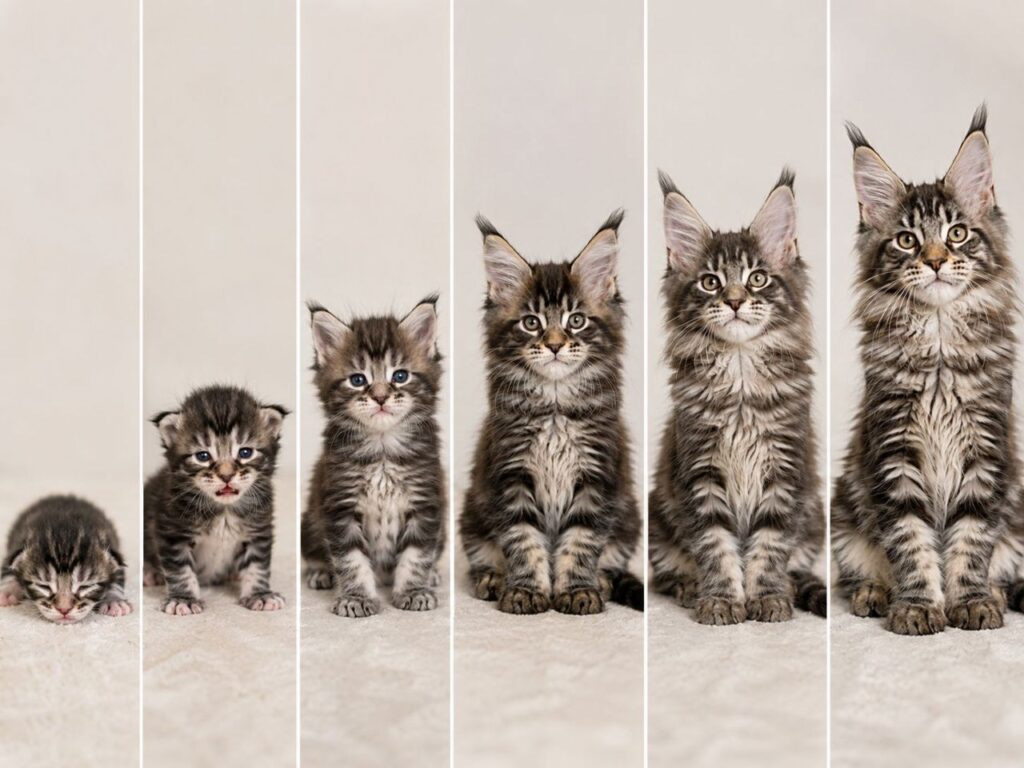
Birth to 6 Months: The Fastest Growth Stage
The first six months represent the fastest growth period of a cat’s life. During this stage, nearly every system in the body develops rapidly:
- Bones lengthen at an incredible pace.
- Internal organs mature.
- Coordination improves almost daily.
- Healthy kittens gain weight steadily and become noticeably larger every few weeks.
Veterinary studies estimate that kittens complete roughly 80% of their adult skeletal development during the first six months. By this age, many kittens have already reached approximately 70% of their expected adult weight.
This is why owners often notice dramatic physical changes over a very short period. A fluffy, round-faced kitten gradually transforms into a lean, athletic adolescent with longer legs and a more mature body shape.
Nutrition Tip: Because growth is so rapid, high-quality kitten nutrition is essential during this period. Protein, healthy fats, vitamins, minerals, and balanced calories all support proper bone development and healthy muscle growth.
6 to 12 Months: Growth Begins to Slow
After six months, cat growth becomes much less dramatic. Your kitten may already look almost like an adult, but plenty of development is still taking place.
Instead of growing taller, the body gradually fills out:
- Muscles become stronger.
- The chest widens.
- Body proportions become more balanced.
- The adult coat starts replacing the softer kitten fur.
Many cats go through what owners affectionately call the “teenage phase.” During this time, they often appear long-legged, slim, or slightly awkward. This uneven appearance is perfectly normal. Although body length changes only slightly during this stage, muscle mass and overall body condition continue improving throughout the first year.
12 to 18 Months: Final Adult Body Development
For most Domestic Shorthair, Domestic Longhair, and mixed-breed cats, the final stage of growth occurs between 12 and 18 months.
At this point:
- Skeletal growth has finished.
- Adult body length remains stable.
- Muscle mass reaches its mature level.
- Body weight becomes more consistent.
- The overall body shape looks balanced and proportionate.
Many owners notice that their cat doesn’t become taller after their first birthday but instead becomes broader across the shoulders and chest. This is normal physical maturation rather than additional skeletal growth.
Large Cat Breeds Grow for Years
Cat breed has one of the biggest influences on adult cat size. While the average house cat reaches full size by about 18 months, several large breeds continue growing long after their first birthday.
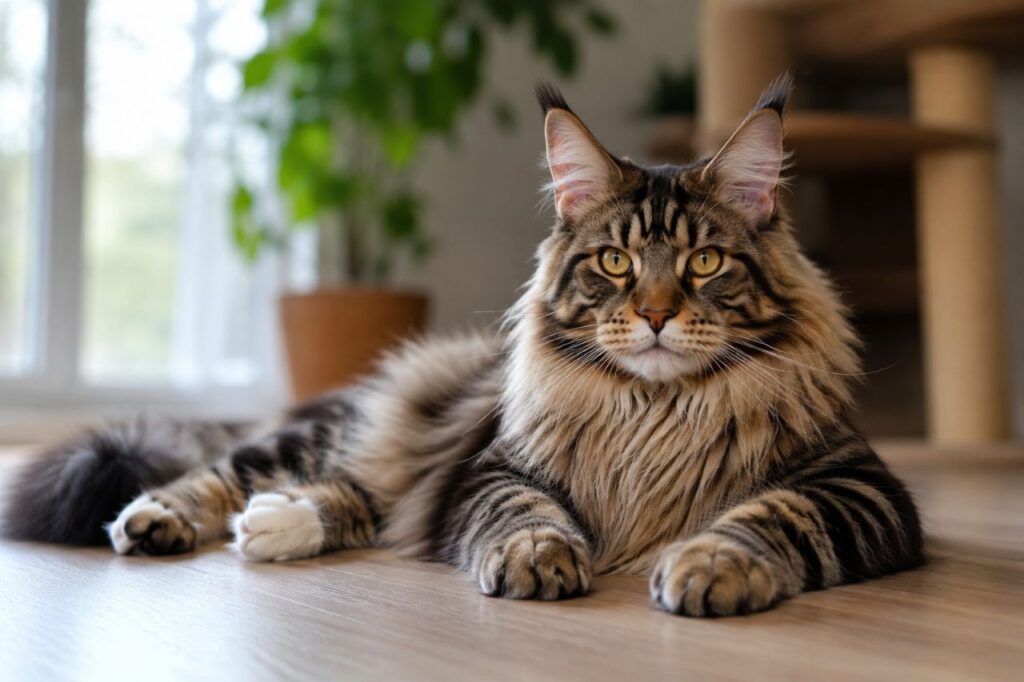
Slow-Maturing Large Breeds:
- Maine Coon
- Ragdoll
- Siberian
- Norwegian Forest Cat
Large breeds continue building muscle, increasing chest width, strengthening bone density, and filling out their bodies until they are 3 to 5 years old. A one-year-old Maine Coon is often still considered an adolescent rather than a fully mature adult.
Male and Female Cats Mature Differently
Sex also plays an important role in feline growth timelines.
- Female cats usually develop more quickly, completing most skeletal growth between 10 and 12 months.
- Male cats generally continue growing until 12 to 18 months, sometimes even longer depending on the breed.
Adult males usually have:
- Larger frames
- Broader shoulders
- Wider heads
- Greater muscle mass
- Higher average body weight
These differences are completely normal and primarily determined by genetics and hormones.
When Is a Cat Considered Fully Grown?
Many people assume a cat becomes an adult as soon as it reaches reproductive maturity. However, veterinarians separate feline adulthood into two distinct stages:
- Sexual maturity
- Physical maturity
These milestones occur at completely different times.
Sexual Maturity Happens First
Most kittens reach sexual maturity between 4 and 9 months of age.
- Male cats may begin spraying urine, marking territory, or showing increased interest in females.
- Female cats usually experience their first heat cycle during this period, often becoming more vocal, restless, and affectionate.
Although kittens are capable of reproduction at this age, they are not physically mature. Their skeleton, muscles, immune system, and internal organs continue developing for many more months. For this reason, veterinarians generally discourage breeding cats before they reach full physical maturity.
Physical Maturity Defines a Fully Grown Cat
From a veterinary perspective, a cat is considered fully grown only after its body has completely matured.
Signs of complete physical maturity include:
- Fully closed growth plates
- Stable height and body length
- Mature muscle development
- Consistent adult body weight
- Fully developed coat
- Mature immune function
- Complete organ development
Only after these milestones are reached can a cat truly be considered a fully developed adult.
Summary: Adult Age by Breed
Cats mature at different rates depending on their specific breed classification:
| Cat Breed Type | Estimated Timeline to Full Size | Growth Details |
| Domestic Mixed-Breeds (Shorthair/Longhair) | 12 to 18 Months | Reach adult size around 12 months; final muscle development continues to 18 months. |
| Medium-Sized Breeds (British Shorthair, Russian Blue, Abyssinian, etc.) | 12 to 15 Months | Typically finish growing and framing out within this window. |
| Large Breeds (Maine Coon, Ragdoll, Siberian) | 3 to 5 Years | Often reach partial maturity around 2 years; complete physical development takes up to 5 years. |
Can You Predict How Big Your Kitten Will Get?
Almost every cat owner asks the same question during the first year: How big will my kitten be when fully grown?
The good news is that a cat’s adult size isn’t completely unpredictable. While no method can guarantee an exact weight or body size, veterinarians can usually make a reliable estimate by looking at several key factors.
In most healthy cats, breed, genetics, sex, nutrition, and overall health provide a surprisingly accurate picture of adult size. When these factors are evaluated together, experienced veterinarians can often predict a kitten’s mature body size with a high degree of confidence.
Let’s look at the seven factors that have the greatest influence on adult cat size.
7 Factors That Determine Your Cat’s Adult Size
1. Breed Sets the Genetic Size Limit
Cat breed is the single biggest factor that determines how large a cat can become. Different breeds were developed for different body types, so their average adult size varies dramatically.
Generally speaking:
- Small cat breeds usually weigh between 5 and 8 pounds (2.3 to 3.6 kg).
- Medium-sized breeds typically reach 8 to 12 pounds (3.6 to 5.4 kg).
- Large cat breeds often weigh 15 to 25 pounds (6.8 to 11.3 kg) or even more.
For example, a Singapura is naturally much smaller than a Maine Coon, even when both receive excellent nutrition. Most mixed-breed house cats fall into the medium-sized category. However, if your kitten inherits genes from a larger breed, it may continue growing well beyond its first birthday. Likewise, kittens carrying genes from naturally small breeds usually remain more petite throughout adulthood.
2. Sex Makes a Noticeable Difference
Male and female cats rarely grow to exactly the same size. Even within the same litter, males usually develop:
- Larger bone structure
- Broader shoulders
- Wider chests
- More muscle mass
- Heavier adult weight
On average, male cats weigh 2 to 4 pounds more than females of the same breed. Female cats generally mature earlier and maintain a leaner, more refined body shape. This difference is completely normal and reflects natural hormonal development.
3. Genetics Influence Nearly Everything
While breed provides the overall framework, feline genetics determine the finer details. Your kitten inherits countless physical characteristics from its parents, including:
- Bone structure and body length
- Head shape
- Muscle potential
- Adult weight expectations
- Overall growth rate
If both parents are large, there’s a strong chance the kitten will also become a large adult cat. Likewise, kittens born to smaller parents often remain smaller throughout life. When possible, observing the size of the mother and father provides one of the most accurate ways to estimate future adult size.
4. Spaying and Neutering Affect Body Condition, Not Bone Size
Many owners believe that neutered cats automatically become larger. This is only partly true.
Current veterinary research shows that spaying and neutering do not increase bone length or overall skeletal size. Instead, sterilized cats often experience a slight reduction in metabolism after surgery. Unless calorie intake is adjusted, they may gain body fat more easily.
As a result, neutered cats often appear:
- Rounder
- Heavier
- Softer
- Less lean
This change reflects body composition rather than additional skeletal growth. Regular exercise and portion control help maintain a healthy body condition after sterilization.
5. Early-Life Environment Can Influence Growth
A kitten’s earliest weeks play an important role in lifelong development. Kittens raised in crowded litters sometimes compete intensely for milk during nursing. Those receiving less nutrition may grow more slowly during the first weeks of life.
Environmental stress also matters. Kittens raised in clean, stable homes with consistent food and veterinary care generally develop closer to their full genetic potential. In contrast, prolonged stress, poor sanitation, or inadequate nutrition during early development may slightly reduce final adult size. Once growth plates close, it’s impossible to completely reverse early growth deficits.
6. Nutrition Helps Your Kitten Reach Its Full Potential
Genetics determine the maximum size a cat can reach; kitten nutrition determines whether that potential is achieved. The first year of life is especially important because bones, muscles, organs, and the immune system are developing rapidly.
A balanced kitten diet should provide:
- High-quality animal protein
- Healthy fats
- Essential amino acids
- Calcium and phosphorus
- Vitamins and trace minerals
Poor-quality diets or long-term nutritional deficiencies can lead to slower growth, reduced muscle development, and a smaller adult body size. By contrast, a complete, balanced kitten food supports healthy skeletal growth without encouraging unhealthy weight gain.
7. Overall Health Has a Major Impact
Healthy kittens grow more consistently than those dealing with chronic medical problems. Several health conditions can interfere with normal feline development, including:
- Intestinal parasites (worms)
- Chronic digestive disorders
- Congenital abnormalities
- Long-term infections
- Nutrient absorption problems
Routine veterinary examinations, vaccinations, parasite prevention, and prompt treatment of illness all support healthy growth. If a kitten consistently falls behind normal growth expectations, a veterinarian can evaluate whether an underlying medical condition is responsible.
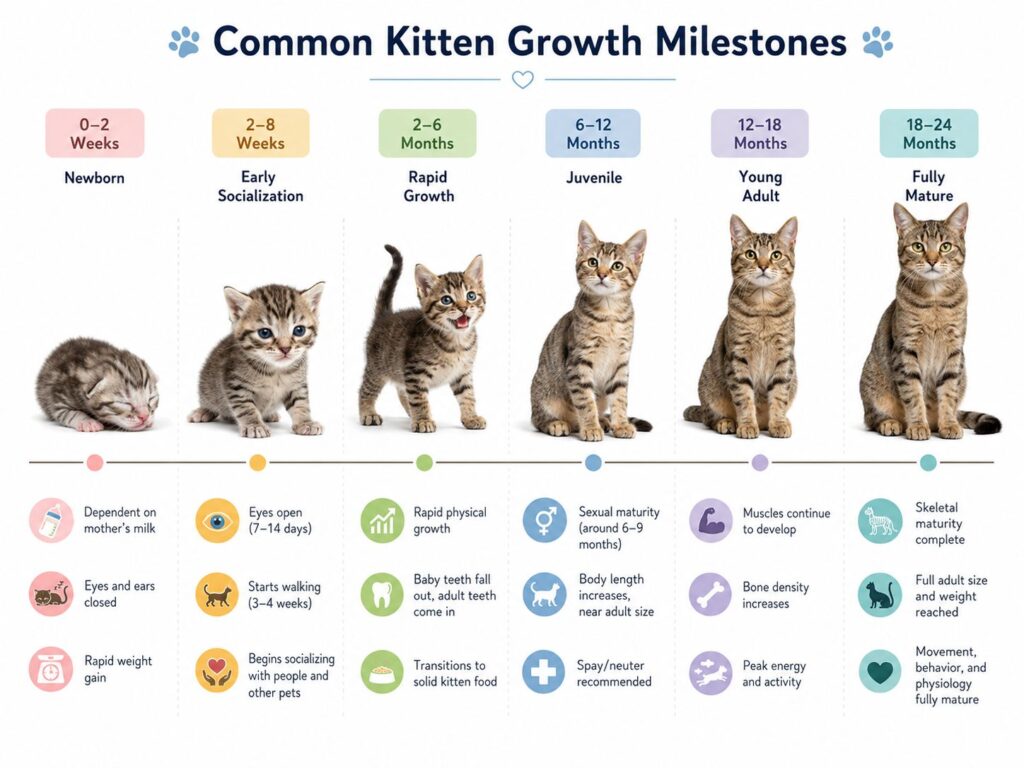
Common Kitten Growth Milestones
Although every cat develops at its own pace, most healthy kittens reach these developmental milestones within a fairly predictable timeline.
| Age | Developmental Milestone |
| Birth to 2 weeks | Eyes begin opening |
| 3 to 6 weeks | Eye color gradually changes |
| Around 3 months | Permanent eye color develops |
| 3 to 4 months | Baby teeth begin falling out |
| 6 to 8 months | Adult teeth fully erupt |
| 4 to 9 months | Sexual maturity develops |
| Around 12 months | Most domestic cats reach adult body size |
| Around 18 months | Physical development is usually complete |
| 3 to 5 years | Giant breeds (like Maine Coons) finish maturing |
These milestones provide helpful benchmarks for tracking kitten growth, but individual cats may reach them a little earlier or later without cause for concern.
Average Adult Cat Size and Healthy Weight
Many cat owners wonder whether their cat is too small, too large, or simply average. While every cat is unique, veterinarians use general body measurements and body condition scoring to determine whether a cat falls within a healthy range.
For most Domestic Shorthair and Domestic Longhair cats without large-breed genetics, the average adult measurements are:
- Weight: 6 to 12 pounds (2.7 to 5.4 kg)
- Body length (excluding the tail): 16 to 20 inches (40 to 50 cm)
- Shoulder height: 8 to 10 inches (20 to 25 cm)
Female domestic cats typically weigh 6 to 9 pounds, while males usually range from 8 to 12 pounds because of their larger frame and greater muscle mass.
Breed also makes a significant difference. Small breeds like the Singapura may weigh only 4 to 6 pounds, medium breeds such as the British Shorthair and American Shorthair generally weigh 8 to 13 pounds, while giant breeds like the Maine Coon and Ragdoll commonly reach 15 to 25 pounds, with exceptional individuals weighing even more.
Keep in mind that body condition is more important than the number on the scale. A healthy adult cat should have a visible waist when viewed from above, a slight abdominal tuck from the side, and ribs that can be felt easily under a thin layer of fat without being visibly prominent.
If your cat weighs less than expected, loses weight unexpectedly, or becomes overweight despite a balanced diet, schedule a veterinary examination to rule out underlying health issues.
Final Thoughts
Watching a kitten grow into an adult cat is one of the most rewarding parts of pet ownership. While every cat follows its own timeline, understanding when cats stop growing helps you provide the right nutrition, exercise, and veterinary care at every stage of life.
For most household cats, physical growth is largely complete between 12 and 18 months, while giant breeds may continue maturing for several more years. Remember that sexual maturity is not the same as physical maturity, and a cat’s final adult size is shaped by a combination of breed, genetics, sex, nutrition, overall health, and early-life care.
Rather than focusing only on body weight, pay attention to your cat’s overall body condition, energy level, muscle tone, and regular veterinary checkups. A lean, active, well-conditioned cat is far healthier than one that simply weighs more.
Every cat grows at its own pace, and small differences in feline development are completely normal. If your kitten seems unusually small, stops gaining weight, or shows signs of delayed growth, consult your veterinarian for a thorough evaluation. Early intervention can identify nutritional deficiencies, medical conditions, or developmental concerns before they affect long-term health.
By understanding your cat’s natural growth journey, you’ll be better equipped to support a lifetime of good health, healthy weight, and happy companionship.
Frequently Asked Questions
1. Do cats stop growing after one year?
Most domestic cats complete the majority of their growth by 12 months, but many continue developing muscle and body condition until 18 months. Large breeds such as the Maine Coon may continue growing for 3 to 5 years.
2. Do bigger paws mean a bigger adult cat?
Not always. Large paws can sometimes indicate future growth, especially in large breeds, but genetics and breed are much more reliable predictors of adult size.
3. Does neutering make cats bigger?
No. Spaying or neutering does not increase bone size or height. It may lower calorie requirements slightly, making weight gain more likely if food intake isn’t adjusted.
4. Can poor nutrition stunt a kitten’s growth?
Yes. Inadequate nutrition during the first year of life can affect bone development, muscle growth, and overall adult size. Feeding a complete, balanced kitten diet is one of the best ways to support healthy growth.
5. How can I tell if my kitten is growing normally?
Regular weight checks, routine veterinary visits, a balanced diet, and steady body condition are the best indicators. Growth naturally slows after six months, so a reduced growth rate doesn’t necessarily indicate a problem.
