

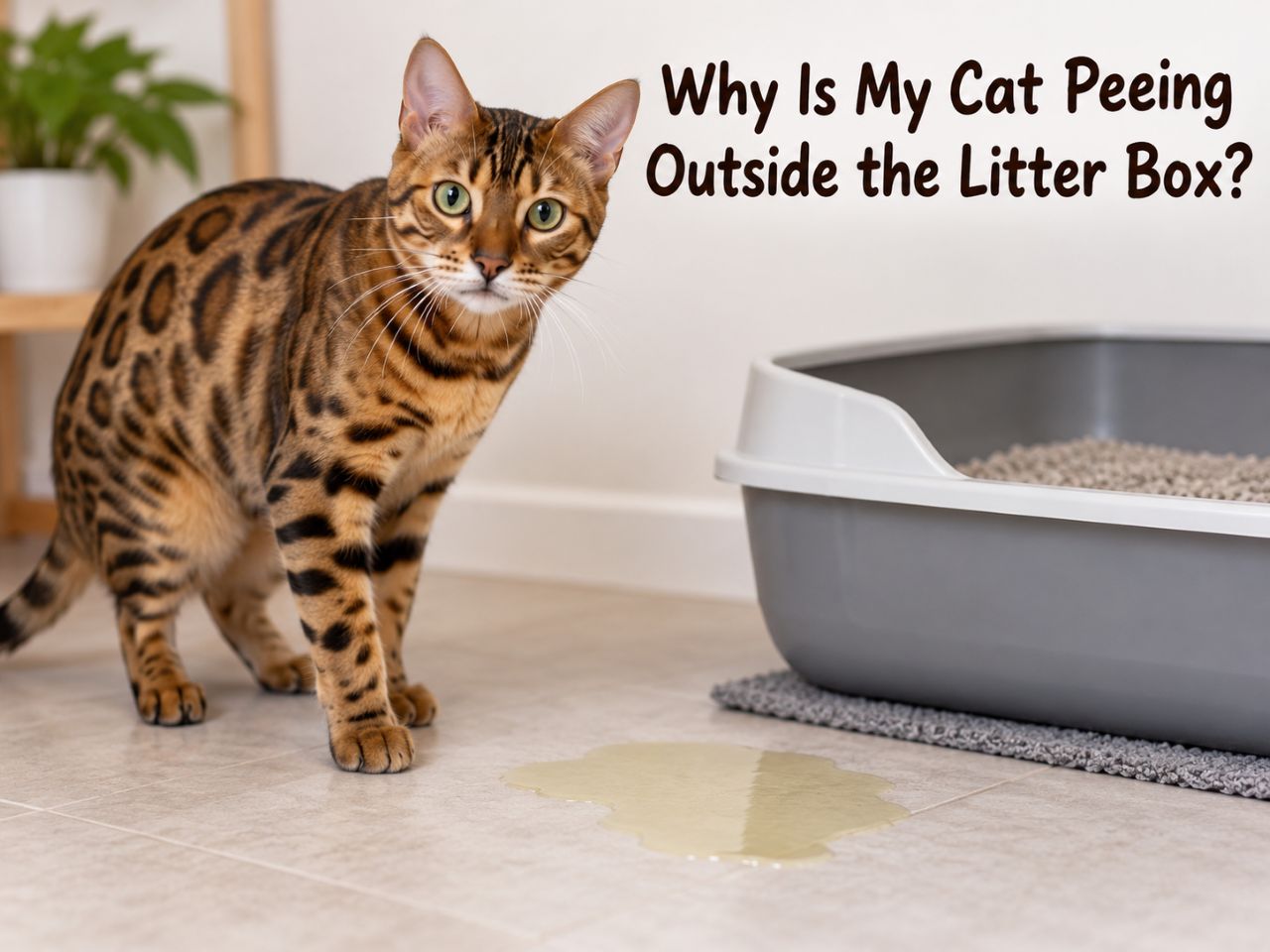
Finding a wet spot on the rug or a strong-smelling patch on the bed is frustrating. It’s also information. A cat that stops using the litter box is usually dealing with one of four things: pain or illness, a litter box problem, stress or conflict, or urine marking. It isn’t revenge, and it doesn’t mean your cat has forgotten their training.
A sudden change deserves a call to your veterinarian, even when your cat seems fine in every other way. Cats often hide pain. Urinary trouble may show up in the litter box before you notice changes in appetite, energy, or mood.
There is one exception to the “make an appointment” approach: a cat that keeps trying to urinate but produces little or no urine may have a blocked urethra. That is an emergency, especially in male cats.
Check for a urinary emergency before anything else
Go to an emergency veterinary clinic now if your cat:
- repeatedly squats or visits the box but produces no urine or only a few drops
- becomes weak, unusually quiet, unwilling to eat, or starts vomiting while struggling to urinate
- appears severely distressed or has a swollen, painful-looking abdomen and cannot urinate
Call your regular veterinarian promptly for blood in the urine, crying during urination, frequent small amounts, or repeated genital licking. If you cannot tell whether urine is coming out—or those signs worsen—treat it as an emergency.
Don’t wait until morning to see if a blocked cat improves. Don’t press on the abdomen, try to express the bladder, give human pain medicine, or use leftover antibiotics. A veterinarian needs to relieve an obstruction and check the effects on the cat’s body.
Passing a few drops does not make repeated straining safe to watch at home. Partial obstruction, bladder inflammation, crystals, and stones can look similar without an exam.
Is your cat peeing or spraying?
The mark itself and your cat’s posture can help you describe the problem to your vet. They don’t provide a diagnosis, but they point the investigation in the right direction.
| What you notice | Regular urination outside the box | Urine spraying |
|---|---|---|
| Posture | Usually squatting | Usually standing with the tail raised; the tail may quiver |
| Surface | Often a horizontal surface such as carpet, a bed, laundry, or the floor | Often a vertical surface such as a wall, door, curtain, or furniture side |
| Amount | Usually a puddle or a normal bladder-sized amount | Usually a small amount |
| Pattern | May happen near the box or on a preferred texture | Often appears near doors, windows, hallways, or socially important areas |
| Likely concerns | Urinary pain, increased urine output, mobility trouble, or box aversion | Territorial communication, hormones, fear, or social stress |
A spraying cat may still use the litter box normally. Cats can also mark while squatting, so the distinction isn’t always tidy. If you never see the event, a small home camera can capture posture and help your veterinarian or behaviorist understand what’s happening.
Medical problems should be ruled out first
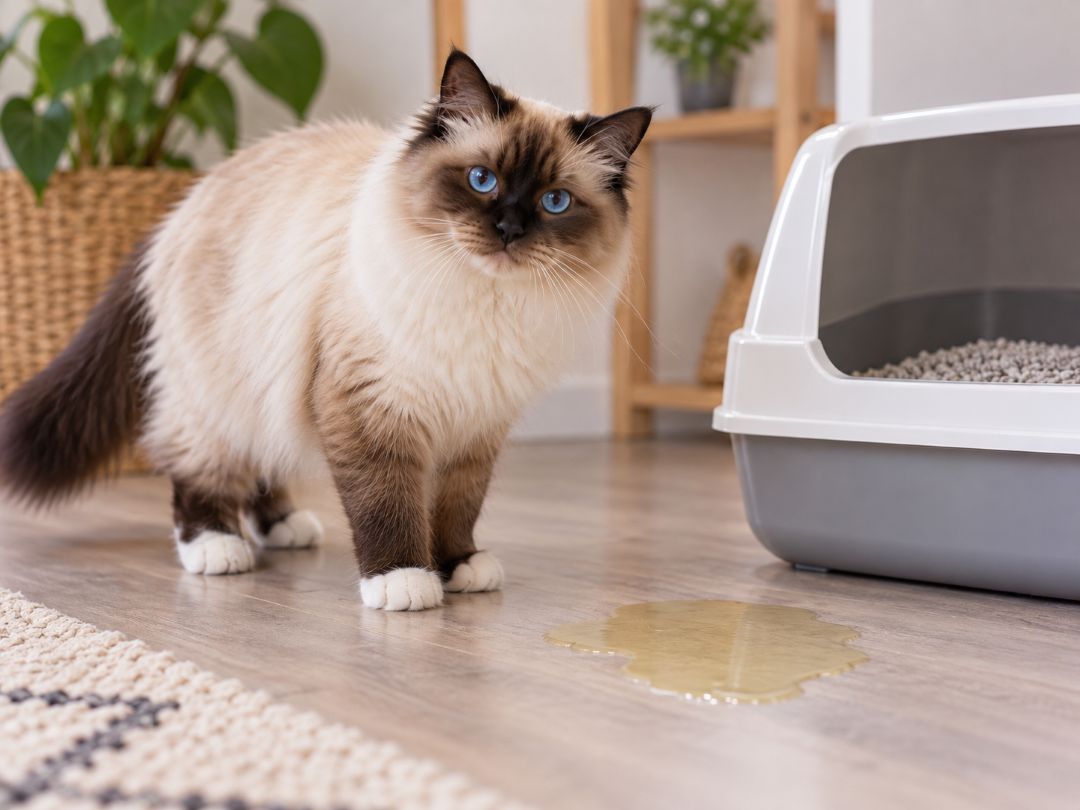
When a previously reliable cat starts having accidents, it’s tempting to blame a dirty box or a recent move. Those details matter, but health comes first.
Urinary pain and urgency
Inflammation of the bladder or urethra can create an intense urge to pee. Your cat may not reach the box, may associate the box with pain, or may search for a different surface. Possible causes include:
- feline idiopathic cystitis (FIC), a painful bladder condition that can flare during stress
- urinary crystals or bladder stones
- a bacterial urinary tract infection
- inflammation or narrowing of the urethra
- partial or complete urinary obstruction
People often call any urinary accident a UTI, but the same signs can come from several different conditions. Giving an antibiotic without testing may miss the real cause. A urinalysis, and sometimes a urine culture or imaging, helps the veterinarian tell them apart.
Watch the size as well as the number of wet spots. Many tiny spots paired with repeated squatting suggest urgency or difficulty urinating. That pattern is different from several unusually large puddles.
Conditions that make a cat produce more urine
Kidney disease, diabetes, and hyperthyroidism can increase thirst and urine output. A cat may fill the box faster, have trouble holding a full bladder, or simply fail to reach the box in time.
Tell your veterinarian if you’re refilling the water bowl more often, finding much larger clumps, noticing weight loss, or seeing a change in appetite.
Pain, limited mobility, and aging
Arthritis, an injury, weakness, or another painful condition can turn a tall-sided box or a basement staircase into a barrier. A senior cat may stand beside the box, try to step in, and decide the floor hurts less. Age-related cognitive changes can also affect how easily a cat finds or remembers a distant box.
A low entrance and a large open box on the floor where your cat spends most of the day may help. Still mention the change to your vet; trouble entering the box can be an early sign of pain.
What the veterinary visit may include
Your vet will ask when the accidents began, how much urine you see, and what changed at home. A physical exam and urinalysis are common starting points. A urine culture, bloodwork, X-rays, or ultrasound may follow. Bring photos or video and brief notes on drinking, appetite, vomiting, genital licking, and box visits.
The litter box may not work for your cat anymore
A setup that looks perfectly reasonable to a person can feel cramped, dirty, exposed, or painful to a cat. Preferences can also change with age or after one frightening experience.
The box is too dirty
Scoop every box at least once a day and more often when several cats use it. Wash it periodically with hot water and mild, unscented soap, then rinse and dry it well. Strong disinfectants, air fresheners, and ammonia-based products can make the area less inviting.
The box is too small or hard to enter
Many store-bought boxes are cramped. Aim for about one and a half times your cat’s length, measured from the nose to the base of the tail. Your cat should be able to turn, dig, squat, and leave without squeezing against the sides.
An uncovered box is a good starting point because it offers room, airflow, and a clear view of the surroundings. A cat that urinates high or over the edge may need a larger box with high sides rather than a cramped covered box. Kittens, senior cats, and cats with joint pain need at least one low-entry option.
An automatic box may frighten a cautious cat, so keep a regular, nonmoving option available.
The litter feels or smells wrong
Many cats favor a soft, fine-grained, unscented clumping litter. Heavy perfume can be overpowering, while rough pellets may bother sensitive paws.
Avoid replacing every box with a new litter overnight. Set up a second box beside the familiar one, fill it with the new option, and let your cat choose. About two inches of litter gives most cats enough material to dig and cover without sinking deeply. Your cat’s choice matters more than the packaging claim.
The location feels unsafe
A quiet box can still be a bad box if it sits in a closet with one exit, beside a noisy washer, behind a dog’s bed, or at the end of a hallway another cat controls. Cats want privacy without feeling trapped.
Choose a calm, easy-to-reach location with more than one path of approach when possible. Keep boxes away from food and water. In a multistory home, place at least one box on every level your cat uses.
Multi-cat tension is easy to miss
Cats don’t have to fight openly for one to intimidate another. Staring from a hallway or quietly blocking the stairs may keep a less confident cat away. You might only see urine in an open spot where the cat has a view and an escape route.
Follow the one litter box per cat, plus one extra guideline. A two-cat home starts with three boxes. Put them in separate areas; three boxes lined up in one room function more like one bathroom from a cat’s point of view.
Spread out food, water, resting spots, scratching surfaces, hiding places, and perches too. If one cat follows, corners, or displaces another, ask your veterinarian or a qualified feline behavior professional about a gradual reintroduction.
Stress can affect both behavior and the bladder
Moving, remodeling, houseguests, a new baby, a schedule change, neighborhood cats outside the window, or a new pet can all unsettle a cat. A single loud noise near the box can create avoidance. Ongoing stress can also be connected with flares of feline idiopathic cystitis, so “medical” and “behavioral” aren’t always separate categories.
Keep meals and playtime predictable, and provide places to hide and climb. If outdoor cats trigger spraying at doors or windows, block the view and use humane ways to discourage visitors from approaching.
Pheromone products may be useful as one part of a broader plan, but they won’t fix a painful bladder, an inaccessible box, or bullying between cats. Ask your veterinarian before trying supplements or anxiety medication.
What the accident location can tell you
Treat these patterns as clues rather than proof:
- Right beside the litter box: The box may be hard to enter, too small, dirty, or painful to use. Urinary urgency can also cause a cat to miss by inches.
- Over the edge of the box: The box may be too short or cramped, or your cat may not be squatting comfortably because of pain or stiffness.
- On the bed or in laundry: Soft, absorbent fabric, familiar scent, stress, or lingering urine odor may draw a cat back. It is not a personal insult.
- Near doors and windows: Small marks on vertical surfaces often point toward urine marking, sometimes triggered by outdoor cats.
- In the bathtub or sink: The cat may prefer a smooth, easy-to-reach surface, but urinary discomfort still has to be ruled out.
- In a room away from other pets: The route to the regular box may feel unsafe, especially in a multi-cat home.
How to stop a cat from peeing outside the litter box
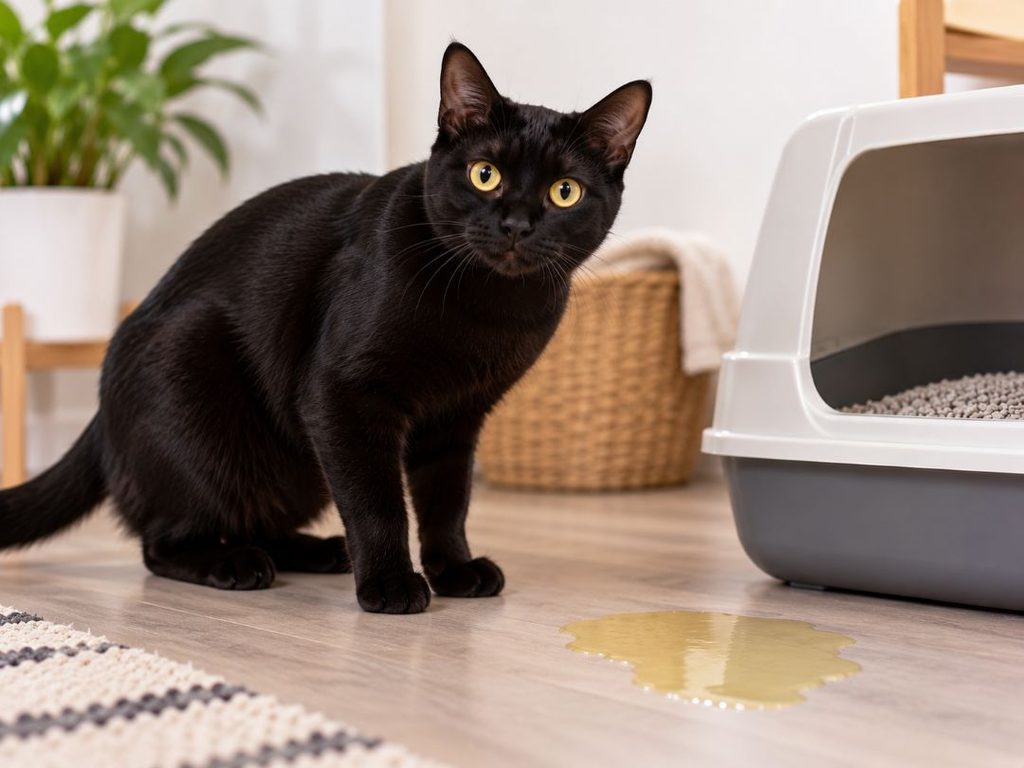
Solve the reason rather than only protecting the carpet. Work through this reset in order.
Arrange a medical check
Call your veterinarian for any new or repeated change. Tell the clinic whether your cat is male or female, how often they try, and whether you see a stream, drops, or no urine. Use an emergency clinic for the warning signs listed earlier.
Add a better box before removing the old one
Set up a large, uncovered box in a quiet, accessible place, with a low entrance if mobility may be an issue. If accidents happen in one spot, temporarily put a box there. Once your cat uses it reliably, move it only through a gradual plan.
Don’t move the only familiar box or change every feature at the same time. Side-by-side choices show you whether your cat prefers a different litter, box style, or depth.
Keep a simple litter box routine
Scoop at least daily, top up litter as needed, and wash the box regularly with mild soap and hot water. Check more often in a multi-cat home.
Remove the urine odor, not just the stain
Blot fresh urine, then use an enzymatic cleaner made for pet urine according to its label. It needs to reach as deeply as the urine did, especially on carpet, mattresses, and upholstery. Let the area dry and repeat if odor remains.
Avoid ammonia-based cleaners and strongly perfumed sprays, which can leave an irritating or urine-like smell.
Close off a repeat location while it dries if you can. After it is fully cleaned, using the area for play, treats, or rest may help change its meaning. Never place food beside an active litter box.
Reduce pressure around shared resources
Separate litter boxes instead of clustering them. Make sure no box can be guarded from a single doorway. Add visual barriers, perches, hiding spots, and separate feeding and water stations when cats avoid one another.
If you don’t know which cat is urinating, use a camera rather than guessing. Your veterinarian can also help you plan a safe way to identify the cat without increasing conflict.
Stay calm and skip punishment
Yelling, spraying water, rubbing a cat’s nose in urine, or carrying them to the box after an accident won’t explain what you want. It can make people, the room, or the litter box feel less safe, adding stress to the original problem.
Quietly clean the spot. You can reward normal box use with a treat or play, but don’t hover; privacy may be part of what your cat needs.
Get specialized help when the problem continues
Keep your veterinarian updated if accidents continue after treatment, return, or appear with new symptoms. Some cases combine causes, such as arthritis plus box aversion or bladder pain plus social conflict.
A board-certified veterinary behaviorist can review the home layout, social relationships, and learned habits. Medication may help diagnosed anxiety or marking, but only alongside environmental changes and veterinary monitoring.
What not to do
- Don’t assume your cat is being stubborn or spiteful.
- Don’t delay care when your cat strains or produces little to no urine.
- Don’t restrict drinking water to reduce accidents.
- Don’t give antibiotics, pain relievers, urinary diets, or supplements without veterinary direction.
- Don’t cluster every box or leave your cat without a familiar option during changes.
- Don’t mask urine with perfume; neutralize it with an enzymatic product.
A better way to read the message
When you ask, “Why is my cat peeing outside the litter box?”, start with the body, then look at the box and the home. Rule out pain, provide clean and accessible boxes in separate locations, remove old odors, and reduce social pressure.
At Catsoria, we view a litter box accident as a clue, not a character flaw. Finding the cause is kinder to your cat and far more effective than trying to correct the puddle after it appears.
This Catsoria article provides general educational information and does not replace an examination or diagnosis from your veterinarian.
Frequently Asked Questions
1. Why is my cat suddenly peeing outside the litter box?
A sudden change may come from urinary pain, increased urine production, mobility trouble, stress, or a bad litter box experience. Schedule a veterinary visit. Repeated straining with little or no urine is an emergency.
2. Why is my cat peeing right outside the litter box?
The entrance may hurt, the box may be cramped or dirty, another pet may block access, or urinary urgency may cause your cat to miss. Try a larger low-entry box, but arrange a health check too.
3. Why is my cat peeing outside the litter box but still pooping in it?
Urination may hurt even when defecation does not. Some cats also prefer separate boxes for urine and stool. Add a box while your veterinarian rules out urinary disease.
4. Why is my cat peeing on my bed?
A bed is soft, absorbent, and full of familiar scent. It may appeal to a stressed cat or one with a surface preference, mobility trouble, or urinary pain. Clean the bedding, protect the mattress, limit access temporarily, and arrange a veterinary exam.
5. Can a dirty litter box make a cat pee elsewhere?
Yes. Scoop at least daily, provide enough separate boxes, and wash them with mild, unscented soap. A sudden change or urinary symptoms still calls for a vet visit.
6. Will vinegar stop a cat from peeing in the same place?
Vinegar may change the smell without removing urine compounds from porous material. An enzymatic pet-urine cleaner is a better choice. Avoid ammonia and spot-test any product.
Editorial Sources
- Feline Veterinary Medical Association: Feline House-Soiling
- Feline Veterinary Medical Association: Positive Reinforcement Training—Addressing Undesirable Behavior
- Cornell Feline Health Center: Feline Lower Urinary Tract Disease
- Cornell Feline Health Center: Feline Behavior Problems—House Soiling
- American College of Veterinary Surgeons: Urinary Obstruction in Male Cats
- The Ohio State University Indoor Pet Initiative: Litter Boxes