

Have you ever watched your cat sniff a grocery bag, your shoes, or one tiny corner of the sofa as if it were reading a secret message? To us, it may look random. To a cat, that little sniff is packed with information.
Most people think dogs are the champions of smell, but the cat nose is far more powerful than many pet parents realize. A cat’s nose is not just for finding food. It helps with survival, communication, territory, appetite, comfort, and even recognizing the people they love.
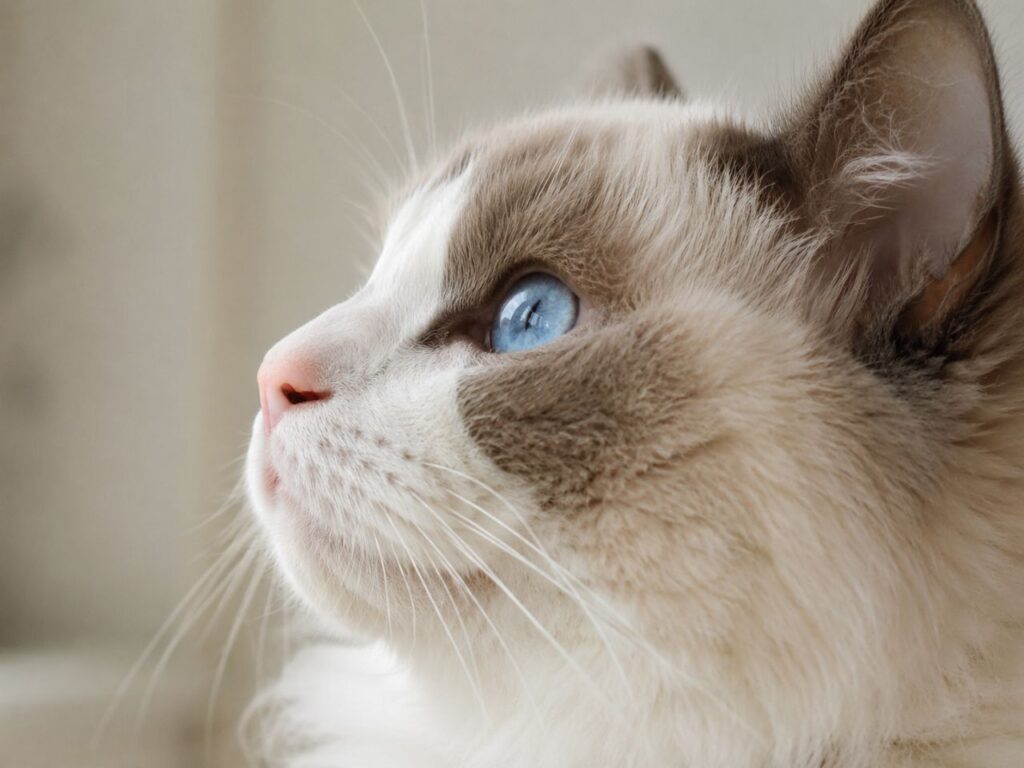
Behind that small pink, black, or speckled nose is a highly sensitive feline olfactory system that shapes how cats understand the world. Here are 12 fun and surprising facts about cat noses and cat sense of smell that every cat lover should know.
The 12 Facts About Cat Noses
1. Every cat has a unique nose print, just like a fingerprint
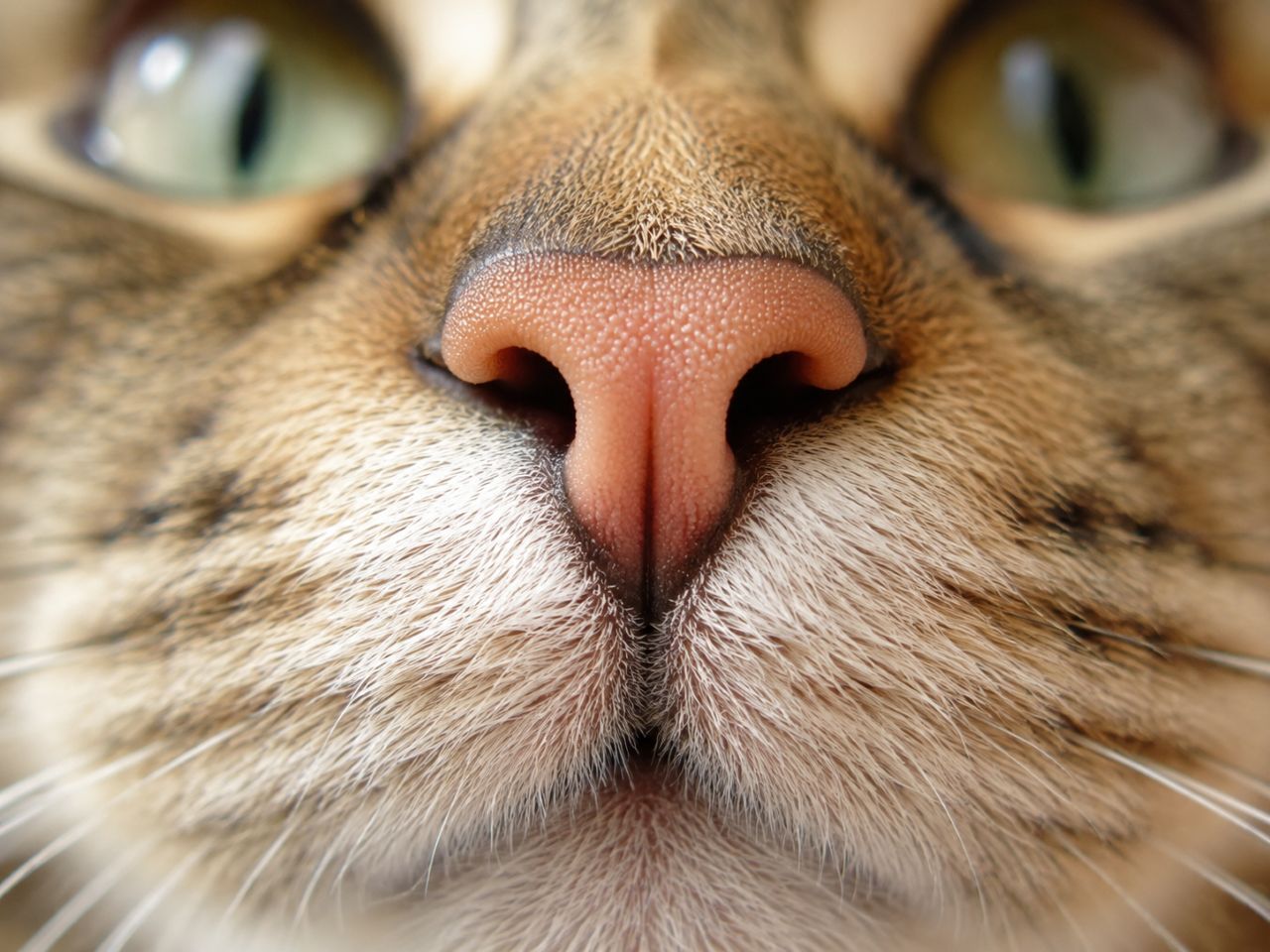
At first glance, many cat noses seem similar. Some are pink, some are black, some are gray, and some have adorable little spots. But look closer and you’ll find something special.
Every cat’s nose has its own pattern of tiny bumps, ridges, lines, and grooves. No two cats have exactly the same cat nose print. That makes a cat’s nose pattern comparable to a human fingerprint.
These little nose markings are formed naturally and usually stay consistent throughout a cat’s life. They do not simply disappear as a cat grows older or sheds fur.
Different coat colors and breeds may make the nose pattern easier or harder to see. A light-colored cat may have a clearer pink nose, while a tortoiseshell or calico cat may have a mottled, mixed-color nose that looks like a tiny watercolor painting.
Some animal experts have even suggested that nose prints could help identify lost pets. In real life, this method is not widely used because most cats are not thrilled about close-up nose photography. Still, your cat’s nose print is one of its most personal little signatures.
2. Cats have a much stronger sense of smell than humans
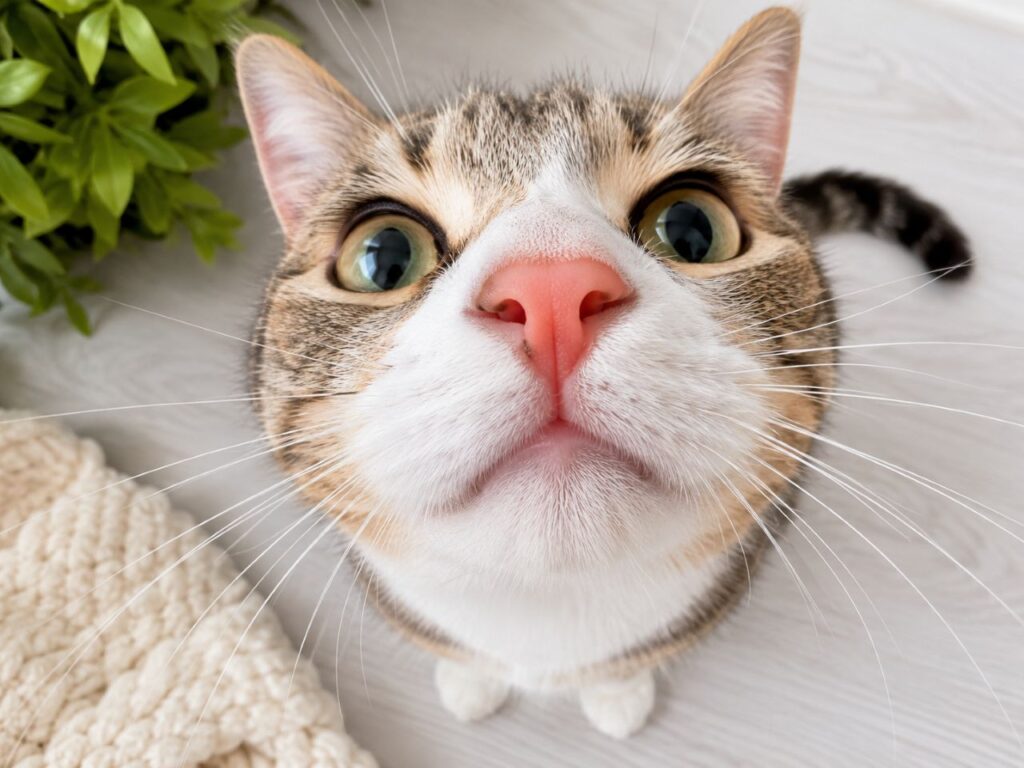
A cat’s sense of smell is one of its strongest survival tools. While humans rely heavily on sight, cats depend far more on scent.
Humans have only a few million scent receptors. Cats have tens of millions to hundreds of millions of odor-sensitive cells, depending on the source and how they are measured. That means a cat’s nose can pick up scent details that humans would never notice.
This is why your cat may smell dinner before you open the can, notice another animal on your clothes, or react to a visitor long before you understand why.
The inside of a cat’s nasal cavity is built to trap and process scent particles. It works almost like a tiny scent maze, helping the cat collect more information from the air. For a cat, a room is not just a room. It is a layered map of smells: food, people, furniture, other pets, cleaning products, outdoor air, and every small change in between.
3. Cats have a second scent organ called the Jacobson’s organ
Cats do not rely only on their visible nose. They also have a special scent-processing organ in the roof of the mouth called the Jacobson’s organ, or vomeronasal organ.
This organ helps cats analyze pheromones, which are chemical signals released by other animals. These signals can carry information about territory, mating, stress, health, and social status.
You may have seen your cat make a strange face after smelling something interesting. The mouth opens slightly, the upper lip curls, and the cat stares into space for a second. It may look funny, dramatic, or mildly offended.
That expression is called the Flehmen response. Your cat is pulling scent particles toward the Jacobson’s organ to “read” them more deeply.
A simple way to think about it: the nose smells ordinary odors, while the Jacobson’s organ reads biological messages.
4. Cats can detect scent signals from surprisingly far away
A cat’s nose is not just sensitive. It is also excellent at tracking scent over distance.
Outdoor and unneutered cats may detect pheromone signals from other cats in the area, especially during mating periods. This is one reason some indoor cats suddenly become restless, vocal, or eager to escape when nearby cats are in heat.
Cats can also remember scent trails and familiar smells for a long time. Their scent memory helps them recognize places, people, other animals, and territory.
Food scents are another powerful trigger. Many cats can notice food from another room, especially if it has a strong meat aroma. Even a sealed treat bag may not be as “sealed” as you think. To your cat, it may be quietly announcing itself from the pantry.
5. A moist cat nose helps capture scent particles
Many healthy cats have a cool, slightly moist nose. That little bit of moisture is useful because scent particles often stick better to damp surfaces.
The thin layer of moisture on the nose helps trap odor molecules so the scent receptors can process them more effectively. Cats also lick their noses to clean away dust and refresh that moisture.
But here is where many cat owners worry too much: a dry cat nose does not automatically mean illness.
A cat’s nose may feel dry after sleep, during warm weather, after exercise, or simply because of the room’s humidity. What matters more is the overall condition of the nose and the cat’s behavior.
A dry nose paired with cracking, bleeding, thick discharge, loss of appetite, sneezing, coughing, or low energy deserves a call to the vet. A warm or dry nose by itself is not enough to diagnose a problem.
6. Cats recognize people mostly by smell
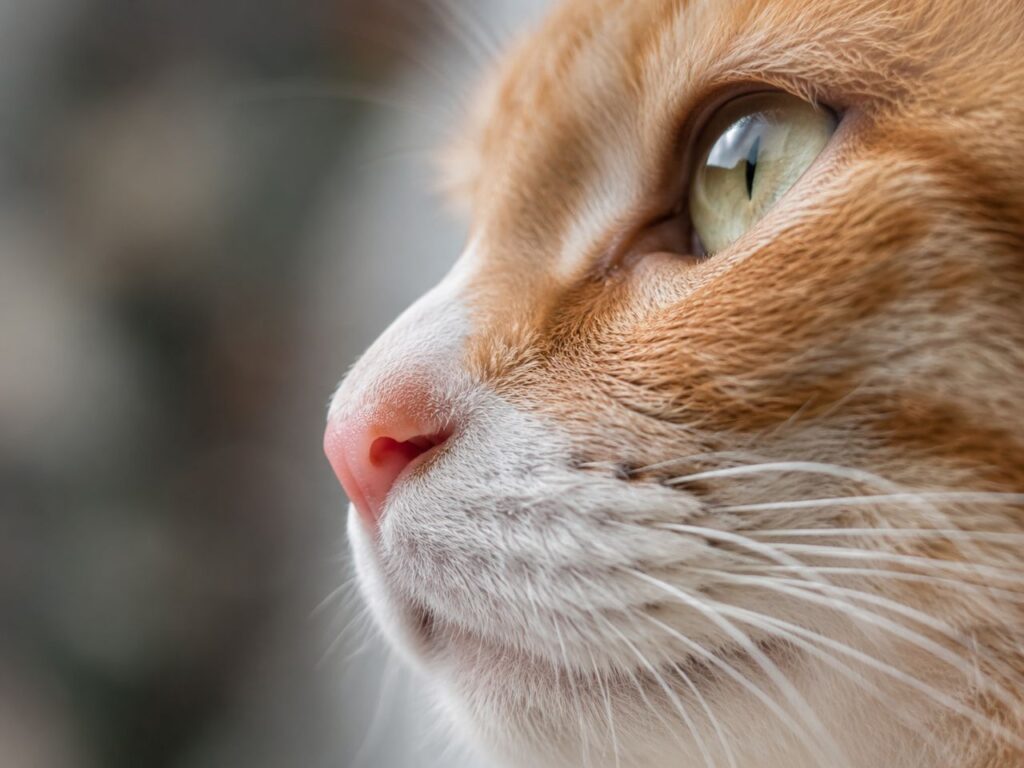
Your cat may know your face, your voice, and your daily routine, but scent plays a huge role in recognition.
Cats are not built to study human faces the way humans study each other. They notice movement well, but scent gives them deeper and more reliable information.
Your body odor, laundry detergent, shampoo, lotion, sweat, home scent, and even the smell of your shoes create a unique scent profile. To your cat, that profile is “you.”
This is why a cat may act cautious if you come home smelling like another animal, a vet clinic, strong perfume, smoke, or unfamiliar cleaning products. You may look the same, but your scent story has changed.
When cats rub their cheeks, head, or body against you, they are not just being cute. They are leaving their own scent on you. In the cat world, shared scent means comfort, belonging, and safety.
7. A cat’s appetite is strongly guided by smell
Cats are famously picky, but much of that pickiness starts with the nose.
Compared with humans, cats have a more limited taste range. They are especially driven by aroma when deciding whether food is fresh, safe, and worth eating.
This is why a cat may reject food that seems perfectly fine to you. Dry food that has gone stale, wet food that has been sitting out too long, or refrigerated food served too cold may smell dull or unpleasant to your cat.
Warm food usually smells stronger, which is why gently warming wet food can sometimes help a picky cat eat. Never serve food hot, but bringing it closer to room temperature can make the aroma more appealing.
When cats are sick, congested, or dealing with upper respiratory issues, their sense of smell may drop. Once food loses its smell, it often loses its appeal. That is one reason sick cats may stop eating quickly and need attention sooner than people expect.
8. Cats build a “scent map” of their home
When your cat sniffs a new box, a guest’s bag, a fresh blanket, or a rearranged room, it is not being nosy for no reason. It is updating its scent map.
Cats use smell to understand where they are and whether the environment feels safe. Every room, object, person, and pet has a scent label.
When something changes, the map changes too.
A new couch, new litter box, new cat tree, visiting dog, fresh paint, or scented candle can all disturb your cat’s familiar scent world. Your cat may sniff repeatedly, walk the same path several times, or rub its cheeks on objects to make the space smell familiar again.
This behavior is normal. It helps cats feel secure. For sensitive cats, keeping some familiar blankets, beds, or scratching posts during changes can make a big difference.
9. Cat nose color is mostly controlled by genetics
A cat’s nose color is not a simple health meter.
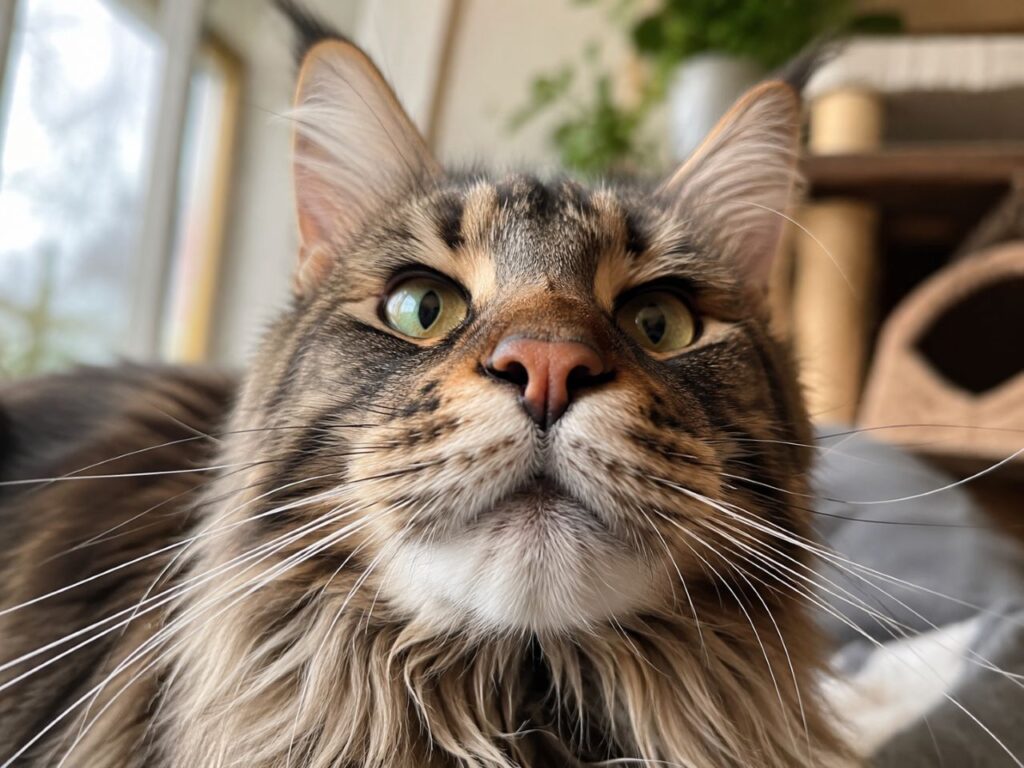
Pink, black, brown, gray, brick-red, spotted, or mixed-color noses are usually determined by genetics and coat color. A black cat often has a dark nose. A white or light-colored cat may have a pink nose. Calico and tortoiseshell cats often have beautifully mixed nose colors.
Small changes in shade can happen with age, temperature, or circulation. Some cats may look a little pinker after play or warmer when relaxed.
What matters is not the natural color, but sudden or unusual changes. Pale, bluish, yellowish, swollen, crusty, bleeding, ulcerated, or painful-looking noses should be checked by a veterinarian.
A dark nose is not “less healthy.” A pink nose is not automatically “better.” It is simply part of your cat’s natural design.
10. Strong scents can overwhelm cats
Because cats have such sensitive noses, scents that seem pleasant to humans may feel intense or irritating to them.
Perfume, air fresheners, scented litter, scented candles, essential oil diffusers, disinfectant sprays, smoke, incense, and strong cleaners can all bother a cat’s nose and respiratory system.
Essential oils deserve extra caution. Cats are especially sensitive to many concentrated oils, and exposure through inhalation, skin contact, or grooming residue can be risky.
Common household scents like citrus, peppermint, tea tree, eucalyptus, cinnamon, onion, garlic, and strong floral fragrances may also be unpleasant or unsafe for cats.
If your cat leaves the room when you spray perfume or light a candle, believe the cat. Its nose is not being dramatic. It is protecting a very delicate sensory system.
For a cat-friendly home, choose unscented or low-scent products when possible, ventilate rooms well, avoid diffusers around cats, and never apply essential oils directly to your pet.
11. Kittens depend on smell before sight and hearing
Newborn kittens are tiny, fragile, and almost completely dependent on smell.
At birth, kittens cannot see or hear well. Their eyes and ears are still developing. But their sense of smell helps them find their mother, locate milk, and stay close to the warm, familiar scent of the nest.
A kitten uses scent to recognize its mother, littermates, and feeding area. Without this early scent ability, a newborn kitten would struggle to nurse and survive.
This is one reason strong cleaning products or heavy fragrances should be avoided around newborn kittens and nursing cats. Their world is built around scent, warmth, and touch.
For kittens, smell is not just interesting. It is life support.
12. A cat’s sense of smell can change with age and health
A cat’s sense of smell is not fixed forever. It can change with age, illness, stress, and environment.
Young and healthy adult cats usually have sharp scent detection. They sniff, explore, investigate new objects, and respond quickly to food smells.
Senior cats may lose some scent sensitivity as the nasal tissues and sensory systems age. This can affect appetite, curiosity, and confidence. An older cat that eats less may not dislike the food. It may simply not smell it as strongly anymore.
Health problems can also reduce smell. Colds, nasal inflammation, respiratory infections, dental disease, mouth pain, and congestion may all make food less appealing and the world harder to read.
If your cat suddenly stops smelling food, refuses meals, sneezes often, has nasal discharge, or seems unusually tired, it is worth contacting your vet. Changes in scent behavior can be an early clue that something is off.
Final Thoughts
A cat’s nose may be small, but it carries a huge part of your cat’s world.
Through scent, cats recognize family, judge food, read other animals, mark safe spaces, find comfort, avoid danger, and understand their environment. What looks like a quick sniff to us may be a full page of information to them.
When you understand how powerful the cat sense of smell really is, many feline behaviors start to make more sense. The sniffing. The rubbing. The sudden suspicion after you visit another pet. The refusal to eat cold food. The dislike of scented litter or strong candles.
Your cat is not being strange. It is being a cat.
So the next time your cat presses that tiny nose against your hand, your shoe, a box, or the corner of the couch, remember this: your cat is reading the room in a language made of scent.
And in that quiet little nose-boop, there is a whole hidden world.
Frequently Asked Questions
1. How strong is a cat’s sense of smell compared to humans?
A cat’s sense of smell is incredibly powerful—roughly 9 to 14 times stronger than a human’s. While humans have about 5 million scent receptors, cats possess anywhere from 45 million to over 200 million odor-sensitive cells depending on the breed. This highly advanced feline olfactory system allows them to detect subtle environmental changes, identify pheromones, and track scents from impressive distances.
2. Why do cats sniff everything with their mouths open?
When a cat opens its mouth slightly and curls its upper lip after sniffing something, it is triggering the Flehmen response. This behavior allows them to bypass the regular nostrils and funnel scent particles directly into the Jacobson’s organ (or vomeronasal organ) located in the roof of their mouth. This specialized organ functions like a biological dashboard, helping them decode complex chemical messages and pheromones left by other animals.
3. How do cats recognize their owners?
While cats can recognize your face and the tone of your voice, they primarily identify you by your unique scent profile. Your body chemistry, laundry detergent, soap, and home environment combine to create a distinct smell that means safety and comfort to your pet. When they engage in cat scent marking by rubbing their cheeks or bodies against you, they are blending their scent with yours to claim you as family.
4. Are essential oils safe for cats to smell?
No, many essential oils are highly toxic and unsafe for cats. Because a cat’s nose is exceptionally sensitive, strong aromas from diffusers, candles, or sprays can easily overwhelm and irritate their respiratory systems. Furthermore, cats lack specific liver enzymes required to metabolize the volatile organic compounds in oils like tea tree, eucalyptus, citrus, and peppermint, making both inhalation and skin contact risky.
5. Why do sick or older cats stop eating?
A cat’s appetite and smell are directly linked; they rely on aroma to stimulate their desire to eat far more than taste. If a feline experiences senior cat smell loss due to aging nasal tissues, or if a younger cat suffers from a congested respiratory infection, food loses its appeal entirely. Warming up wet food to enhance its aroma can often encourage a congested or older cat to eat.
