
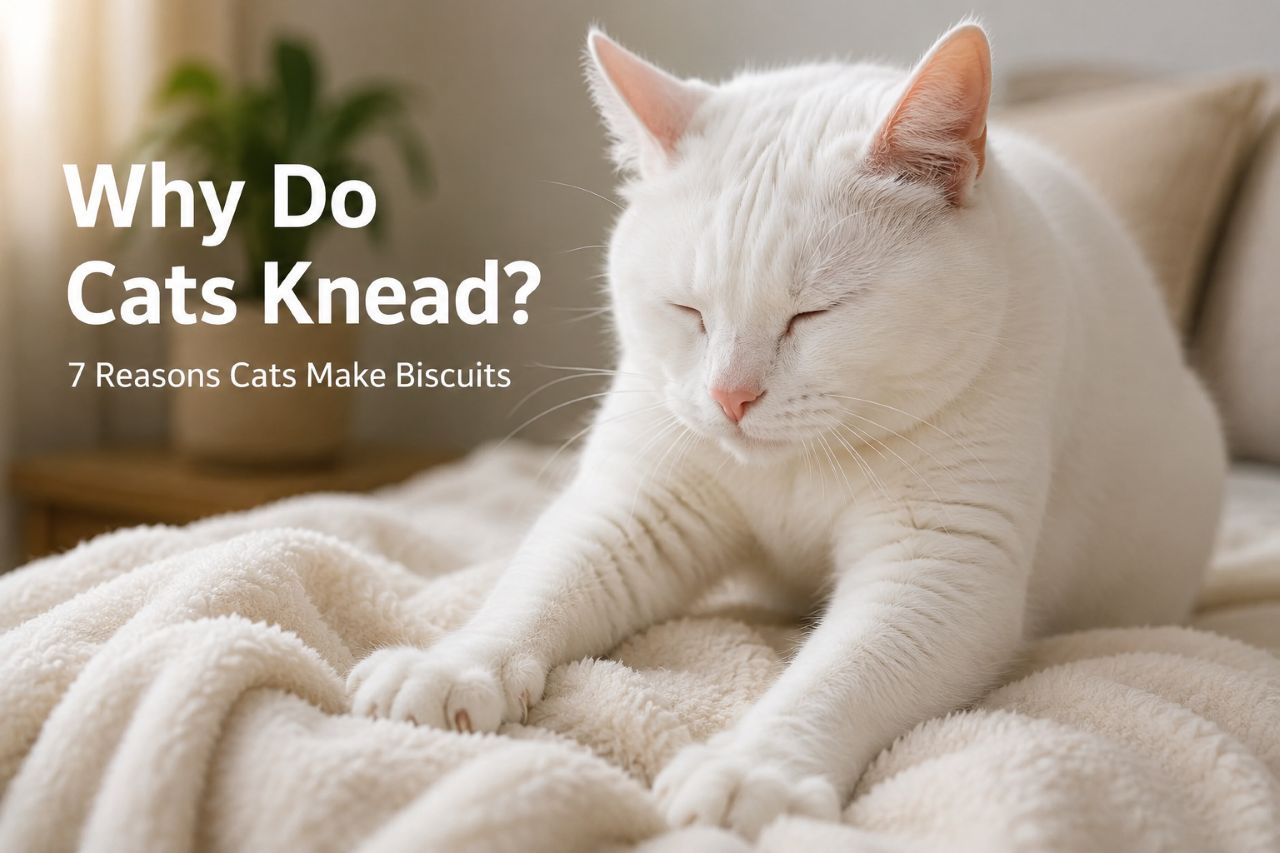
Your cat climbs onto your lap, turns in a small circle, and begins pressing one front paw down, then the other. Sometimes there is purring. Sometimes there is drooling. And sometimes those tiny claws go straight through your shirt.
This rhythmic paw movement is called cat kneading, although many cat owners affectionately call it “making biscuits.”
So, why do cats knead?
Cats usually knead because the movement is connected to comfort, safety, and habits formed during kittenhood. An adult cat may also knead to prepare a sleeping area, stretch its body, mark a familiar place with its scent, or calm itself when feeling stressed.
In most cases, is cat kneading normal? Yes, it is completely normal. It is often a sign that your cat feels relaxed and secure. However, a sudden or dramatic change in the behavior can occasionally point to stress, pain, or another health concern requiring a trip to the vet.
What Is Cat Kneading?
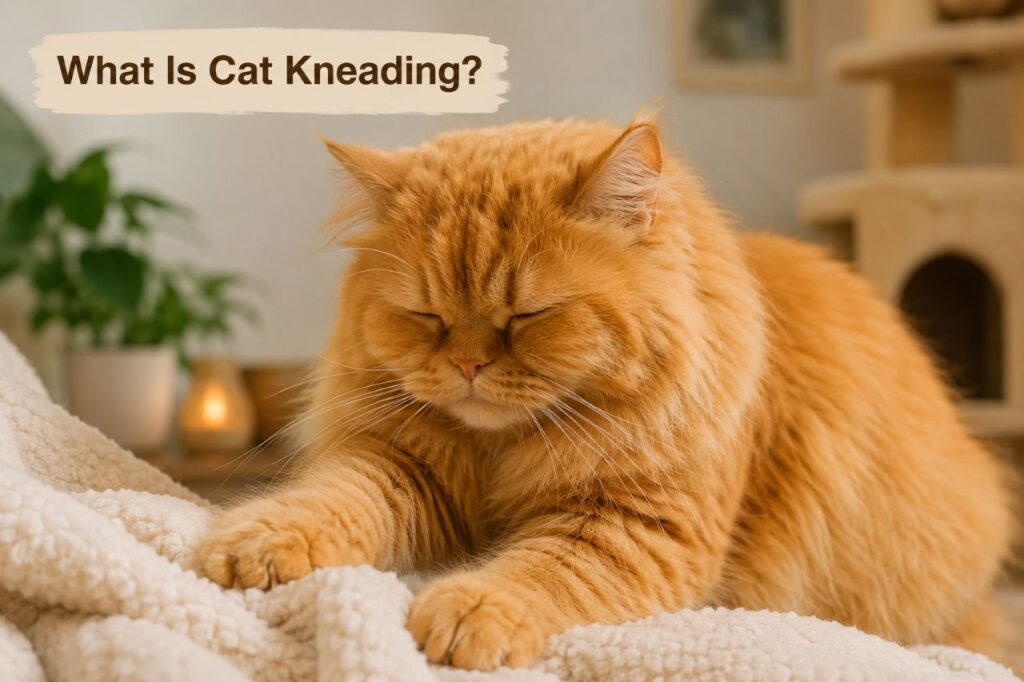
Kneading is a repetitive movement in which a cat pushes its front paws against a soft surface, usually alternating between the left and right paw.
Cats may knead:
- Blankets
- Pillows
- Beds
- Carpets
- Other animals
- Their owner’s lap, stomach, or chest
Some cats keep their claws tucked away. Others extend their claws with every push, turning a cozy bonding moment into an unexpected session of feline acupuncture.
A kneading cat may also purr, close its eyes, suck on fabric, drool, or settle down for a nap afterward. These accompanying behaviors can help you understand cat kneading meaning and what your cat is feeling.
Why Do Cats Knead? The 7 Most Common Reasons
There is not one single explanation for every cat. Kneading appears to serve several emotional, physical, and instinctive purposes.
1. Kneading Begins During Kittenhood
The strongest explanation starts with nursing. Young kittens press their paws against their mother’s abdomen while feeding. This movement helps encourage milk flow. Because nursing also brings warmth, food, physical contact, and protection, kittens develop a powerful association between kneading and feeling safe.
Many cats carry this behavior into adulthood. When an adult cat kneads a blanket or your lap, it may be recreating part of that early feeling of security. This does not necessarily mean your cat thinks you are its mother. It simply means the situation feels comforting and familiar.
2. Cats Knead When They Feel Safe and Content
One of the most common examples of cat kneading behavior happens during a quiet evening at home. Your cat may climb onto the couch, begin purring, knead a soft blanket, and slowly close its eyes. In this setting, the behavior usually means your cat feels comfortable enough to relax.
Other signs of a content cat may include:
- A loose, relaxed body
- Half-closed eyes
- Slow blinking
- Why do cats knead and purr simultaneously? It reinforces a deep sense of calm.
- A neutral tail position
- Settling down to sleep
When kneading is paired with these signals, there is usually no reason for concern.
3. Cats May Knead Before Going to Sleep
Have you noticed your cat kneading its bed immediately before lying down? This may be an instinctive form of bed preparation. Wild felines and outdoor cats may press down grass, leaves, or other soft materials before resting. Although your indoor cat probably has a much nicer bed, the old preparation routine may still remain.
The kneading may help your cat inspect the surface, adjust the material, and create a comfortable sleeping spot. It is the feline version of fluffing a pillow before bedtime.
4. Kneading Helps Cats Mark Familiar Places
Cats rely heavily on scent when communicating with their environment. They have scent-producing glands around their paws. When a cat kneads a blanket, bed, or person, it may leave behind subtle scent signals. Humans usually cannot smell these signals, but they can help the cat identify an area as familiar and safe.
This explains part of the cat kneading meaning when your cat repeatedly chooses the same blanket or the same place on the couch. It may also explain why does my cat knead me. In the gentlest possible way, your cat may be adding you to its collection of trusted belongings.
5. Kneading May Stretch the Muscles and Paws
Kneading involves extending the toes, shifting body weight, and moving the shoulders and front legs. For some cats, this movement may simply feel good. It may help stretch muscles after resting or release tension before settling down.
Watch your cat after a long nap. It may stretch its front legs, arch its back, scratch a nearby post, and knead a soft surface. These behaviors can form part of the cat’s normal stretching and movement routine.
6. Cats Sometimes Knead to Soothe Themselves
Kneading does not always mean a cat is joyful. It can also be a self-soothing behavior. A nervous cat may return to a familiar movement when dealing with:
- A new home
- A new pet
- Visitors
- Changes in routine
- Loud noises
- Separation from a favorite person
- Physical discomfort
Context matters. A cat kneading a blanket while relaxed beside you is different from a cat hiding under a bed, kneading repeatedly, and refusing food. Veterinary sources note that cats may knead or purr when trying to comfort themselves during stress or discomfort. Look at the full pattern of behavior rather than treating kneading as an automatic sign of happiness.
7. Kneading Can Be Part of Social Bonding
Cats do not express affection in exactly the same way people or dogs do. Their signals are often quieter. When a cat kneads your lap while resting against you, it may be combining several positive behaviors: seeking warmth, leaving its scent, settling down, and choosing to stay physically close.
The important message is not necessarily “I love you” in a human sense. It is closer to “I feel safe enough to relax here.” For a cat, that is a meaningful compliment.
Why Does My Cat Knead Me?
When people ask, “why does my cat knead me?”, they are usually wondering whether the behavior means affection. Often, it does indicate trust and comfort. Your body is warm, soft, and familiar. You may also be sitting in the exact place where your cat likes to sleep.
Your cat might knead you because:
- Your lap feels like a comfortable bed
- Your presence is associated with safety
- Kneading helps the cat relax
- The cat is leaving its scent on a trusted person
- It is preparing to curl up and sleep
If your cat kneads other people but not you, do not take it personally. Some cats choose surfaces based on texture, position, warmth, or habit. A fleece blanket may simply outrank your lap in the official household kneading competition.

Why Do Cats Knead Blankets?
Soft blankets are among the most common kneading targets because they provide gentle resistance under the paws.
Why do cats knead blankets instead of hard surfaces? The texture may resemble the soft surfaces associated with nursing, resting, or nest preparation. Some cats become especially attached to fleece, wool, or fuzzy fabrics. They may knead the same blanket every day before sleeping.
A cat may also suck or chew lightly on the fabric while kneading. This is often connected to the comforting nursing behaviors of kittenhood. However, you should make sure your cat is not tearing off and swallowing pieces of material. Fabric ingestion can become dangerous and requires immediate veterinary attention.
Why Do Cats Knead and Purr at the Same Time?
Why do cats knead and purr together? Both behaviors are commonly associated with relaxation and early kittenhood. Kittens knead while nursing, and they also purr during close contact with their mother. An adult cat may repeat both behaviors when it feels warm, comfortable, and protected.
However, purring is not always proof that a cat is happy. Cats may also purr when they are frightened, injured, or trying to calm themselves. If kneading and purring occur alongside hiding, reduced appetite, unusual posture, or reluctance to move, contact your veterinarian.
Why Does My Cat Use Its Claws While Kneading?
Using the claws is usually a natural part of the kneading motion. As a cat spreads its toes and presses down, the claws may extend automatically. Your cat is probably not trying to scratch or hurt you. Unfortunately, that does not make the claws feel any softer.
To make kneading more comfortable:
- Place a thick blanket between your cat and your skin.
- Keep your cat’s nails trimmed.
- Provide a soft pillow or dedicated kneading blanket.
- Gently move the cat to the approved surface.
- Reward calm kneading with attention or a small treat.
Do not yell, hit, or spray your cat with water. Punishment can create fear without removing the natural urge to knead. Gentle redirection is safer and more effective.
Why Do Some Cats Drool While Kneading?
A small amount of drooling during kneading can happen when a cat becomes deeply relaxed. Because kneading is connected to nursing, some cats may show other kitten-like responses at the same time, including sucking on fabric or producing a little saliva.
Occasional drooling that happens only during a relaxed kneading session may be harmless. Still, new or excessive drooling can also be associated with dental disease, mouth pain, nausea, poisoning, or other medical problems.
Arrange a veterinary examination if the drooling:
- Begins suddenly
- Happens outside kneading sessions
- Has a bad odor
- Comes with difficulty eating
- Is mixed with blood
- Occurs with vomiting, weakness, or pawing at the mouth
The setting and timing make an important difference.
Why Do Some Cats Never Knead?
Not every cat kneads, and the absence of kneading does not mean your cat is unhappy or does not trust you.
Cats have individual personalities and different ways of expressing comfort. One cat may knead every blanket in the house. Another may prefer head-butting, grooming, slow blinking, sleeping nearby, or following you from room to room.
Early experiences, genetics, personality, preferred textures, and learned routines may all affect how often a cat kneads. There is no required amount of kneading for a healthy cat.
Is Cat Kneading Normal?
In most cases, is cat kneading normal? Yes, it is normal and does not need to be stopped.
Normal kneading generally:
- Happens in familiar, comfortable locations
- Lasts for a short period
- Occurs before resting or sleeping
- Is accompanied by relaxed body language
- Does not interfere with eating, playing, or using the litter box
The main question is whether the behavior is typical for your individual cat. A cat that has kneaded every evening for years is probably following a comfortable routine. A cat that suddenly begins kneading constantly while also hiding and eating less deserves closer attention.
When Should You Talk to a Veterinarian?
Contact your veterinarian if kneading changes suddenly or appears alongside other physical or behavioral symptoms.
Watch for:
- A sudden increase or decrease in kneading
- Constant or compulsive kneading
- Hiding more than usual
- Loss of appetite
- Limping or stiffness
- Reluctance to jump
- Changes in litter box habits
- Crying or unusual vocalization
- Aggression when touched
- Repeated fabric chewing or swallowing
- Excessive drooling
- A tense or hunched posture
Cats are good at hiding discomfort. A change in a familiar behavior may be one of the first clues that something is wrong. Kneading alone is rarely an emergency, but the surrounding symptoms can be important.

Can You Stop Your Cat From Kneading?
You usually do not need to stop it. Kneading is a natural behavior that gives many cats comfort. Instead, manage where and how it happens.
Keep a folded blanket beside your usual sitting area. When your cat begins kneading your skin, calmly slide the blanket underneath its paws. You can also create a designated biscuit-making station with a soft bed or pillow. Regular nail trims can reduce scratches, while scratching posts give your cat another healthy outlet for using its paws.
The goal is not to remove the behavior. It is to make the experience comfortable for both of you.
Final Thoughts
The next time your cat begins pressing its paws into your blanket, bed, or lap, you are watching a behavior with roots in the earliest days of its life.
Cats may knead because they feel safe, want to settle down, are marking a familiar place, stretching their muscles, or soothing themselves. Most of the time, your cat’s tiny biscuit factory is simply open because the surroundings feel comfortable.
Pay attention to the full picture. Relaxed kneading before a nap is usually harmless. Sudden, excessive kneading combined with hiding, pain, or appetite changes deserves a conversation with your veterinarian. And when the claws come out, place a thick blanket over your lap. You can appreciate the affection without becoming the dough.
Frequently Asked Questions
1. Why do cats knead their owners?
Cats often knead their owners because they feel safe, relaxed, and comfortable. Your lap may also provide the warmth and softness they associate with resting or nursing as kittens.
2. Why do cats knead blankets?
Cats knead blankets because soft fabrics are comfortable under their paws. The behavior may also help them prepare a sleeping spot, mark the blanket with their scent, or soothe themselves before resting.
3. Does cat kneading mean they love you?
Kneading can be a sign of trust and affection. A cat that kneads you while purring and showing relaxed body language usually feels secure in your presence.
4. Why does my cat use its claws while kneading?
Cats may extend their claws naturally as they spread their toes and press down. They are usually not trying to hurt you. Placing a thick blanket over your lap can make kneading more comfortable.
5. When should I worry about excessive kneading?
Talk to a veterinarian if your cat suddenly kneads much more than usual or shows other symptoms such as hiding, loss of appetite, limping, excessive drooling, or unusual vocalization. Sudden behavioral changes may indicate stress or discomfort.