
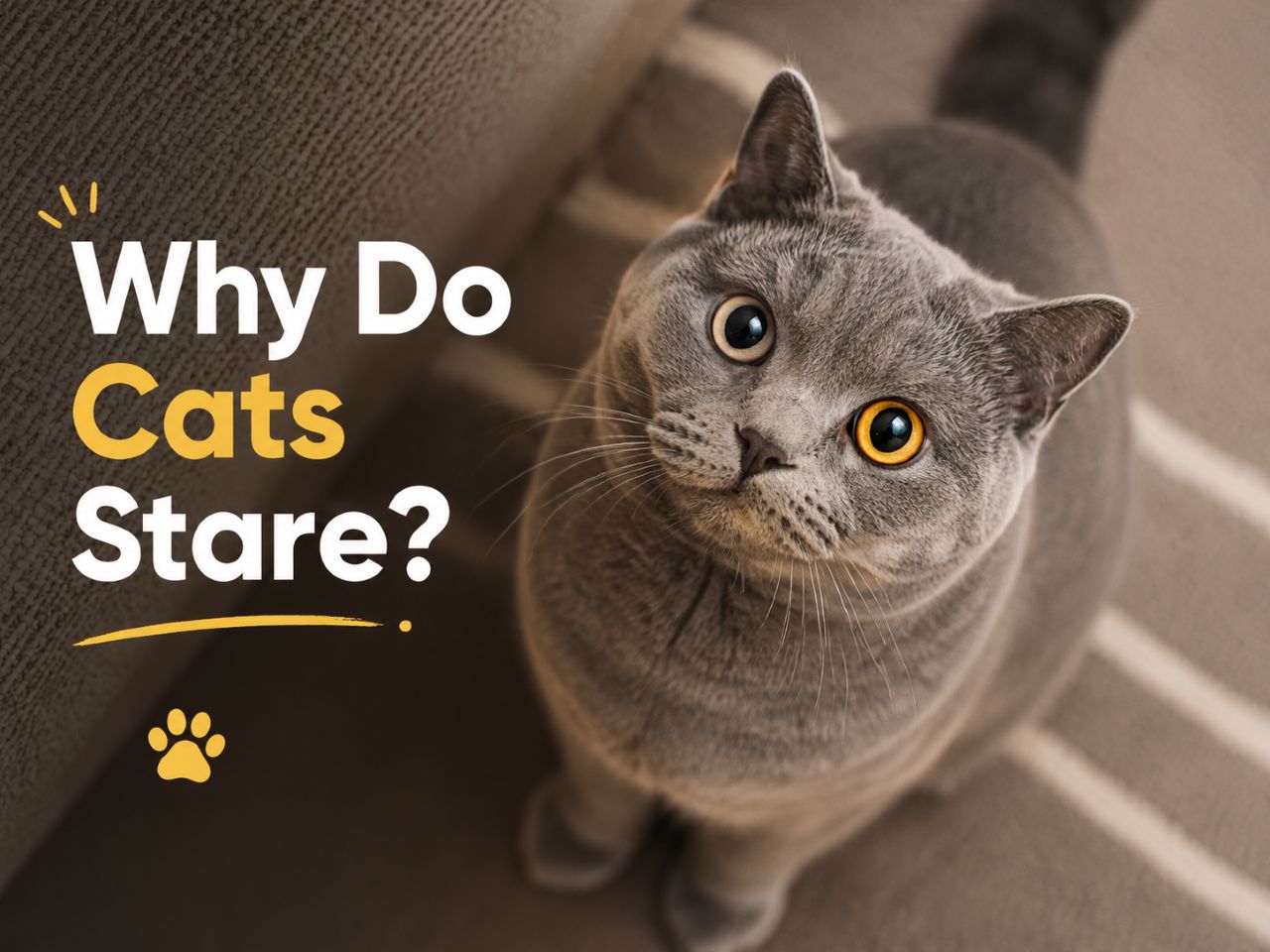
Why do cats stare?
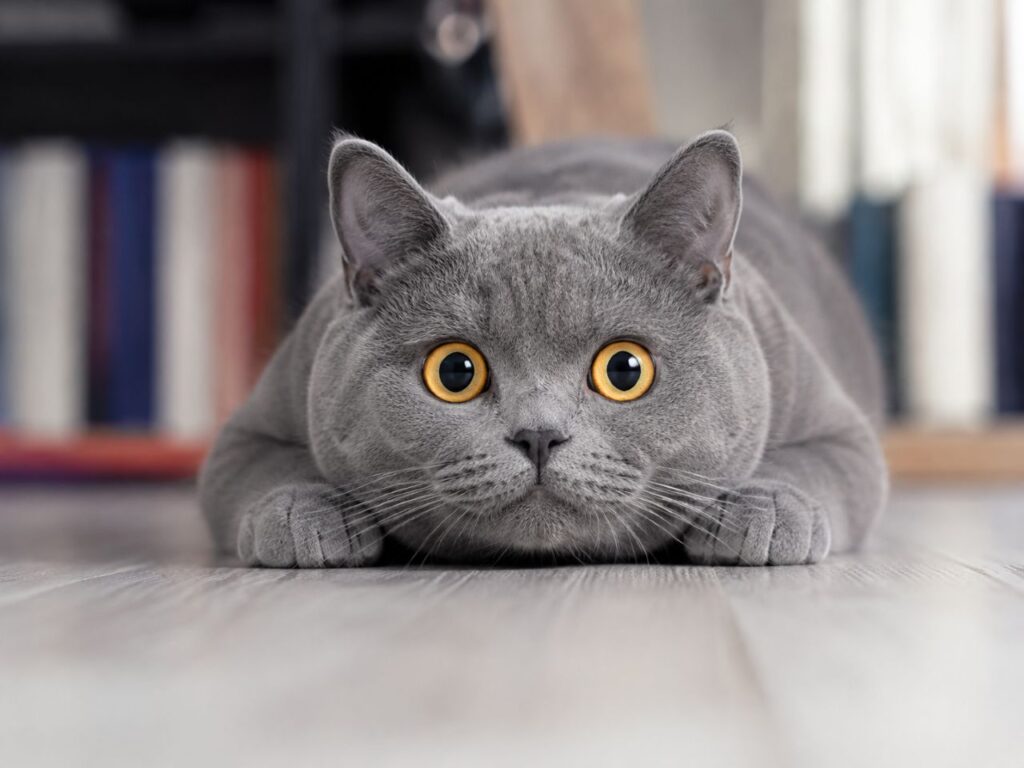
Most of the time, a cat staring is communicating, observing, waiting for something, or reacting to a sound or movement you have not noticed. A soft cat eye contact may show trust. A dinner-time stare usually means business. A stiff, unblinking stare can be a warning. The meaning lives in the rest of your cat’s body.
Cats do not rely on facial expressions in quite the same way people do. Their eyes work together with their ears, whiskers, tail, posture, and vocalizations. Once you learn to read the whole furry sentence, that mysterious stare becomes much easier to translate.
Why Does My Cat Stare at Me?
Your cat may stare at you because they want food, attention, play, reassurance, or space. Some cats also watch their people simply because why do cats stare at humans often comes down to human behavior being interesting and predictable.
Veterinary behavior guidance identifies attention, play, food, affection, fear, and aggression among the most common reasons for cat staring. The surrounding cat body language tells you which explanation fits.
There is another piece to the puzzle: your cat may have learned that staring works.
Perhaps your cat looked at you one evening and you filled the food bowl. The next day, the stare earned a treat. A few successful attempts later, your cat had installed a reliable human-control button.
Cats Protection notes that when owners repeatedly respond to eye contact with food or attention, cats can learn to use staring as a request.
In other words, the stare may feel ancient and mystical, but sometimes what does it mean when a cat stares at you is simply, “This technique has produced chicken before.”
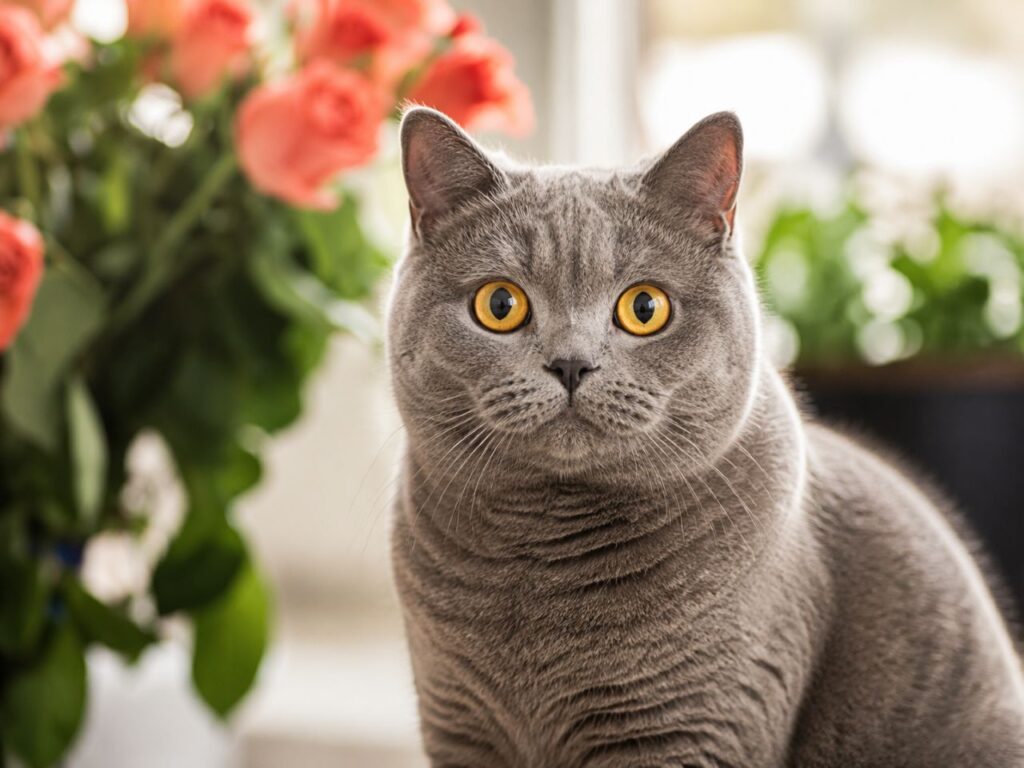
10 Reasons Why Cats Stare at You
1. Your Cat Wants Food
The classic food stare usually appears near a familiar feeding time. Your cat may sit beside the bowl, position themselves between you and the kitchen, or make intense eye contact while you eat.
Common clues include:
- Walking toward the feeding area after catching your eye
- Meowing, chirping, or rubbing against your legs
- Looking from you to the bowl and back again
- Appearing at the same time every morning or evening
- Staring at your plate with theatrical disappointment
Cats are excellent at learning household routines. They notice the sound of a cabinet opening, the location of the treat bag, and the suspicious delay between you getting out of bed and breakfast appearing.
Try not to reward every stare with food. Feeding on demand can strengthen begging behavior and may add unnecessary calories. Scheduled meals, measured portions, puzzle feeders, or an automatic feeder can make the routine less dependent on your cat’s ability to hypnotize you.
2. Your Cat Wants Attention
Sometimes why does my cat stare at me is not complicated at all. They want company.
An attention-seeking cat may stare and then:
- Walk toward you with an upright tail
- Rub their cheeks against furniture or your legs
- Jump onto your desk
- Roll onto one side
- Purr, trill, or give a quiet meow
- Tap you with one paw
A relaxed body matters here. The ears should look neutral or forward, the muscles should not appear stiff, and the tail should move calmly.
You do not need to interrupt everything the moment your cat looks at you. Still, regular affection, grooming, play, and quiet companionship can prevent attention-seeking from turning into midnight concerts or keyboard occupations.
3. Your Cat Is Showing Affection
A calm gaze can be part of your cat’s way of bonding with you.
The friendliest version often includes soft eyelids, a relaxed face, and a slow, deliberate blink. This is commonly called a cat slow blink. It is less like a dramatic declaration of love and more like a small signal that says, “I feel safe enough to lower my guard.”
Researchers studying cat-human interaction found that cats were more likely to narrow their eyes after people performed slow-blink movements. Cats were also more likely to approach a person following a slow-blink interaction than after a neutral expression. The findings suggest that eye narrowing can function as positive communication between cats and humans.
To slow-blink back:
- Look toward your cat without leaning over them.
- Let your eyelids close slowly.
- Keep them closed for a brief moment.
- Open your eyes gently and look slightly away.
Do not hold intense eye contact afterward. The point is to appear calm, not to begin a championship staring match.
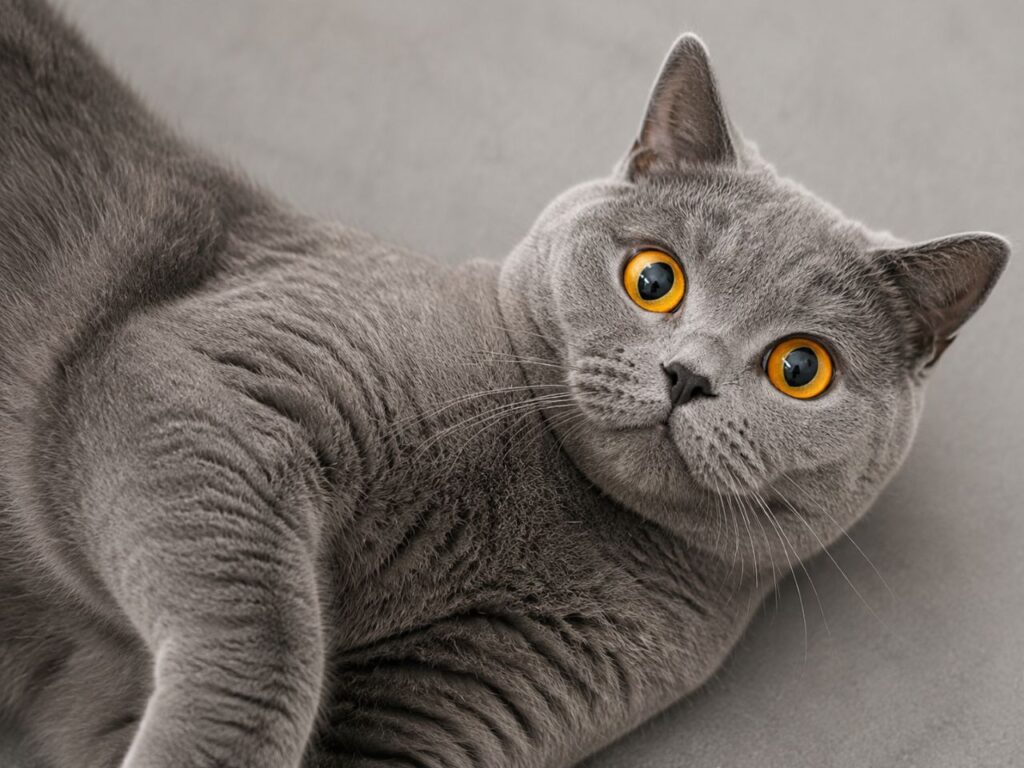
4. Your Cat Is Studying You
Cats spend a surprising amount of time collecting information.
They notice when you put on work shoes, pick up the carrier, open the refrigerator, or sit in the chair associated with evening cuddles. Watching helps them predict what will happen next.
Your cat may stare because you are:
- Moving an interesting object
- Preparing to leave
- Handling food
- Speaking in an unusual tone
- Sitting somewhere they want to sit
- Behaving differently from your normal routine
For an indoor cat, you are one of the most active objects in the environment. You make noises, move furniture, open doors, produce snacks, and occasionally drop things. From a feline perspective, you are premium unscripted television.
A curious stare typically comes with forward-facing ears, normal-sized pupils, loose muscles, and a comfortable sitting or lying position.
5. Your Cat Wants to Play
A playful stare has a different flavor. It often carries a little electricity.
Your cat may lower their front body, wiggle their rear end, swish the tip of the tail, or hide partially behind furniture. Their pupils may widen as they prepare to chase, pounce, or ambush your ankle.
This does not necessarily mean your cat is angry. Dilated pupils can appear during excitement as well as fear, so the rest of the body must provide context.
A playful cat may:
- Stare at your moving hands or feet
- Crouch with their weight ready to spring
- Run away and look back
- Pounce without hissing or growling
- Bring you a toy
- Suddenly race through the room
Use a wand toy, feather teaser, rolling ball, or another toy that keeps teeth and claws away from your skin. Hands should not become prey. A kitten who learns that fingers are hunting equipment may grow into an adult cat with the same opinion and considerably sharper hardware.
6. Your Cat Feels Nervous or Frightened
A cat may stare at something that worries them because looking away would mean losing track of a possible threat.
PetMD advises looking at pupil size, ear position, posture, tail movement, vocalizations, and coat position when interpreting a stare. A frightened cat may crouch, pull the ears back, widen the pupils, and raise the fur.
A fearful stare is usually accompanied by changes elsewhere in the body:
| What you see | What it may mean |
| Wide pupils and crouched body | Fear or uncertainty |
| Ears turned sideways or flattened | Discomfort or defensive arousal |
| Tail wrapped tightly around the body | Attempt to appear small and protected |
| Raised fur | Strong fear or defensive preparation |
| Head lowered while watching | The cat is monitoring a threat |
| Hissing or growling | The cat needs more distance |
Do not reach toward a frightened cat. Turn your body slightly sideways, soften your gaze, reduce noise, and give the cat a clear escape route. Forcing contact can turn fear into defensive scratching or biting.
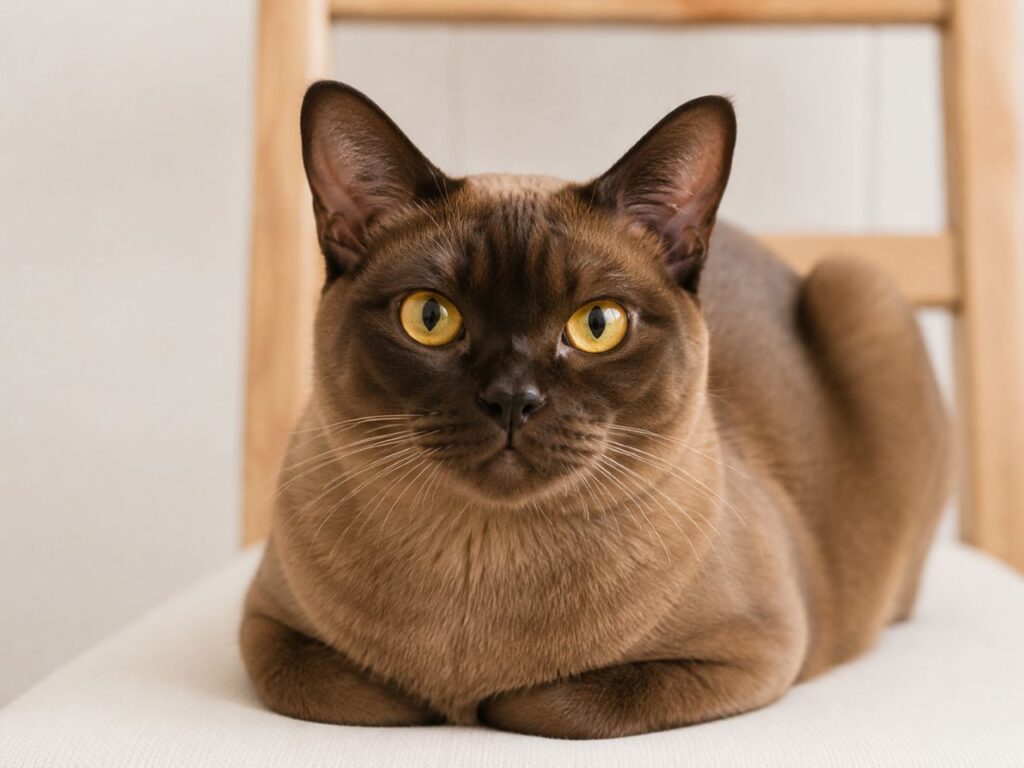
7. Your Cat Is Warning You to Back Off
A hard, fixed stare can be a warning, particularly when the body looks stiff.
This type of stare may appear during conflict with another pet, when a cat is guarding a space, or when someone has continued touching them after they have had enough. A fixed stare during feline conflict can be part of threatening body language, especially when paired with tension and wide-open eyes.
Watch for:
- An unblinking gaze
- A rigid body
- Flattened or sharply rotated ears
- A lashing tail
- Raised fur
- Growling, snarling, or hissing
- Weight shifted forward or backward
- One paw beginning to lift
Do not stare back, scold the cat, pick them up, or block their exit. Stop the interaction and create distance. When two cats are involved, avoid placing your hands between them. Use a barrier, close a door when it can be done safely, or redirect attention from a distance.
8. Your Cat Is Watching You Sleep
Waking to find two bright eyes inches from your face can make breakfast feel like a hostage negotiation.
So, why does my cat stare at me while I sleep?
The most likely explanations are routine, hunger, boredom, curiosity, or a desire for attention. Cats may become active around dawn, which often overlaps with the time their humans are still trying to squeeze another hour from the pillow.
Your cat may have learned that sitting nearby, touching your face, or staring eventually causes you to move. Movement might lead to breakfast. That is enough motivation for many cats to repeat the experiment.
To reduce early-morning surveillance:
- Schedule an active play session before bed.
- Offer the final meal after play.
- Use an automatic feeder for early breakfast.
- Provide quiet overnight toys or food puzzles.
- Avoid getting up to feed your cat immediately after being awakened.
Consistency matters. Feeding your cat at 4:30 a.m. “just this once” may be recorded in the feline policy manual as a permanent schedule change.
A new nighttime behavior accompanied by crying, restlessness, pain, increased thirst, appetite changes, or confusion should be discussed with a veterinarian.
9. Your Cat Hears or Sees Something You Do Not
When people ask, “why does my cat stare at nothing?”, the answer is often that the cat is not staring at nothing. The stimulus is simply too quiet, small, distant, or dim for a person to notice.
Domestic cats can hear frequencies far above the upper range detected by humans. Research has measured feline hearing across an unusually broad frequency range, helping explain why cats may react to faint activity inside walls or above ceilings.
A cat staring at wall or a blank area may be tracking:
- An insect near the ceiling
- A tiny reflection from a phone, watch, or passing car
- Dust moving through a shaft of light
- Water traveling through pipes
- Scratching from a rodent or insect inside a wall
- Outdoor animals beyond a window
- A sound coming from another room or apartment
Research into mammalian vision also suggests that cats’ eyes transmit some ultraviolet wavelengths that human eyes do not detect. This does not mean every wall contains a secret neon mural, but it supports the broader point that cats may perceive parts of their environment differently from us.
The explanation is usually sensory, not supernatural. There is no scientific evidence that a cat staring at the wall is seeing a ghost. Your cat is more likely investigating plumbing, insects, reflections, or a mouse conducting unauthorized renovations.
10. Your Cat Is Checking the Social Temperature
Cats sometimes look to familiar people when something changes.
A delivery arrives. A dog barks outside. A pan falls in the kitchen. Your cat freezes and looks at you.
They may be gathering information from your voice, posture, and reaction. A calm human can become a useful reference point in an uncertain moment.
This does not mean cats interpret every facial expression exactly as people do. It means they learn patterns. They know what your relaxed routine looks and sounds like, and they notice when the atmosphere changes.
Speak gently, move normally, and avoid forcing reassurance through petting. A worried cat may prefer distance while still keeping you in view.
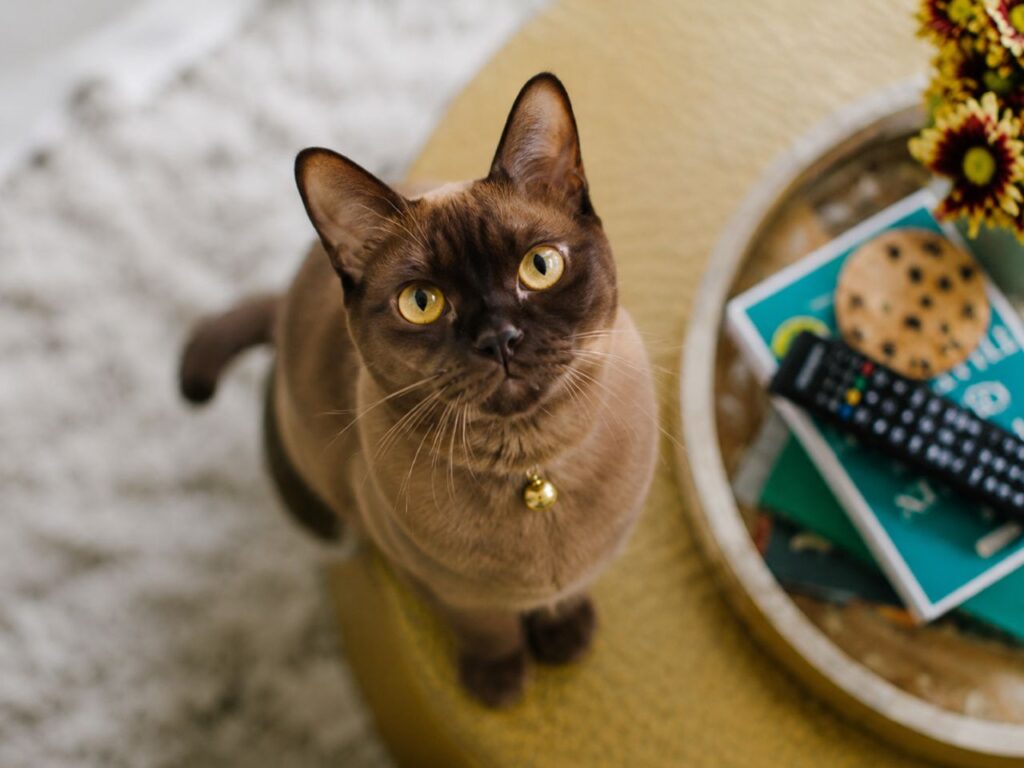
What Does a Cat’s Stare Mean?
The eyes are only one tile in the mosaic of cat body language.
- Soft eyes with slow blinking
- Likely meaning: relaxation, trust, or friendly social communication.
- Best response: blink slowly, speak softly, or let the cat approach.
- Wide eyes with forward ears
- Likely meaning: interest, excitement, or focused attention.
- Best response: look for the object or sound that has caught your cat’s attention.
- Wide pupils with a crouched posture
- Likely meaning: fear, overstimulation, or uncertainty.
- Best response: reduce pressure and give the cat space.
- Hard stare with a stiff body
- Likely meaning: warning, conflict, or defensive readiness.
- Best response: stop approaching and avoid direct eye contact.
- Staring with tail twitching
- Likely meaning: excitement, frustration, hunting focus, or growing irritation.
- Best response: consider what happened immediately before the tail began moving.
- Staring followed by a pounce
- Likely meaning: play or predatory behavior.
- Best response: redirect the cat to an appropriate toy.
Pupil size alone cannot identify a mood. Lighting changes pupil size too, and both playful excitement and fear can produce large pupils. Look at the entire cat and the immediate situation.
Why Does My Cat Stare at Me and Meow?
Staring plus meowing is usually a direct request.
Your cat may want you to:
- Fill the bowl
- Open a door
- Follow them
- Retrieve a lost toy
- Clean the litter box
- Provide affection
- Investigate something unusual
Pay attention to where your cat goes after meowing. Many cats look back while walking toward the object of interest.
Repeated vocalization can also signal distress, particularly in senior cats or cats showing changes in appetite, thirst, bathroom habits, mobility, or sleep. A sudden change deserves more attention than a familiar daily conversation.
Why Does My Cat Stare at Me and Then Bite?
The stare may have been an early warning that the interaction was becoming uncomfortable.
Before biting, many cats show smaller signals:
- The tail begins flicking.
- The skin ripples along the back.
- The ears rotate outward.
- The pupils widen.
- The body becomes still.
- The cat turns to look at your hand.
- The whiskers tighten against the face.
A bite that seems to arrive “out of nowhere” often had a quiet preface.
Stop petting when the cat first becomes tense. Let them leave. Some cats enjoy only a few seconds of touch, while others want longer sessions. Respecting that individual limit builds more trust than trying to convince the cat to tolerate extra handling.
Final Thoughts
So, what does it mean when a cat stares at you?
It might mean “Feed me.” It might mean “Play with me.” It may be a quiet sign of trust, a moment of curiosity, or a request for personal space.
The eyes provide the headline. The ears, tail, posture, pupils, and situation provide the article.
Most staring is ordinary feline communication wrapped in a little mystery. Learn your cat’s patterns, respect warning signals, and pay attention to sudden changes. Soon that silent gaze will feel less like an unsolved riddle and more like a familiar conversation.
At Catsoria, we believe understanding the small signals helps people build safer, warmer relationships with the cats sharing their homes. Even when those cats spend ten uninterrupted minutes watching them fold laundry.
Frequently Asked Questions
1. Is it normal for my cat to stare at me?
Yes. Cats commonly stare when they want food, play, attention, affection, information, or distance. A relaxed cat with normal behavior is usually communicating or observing.
2. Do cats stare at people they love?
Cats may hold soft eye contact with people they trust, especially when the gaze includes relaxed eyelids or slow blinking. A hard, rigid stare has a different meaning and should be interpreted through the cat’s posture.
3. Should I stare back at my cat?
Avoid holding an intense, unblinking stare. Some cats may find it threatening. Use soft eyes, blink slowly, and look slightly away.
4. Why does my cat stare at me without blinking?
Your cat may be intensely focused on food, play, movement, or a change in the environment. When the body is stiff, the ears are flattened, or the tail is lashing, an unblinking stare can signal discomfort or conflict.
5. Why does my cat stare at the wall?
Your cat may hear insects, rodents, pipes, wiring, or activity in another room. They may also notice tiny shadows, reflections, or movement that you cannot see. Persistent staring combined with confusion or other symptoms should be checked by a veterinarian.
6. Why does my cat stare at me from across the room?
Your cat may be monitoring your routine, waiting for you to move, seeking attention, or resting while keeping you in view. Relaxed posture usually suggests curiosity or comfort.