

You are petting your cat. They are purring, their eyes are half closed, and everything seems peaceful. Then their teeth close around your hand.
The bite may be soft enough to feel almost playful, or sharp enough to send you across the room looking for a bandage. Either way, the sudden switch can feel personal. It usually is not.
Cats bite to communicate, play, hunt, defend themselves, stop unwanted contact, or respond to pain. A gentle nibble from a relaxed cat may be a playful or social gesture. A hard bite from a tense cat is more likely to mean fear, frustration, overstimulation, or physical discomfort.
The moments before the bite matter. So do the pressure of the bite, your cat’s posture, and what happens next.
What Does It Mean When a Cat Bites You?
A cat’s mouth is one of the tools they use to explore and control their surroundings. Kittens bite during play. Adult cats may bite when hunting, grooming, defending territory, or ending an interaction.
When a cat bites a person, the behavior often falls into one of these categories:
- Play or hunting practice
- Overstimulation during petting
- Fear and defensive behavior
- Frustration or redirected aggression
- A request for attention
- Pain or illness
- A gentle social nibble
Veterinary sources describe cat biting as a form of feline communication rather than proof that a cat is naturally mean or dislikes its owner.
A bite that seems to come “out of nowhere” often had a warning label. Cats simply print those labels in tail movements, ear positions, muscle tension, and very small changes in posture.
Your Cat May Be Playing Hunter
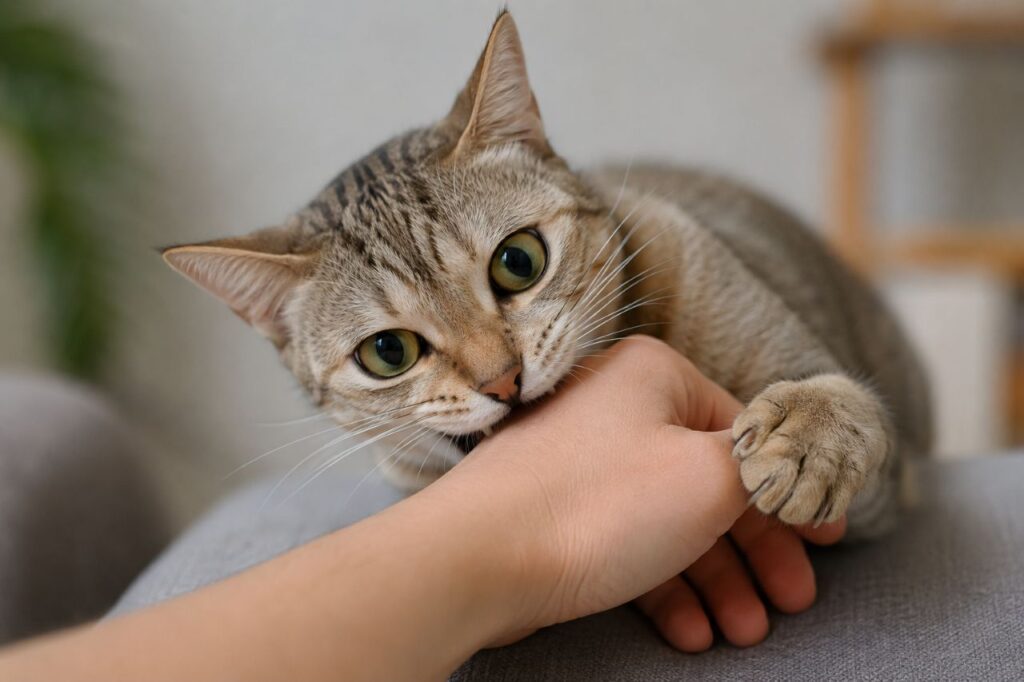
Cats are predators, even when their most demanding daily task is walking from the couch to the food bowl. Stalking, pouncing, grabbing, kicking, and biting are all parts of normal hunting behavior. Kittens practice these skills through play with their mother and littermates. They learn how hard they can bite before another kitten squeals, swats back, or ends the game.
Human hands and feet can become substitute prey when a cat does not have enough appropriate play outlets. Wiggling fingers, toes moving under a blanket, or ankles passing through a hallway can trigger a quick chase.
This kind of play aggression in cats often looks different from fear-based aggression. A playful cat may:
- Hide behind furniture and wait for you to pass
- Chase moving feet
- Grab an arm with the front paws
- Bite and kick with the back legs
- Run away, then return for another round
- Show energetic rather than defensive body language
Play biting is especially common in kittens and young cats. It can also appear in adult indoor cats that are bored, under-exercised, or accustomed to rough play with people. The cat is not plotting your downfall. Your ankle moved like prey, and the tiny hunter accepted the assignment.
Why Does My Cat Bite Me When I Pet Them?
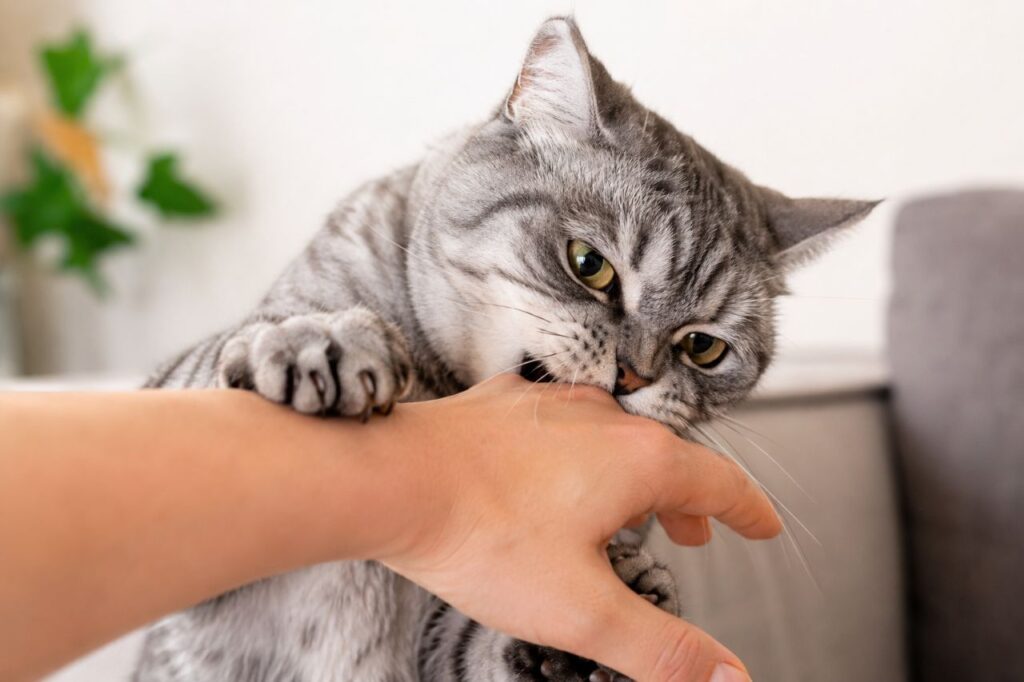
Petting-related biting is one of the most confusing feline behaviors because the cat may appear happy moments before it happens. Many cats enjoy touch in short sessions. Repeated strokes can eventually become irritating or overwhelming. The cat reaches their limit, gives a warning, and bites when the touching continues.
This is often called petting-induced aggression or overstimulation.
The cat may not have changed their mind as suddenly as it seems. Look for small signs that appear before the bite:
- The tail begins twitching at the tip
- Ears turn sideways or backward
- The skin ripples along the back
- The cat stops purring
- Their pupils widen
- The body becomes stiff
- The cat turns to watch your hand
- Whiskers pull forward or flatten back
A sudden freeze can be especially important. A very still cat is not always a relaxed cat.
Cats have different touch preferences. One may enjoy long strokes along the back. Another may tolerate only a few scratches around the cheeks. The belly, paws, lower back, and base of the tail can be highly sensitive areas for some cats.
VCA notes that fear, anxiety, restraint, and overstimulation can contribute to biting during petting. Catsoria also describes some gentle “love bites” as requests to end a petting session before the cat becomes more uncomfortable. Try stopping while your cat is still enjoying the interaction. A short, successful petting session is better than stretching it until teeth appear.

What Are Cat Love Bites?
A cat love bite is a gentle nibble that usually does not break the skin. It may happen while a cat is purring, grooming you, kneading, or resting against your body. The term sounds romantic, but affection is only one possible explanation.
A soft bite can mean:
- “I am playing with you.”
- “Keep paying attention to me.”
- “That petting session is becoming too much.”
- “I am grooming you.”
- “I am excited and not controlling my mouth very well.”
PetMD defines love bites as gentle mouth contact that usually causes no injury. They can occur during relaxed social contact, yet they may also signal frustration or overstimulation. Context and body language separate an affectionate nibble from an early warning.
A relaxed love bite often comes from a cat with soft eyes, neutral ears, and loose muscles. The cat may release immediately and return to purring. A warning bite carries more tension. The tail may snap back and forth. The cat might grip your hand, stare at it, or increase pressure when you move. Do not assume every gentle bite is a declaration of devotion. Sometimes it is a polite memo asking your hand to leave.
Why Does My Cat Bite Me Gently While Purring?
Purring does not always mean a cat wants an interaction to continue forever. Cats may purr when relaxed, but they can also purr during stress, pain, or self-soothing. A purring cat that gives a soft bite may still be content. They may be playing, grooming, or showing social affection.
Watch what comes after the bite:
- If your cat releases your hand, remains loose, and nudges you for more contact, the nibble was probably playful or social.
- If the cat stiffens, flicks their tail, or turns away, stop petting. The purr did not cancel the boundary.
Gentle biting during petting is commonly associated with affection, play, or an approaching overstimulation threshold.
Fear Changes the Bite
A frightened cat may bite because they believe escape is impossible. This can happen when someone tries to pull a cat from under a bed, force them into a carrier, hold them during a loud event, or introduce them too quickly to an unfamiliar animal.
Fear-based biting is usually not subtle. The cat may crouch low, flatten their ears, hiss, growl, swat, or pull away. The pupils often look large. Some cats puff up their fur to appear bigger.
A frightened cat needs distance, not discipline.
Trying to pick up, corner, or comfort a highly aroused cat can make the bite more likely. Give the cat a clear escape route and reduce the trigger when it is safe to do so.
For carrier problems, work on gradual training outside of travel days. Leave the carrier open in a familiar room. Place bedding, toys, or treats inside. The goal is to turn it into ordinary furniture rather than a plastic announcement that something unpleasant is about to happen. Fear and stress are well-recognized causes of serious cat bites, particularly when a cat feels trapped or threatened.
The Bite May Be Aimed at Something Else
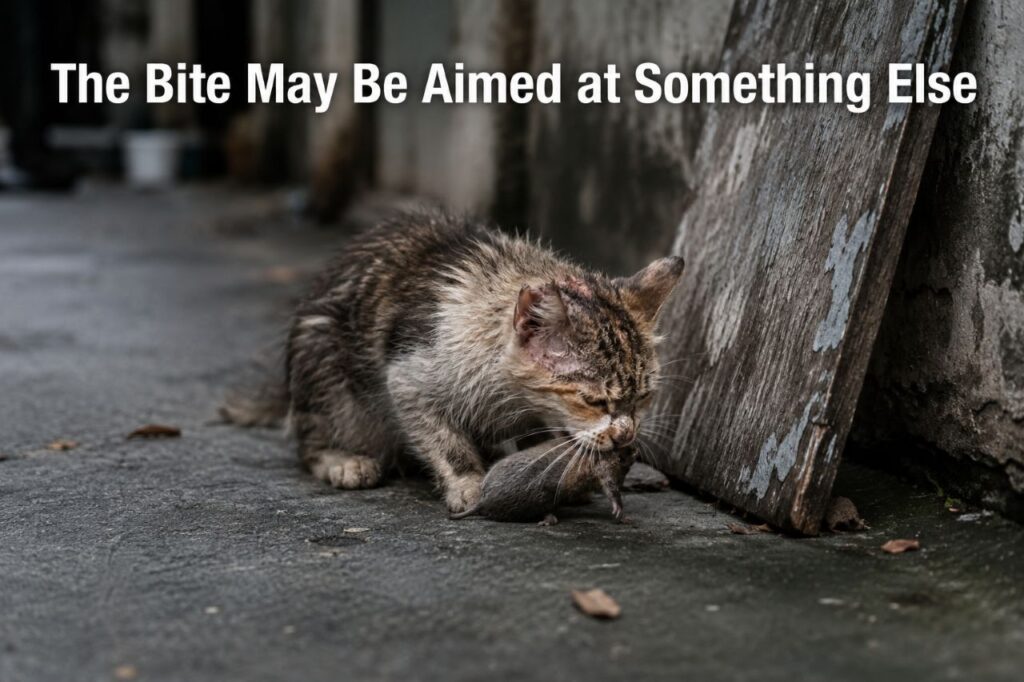
A cat can become intensely aroused by a trigger they cannot reach. They may see a strange cat through the window, hear an animal outside, or become startled by a loud sound. Unable to confront the actual source, they turn and bite the nearest available person or pet.
This is known as redirected aggression.
The bite can feel completely unprovoked because you were not involved in the original event. From the cat’s perspective, their nervous system is already flashing red. Your hand, leg, or another household cat happens to enter the danger zone.
Do not touch a cat that is staring rigidly out a window, growling, lashing their tail, or pacing after a frightening event. Close the curtain or block the view if you can do so without approaching the cat. Give them time and space to settle. Arousal may last longer than expected. Reaching toward the cat too soon can restart the reaction.
Sometimes Biting Works
Cats repeat behavior that produces a useful result.
A cat nips your leg and you fill the food bowl. They bite your hand and you begin playing. They grab your sleeve while you work, and you immediately look at them. The cat has learned a simple rule: teeth make humans respond.
Attention-seeking bites are often quick and controlled. They may occur at predictable times, such as before meals or when the owner stops petting.
Avoid rewarding the bite with the exact thing your cat requested. Wait for a calm behavior, then offer food, play, or attention. This keeps the cat from learning that biting is the fastest route to customer service. Scheduled meals and regular play sessions can help when the biting follows a daily pattern.
Why Does My Cat Bite My Feet and Ankles?
Feet are almost designed to trigger a cat’s hunting response. They move quickly, disappear around corners, slide under blankets, and arrive at the exact height of an ambush. A bored cat can turn a walk down the hallway into a miniature wildlife documentary.
Ankle biting is usually connected to play, hunting behavior, or attention seeking.
Do not kick, run, or rapidly pull away. Fast movement may make the game more exciting. Freeze for a moment, then redirect the cat toward a toy that can be safely chased and bitten.
A wand toy is useful because it keeps teeth away from human skin while allowing the cat to stalk, chase, pounce, and catch. Let the cat capture the toy regularly. An endless chase with no successful catch can become frustrating. Two or more short, active play sessions each day may reduce hallway ambushes. Some cats need more, especially young adults and energetic breeds.
Why Does My Cat Hug My Arm and Bite Me?
Cats sometimes grab an arm with their front paws, bite, and kick with their back legs. This resembles the way a cat controls prey. The front legs hold the target while the back feet deliver rapid bunny kicks. During play, a moving human arm may trigger the same sequence.
The behavior can also appear when a cat becomes overstimulated during petting. What began as cuddling turns into grabbing because the cat has crossed from calm social contact into high arousal.
Do not pull your arm away sharply. That movement may increase chasing and gripping. Pause, protect your face, and allow the cat to release when possible. A thick kicker toy can provide a safer target during future play. Avoid using bare hands to wrestle with kittens. A five-pound kitten practicing on your fingers will eventually become a stronger adult cat who sees no reason to retire the game.
Licking, Then Biting
A cat may lick your skin several times and then bite. This sequence can be part of social grooming. Cats sometimes use their front teeth while cleaning fur, especially when working through debris or tangles. Your cat may apply the same questionable salon technique to your arm.
Licking followed by biting can also mark the end of the interaction. The cat begins in a relaxed state, becomes overstimulated, and uses a bite to stop the petting.
The pressure tells you something. A tiny nibble from a loose, purring cat is different from a firm grip accompanied by a whipping tail. When the licking becomes faster or the cat’s body tightens, remove your hand before the bite arrives.
Pain Can Make a Friendly Cat Bite
A cat that suddenly begins biting may be hurting. Pain lowers tolerance for touch and handling. A cat with arthritis may bite when someone strokes the back or moves a sore joint. Dental pain can make contact around the face uncomfortable. Skin disease, injuries, urinary problems, and internal illness may also change a cat’s behavior.
Cornell University’s Feline Health Center notes that cats in pain may bite to avoid touch, movement, or activities that make the discomfort worse.
Clues that biting could have a medical cause include:
- The behavior started recently
- Your cat reacts when one specific area is touched
- Jumping has become difficult
- Appetite or grooming habits changed
- The cat hides more often
- They seem restless or unusually quiet
- There is limping, swelling, or sensitivity
- A social cat has become withdrawn
Older cats should not be dismissed as simply becoming “grumpy.” Arthritis, dental disease, reduced vision, and other age-related conditions can affect how safe they feel when approached.
Schedule a veterinary exam when biting appears suddenly, becomes more intense, or comes with any physical or behavioral change.
Cat Biting That Seems Unprovoked
A truly unprovoked bite is less common than it appears. The trigger may be easy to miss:
- You touched a painful area.
- The cat saw another animal outside.
- Petting lasted longer than the cat could tolerate.
- A noise startled them.
- Your hand smelled like another pet.
- The cat was guarding food, a resting spot, or a hiding place.
- Moving clothing activated hunting behavior.
Keep a brief record of biting incidents. Write down where the cat was, what you were doing, who else was nearby, and what the cat did during the minute before the bite. Patterns tend to emerge. Perhaps the cat bites only when touched near the hips. Maybe every incident occurs beside one window where outdoor cats pass. The bite may seem random until the surrounding pieces are placed together.
Learn the Warning Signs Before the Teeth Arrive
Cats rarely send formal invitations before biting, but their bodies usually change. Early signs can be tiny:
- The tail tip ticks back and forth
- The cat glances toward your hand
- Purring stops
- Their shoulders rise
- The ears rotate slightly
- The skin twitches
More obvious warnings include hissing, growling, flattened ears, enlarged pupils, tail lashing, raised fur, and an attempt to escape.
Stop interacting at the early stage. Waiting for a hiss means you have already ignored several quieter messages. Children need help learning these signals. A cat that walks away should not be followed, picked up, or pulled from a hiding place. Resting and eating cats also deserve space.

How to Stop a Cat From Biting
The solution depends on why the biting occurs. There is no single correction that works for play, fear, pain, and overstimulation.
Keep Hands Out of the Toy Box
Use wand toys, rolling toys, stuffed kicker toys, and balls instead of fingers. Everyone in the household needs to follow the same rule. If one person roughhouses with the cat while another person discourages biting, the lesson becomes foggy.
End Play Calmly
When teeth touch skin, pause the interaction. Avoid shouting, hitting, or yanking your hand around. A dramatic reaction can frighten the cat or make the encounter feel more like prey play. PetMD recommends redirecting biting toward toys and avoiding punishment.
Give Hunting Energy Somewhere to Go
Move a wand toy along the floor, behind furniture, and around corners. Let it behave like prey rather than dangling it directly in the cat’s face. Finish the session with a successful catch. A small meal or treat afterward can create a satisfying hunt-catch-eat rhythm.
Shorten Petting Sessions
Count how many strokes your cat accepts before their body changes. Stop a little earlier next time. Pet around areas your cat appears to enjoy, often the cheeks, chin, and sides of the head. Do not assume that a cat exposing the belly is requesting a stomach rub. The posture may show trust without granting touching rights.
Reward Soft Behavior
Give attention when your cat approaches calmly, sits without biting, or plays with an appropriate toy. You are not bribing the cat. You are making the preferred behavior more worthwhile than the unwanted one.
Add More Choice
Cats often bite when they feel trapped. Allow the cat to leave your lap. Provide high perches, covered beds, and quiet rooms. Do not drag them from hiding places unless there is an emergency. A cat with control over contact often has less reason to enforce boundaries with teeth.
What Not to Do
Do not hit, yell at, or spray a biting cat with water.
Punishment may stop behavior for a moment, but it can also make the cat afraid of you. A fearful cat is more likely to defend themselves in future interactions. Cornell notes that cats may fail to connect punishment with the unwanted action and instead learn that the person delivering it is unsafe.
Do not hold the cat down to “show who is in charge.” Cats are not biting because they are trying to become household management. Avoid forcing contact after a bite. Let the cat move away and settle.
When Professional Help Makes Sense
Talk to your veterinarian when:
- The biting started suddenly
- Bites are becoming harder or more frequent
- The cat targets one person repeatedly
- Biting occurs during normal movement or touch
- Your cat seems painful, sick, or confused
- The behavior creates a safety risk
- You cannot identify the trigger
A veterinarian can check for pain and illness before the behavior is treated as a training problem. For ongoing aggression, ask about a qualified feline behavior professional or a board-certified veterinary behaviorist.
What To Do When a Cat Bite Breaks the Skin
Cat teeth can create narrow puncture wounds that push bacteria beneath the skin. A small hole may look harmless while deeper tissue becomes infected.
Wash the bite promptly with soap and running water. The CDC advises people bitten by a cat or dog to clean the area right away and contact a doctor or urgent care clinic because animal bites can transmit bacteria and cause deep infections like cellulitis.
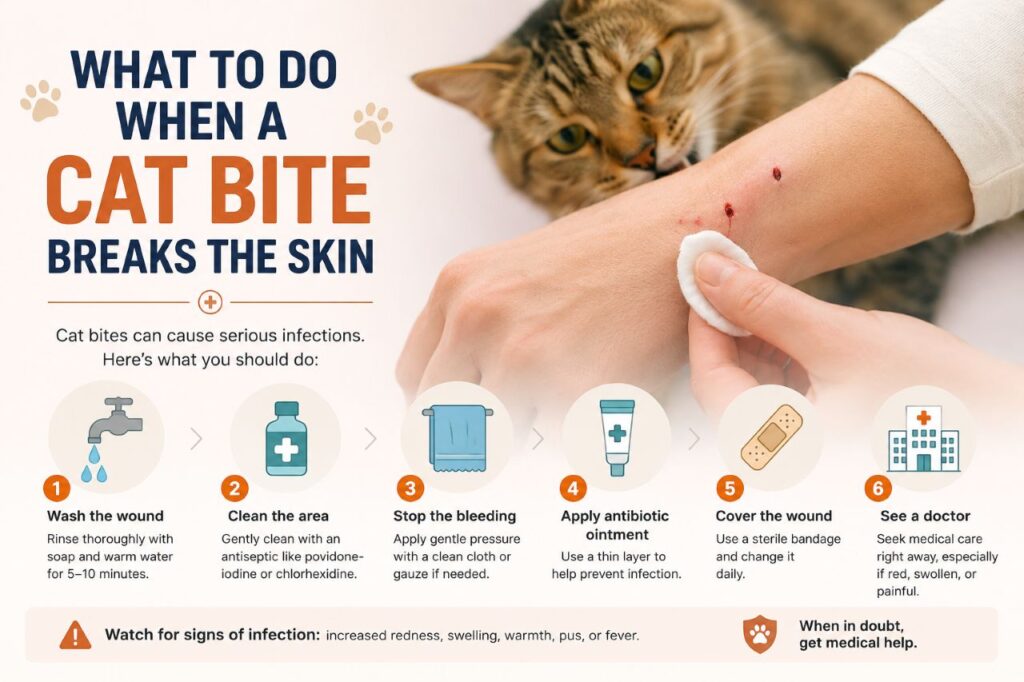
Seek medical advice promptly when:
- The bite is deep
- It is on the hand, face, or near a joint
- Bleeding does not stop
- Redness, warmth, swelling, pain, or drainage develops
- You have a weakened immune system
- The cat is stray or has an unknown rabies vaccination history
- You develop a fever or feel unwell
Do not ignore a puncture simply because it is small. Cat teeth are precision instruments, and unfortunately, they are quite good at delivering bacteria below the surface. Questions about rabies exposure should be directed to a healthcare professional or local public health authority, especially after a bite from an unfamiliar or unvaccinated cat. The CDC recommends reporting certain bites involving stray cats or uncertain rabies status.
Final Thoughts
Why do cats bite? Teeth are part of the way cats play, hunt, protect themselves, and communicate boundaries. The bite may mean “catch me,” “stop touching me,” “I am scared,” or “that spot hurts.”
The useful question is not only why the cat bit. Ask what happened during the minute before it.
A moving ankle points toward play. A twitching tail during petting suggests overstimulation. A rigid stare at an outdoor cat raises the possibility of redirected aggression. A sudden reaction to touch may lead back to pain. Once the trigger becomes visible, the bite stops looking like a random act of betrayal. It becomes information, delivered with unnecessarily sharp stationery.
Frequently Asked Questions
1. Why do cats bite their owners but not strangers?
A cat may feel comfortable enough to play with or set boundaries with a familiar owner. Owners also handle, pet, feed, and interact with the cat more often, creating more opportunities for biting. A fearful cat may avoid strangers rather than approach them.
2. Is it normal for kittens to bite?
Yes. Kitten biting is a normal part of play and hunting practice. It still needs gentle guidance. Use toys rather than hands, end play when teeth touch skin, and provide regular outlets for chasing and pouncing.
3. Why does my cat bite me when I stop petting them?
Your cat may be asking for more attention or reacting to the sudden end of an enjoyable interaction. If biting reliably makes you resume petting, the behavior can become a learned strategy. Wait for calm behavior before giving attention again.
4. Why does my cat bite me in the morning?
Morning bites are often connected to food, play, or a learned wake-up routine. A timed feeder may help when the cat bites to demand breakfast. An active play session before bed can also reduce early-morning energy.
5. Why does my cat bite only one person?
That person may pet differently, move more quickly, use hands during play, or miss the cat’s warning signs. Scent and past experiences may also affect the cat’s response. Watching several interactions can reveal what changes around that individual.
6. Why does my cat bite when I pick them up?
Some cats dislike restraint. Others may feel insecure when lifted or experience pain when pressure is placed on the body. Support the chest and hindquarters, keep lifts brief, and stop if the cat becomes tense. New resistance to handling deserves a veterinary check.