

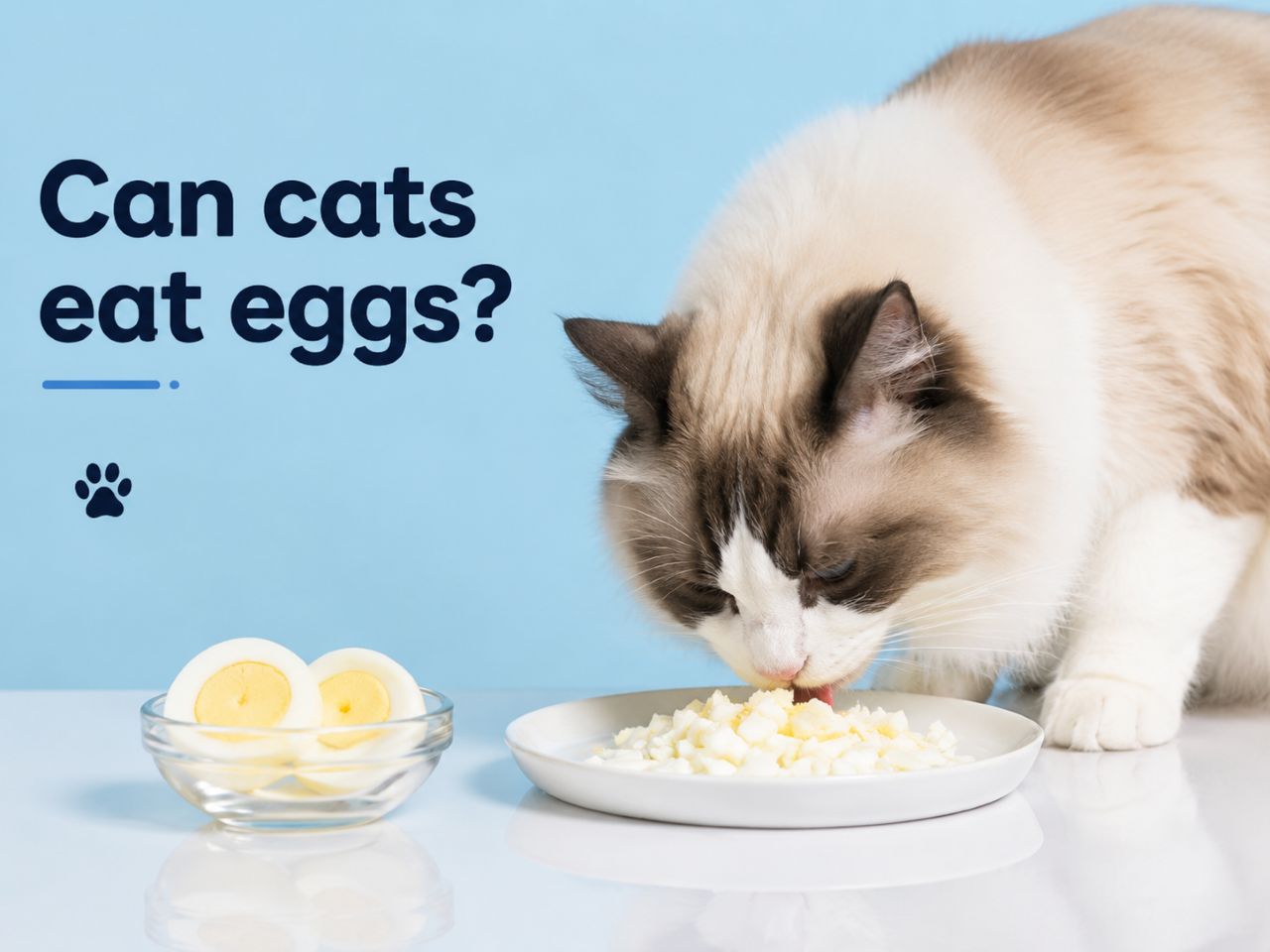
can cats eat eggs?
Yes. Most healthy cats can eat a small amount of fully cooked egg. It should be plain, cooled, and served as an occasional treat rather than a meal. Knowing how to prepare can cats eat scrambled eggs or can cats eat boiled eggs safely can work well, but can cats eat raw eggs? Absolutely not—raw eggs, runny eggs, heavily seasoned eggs, and buttery breakfast leftovers are poor choices.
For most cats, one or two teaspoons is enough. A whole egg is far more than the average cat needs in one sitting.
Can Cats Eat Eggs Safely?
Cats can eat both cooked egg whites and cooked egg yolks. The important word is cooked.
A cat-friendly egg should be:
- Cooked until the white and yolk are firm
- Served without salt, pepper, sauces, or seasoning
- Prepared without butter or large amounts of oil
- Broken into small, easy-to-eat pieces
- Offered in a modest portion
Veterinary nutrition sources generally treat eggs as an occasional extra, not as a replacement for balanced cat food. Eggs provide protein and fat, but they do not contain every nutrient a cat needs in the correct proportions. View cooked egg as a tiny bonus on top of your cat’s regular diet. It is not a complete feline breakfast, no matter how convincingly your cat argues otherwise.
Are Eggs Good for Cats?
When considering are eggs good for cats, they can offer useful nutrients when served in small amounts. They contain highly digestible animal protein, essential amino acids, healthy fats, vitamins, and minerals. Since cats are obligate carnivores, their bodies are built to rely heavily on nutrients from animal-based foods.
Potential nutritional benefits include:
- High-quality protein that supports muscles and normal tissue maintenance
- Essential amino acids used throughout the body
- Healthy fat that supplies energy
- B vitamins involved in metabolism
- Selenium and other trace minerals
- Small amounts of vitamins A, D, and E
Still, a spoonful of egg will not transform a cat’s health. A complete and balanced cat food should already provide the protein, taurine, fatty acids, vitamins, and minerals your cat requires. Eggs are best viewed as a pleasant extra rather than a nutritional shortcut.
How Much Egg Can a Cat Eat?
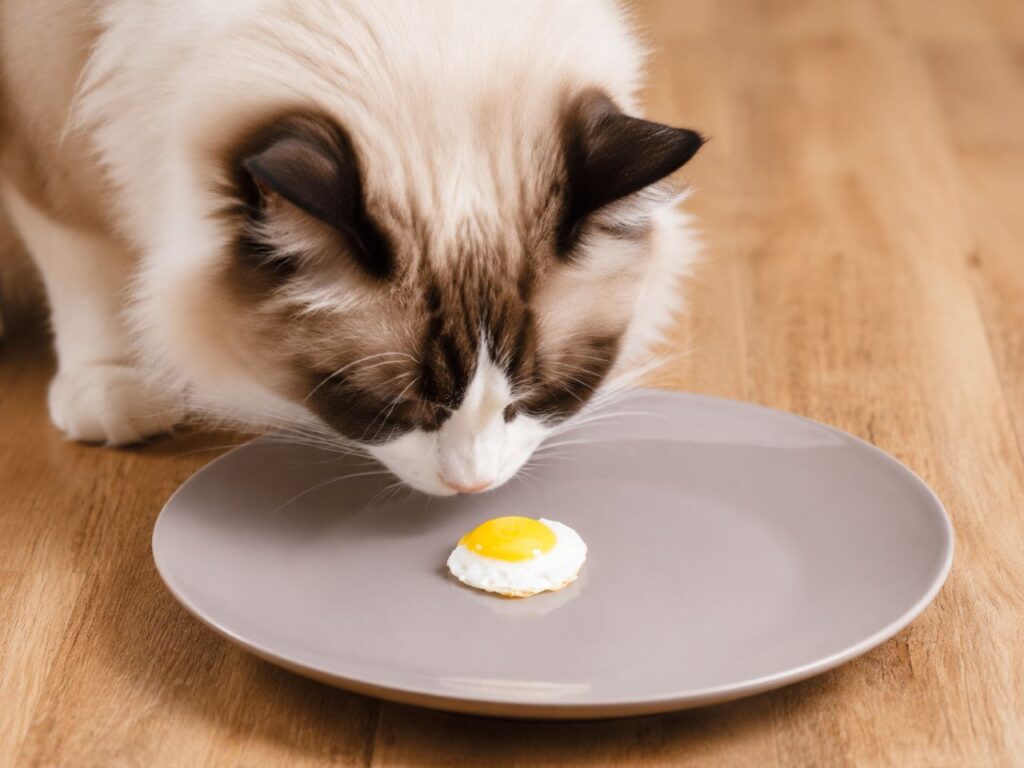
If you are wondering how much egg can a cat eat, for most average-sized adult cats, one to two teaspoons of cooked egg is a sensible serving. Larger cats may tolerate slightly more, while kittens and very small cats should receive less.
A practical portion guide looks like this:
| Cat’s Weight | Suggested Cooked Egg Portion |
| Up to 5 pounds | ½ to 1 teaspoon |
| 6 to 10 pounds | About 1 teaspoon |
| 11 to 15 pounds | Up to 2 teaspoons |
| 16 pounds or more | Up to 1 tablespoon |
These amounts are general guidelines, not daily targets. Serving egg once or twice a week is plenty for most cats.
One large egg contains roughly 70 calories. That may seem small on a human plate, but it can represent a large share of an average indoor cat’s daily calorie allowance. Veterinary guidance recommends keeping all treats and extras within about 10% of a cat’s total daily calories. A whole egg is therefore too much for most cats, particularly when added on top of their normal food.
Start With a Tiny Taste
The first serving should be smaller than the maximum amount. Offer about half a teaspoon and watch your cat for the next day. Stop feeding egg if you notice:
- Vomiting
- Loose stool or diarrhea
- Unusual itching or skin redness
- Excessive grooming
- Reduced appetite
- Swelling around the face
Food allergies to egg are not especially common in cats, but any new food can trigger an adverse reaction or feline food allergy in an individual animal.
Can Cats Eat Scrambled Eggs?
Yes, can cats eat scrambled eggs is perfectly safe when they are fully cooked and completely plain.
The safest method is simple:
- Crack an egg into a bowl.
- Whisk it without adding milk, cream, salt, or seasoning.
- Cook it thoroughly in a clean nonstick pan.
- Allow it to cool completely.
- Offer a teaspoon-sized portion.
You do not need to make a separate gourmet brunch for the cat. Plain and slightly boring is exactly what makes it safe. Avoid scrambled eggs made with:
- Butter or heavy oil
- Milk, cream, or cheese
- Salt, pepper, or hot sauce
- Garlic, onion, or chives (and related Allium plants, which are highly toxic to cats)
- Processed meat (sausage, bacon, ham)
Dairy and fatty ingredients can cause severe stomach trouble, even when they are not directly toxic.
Can Cats Eat Boiled Eggs?
Yes, cats can eat boiled eggs as long as they are fully cooked and served plain. Let the egg cool, remove the shell, and cut or mash a small piece before offering it to your cat.
Hard-boiled eggs are a simple choice because they do not need butter, oil, or seasoning. You can mix a teaspoon into your cat’s regular food or offer a few small pieces as a treat.
Skip soft-boiled eggs with runny yolks. Cooking both the white and yolk until firm lowers the risk from bacteria that may be present in undercooked eggs. Keep the serving small, since a whole egg contains far more calories than most cats need from a treat.
Can Cats Eat Raw Eggs?
No. When asking can cats eat raw eggs, the answer is a strict no. Cats should never eat raw eggs or undercooked eggs.
Raw animal protein can carry disease-causing germs, including Salmonella. A contaminated egg can affect the cat eating it, and bacteria may also spread to people through hands, bowls, utensils, kitchen surfaces, saliva, or feces. The CDC, FDA, and AVMA all advise caution with raw animal-based pet foods because of safety risks to pets and household members.
Raw egg whites also contain avidin, a protein that binds to biotin (Vitamin B7). Frequent consumption of raw egg whites may interfere with biotin absorption. Cooking changes the structure of avidin and completely removes this concern.
Avoid:
- Raw whole eggs
- Raw egg yolks or raw egg whites
- Runny scrambled eggs or soft, uncooked centers
- Raw batter containing egg
Cats do not gain a meaningful advantage from eating eggs raw. Cooking makes the egg safer and still leaves it nutritionally useful.
When Should Cats Avoid Eggs?
Egg is not an ideal treat for every cat. Speak with your veterinarian before adding it to the diet if your cat has:
- A known food allergy
- Chronic vomiting or diarrhea
- Feline pancreatitis
- Obesity or Diabetes
- Kidney disease or Liver disease
- A sensitive stomach
- A prescription or elimination diet
Cats on elimination diets should not receive unapproved foods. Even one bite can interfere with a food-allergy trial and make the results harder to interpret.
What Ingredients Should Never Be Added to Eggs for Cats?
The egg itself is rarely the main problem. Trouble usually begins when it arrives dressed for brunch. Do not serve eggs containing:
- Onion, Garlic, Chives, or Leeks: Members of the Allium family can damage a cat’s red blood cells, leading to heolytic anemia. This includes fresh, cooked, dried, and powdered forms.
- Large Amounts of Salt: Cats do need sodium in a properly balanced diet, but salty human food can add far more than necessary, leading to sodium toxicity.
- Butter, Bacon Grease, or Heavy Oil: Fatty additions increase calories and may trigger vomiting or diarrhea in sensitive cats.
- Cheese, Milk, or Cream: Many adult cats are lactose intolerant and do not digest lactose well. Rich dairy can turn a small snack into a litter-box thundercloud.
- Sausage, Ham, or Bacon: Processed meats are often high in salt and fat, and may contain garlic or onion powder.
- Hot Sauce and Seasoning Blends: Spicy sauces can irritate the digestive system, while seasoning blends may contain unsafe hidden ingredients.
When sharing egg with a cat, remove the cat’s portion before seasoning the rest for yourself.
What Should I Do If My Cat Accidentally Eats an Egg?
My Cat Ate a Whole Egg. What Should I Do?
A healthy adult cat that steals one fully cooked, plain egg may experience nothing more dramatic than a very successful morning. Still, a whole egg contains a substantial number of calories and may cause digestive upset. Monitor your cat for:
- Vomiting or Diarrhea
- Abdominal discomfort or Lethargy
- Loss of appetite
Contact your veterinarian if symptoms appear, persist, or become severe. Call a veterinarian more promptly if the egg was raw or contained toxic ingredients.
My Cat Ate Raw Egg
Remove the remaining egg immediately and clean any contaminated bowls, counters, utensils, and floors. Wash your hands thoroughly. Watch for vomiting, diarrhea, fever, weakness, reduced appetite, or unusual behavior. Some animals carrying Salmonella may show mild signs or no obvious symptoms, so contact your veterinarian for advice, especially if your cat is a kitten, elderly, or immunocompromised.
Final Thoughts
So, can cats eat eggs?
Yes, most healthy cats can enjoy a little fully cooked egg. Plain scrambled egg and hard-boiled egg are the safest choices. Remove the shell, skip the seasoning, and serve only a teaspoon or two.
Eggs provide high-quality protein and other nutrients, but they are not a complete meal for cats. Raw eggs carry food-safety risks, while oversized portions can add more fat and calories than a cat needs. The bowl still belongs to balanced cat food. Egg is merely a guest star, allowed one brief scene before exiting the kitchen.
Frequently Asked Questions
1. Can cats eat eggs every day?
A tiny amount may fit into some cats’ daily calorie allowance, but most cats do not need egg every day. Offering it once or twice a week makes portion control easier.
2. Can cats eat scrambled eggs?
Yes. Scrambled eggs are safe when fully cooked and made without butter, milk, salt, cheese, or seasoning.
3. Can cats eat raw eggs?
No. Raw eggs may contain harmful bacteria like Salmonella, and raw egg whites contain avidin, which can interfere with biotin absorption when consumed regularly.
4. Can cats eat egg yolk?
Yes, as long as the yolk is fully cooked. Keep the portion small because yolks contain more fat and calories than egg whites.
5. Can cats eat fried eggs?
A small unseasoned piece may be safe, but boiled or plain scrambled egg is preferable because fried eggs often contain extra oil or butter.
