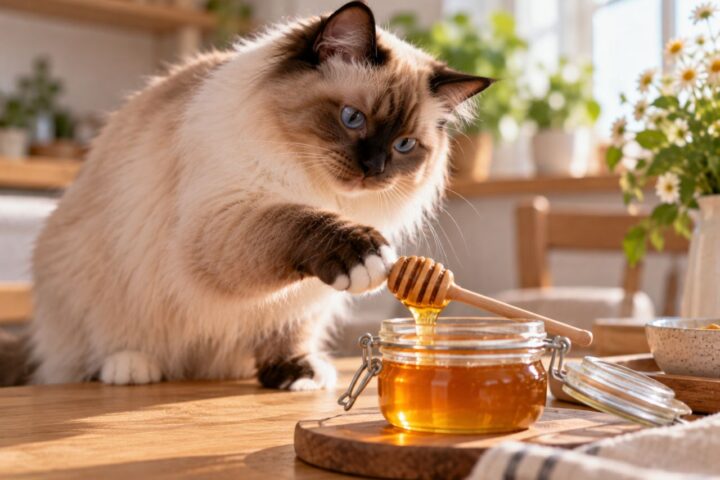

Cats should not eat mustard. The condiment can irritate their mouth and digestive tract, and some recipes contain onion or garlic, which are toxic to cats. A tiny lick of plain mustard is often less concerning than a larger amount, but the ingredients, quantity, and your cat’s condition determine what to do next.
Finding mustard on your cat’s whiskers can send you straight to your phone. Before throwing away the food or rinsing the plate, keep the jar or packet. The label will help your veterinarian assess what your cat actually swallowed.
My Cat Ate Mustard. What Should I Do?
Start by moving the food out of reach. Then work through these steps.
- Check the ingredients. Look for onion, garlic, onion powder, and garlic powder. Include the rest of the food your cat ate: a dipping sauce, seasoned meat, or prepared salad may contain ingredients that aren’t in the mustard itself.
- Record the amount and timing. Note whether you saw a single lick, found several bites missing, or discovered an open container without knowing what happened. Save the packaging and have your cat’s approximate weight ready.
- Get advice for the exposure. Contact your veterinarian promptly for an unknown quantity, mustard seeds or powder, any product containing onion or garlic, or a cat showing symptoms. Mention existing illnesses and medications. After a trace lick of plain mustard in an otherwise well cat, your vet may recommend observation at home.
- Avoid home treatments. Keep fresh water available, but don’t force your cat to drink. Don’t give human stomach medicines, activated charcoal, or a homemade antidote unless a veterinarian specifically directs you.
Do not try to make your cat vomit. Hydrogen peroxide is unsafe for cats, and salt or mustard is not an appropriate home treatment. A veterinarian can decide whether treatment is needed and provide it safely.
For U.S. poison advice, call ASPCA Poison Control at 888-426-4435 or Pet Poison Helpline at 855-764-7661. Consultation fees may apply. Trouble breathing, collapse, or severe weakness requires immediate emergency veterinary care.
Why Mustard Can Make Cats Sick
The concern involves both mustard’s own ingredients and anything added to the recipe.
Mustard seeds can irritate the digestive tract
Prepared mustard starts with mustard seeds, often ground into powder. Compounds in the seeds give the condiment its sharp taste and can cause irritation when eaten.
Possible effects include drooling, vomiting, loose stool, abdominal discomfort, and a reduced appetite. The amount matters: a trace of diluted condiment and a mouthful of dry powder are different exposures.
This is also why calling every accidental lick “mustard poisoning” can be misleading. Digestive irritation is a concern, but serious toxicity depends on the product and what else it contains.
Onion and garlic change the risk
Some mustard sauces, dressings, and marinades contain onion or garlic, including powdered forms. These ingredients can damage a cat’s red blood cells and cause anemia, reducing the blood’s ability to carry oxygen.
Cooking does not make them safe. Concentrated powders also deserve attention, even when you cannot see pieces of onion or garlic in the food.
A cat may look normal soon after eating an allium-containing product. Signs of red blood cell damage can take days to become apparent. Contact your veterinarian after a suspected exposure rather than waiting for symptoms.
The rest of the recipe matters
Vinegar and additional spicy ingredients can contribute to stomach upset. Salt content varies between products, and honey mustard dressings may include added sugar and fat.
These ingredients don’t make every tiny lick a medical emergency. They do make mustard an unsuitable treat and explain why the complete ingredient list is more useful than the color or brand name alone.
Are Yellow Mustard, Dijon, and Honey Mustard Different?
No common mustard variety is a recommended food for cats. The differences help assess an accident.
| Type | What to check after a cat eats it |
|---|---|
| Yellow mustard | A mild taste doesn’t make it suitable for cats. Check the amount and the full ingredient list. |
| Dijon or spicy brown mustard | Recipes vary. Tell your vet about added seasonings and any wine or other alcohol listed on the label. |
| Honey mustard or mustard dressing | Honey doesn’t remove the mustard-related concerns. Check for onion, garlic, and other dressing ingredients. |
| Whole-grain mustard | It still contains mustard seeds; the visible grains don’t make it a safer option. |
| Dry mustard powder or loose seeds | Report the form and estimated amount to your vet. These are different from a small smear of prepared sauce. |
Avoid using a “safe teaspoon” rule from a general online answer. Products differ, and the same spoonful represents a different exposure for a small kitten than for a large adult cat.
Symptoms to Watch For After Mustard Exposure
Watch your cat’s behavior as well as the litter box. A cat with an upset stomach may become quiet, hide, or turn away from a meal.
Call your veterinarian promptly about vomiting, persistent drooling, diarrhea, abdominal discomfort, or a noticeable drop in appetite or energy after the exposure. Repeated vomiting, an inability to keep water down, or blood in vomit or stool needs urgent assessment.
Pale gums, unusual weakness, rapid or difficult breathing, and red or brown urine are especially concerning when onion or garlic may have been involved. These signs warrant urgent veterinary care.
Follow the monitoring period your vet recommends. An uneventful first few hours does not rule out every ingredient-related problem, particularly after allium exposure.
Does Mustard Have Any Nutritional Benefit for Cats?
There is no nutritional reason to add mustard to your cat’s meals. Cats need a diet that supplies their specific requirements for protein, amino acids, fats, vitamins, and minerals. A complete and balanced cat food appropriate for their life stage is designed to do that.
The presence of vitamins or plant compounds in a human condiment does not make it a useful feline supplement. Cats already eating an appropriate diet generally don’t need extra vitamins unless their veterinarian recommends them.
For a healthy cat that wants to join you at mealtime, put a little of their usual food in a separate bowl. An appropriate cat treat can also be an occasional option. Keep extras modest so they don’t displace balanced meals.
A cat who feels sick after an accidental exposure needs advice about that episode before you introduce new foods.
Keeping Mustard Out of Your Cat’s Reach
Small changes around food preparation can prevent repeat incidents:
- Put used plates and dipping cups straight into the dishwasher or another inaccessible spot.
- Close mustard jars and clear spills before leaving the kitchen.
- Keep takeout packets and food wrappers in a covered trash can.
- Ask family members to check with you before sharing seasoned food with the cat.
Avoid offering meat after simply scraping the mustard off. Sauce can remain on the food, and the meat may have its own onion or garlic seasoning.
Give your cat their own food away from the preparation area, then clear the counter before letting them investigate.
Frequently Asked Questions
Will one lick of mustard hurt my cat?
A tiny lick of plain mustard often causes no serious problem, though stomach upset is possible. Check the ingredients and watch your cat. Contact your vet for symptoms, uncertainty about the amount, or any onion or garlic in the product.
Can cats eat mustard greens?
Mustard greens are the plant’s leaves, so they are a different food from seed-based mustard sauce. They can still cause digestive upset and aren’t necessary in a cat’s diet. Avoid serving greens seasoned with onion or garlic, and ask your vet before adding them to your cat’s meals.
Can kittens have a little mustard?
Mustard is not an appropriate kitten treat. Report accidental ingestion to your veterinarian, especially when the amount is uncertain or symptoms develop. Include the kitten’s age and weight when you call.
Can mustard help a cat throw up something harmful?
No. Never use mustard to induce vomiting. There is no safe household method for making a cat vomit; suspected poisoning needs veterinary guidance.