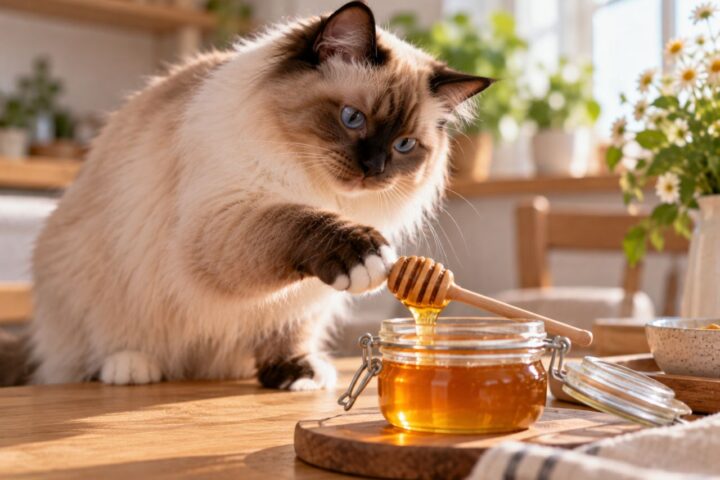

The crinkle of a seaweed snack bag can bring a curious cat into the kitchen almost as quickly as opening a can of tuna. Before you hand over a piece, look at the ingredient list.
Most healthy adult cats can eat a tiny piece of plain, unseasoned, food-grade nori once in a while. That does not make every seaweed product cat-safe. Roasted snack sheets may contain salt and flavorings, seaweed salad comes dressed, and kelp can contain far more iodine than you might expect.
Seaweed also offers no nutrient that a cat needs to get from a snack. A complete and balanced cat food should already supply the right amounts of iodine, amino acids, vitamins, and minerals.
Not All Seaweed Is the Same
“Seaweed” is a casual name for many kinds of marine algae. Nori, wakame, kombu, dulse, and kelp differ in texture, mineral content, and preparation. The answer changes again once salt, garlic, sauce, or oil is added.
| Seaweed product | Should cats eat it? | What matters |
|---|---|---|
| Plain nori sheet | A tiny piece occasionally | Check that seaweed is the only ingredient |
| Salted or flavored seaweed snack | No | May contain excess salt, garlic, onion, chili, or added oil |
| Kombu or kelp | Do not use as a casual treat or supplement | Iodine can be highly concentrated and variable |
| Wakame salad | No | The prepared dish commonly contains salty or seasoned dressing |
| Nori from a sushi roll | The plain wrapper is low-risk; do not offer the whole roll | Sauces, raw fish, and other fillings create separate concerns |
| Wild or beach seaweed | No | Species, contamination, decay, and foreign material are unknown |
| Seaweed in a complete commercial cat food | Usually fine when fed as directed | The ingredient is part of a formulated diet, not a home-added supplement |
Being an obligate carnivore does not mean every plant or algae ingredient is poisonous to a cat. It means cats depend on nutrients found in animal tissues and need a diet formulated around those requirements. The Cornell Feline Health Center also cautions that adding vitamins or minerals to an already balanced diet is usually unnecessary and can be harmful.
Is Seaweed Good for Cats?
Seaweed can contain iodine, fiber, trace minerals, and a range of naturally occurring compounds. Its nutritional profile changes with the species, growing location, season, and processing method. Even samples of the same type can differ considerably.
Those facts make seaweed interesting to nutrition researchers. They do not prove that sharing a bit of nori will improve a cat’s coat, digestion, immune system, or thyroid health.
Research directly testing seaweed as a food for cats is limited. A few feline dental products contain a measured amount of a particular brown seaweed, but that is not the same as sprinkling grocery-store kelp over dinner. Broad claims about “detoxing,” preventing hairballs, or strengthening immunity run ahead of the evidence.
The portion matters too. The tiny amount that makes sense as a treat is unlikely to provide a meaningful nutritional benefit. If your cat has constipation, a dull coat, recurring hairballs, or poor appetite, adding seaweed may hide the real question instead of solving it. Bring the change to your veterinarian.
Why Iodine Deserves More Attention Than the Vitamin List
Iodine is essential because the thyroid gland uses it to make thyroid hormones. The trouble is not that seaweed contains iodine. The trouble is that the amount can be hard to predict.
Published analyses have found wide variation in iodine among edible seaweeds, with brown varieties such as kombu and kelp often reaching much higher concentrations than nori. A large European Food Safety Authority assessment also found substantial variation in iodine and several metals across seaweed samples, including differences within a species. Product labels rarely tell pet owners enough to calculate how a spoonful of kelp powder fits into a cat’s entire diet.
Scientists are still studying the relationship between dietary iodine patterns and feline hyperthyroidism. A 2022 Scientific Reports study found that low or fluctuating iodine exposure may be common in domestic cats, but that does not show that one bite of nori causes thyroid disease. The practical lesson is simpler: do not improvise with concentrated iodine sources.
This rule is especially strict for a cat eating an iodine-restricted diet to manage hyperthyroidism. Cornell University’s veterinary hospital states that cats using this treatment must eat only the prescribed diet, without other food, treats, supplements, or hunting. A seaweed snack could work against that carefully controlled plan.
Seasoned Seaweed Is a Different Food
Many snack-size sheets are roasted with salt and oil. Flavored versions may include soy sauce, chili, wasabi seasoning, onion powder, or garlic powder. A product that seems lightly seasoned to a person was not formulated for a ten-pound cat.
Garlic and onion deserve a label check of their own. Cats are particularly susceptible to compounds in the Allium family, and dried powders are concentrated. These ingredients can damage red blood cells, with weakness, pale gums, rapid breathing, or collapse sometimes appearing days after exposure. The Merck Veterinary Manual advises that raw, cooked, dehydrated, and granulated forms can all cause poisoning.
Salt poisoning generally requires more than a lick or a crumb, especially when fresh water is available. A cat that eats a large amount of heavily salted food still needs prompt professional advice. Vomiting, marked thirst, weakness, wobbliness, tremors, or seizures are not signs to watch at home.
Oil is less dramatic but still unhelpful. It adds calories and may upset the stomach. Chili and strong seasonings can irritate the mouth or digestive tract. There is no benefit that makes those extras worth the gamble.
Can Cats Eat Nori?
Plain nori is the most reasonable seaweed to share with a cat. It is the thin, dried seaweed commonly wrapped around sushi. Choose a package whose ingredient list says only nori or seaweed. “Roasted” can simply describe dry heat, but many roasted snack products also contain oil and salt, so the front of the package is not enough.
Tear off a piece roughly the size of your thumbnail, then tear that into smaller flakes. That is a cautious taste, not a scientifically established serving. No standard veterinary portion for seaweed exists, and iodine content differs from product to product.
Offer one flake and see what your cat does. Some cats chew it; others lick it, drop it, or walk away. Do not hold a stiff sheet where an eager cat can bite off a large strip. Keep fresh water available and stop if you notice vomiting, diarrhea, drooling, or a change in appetite.
There is no reason to put nori on a feeding schedule. For a regular reward, a cat treat or a tiny piece of plain cooked meat is a better nutritional fit.
What About Kelp Powder and Seaweed Supplements?
Do not add human kelp powder, capsules, tinctures, or loose seaweed meal to your cat’s bowl on your own. “Natural” does not tell you the iodine dose, contaminant testing, or whether the product was formulated for cats.
A veterinarian may recommend a pet product containing a standardized seaweed ingredient for a specific reason. In that case, use the named product and measured amount. A spoonful from a bulk bag is not an equivalent substitute.
The same caution applies to homemade and raw diets. Balancing iodine requires the complete recipe and a reliable nutrient analysis. It is a job for a board-certified veterinary nutritionist, not a guess based on the mineral claims printed on a supplement pouch.
Can Kittens Eat Seaweed?
A kitten that steals a tiny piece of plain nori is unlikely to be harmed. There is still no good reason to offer it deliberately. Growing kittens have less room in their diet for nutritionally incomplete extras and need food labeled complete and balanced for growth.
Use a kitten-appropriate treat during training or bonding. It gives you a predictable ingredient list without adding an uncontrolled source of iodine.
Senior cats and cats with kidney, heart, digestive, or thyroid disease also deserve an individual answer. Their diet may already limit sodium, minerals, or outside treats. Ask the veterinarian who knows the cat’s diagnosis and current food.
My Cat Ate Seaweed—What Should I Do?
Start with the package, not a search for a home remedy. Work out what your cat ate, how much is missing, and whether the product contains salt, garlic, onion, or another seasoning.
If it was one small piece of plain nori and your otherwise healthy cat is acting normally, remove the rest, provide water, and monitor for stomach upset.
Call your veterinarian promptly if:
- A large part of the package is missing
- The product contains garlic, onion, or an unknown seasoning blend
- Your cat ate kelp powder, a supplement, wild seaweed, or part of the packaging
- Your cat has hyperthyroidism or is on an iodine-restricted therapeutic diet
- Vomiting or diarrhea repeats, or your cat becomes weak, painful, very thirsty, unsteady, unusually quiet, or uninterested in food
Trouble breathing, collapse, tremors, seizures, or very pale gums need emergency care. Do not give hydrogen peroxide or try to make a cat vomit at home. The ASPCA Animal Poison Control Center is available in the United States at (888) 426-4435; a consultation fee may apply.
How Seaweed Fits Into a Balanced Cat Diet
At least 90% of a cat’s daily calories should come from a complete and balanced food. The World Small Animal Veterinary Association recommends keeping treats, toppers, and complementary foods to 10% or less unless a veterinarian directs otherwise.
That percentage is a ceiling, not a target. It also measures calories, while the main concern with kelp is mineral concentration. Staying below 10% of calories does not make an unmeasured iodine supplement safe.
Seaweed is best treated as a curiosity food. Your cat can have a tiny taste of the plain kind, but their regular meal should do the nutritional work.
Final Thoughts
A healthy adult cat can usually sample a tiny piece of plain, unseasoned nori without trouble. Check the ingredient list, tear it small, and keep it occasional.
Leave seasoned seaweed snacks, salads, kombu, kelp powder, and beach finds off the menu. Cats with thyroid disease or a prescription diet need advice from their own veterinarian before any seaweed is offered.
At Catsoria, our rule for sharing human food is simple: the ingredient list matters more than the front of the package, and a treat should never be asked to fix a health problem.
Frequently Asked Questions
1. Can cats eat dried seaweed?
Cats can have a tiny piece of plain dried seaweed, preferably nori, on rare occasions. Avoid any product with added salt, oil, garlic, onion, chili, or flavored powder. Cut or tear it into small flakes so a large, papery strip does not become a choking risk.
2. Can cats eat roasted seaweed snacks?
Most roasted seaweed snacks are not a good choice for cats because they contain salt and oil. Some also use garlic, onion, soy sauce, or spicy flavorings. A dry-roasted nori sheet with seaweed as its only ingredient is different, but it still belongs in the occasional-taste category.
3. Can cats eat sushi seaweed?
A small piece of plain nori wrapper is generally low-risk. Do not hand over a whole sushi roll. Raw fish, salty sauce, spicy mayo, tempura batter, and other fillings bring their own risks, and cats do not need the rice.
4. Can cats eat seaweed salad or wakame?
Do not offer prepared seaweed salad. The wakame itself may not be toxic in a tiny plain amount, but restaurant and packaged salads commonly contain salty dressings, sugar, sesame oil, soy sauce, and seasonings. It is easier and safer to skip the dish.
5. Can cats eat seaweed every day?
Seaweed should not become a daily homemade topper. Repeated feeding adds an unpredictable source of iodine to a diet that should already be balanced. Choose a complete cat food and keep any plain nori taste infrequent.
6. Does seaweed help cats with constipation or hairballs?
There is not enough feline evidence to use grocery-store seaweed as a treatment for either problem. More fiber is not automatically better, and recurring constipation or vomiting may need medical care. Ask your veterinarian about a food, fiber source, grooming plan, or treatment suited to the actual cause.
Source
- Cornell Feline Health Center. Feeding Your Cat.
- World Small Animal Veterinary Association. Guidelines on Selecting Pet Foods.
- Teas J, Pino S, Critchley A, Braverman LE. Variability of Iodine Content in Common Commercially Available Edible Seaweeds. Thyroid. 2004;14(10):836–841.
- European Food Safety Authority. Dietary Exposure to Heavy Metals and Iodine Intake via Consumption of Seaweeds and Halophytes. EFSA Journal. 2023;21(1):7798.
- Alborough R, Graham PA, Gardner DS. Estimating Short- and Longer-Term Exposure of Domestic Cats to Dietary Iodine Fluctuation. Scientific Reports. 2022;12:8987.
- Cornell University Hospital for Animals. Feline Hyperthyroidism.
- Merck Veterinary Manual. Garlic and Onion (Allium spp.) Toxicosis in Animals.
- ASPCA. Animal Poison Control Center.