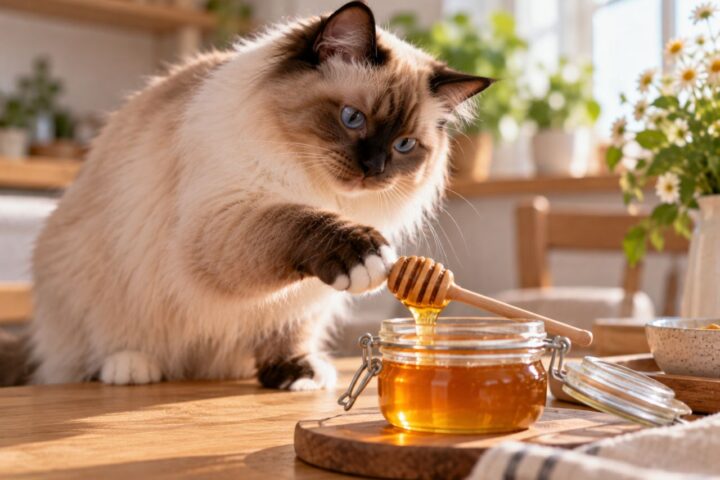

Cats can eat a small amount of clean common dandelion, including its leaves and flowers. The plant itself is generally considered non-toxic to cats. A nibble may still cause stomach upset. Call your vet promptly if lawn chemicals may be involved. Dandelions are optional; cats do not need them to stay healthy.
Before deciding what to do, check what your cat actually ate. A fresh leaf from an untreated plant, a flower picked beside a public sidewalk, and a bottle of dandelion extract involve different questions. The plant’s identity, its source, and the form your cat swallowed all matter.
Are Dandelions Poisonous to Cats?
Common dandelion, Taraxacum officinale, appears in the safe category of Cats Protection’s plant guide. That is reassuring when a healthy cat takes a little bite from a correctly identified, untreated plant.
Stomach upset remains possible. Even plants classified as non-toxic can cause vomiting or other digestive problems when eaten. Stop access to the plant and contact your vet if your cat becomes unwell.
Identification deserves a moment of attention. Common dandelions have a cluster of leaves at ground level and individual flower heads on hollow, unbranched stalks. Those features are useful clues, but a yellow flower alone is not enough to identify a plant. Avoid offering anything you cannot identify confidently.
Do Dandelions Offer Nutritional Benefits for Cats?
Dandelion leaves contain nutrients, including calcium, potassium, and iron. Their nutrient content helps explain their use as food for people. It does not establish that adding a few leaves improves a cat’s diet.
Cats are obligate carnivores with specific nutritional needs. A complete and balanced cat food appropriate for their life stage is designed to meet those needs. Extra vitamin and mineral supplements are generally unnecessary for cats already eating a complete diet. More nutrients are not automatically better.
Human nutrition charts can be misleading
Vitamin A is a useful example. Cats cannot convert the beta-carotene found in plants into vitamin A; they need preformed vitamin A in their diet. A leafy green described as a good vitamin A source for people should not be treated as an equivalent source for cats.
Fiber also requires some context. Different fibers have different effects in the gut, and both the type and amount matter. That makes “contains fiber” a poor basis for promising that dandelions will fix constipation, prevent hairballs, or improve a particular cat’s digestion.
What about antioxidant and “detox” claims?
Dandelions are sometimes promoted for liver support, kidney health, and cancer prevention. The sources reviewed for this article do not establish those benefits from feeding dandelions to cats.
The National Center for Complementary and Integrative Health describes research on dandelion’s antioxidant and anti-inflammatory properties as preliminary laboratory work. Its summary concerns human health, and even there, convincing evidence for treating a health condition is lacking. Those findings cannot establish a benefit or a dose for a pet cat.
Leaves, Flowers, Roots, and Extracts: What’s the Difference?
The safety classification for the fresh plant should not be used to judge every product made from it. Herbal preparations vary in concentration and ingredients, and medicinal use needs veterinary guidance.
| Part or product | Practical guidance |
|---|---|
| Fresh dandelion greens | A small nibble of a clean, untreated leaf is generally low concern for a healthy adult cat. Keep greens optional. |
| Yellow flowers | A little accidental nibble is usually low concern when the plant is correctly identified and untreated. There is no need to serve whole flower heads. |
| Roots and long stalks | Skip these as treats. A plant’s non-toxic classification does not establish a useful serving size or a reason to feed every part. |
| Tea, powders, tinctures, or extracts | Check the exact product with your veterinarian before giving it. A fresh leaf and a concentrated preparation are not interchangeable. |
Before Offering Your Cat a Leaf
There is no reason to introduce dandelions solely to improve nutrition. At Catsoria, we recommend keeping greens optional and letting a complete cat food meet your cat’s dietary needs.
For a healthy adult cat that is interested in tasting a leaf, take a cautious approach:
- Use a correctly identified plant from a source you know has not been treated with lawn chemicals. Avoid roadside plants and public lawns with an unknown treatment history.
- Rinse the leaf thoroughly under running water to remove surface dirt. Do not use dish soap or household cleaners.
- Offer only a tiny, torn piece, served plain. Skip sauces, dressing, and seasoned greens.
- Let your cat choose whether to eat it. Remove the remainder and stop offering it if digestive symptoms develop.
This is a cautious tasting approach, not a scientifically established dose. The sources reviewed for this article do not provide a validated feline serving size, so a daily recommendation in teaspoons or grams would imply more certainty than the evidence supports.
Rinsing is useful for cleaning, but it cannot make a chemically treated lawn plant reliably safe to eat. Washing removes some surface residues, and no washing method removes all pesticide residues.
Lawn Treatments and Herbal Products Need Extra Care
When a cat eats dandelions from a lawn, ask whether weed killer, insecticide, or a combined lawn treatment has been used. Keep the product name or label available if you need veterinary advice. Risk depends on the actual product and exposure; the word “pesticide” alone does not tell you how serious it is.
Follow the label’s instructions for keeping pets away from treated areas. A label’s permission to walk on a lawn again should not be interpreted as permission to feed treated weeds.
Dandelion root for cats is also sold as a supplement. Before using one, ask your veterinarian to assess its ingredients, purpose, and compatibility with your cat’s medications. This matters especially for cats receiving treatment for kidney, heart, liver, or other ongoing disease.
Avoid replacing prescribed care with an herbal product. Herbal treatment requires a diagnosis and attention to species differences and possible interactions.
What to Do If Your Cat Has Already Eaten Dandelions
Move your cat away from the plant. Note roughly how much was eaten and when, and take a photo that shows the leaves, stalk, and flower. Keep any garden-treatment packaging available.
For a small nibble of a known, untreated dandelion: a healthy cat acting normally can generally be watched closely at home. Monitor appetite, energy, vomiting, and stool changes. Call your vet if symptoms appear or you are unsure how much was swallowed.
For an unidentified plant, possible chemical exposure, or an herbal product: contact your veterinarian or an animal poison service promptly. Do not wait for symptoms before seeking advice about a potentially poisonous exposure. Accurate plant identification helps the clinician decide what care is needed.
Repeated vomiting, pronounced drooling, or unusual weakness warrants prompt veterinary attention. Difficulty breathing, seizures, or collapse calls for emergency care. These are general warning signs after a concerning exposure, not expected effects of a small, clean dandelion nibble.
In the United States, ASPCA Poison Control is available at 888-426-4435, 24 hours a day; a consultation fee may apply. Do not try to induce vomiting or give home remedies while waiting for advice.
Frequently Asked Questions
1. Can kittens eat dandelions?
There is no nutritional reason to add them to a kitten’s food. Prioritize a complete diet formulated for growth. An accidental bite needs the same checks for plant identity and chemical exposure, with veterinary advice if the kitten seems unwell or the amount is uncertain.
2. Can cats drink dandelion tea?
Do not offer it routinely. Tea strength and added ingredients vary, and the references reviewed here do not establish a safe feline dose. Ask your vet about the exact product before using it. Fresh water remains the appropriate everyday drink.
3. Will dandelions help a constipated cat?
They are not an established treatment for feline constipation. A vet can assess the cause and advise whether a particular diet or fiber source is appropriate. Contact your veterinarian about ongoing trouble passing stool instead of trying a dandelion remedy.
4. Can cats eat dandelions every day?
A daily serving is unnecessary, and there is no validated daily amount in the sources reviewed. Keep any interest in greens separate from your cat’s essential nutrition. A cat that ignores dandelions is not missing a required part of their diet.
Source
Cats Protection — Cat-safe Plants.
Cornell Feline Health Center — Feeding Your Cat.
Merck Veterinary Manual — Nutritional Requirements of Small Animals.
University of Wisconsin–Madison Extension — Dandelion, Taraxacum officinale.
National Center for Complementary and Integrative Health — Dandelion: Usefulness and Safety.
VCA Animal Hospitals — Veterinary Herbal Therapy.
National Pesticide Information Center — Pesticide Use Around Pets; How Can I Wash Pesticides From Fruit and Veggies?.
ASPCA Poison Control — Toxic and Non-Toxic Plants; Poison Control Guidance.
Pet Poison Helpline — Emergency Instructions.
PetMD — Poisonous Plants for Cats.