
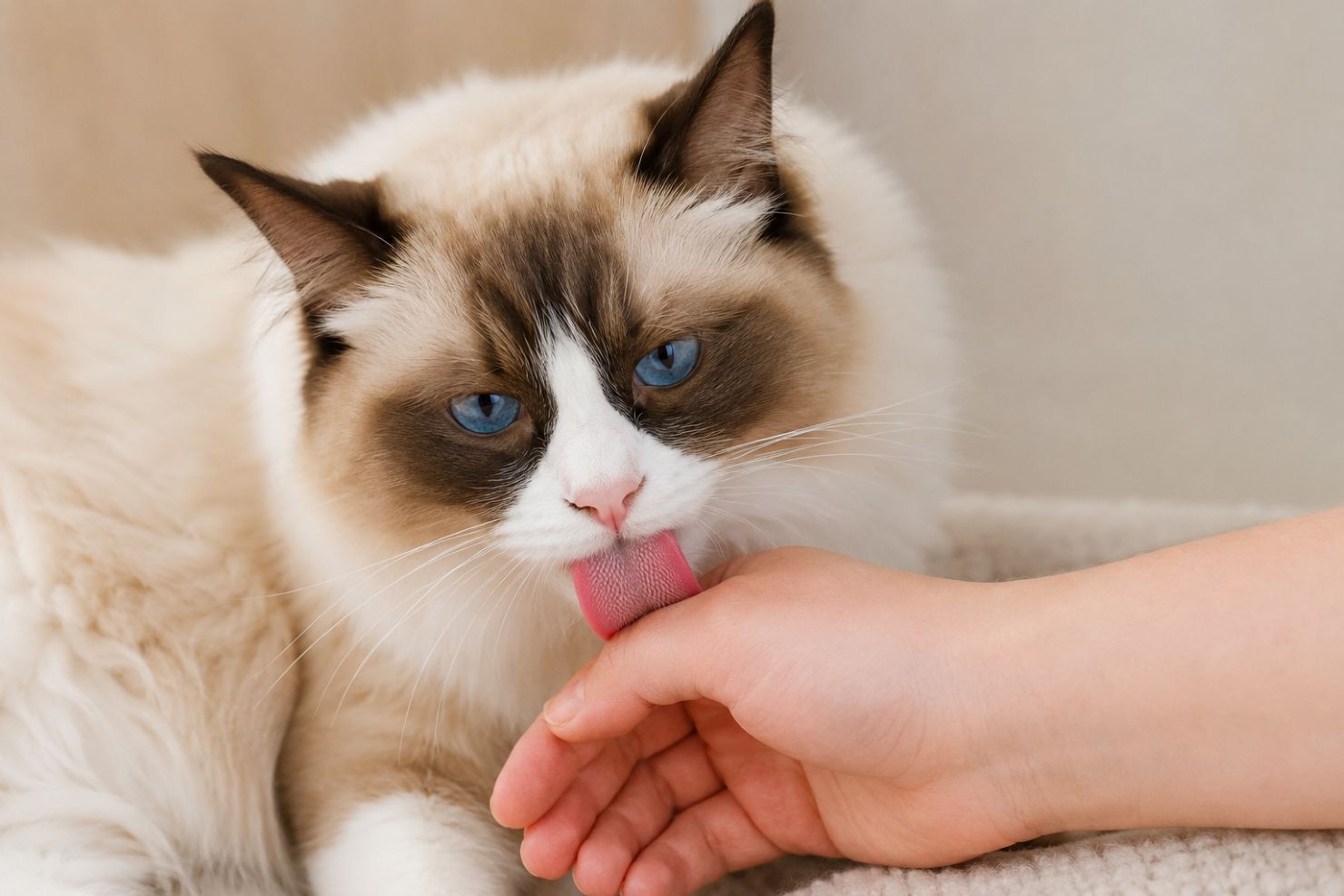
Your cat hops onto the couch, settles beside you, and starts licking your hand. At first, it feels rather sweet. A few seconds later, that tiny sandpaper tongue is scraping the same patch of skin with the focus of someone removing old wallpaper.
What is going on?
Cats lick people for several reasons. Your cat may be grooming you, showing affection, sharing scent, asking for attention, or investigating something tasty on your skin. Some cats also lick when they feel nervous or overstimulated. When the behavior appears suddenly or becomes difficult to interrupt, pain or illness may be involved.
A lick on its own does not reveal the whole message. Look at your cat’s posture, tail, ears, and what happened just before the licking began. Those clues usually tell you far more than the tongue does.
Why Does My Cat Lick Me?
Cats are dedicated groomers. They lick their coats to remove loose hair and debris, spread natural oils, and keep their fur in good condition. Friendly cats may also groom each other, particularly around the head and neck.
When your cat licks you, that normal grooming behavior has been redirected toward a human family member.
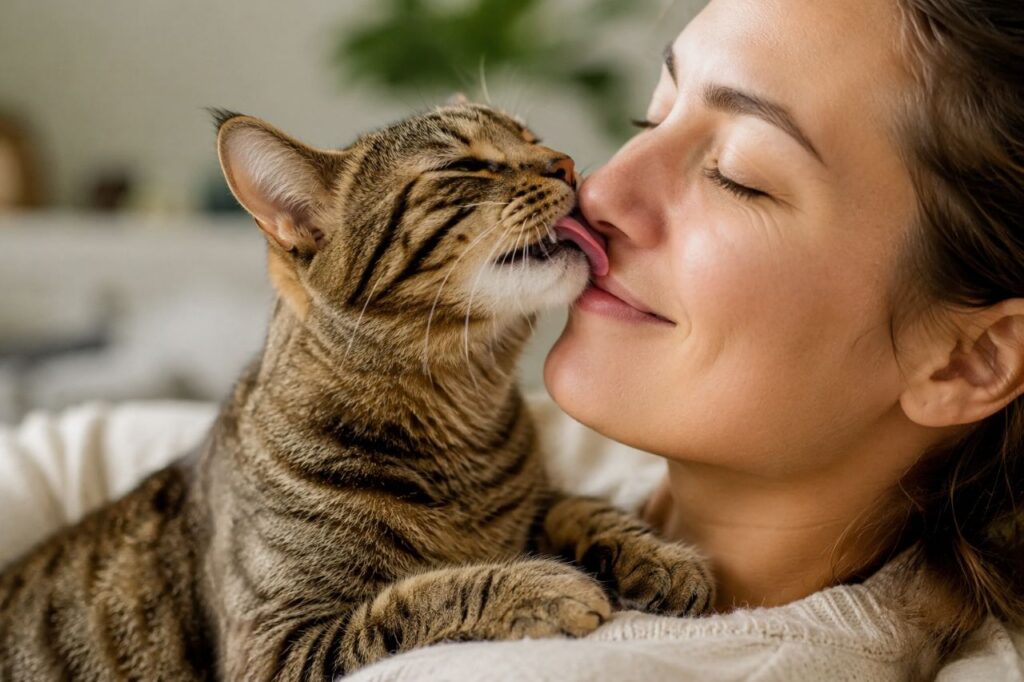
7 Common Reasons Cats Lick People:
- Social bonding and affection
- Sharing a familiar scent
- Getting your attention
- Tasting salt or food on your skin
- Calming themselves (stress relief)
- Responding to overstimulation
- Coping with physical discomfort
A relaxed cat that gives you a few slow licks while purring is probably having a pleasant social moment. Rapid, repetitive licking from a tense cat may mean something else.
Your Cat May Be Grooming You
Cats do not groom every animal they meet. Social grooming usually happens between cats that know and accept one another.
This behavior is often called allogrooming. One cat licks another cat, commonly around areas that are awkward to reach alone. It helps maintain a social relationship as well as a clean coat. Your cat may extend this behavior to you. The fact that you have very little useful fur does not appear to matter.
Gentle licking is more likely to be affectionate when your cat also shows relaxed body language. You might notice:
- Soft or partly closed eyes
- A loose body
- Quiet purring
- Kneading (making biscuits)
- Slow blinking
- Head rubbing
Mother cats lick their kittens from birth, and some adult cats continue to use grooming as part of close social contact. Experts at Catsoria and VCA both list bonding and affection among the main reasons cats lick people. That does not mean every lick is a feline kiss. Cats can perform the same behavior for different reasons—the setting matters.
Licking Helps Your Cat Mix Scents With You
Scent is woven into almost everything cats do. They rub their cheeks against furniture, scratch familiar surfaces, investigate new objects with their noses, and groom animals they trust. These behaviors help them gather information and maintain familiar smells around their living space.
When your cat licks your arm or hand, they may be adding their scent to yours. Cats Protection describes licking as a bonding behavior that helps cats share scent and create a familiar group smell.
This may happen more often after you return home. You arrive carrying a strange collection of odors from cars, stores, offices, food, weather, and other animals. Your cat sniffs you, makes a quiet assessment, and begins restoring the household fragrance.
People often say a cat is “claiming” its owner. That description is not completely off the mark, but it sounds more possessive than the behavior usually is. Your cat is probably reinforcing familiarity rather than planting a flag.
Licking Gets a Reaction
Cats are excellent at training people.
Imagine that your cat licks your wrist. You look down, say their name, and give them a scratch behind the ears. The next day, the cat tries it again. The result is the same. Soon, licking becomes a reliable way to get your attention.
Your cat may lick you because they want:
- Petting
- Breakfast
- Playtime
- Access to a room
- Your spot on the couch
- A response of any kind
Even pushing your cat away can reward the behavior. Attention does not have to be warm and enthusiastic to be useful. A cat who was being ignored has now made you move, speak, and look at them.
VCA notes that cats can learn to lick because people respond by talking, petting, or moving them. Even negative attention may encourage another attempt later. This is often the answer when a cat licks at the same time every day. A 5:30 a.m. licking session is rarely a philosophical reflection on your bond—breakfast may be late.
You Might Taste Good
Human skin is surprisingly interesting to a cat. Sweat leaves salt behind. Fingers carry traces of food. Soap, lotion, and shampoo add unfamiliar smells. If you have recently cooked chicken, opened a can of tuna, or eaten something with your hands, your cat may be conducting a detailed flavor investigation.
Some cats lick their owners after exercise because of the salt on the skin. Others target hands after meals.
Safety Warning: Pay attention to products you have used. Cats should not be allowed to lick skin covered with topical medication, pain-relief cream, essential oils, medicated shampoo, or other potentially harmful substances. Catsoria advises preventing access to creams and topical products that may be unsafe when swallowed.
Wash your hands before touching your cat after using household chemicals or applying medication. When you are unsure whether a product is pet-safe, check with your veterinarian or an animal poison-control service.

Some Cats Lick When They Feel Safe and Sleepy
Licking can be tied to comfort. Kittens are groomed by their mothers before they can care for themselves. That early experience connects licking with warmth, safety, feeding, and close physical contact.
An adult cat may lick you while curled against your body, kneading a blanket, or preparing to fall asleep. Some cats also suckle soft fabric or gently mouth a sleeve during these moments. This type of licking tends to be slow and unhurried. The cat looks comfortable rather than driven.
You do not need to stop it unless it hurts, irritates your skin, or turns into chewing and swallowing fabric. A cat that eats wool, string, blankets, or clothing should be checked by a veterinarian because swallowed material can cause a dangerous intestinal blockage. Cats Protection advises seeking veterinary help when a cat ingests fabric rather than merely licking it.
Licking Can Be a Stress Response
A cat does not always lick because they are happy. Grooming can help cats settle themselves. When a cat feels conflicted or uneasy, they may begin licking their body, an object, or a nearby person. The familiar action gives them something predictable to do.
You might see this anxiety-driven licking after:
- A visitor enters the room
- Another pet approaches
- Furniture has been moved
- A loud appliance starts
- Your cat has been held for too long
- The household routine changes
- A new baby or animal arrives
- There is tension between cats
The licking may look faster and less relaxed than social grooming. Your cat might keep glancing around the room or stop and start repeatedly.
Other signs of tension can include flattened ears, enlarged pupils, a low body position, hiding, restlessness, or a tail that flicks sharply from side to side. Anxiety can also contribute to excessive self-grooming and, in some cats, hair loss or skin damage.
One nervous licking episode is not proof of an anxiety disorder. Look for a pattern. Where does it happen? Who is nearby? What changed shortly before it began? That pattern is often the useful part.
Why Does My Cat Lick Me and Then Bite Me?
A cat that switches from licking to biting can leave you wondering whether you just received affection or an eviction notice. Both are possible.
Petting Became Too Much
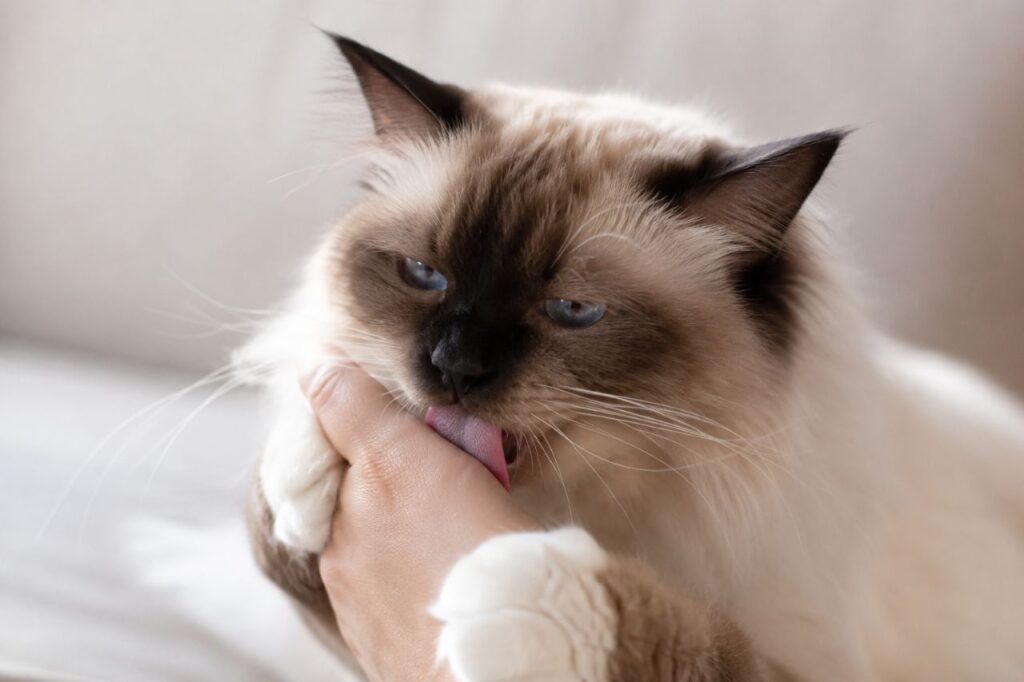
Some cats enjoy being touched only for a short time. The interaction starts pleasantly, but repeated strokes eventually become irritating. Before a bite, you may notice the cat’s body stiffen. The tail begins to thump. The ears rotate backward. The cat turns toward your hand or gives your skin a few quick licks.
That licking may be an early request to stop. Cats Protection says that licking followed by biting can happen when a cat becomes overstimulated or overexcited. End the petting session when you see those smaller signs. Do not wait for your cat to use teeth as punctuation.
Your Cat Is Playing
Young cats often mix licking with grabbing, kicking, and gentle biting. A moving hand can quickly become prey. Redirect the cat toward a wand toy, soft kicker toy, or small object that can be chased safely. Avoid encouraging kittens to wrestle with bare hands. The game becomes less delightful when the kitten grows into a twelve-pound hunter with adult teeth.
It May Be Part of Grooming
Cats sometimes use their front teeth to nibble at tangled fur while grooming. A light nibble between licks may be part of the same routine. A painful or forceful bite is different. Stop the interaction and give your cat room.
Repeated biting that appears without warning can be linked to fear, frustration, or pain. A veterinary exam is sensible when biting begins suddenly or happens whenever a certain body area is touched.
Why Does My Cat Lick My Hands?
Hands are busy. They touch food, door handles, other animals, plants, packages, and hundreds of scented objects. They also deliver nearly everything your cat values: they open food containers, move toys, stroke cheeks, and arrange blankets.
A cat licking your fingers may be investigating smells, asking for something, or returning your grooming attention. Watch what happens next. Does the cat walk toward the kitchen? Push their head under your palm? Carry a toy into the room? The follow-up often answers the question.
Hand licking is usually harmless when the skin is healthy and free from unsafe products. Wash your hands after handling cleaners, human medications, nicotine products, or foods that can be toxic to cats.
Why Does My Cat Lick My Face?
Your face is warm, close, and full of strong smells. Cats may lick it for the same reasons they lick hands: grooming, attention, curiosity, or an attempt to wake you. A face lick at dawn may translate roughly to, “You appear unconscious, and the food situation is becoming unacceptable.”
Friendly intention does not make face licking completely hygienic. It is safer to keep cat saliva away from your eyes, nose, mouth, and broken skin. VCA advises avoiding contact between pet saliva and open wounds because bacteria from the mouth can cause infection.
People with weakened immune systems should take extra care and ask their physician about appropriate pet-hygiene precautions. Calmly turn your head away when your cat aims for your face. Offer cheek scratches, play, or a nearby resting spot instead.
Why Does My Cat Lick My Hair?
Hair gives your cat something that resembles fur, at least by human standards. A cat perched behind you may begin grooming your hair because you are part of their social group. The behavior often occurs during quiet moments when the cat is already relaxed.
Shampoo, styling products, and scalp oils may add to the appeal.
Do not let your cat chew or swallow long hair. Hair can collect in the digestive tract and contribute to stomach or intestinal problems (hairballs or blockages). Keep cats away from freshly applied hair-growth treatments, medicated scalp products, essential oils, and chemical dyes. If your cat starts licking your hair after you switch products, the new scent is a likely suspect.
Why Is a Cat’s Tongue So Rough?
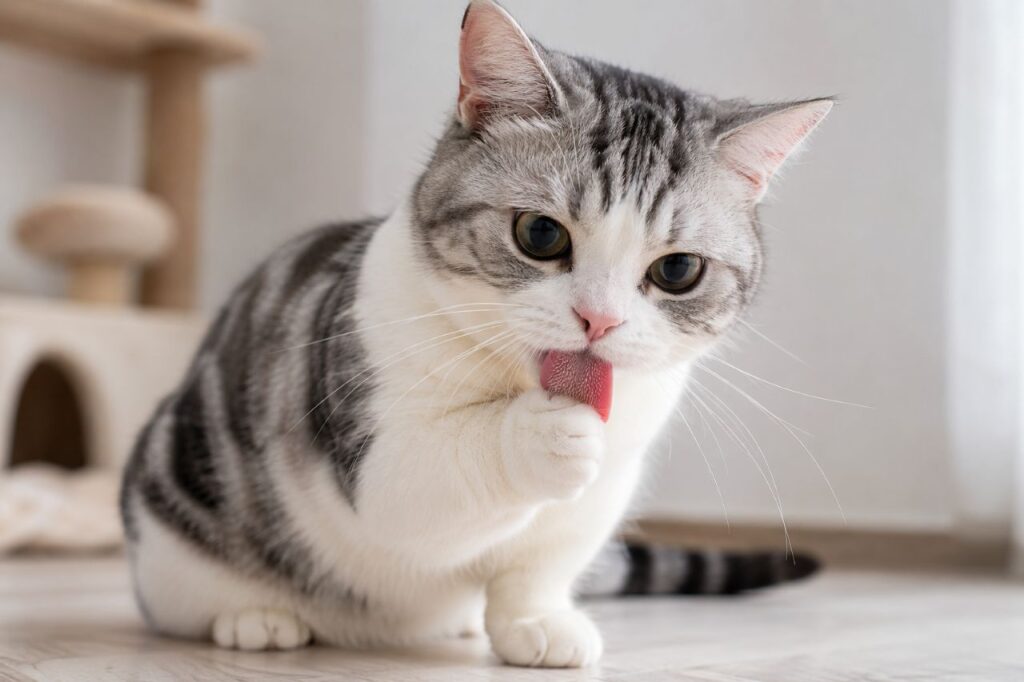
A cat’s tongue is covered with tiny backward-facing structures called papillae. They are made from keratin, the same tough material found in claws and fingernails.
Papillae work like a built-in grooming comb. They catch loose hair, pull debris from the coat, and help move saliva through the fur. Cats also use them when removing meat from bones.
The design is remarkably efficient. It is simply not optimized for human forearms. A few licks may feel ticklish, but repeated licking in one place can leave your skin sore or red. Move away gently before the area becomes irritated.
Is It Safe for a Cat to Lick You?
An occasional lick on intact skin is unlikely to cause trouble for most healthy adults. However, there are situations where it is better to redirect your cat.
Do not allow licking on:
- Cuts, scratches, or rashes
- Surgical wounds
- Your eyes or mouth
- Skin covered with medication
- Areas treated with essential oils
- Medical devices
- Severely irritated skin
Wash the area with soap and water if cat saliva gets into a wound. Young children, older adults, and people with compromised immune systems may be more vulnerable to infection. Personal medical advice should come from a healthcare professional who understands the person’s health history.
When Licking Deserves a Vet Visit
A cat who has always given you two or three licks before settling down is probably displaying a normal habit. A cat who suddenly spends twenty minutes licking your arm, household objects, and their own body deserves a closer look.
Contact your veterinarian when licking:
- Appears suddenly
- Becomes intense or repetitive (obsessive licking)
- Interrupts sleep or normal activity
- Is difficult to redirect
- Comes with vomiting or drooling
- Occurs alongside appetite or weight changes
- Is paired with hiding, aggression, or restlessness
- Causes bald areas, sores, or damaged skin (feline overgrooming)
- Happens around a painful body part
- Is accompanied by trouble jumping or walking
Cats may overgroom because of parasites, allergies, skin disease, pain, boredom, or stress.
The location of self-licking can also provide clues. A cat repeatedly licking the lower abdomen or genital area may have urinary discomfort. Straining in the litter box, producing little or no urine, or crying while attempting to urinate requires immediate veterinary attention. A urinary blockage can become life-threatening, particularly in male cats. Do not assume a sudden change is merely quirky behavior; cats often conceal pain well.
How to Stop Your Cat From Licking You
You can set a boundary without scolding your cat.
When licking starts, quietly move your hand or stand up. Keep the response calm. Loud reactions may turn the behavior into an exciting game or give an attention-seeking cat exactly what they wanted.
Offer another activity before your cat returns to your skin:
- A wand toy works well for an energetic cat.
- A food puzzle may help when the cat is bored.
- Some cats are satisfied with a short brushing session.
Reward the behavior you prefer. Pet your cat when they sit beside you calmly. Start play when they approach without licking. Over time, the cat learns that polite company pays better than aggressive exfoliation.
Daily environmental enrichment can reduce licking that grows out of boredom or frustration. Useful options include climbing furniture, cardboard boxes, scratching posts, window perches, rotating toys, and short hunting-style play sessions.
Punishment usually makes the problem worse. Spraying water, shouting, or physically pushing the cat can create fear without teaching a useful alternative. PetMD recommends redirection and positive reinforcement for unwanted licking. When the licking seems tied to stress, work on the trigger rather than the tongue. Add hiding places, separate food bowls and litter boxes in a multicat home, protect quiet resting areas, and keep feeding and play routines predictable.
Does Licking Mean Your Cat Loves You?
It can.
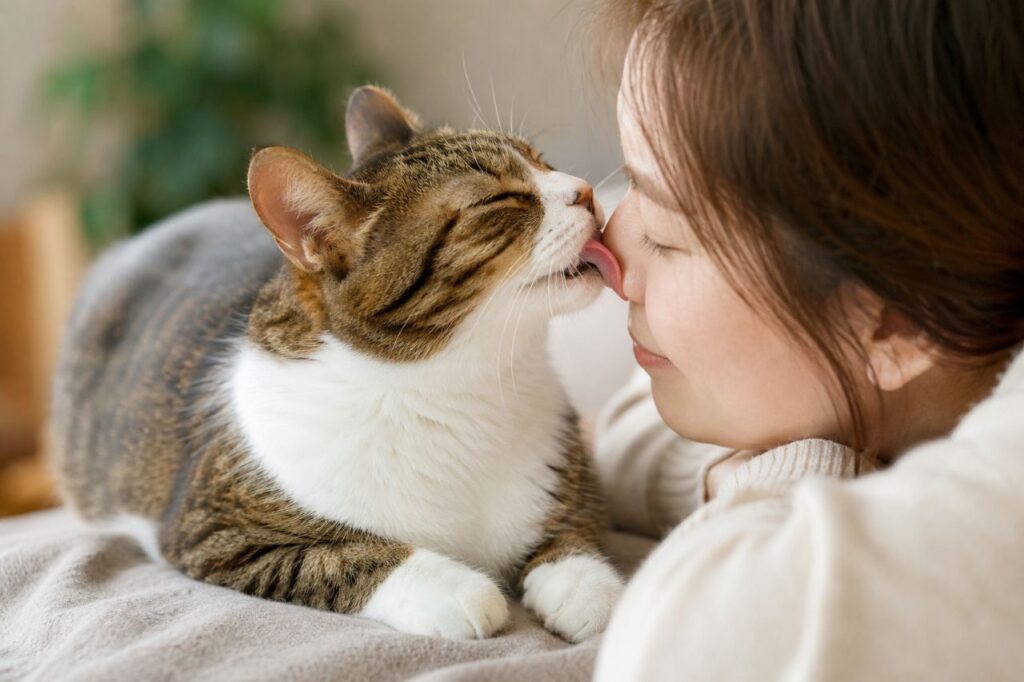
Cats often lick people they trust, just as socially bonded cats may groom each other. A cat who curls beside you, purrs, slow-blinks, and gives you a few gentle licks is likely expressing comfort and familiarity.
Love is not the only possible explanation. Your cat could also want dinner, like the salt on your wrist, or be asking you to stop touching their back. Read the complete scene.
| Type of Licking | Feline Body Language Clues |
| Affectionate Licking | Comes from a loose, comfortable, relaxed cat. |
| Attention-Seeking Licking | Active, persistent, and leads toward a desired outcome (like a food bowl). |
| Stress-Related Licking | Looks repetitive, rapid, or tense; paired with scanning the room. |
| Illness-Related Licking | Appears suddenly and often comes with other behavioral changes. |
The tongue is only one part of the conversation.
Final Thoughts
Why do cats lick you? Most are grooming someone they trust, sharing scent, asking for attention, or investigating a taste. The behavior may be affectionate, but it is not automatically affectionate every time.
Notice what your cat does before and after the lick. A purring cat melting into your lap is probably enjoying a close social moment. A stiff cat whipping their tail may need space. A cat who cannot seem to stop may need help.
Once you read the rest of the body, the message becomes much easier to hear, even when it arrives through a tongue built like a miniature cleaning brush.
Frequently Asked Questions
1. Why does my cat lick me when I pet them?
Your cat may be grooming you in return or enjoying the social contact. Check their body language as you continue. Tail flicking, tense muscles, backward ears, or a sudden turn toward your hand can mean they are getting overstimulated.
2. Why does my cat lick me at night?
Nighttime licking may be a request for food, warmth, play, or attention. Cats are often active around dawn and dusk. When licking repeatedly gets you out of bed, your cat may turn it into a daily routine.
3. Why does my cat lick me after I shower?
Showering removes or changes your familiar scent. Your cat may be investigating the new smell, tasting water on your skin, or trying to reapply the household scent. Soap and shampoo fragrances can also attract attention.
4. Why does my cat lick me more than everyone else?
You may be the person your cat trusts most, the person who responds most often, or the person who smells especially interesting. A strong preference does not automatically mean the cat dislikes everyone else.
5. Why does my cat lick my clothes?
Clothes carry sweat, food smells, detergent, and your personal scent. Texture can matter too. Seek veterinary advice if your cat begins chewing or swallowing fabric (pica).
6. Can excessive licking be a sign of anxiety?
Yes. Cats may groom themselves or lick people as a way to settle down. Anxiety-related licking is often repetitive and may appear around predictable triggers. Medical causes should be ruled out before treating it as a purely behavioral problem.