

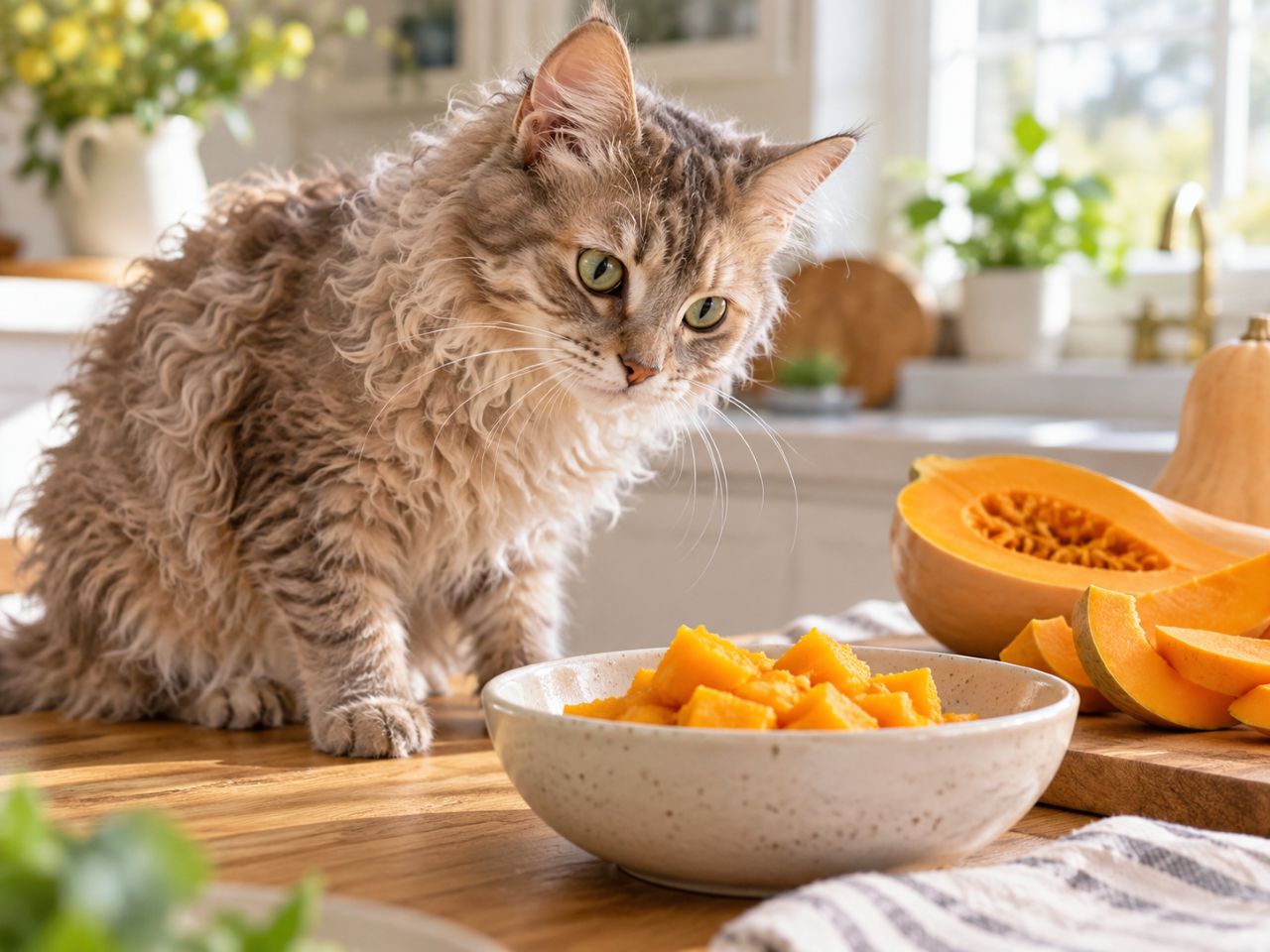
most healthy adult cats can eat a small amount of plain, cooked squash. Butternut squash, acorn squash, spaghetti squash, pumpkin, zucchini, and yellow summer squash can all be offered as occasional tastes. Use soft flesh, remove tough rind and large seeds, and leave out seasonings. Squash should take up only a tiny part of a cat’s diet.
A piece of squash set aside while you cook is easy to keep plain. Once it goes into soup, a buttered side dish, or a casserole, you’ll need to check everything else in the recipe before sharing.
Cats also don’t need squash to stay healthy. A cat who sniffs it and walks away can get everything they need from an appropriate, complete and balanced cat food.
Which Types of Squash Can Cats Eat?
The familiar edible varieties sold for cooking are generally suitable in small amounts. Preparation makes the biggest practical difference: a winter squash has a hard shell, while a young zucchini has tender skin and small, soft seeds.
| Squash variety | Can cats have it? | How to prepare a small taste |
|---|---|---|
| Butternut squash | Yes, plain and cooked | Scoop out the soft flesh, discard the rind and large seeds, and mash. |
| Acorn squash | Yes, plain and cooked | Remove the hard shell and seeds; offer a little mashed flesh. |
| Spaghetti squash | Yes, plain and cooked | Remove the rind and seeds, then chop the soft strands into short pieces. |
| Pumpkin | Yes, plain and cooked | Use cooked flesh or canned pumpkin containing only pumpkin. |
| Zucchini | Yes, in a small amount | Wash, remove the stem, cook until tender, and finely chop. |
| Yellow summer squash | Yes, in a small amount | Prepare like zucchini; remove any firm skin or mature seeds. |
Tiny, tender zucchini seeds don’t need the same treatment as the large seeds inside a butternut squash. For an older summer squash with a firm seed center, scoop that section out.
Choose fresh squash intended for eating. Keep painted, treated, or spoiled display pumpkins out of your cat’s reach, and skip decorative gourds that aren’t sold as food.
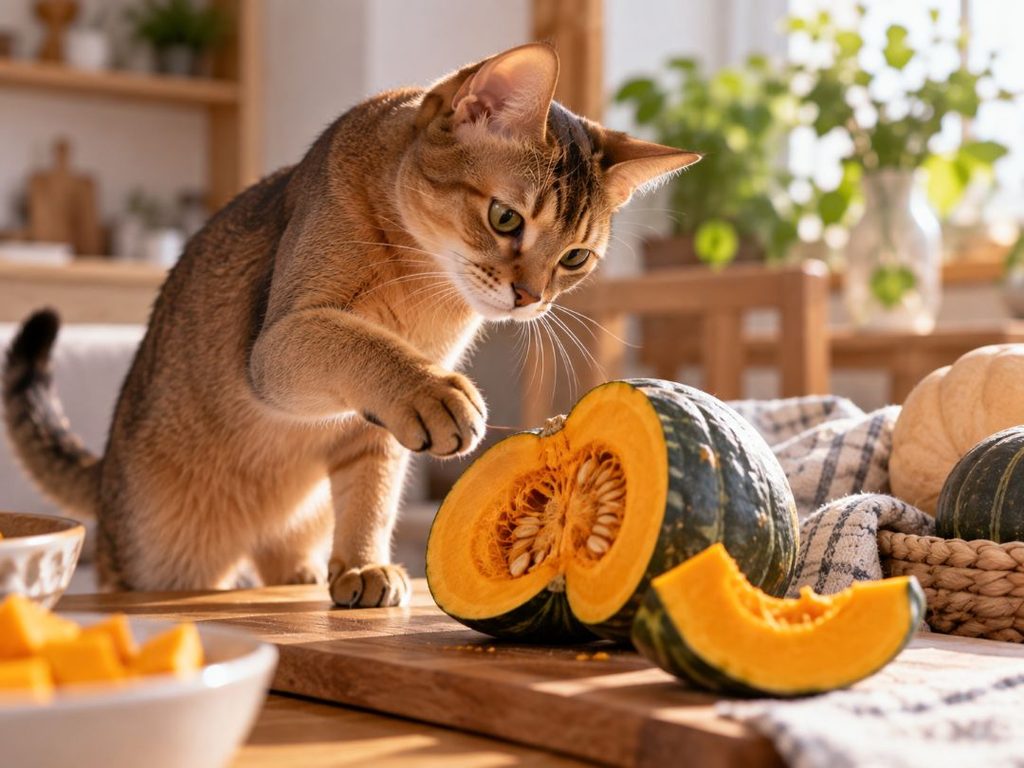
What Squash Adds to a Cat’s Diet
Squash contains water, fiber, carbohydrates, and varying amounts of vitamins and minerals. Those nutrients help explain why squash appears in some pet foods. They don’t mean every cat needs a spoonful added to dinner.
Fiber can affect stool consistency
Dietary fiber influences how food moves through the digestive tract and how much water stool holds. Some fibers can also be fermented by bacteria in the colon.
The effect depends on the fiber source, the amount, and the cat’s overall diet. A small serving may be tolerated well; adding much more can change stool quality or cause digestive upset. A commercial food containing squash has been formulated with the rest of its ingredients in mind. Adding squash at home changes that finished diet.
A little moisture and a different texture
Cooked squash can give a cat a soft, moist food to investigate. Some cats enjoy that texture, while others leave it untouched.
Because the serving should be small, its contribution to daily water intake will also be small. Keep fresh drinking water available. A cat with dehydration or a medical need for more fluids needs a broader plan with their veterinarian.
The vitamin A detail matters
Orange squash contains beta-carotene, a pigment people can convert into vitamin A. Cats require preformed vitamin A in their diet and cannot use beta-carotene to meet that requirement.
That makes claims about squash improving a cat’s eyesight misleading. Their complete and balanced food should already provide appropriate vitamin A, along with the protein, essential fats, taurine, and other nutrients they need. Squash doesn’t replace those essentials.
How Much Squash Can a Cat Eat?
For a healthy adult cat trying it for the first time, offer a pea-sized dab of cooked, mashed squash. That’s a cautious taste to see whether your cat likes and tolerates it, rather than a prescribed nutritional dose.
Introduce it when your cat is eating normally and has no ongoing digestive symptoms. Keep other foods familiar so you can more easily notice a reaction. Watch for vomiting, loose stool, unusual gas, or reduced appetite afterward. Stop offering squash if it doesn’t agree with them.
There isn’t one ideal serving for every cat. Body size, calorie needs, medical history, and other treats all matter. Keep occasional servings small, even when your cat asks for more.
The World Small Animal Veterinary Association recommends keeping all treats below 10% of a cat’s daily calorie intake. That includes squash, lickable treats, dental treats, and bites from your plate combined. If a veterinarian has set a daily allowance of 200 calories, the total from treats should stay below 20 calories.
Keep squash to a small taste even when it fits comfortably within that budget. A low calorie count doesn’t guarantee that a large helping will sit well with your cat’s stomach.
An Easy Way to Prepare Squash for Your Cat
You don’t need a separate cat recipe. Set aside a little squash before seasoning your own meal.
- Wash and trim it. Remove the stem. For winter squash, remove the tough rind, large seeds, and stringy center. You can also cook a halved squash first and scoop the softened flesh out afterward.
- Cook it until soft. Steam, boil, or bake it without added oil, butter, salt, sugar, or seasonings. It should squash easily under a fork.
- Make the texture manageable. Mash dense flesh, finely chop zucchini, and shorten spaghetti squash strands. Let it cool before offering it.
- Offer a small taste separately. A little on a clean dish lets your cat investigate without changing their usual meal. Once you know they tolerate it, a tiny amount can be mixed into their regular food.
For canned squash or pumpkin, read the ingredient list. Choose a plain product without added ingredients. Pumpkin pie filling, seasoned purées, and ready-made soups aren’t interchangeable with plain pumpkin.
Baby food also needs a label check. A savory squash blend may contain onion or other ingredients you wouldn’t expect from the picture on the jar.
Ingredients That Make a Squash Dish Unsuitable
Onion, garlic, chives, and leeks are toxic to cats. They can damage red blood cells, and cooking doesn’t make them safe. Dried powders count, too, so broth, seasoning mixes, and sauces deserve a careful look.
Butter, cream, cheese, frying oil, and sweet glazes add fat or calories the cat doesn’t need. Dairy can also cause digestive trouble in cats that don’t tolerate lactose. Keep the cat’s portion plain from the start; wiping sauce off a cooked piece doesn’t reliably remove the ingredients it has been prepared with.
Squash itself can still cause problems when the portion or texture is wrong. Hard raw chunks, thick rind, and large whole seeds are awkward to chew and swallow. Soft, cooked flesh is the easier choice.
Can Squash Help a Cat With Constipation or Diarrhea?
Veterinarians sometimes use dietary fiber, including plain pumpkin, as part of a treatment plan. Whether it helps depends on what’s causing the problem and which type of fiber the cat needs.
Squash isn’t a reliable home treatment for every digestive upset. Constipation may involve dehydration, painful defecation, reduced movement of the colon, or another underlying condition. Diarrhea also has many possible causes. Adding more fiber without understanding the problem can delay appropriate care.
A veterinarian may recommend a specific food, a measured fiber supplement, medication, or changes to fluid intake. Follow that plan instead of increasing squash whenever the litter box looks different. If your vet has prescribed pumpkin, ask before swapping in another squash; the products and their fiber content can differ.
Contact your vet if your cat repeatedly strains, has ongoing diarrhea, vomits, stops eating, or seems painful or unusually quiet.
Straining with little or no urine is an emergency. Urinary blockage can look like constipation, particularly when a cat keeps returning to the litter box. Seek immediate veterinary care if your cat is trying to urinate but cannot, or you’re unsure whether they’re passing urine.
What to Do if Your Cat Ate Squash From Your Plate
Start with the recipe and the amount eaten.
A small bite of plain, cooked squash in an otherwise healthy cat usually calls for observation. Put the food away and watch for digestive symptoms or a change in behavior.
If the dish contained onion, garlic, chives, or leeks, contact your veterinarian or an animal poison service promptly. Tell them the ingredients, roughly how much your cat ate, and when it happened. Signs of onion or garlic poisoning can take days to develop, so a cat looking comfortable immediately afterward doesn’t rule out a problem.
Call for advice after a large serving, an unknown recipe, or ingestion of a substantial piece of rind. Repeated vomiting, marked weakness, abdominal pain, or difficulty swallowing warrants prompt assessment. Trouble breathing requires emergency care.
Frequently Asked Questions
1. Can cats eat raw squash?
A tiny bite of ordinary zucchini isn’t inherently poisonous. Hard raw winter squash is much more difficult to chew, and large pieces may pose a choking or digestive obstruction risk. For deliberate feeding, use a little soft, cooked flesh.
2. Is butternut squash better than pumpkin for cats?
Neither is necessary for a healthy cat eating a complete and balanced diet. Plain cooked butternut squash can be an occasional taste, and plain canned pumpkin is convenient because it’s already soft. If pumpkin is part of a veterinary treatment plan, check before substituting butternut squash.
3. Can kittens have squash?
Kittens need food appropriate for growth, and squash shouldn’t displace it. There’s no nutritional reason to introduce squash early. Ask your veterinarian before giving a kitten new human foods, especially during weaning or if their stools are loose.
4. Can cats eat squash every day?
They don’t need a daily serving. Keep it occasional unless your veterinarian has recommended a specific addition to the diet. A cat on a prescription food, an elimination diet, or a treatment plan for a medical condition needs approval for extras that might affect that plan.
5. Can I feed squash seeds to my cat?
For home-prepared winter squash, remove the large seeds and serve the soft flesh. Whole seeds and shells can be difficult to manage, and roasted snack seeds often come with salt or seasonings. Small, tender seeds inside young zucchini are different and can remain in a finely chopped, cooked taste.
At Catsoria, we want feeding advice to make daily care easier. When you’re preparing squash, a little plain flesh can be enough to include a curious cat. If they aren’t interested, put their usual meal down and let dinner carry on.
