

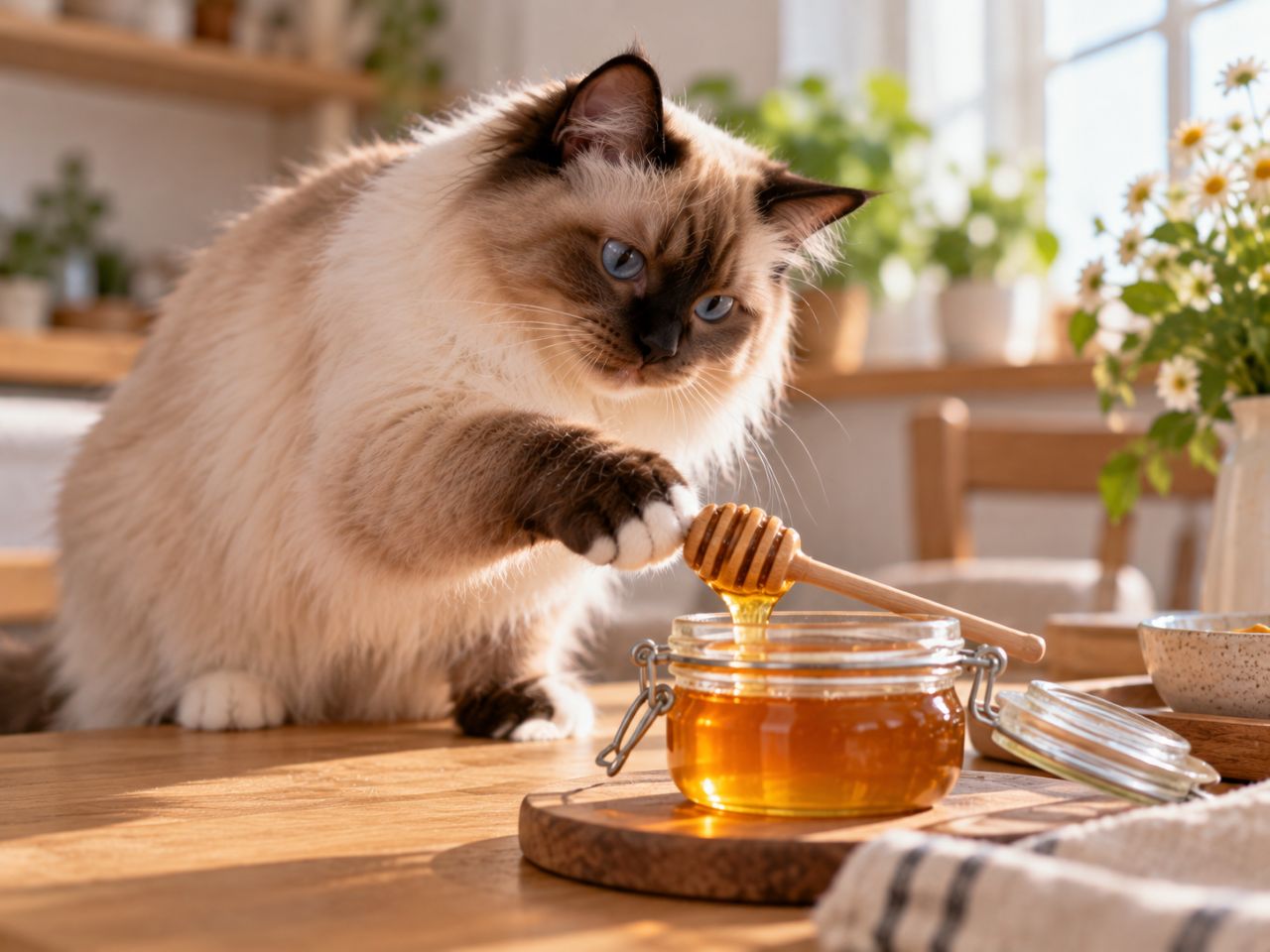
A small, accidental lick of plain honey is unlikely to harm a healthy adult cat. Honey is not generally considered toxic to cats, but it is not a good everyday treat. It adds concentrated sugar without supplying the balanced nutrition cats need, and larger amounts may cause an upset stomach.
The amount matters, and so does the product. A trace of pure honey calls for a different response than a honey-flavored medicine or a dessert containing chocolate. Your cat’s age, health, and symptoms also help determine what to do next.
My Cat Ate Honey. What Should I Do?
Start by putting the honey away and checking the label. Was it pure honey, or was your cat eating something made with it?
For a healthy adult cat that had only a small lick of plain honey and is acting normally, observation at home is usually reasonable. Leave fresh water available and continue the usual feeding routine. Watch for vomiting, diarrhea, reduced appetite, or unusual tiredness over the next day.
Do not try to make your cat vomit. Hydrogen peroxide can seriously harm cats, and a honey spill is not a reason to give home remedies.
Use these situations to guide your next step:
| What happened | What to do |
|---|---|
| A healthy adult cat licked a trace of plain honey and seems normal | Remove access and watch for digestive upset or changes in behavior. |
| Your cat ate a larger amount, or you cannot estimate how much | Call your veterinarian with the product details, approximate amount, and time of exposure. |
| Your cat has diabetes, is a very young kitten, or is already unwell | Ask your veterinarian for advice specific to that cat. |
| The product contains chocolate, caffeine, onion, garlic, or medication | Contact a veterinarian or animal poison service promptly; do not wait for symptoms. |
| Your cat has repeated vomiting, marked weakness, collapse, seizures, or trouble breathing | Seek urgent veterinary care. |
Keep the packaging or take a clear photo of its ingredients. “Honey-flavored” describes the taste, not the safety of everything in the container.
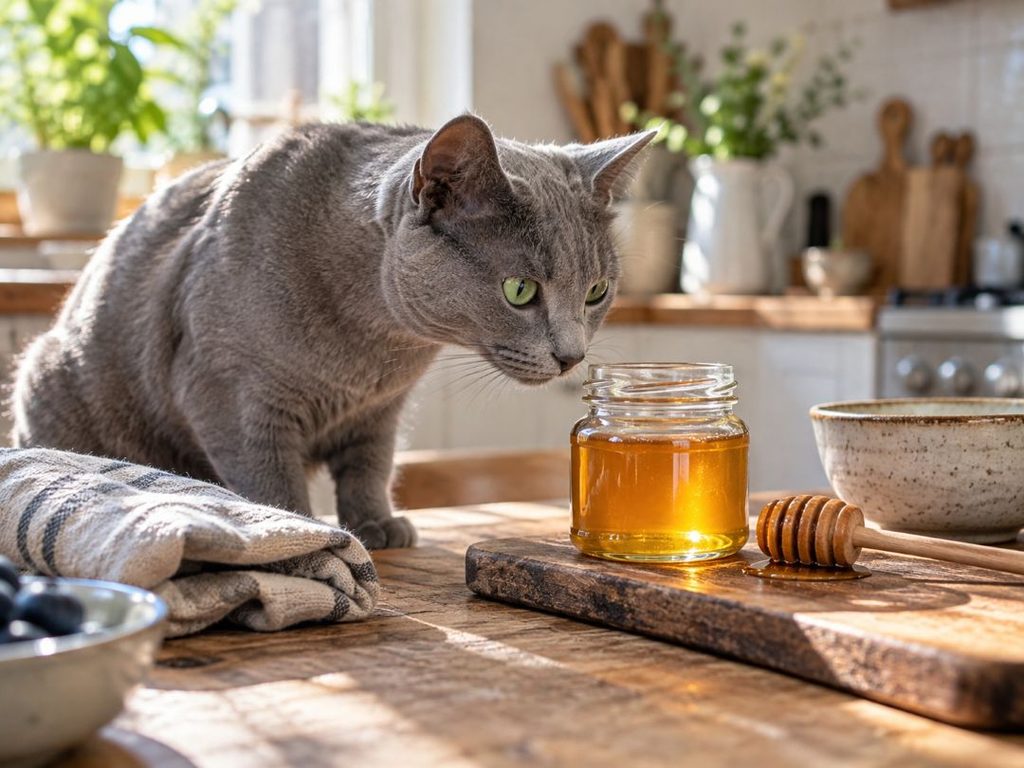
Why Honey Is a Poor Choice for Cat Treats
Honey’s wholesome reputation can make it seem like a useful addition to a cat’s food. Its main contribution to the bowl is sugar.
Cats are obligate carnivores. Their meals need to provide the right balance of protein, fat, vitamins, minerals, and essential nutrients such as taurine. Honey cannot fill that role.
Extra calories are easy to overlook
Repeated little additions can push a cat’s calorie intake above what they need. That matters especially for an indoor cat already carrying extra weight.
Honey does not need to be poisonous to be unhelpful. Adding it to a complete and balanced food gives your cat extra calories without correcting a nutritional gap.
Some cats develop digestive upset
Vomiting, loose stool, and abdominal discomfort can follow a larger serving of honey. A cat that tolerates one lick has not necessarily shown that a spoonful will agree with them.
Keep the response proportionate. Mild exposure does not automatically mean serious illness, but persistent symptoms deserve a call to the vet.
Diabetes changes the advice
Honey should not be a routine snack for a diabetic cat. Its sugars can raise blood glucose and interfere with the feeding plan used to manage the disease.
There is a separate emergency use for sugar when blood glucose falls dangerously low. That belongs in a veterinarian’s treatment plan, discussed below. Do not change an insulin dose on your own to compensate for something your cat ate.
Do Cats Like the Taste of Honey?
Cats lack a functional sweet-taste receptor, so they do not experience honey’s sweetness the way people do. Research has linked this difference to an inactive version of a gene involved in detecting sweet tastes.
That does not stop a cat from investigating or licking honey. A cat’s interest in a food tells you very little about whether it belongs in their diet.
You do not need to find a sweet substitute to keep your cat from missing out. A small reward made for cats can serve the same purpose.
Are Raw, Organic, or Manuka Honey Better for Cats?
Raw honey for cats is not a healthier feeding strategy. Raw, organic, and locally produced honey still contain concentrated sugars. These descriptions do not establish a health benefit for your cat.
Manuka honey also needs some context. Research involving honey in veterinary medicine often concerns its application to wounds. That does not show that feeding a cat Manuka honey improves immunity, digestion, or general health.
An expensive jar is still an unnecessary addition to a healthy cat’s meals.
Medical-grade honey products are different from food honey. They are prepared to meet standards for medical use, including measures to address contamination. A grocery-store jar labeled “Manuka” is not interchangeable with a veterinary wound-care product.
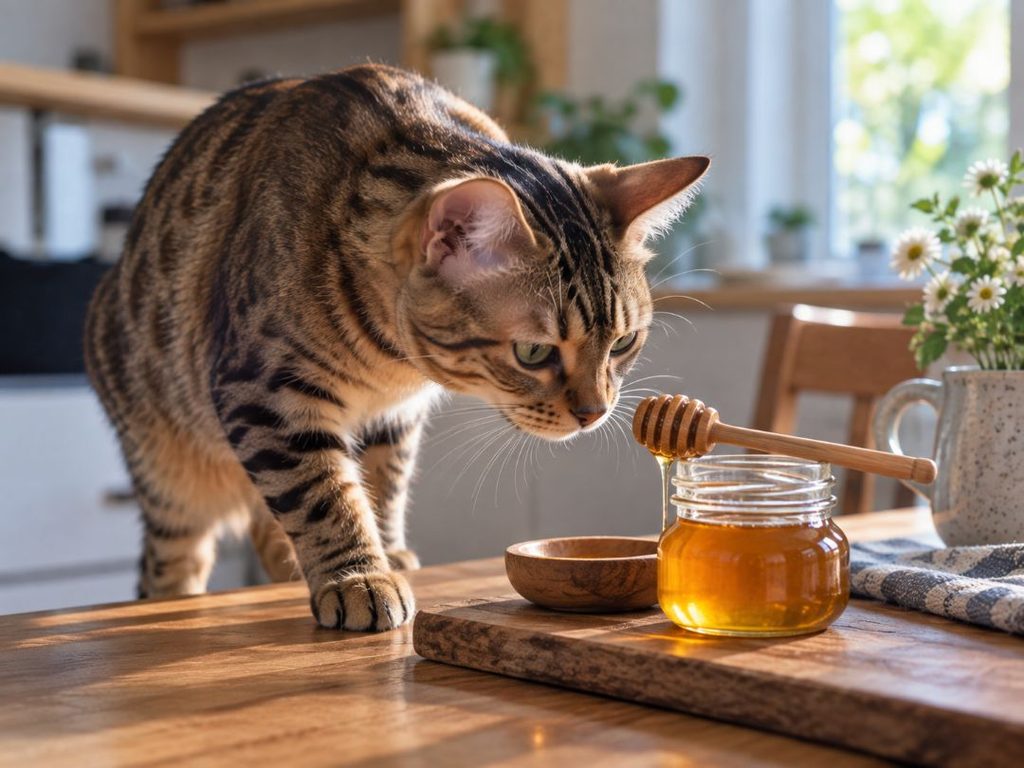
Can Kittens Have Honey?
Keep honey out of a kitten’s regular diet. Growing kittens need food formulated for growth, and honey does not supply that nutrition.
It should not be used to replace a missed meal, stretch kitten formula, or encourage a weak kitten to keep going without veterinary help. A very young kitten that is not feeding normally needs prompt advice.
An accidental lick does not prove that a kitten has been poisoned. Tell your vet the kitten’s age, approximate weight, what they ate, and whether they are behaving normally. Those details are more useful than applying a generic serving size from the internet.
Can Honey Help a Sick Cat?
The answer depends on what the honey is being used for. Feeding it as a household remedy, applying a medical product to a wound, and treating dangerously low blood sugar are separate situations.
Coughs and allergies
Honey is not an established treatment for a cat’s cough or seasonal allergies. Claims about soothing human throats should not be treated as evidence that the same remedy works in cats.
A recurring cough needs veterinary assessment. Cats can cough because of asthma and other airway problems that honey will not address.
Open-mouth breathing or obvious difficulty breathing requires emergency care. Do not delay treatment to try honey, tea, or a homemade mixture.
Wound care
Veterinarians sometimes use medical-grade honey in selected wound-care plans. Results depend on the wound and the product; honey is not a universal shortcut to healing.
For example, a small controlled study published in 2024 found changes in some wound-healing measures in cats, but the honey treatment did not accelerate overall healing. The study examined a topical medical product, not honey added to food.
Ask your veterinarian before applying anything to a cat’s wound. Household honey should not substitute for an examination, cleaning, or treatment of an infected injury.
Low blood sugar
A cat receiving insulin can develop dangerously low blood glucose, called hypoglycemia. Signs may include weakness, trembling, poor coordination, seizures, or collapse.
A veterinarian may instruct you to apply a small amount of honey or another glucose source to the gums as an emergency measure while arranging immediate care. Follow your cat’s emergency plan or obtain urgent veterinary instructions.
Never pour honey into the mouth or force a cat to swallow. Do not put fingers, food, or liquids into the mouth of a cat that is unconscious or having a seizure.
Veterinary care is still needed even when the cat seems to improve. This emergency use does not make honey an appropriate daily food for diabetic cats.
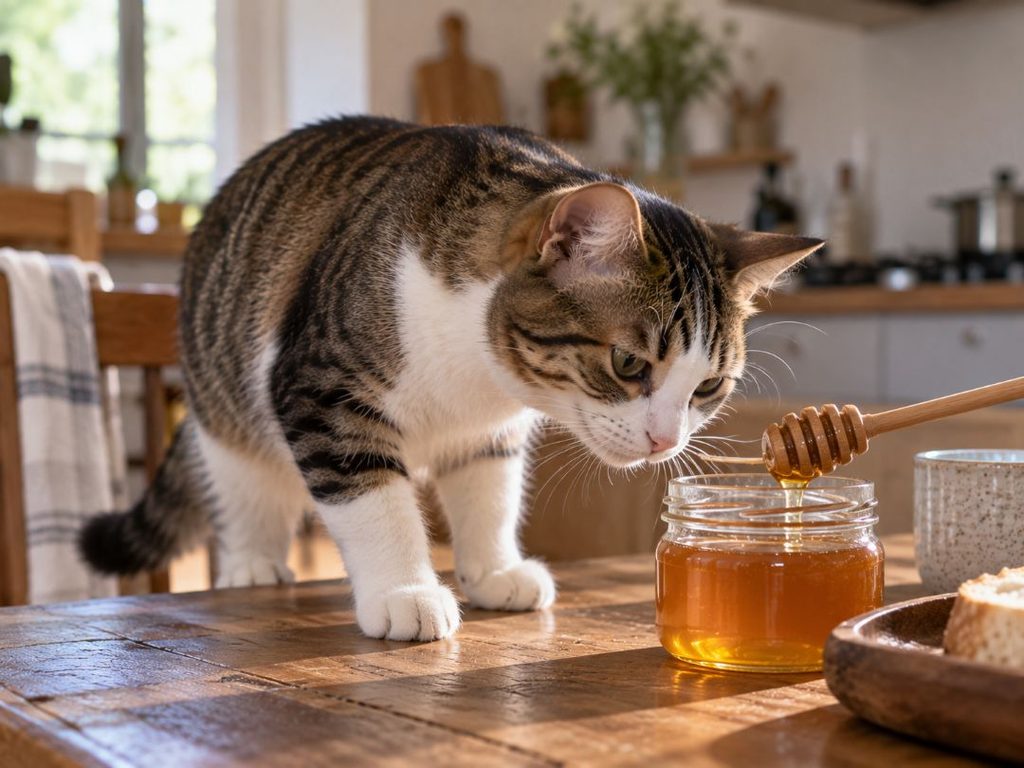
What Can You Offer Instead?
For a healthy cat, a tiny piece of thoroughly cooked, unseasoned chicken or turkey is a more suitable occasional treat. Remove the skin and bones, and avoid sauces, butter, salt, onion, and garlic.
Commercial cat treats can also work. Read the calorie information and keep portions small. Treats should generally stay below 10% of daily calories, with the main diet providing the rest. Cats on therapeutic diets may need different limits or specific approved treats.
A practical Catsoria feeding tip: set aside a little of your cat’s normal daily food for rewards. A few pieces of their usual kibble or a small portion of wet food can make treat time easier to manage.
Frequently Asked Questions
1. How much honey is safe for a cat?
There is no established recommended serving of honey for cats. A small accidental lick is usually low risk for a healthy adult, but that is not a feeding recommendation. Your cat’s size, health, symptoms, and the ingredients in the product matter more than a universal teaspoon limit.
2. Can cats have honey water?
Honey water offers no clear advantage over fresh plain water. Diluting honey does not remove its sugar. A cat that is drinking poorly or seems dehydrated needs veterinary advice rather than a sweetened drink.
3. Can cats eat honey yogurt?
Honey yogurt is best skipped. It adds sugar, and many adult cats have difficulty digesting lactose in dairy products. A tiny accidental taste is different from regularly offering a bowl, but check the full ingredient list and watch for digestive upset.
4. Can honey cause botulism in cats?
Honey can contain bacterial spores, but evidence defining the risk of honey-related botulism in pet cats is limited. Veterinary references describe botulism as rare in cats. Human infant warnings do not establish an equivalent risk or age cutoff for kittens.
Avoid unnecessary feeding, and seek urgent care for weakness, difficulty swallowing, or breathing problems after any suspected harmful exposure.
