


The quick answer is one litter box per cat, plus one extra. That means two boxes for one cat, three boxes for two cats, and four boxes for three cats.
There is one catch: those boxes need to be in separate locations. Two trays touching each other may look like two bathrooms to you, but they give a cat only one place to go. A nervous cat can still lose access to both if another pet controls that room or hallway.
Think of the “cats + one” rule as a reliable starting point, not a promise that every home will work with the same setup. Your floor plan, the cats’ relationships, their ages, and their mobility can all change the number you need.
The Simple Litter Box Formula
Use this count when setting up your home:
Number of litter boxes = number of cats + one extra
| Number of cats | Recommended starting number of litter boxes |
|---|---|
| 1 | 2 |
| 2 | 3 |
| 3 | 4 |
| 4 | 5 |
| 5 | 6 |
| 6 | 7 |
This is a minimum starting point for most homes. You may need another box if your home has several floors, one cat regularly guards a route, or a kitten or senior cat cannot reach the current boxes easily.
Cats that sleep, groom, and play together may be more comfortable sharing than cats that merely tolerate each other. Even bonded cats should still have options. Their relationship can change after an illness, a stressful event, or the arrival of another pet.
Why Does One Cat Need Two Litter Boxes?
One healthy cat may use a single clean box for years without an accident. That does not make the second box pointless. It gives the cat another acceptable place to go when the favorite box is dirty, occupied, noisy, or temporarily inaccessible.
Some cats also use one box mainly for urine and another for stool. Others care more about location than purpose. You do not need to assign a job to each box. Let your cat decide.
A second box is especially useful when:
- Your home has more than one level.
- The first box sits in a bathroom, closet, or room with a door that could close.
- A dog, child, or another cat sometimes interrupts access.
- Your cat is very young, older, arthritic, or recovering from an illness.
- Your cat has previously peed or pooped outside the box.
- Loud appliances or household activity sometimes make the usual location uncomfortable.
For a small apartment, try placing one box in the bathroom and the other at the opposite end of the home, perhaps behind a visual divider in a quiet corner. They do not have to be in large rooms. They do need to be easy to reach at all hours.
If you truly have room for only one box, use the largest suitable box you can fit, keep it exceptionally clean, and watch your cat’s habits. One box is a space-saving compromise, not the same setup as two boxes in separate locations. Make room for a second if your cat hesitates, waits to use the box, or starts eliminating elsewhere.
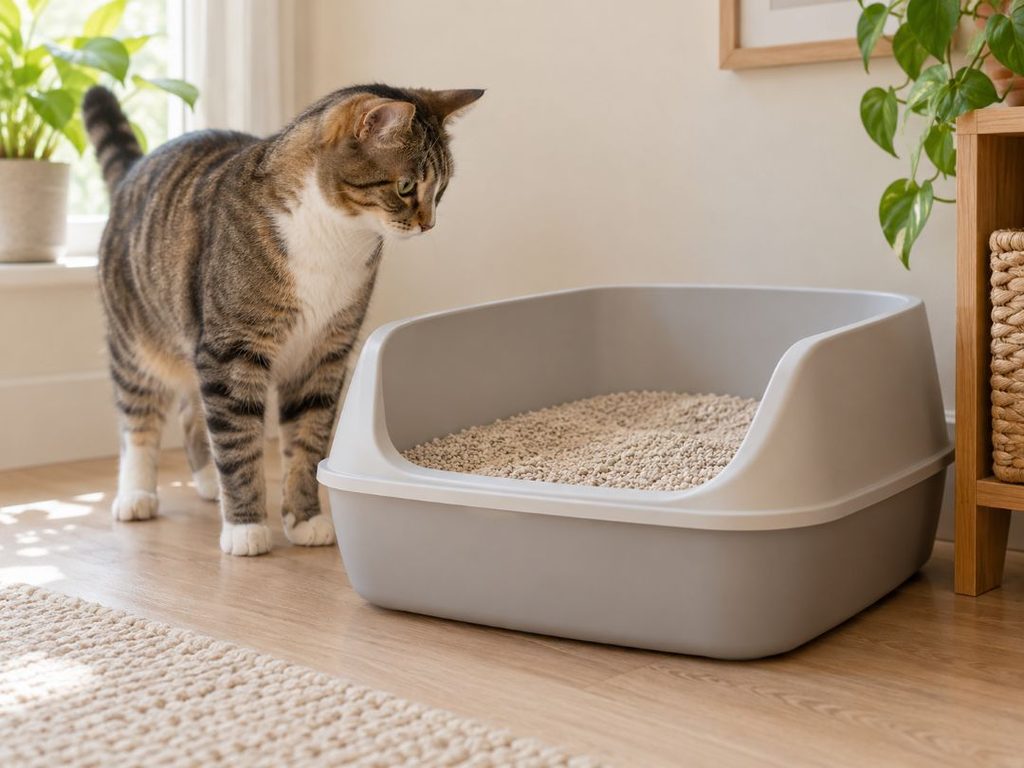
Can Two Cats Share One Litter Box?
Two cats can use the same litter box, and many do. The problem is making that shared box their only option.
Cats do not always advertise tension with hissing or fighting. One cat may sit in a doorway, wait near the stairs, or stare at the other cat as they approach. The less confident cat may turn around and choose a rug, bathtub, or laundry pile instead. From a distance, it can look like a litter-training problem when access is the real issue.
For two cats, three litter boxes in different areas is the safer arrangement. If both cats keep using the same favorite box, leave the others available and clean. An unused box is still a backup when the favorite is occupied or when something in the room suddenly feels unsafe.
Do not expect each cat to claim a personal box. Your goal is free access and choice, not one assigned toilet per cat.
Placement Matters as Much as the Number
Three boxes lined up in a laundry room do not provide the same security as three boxes spread through the home. A single cat can watch the doorway or block the route to the entire group. A washing machine may also start during use and make every box in that room unappealing at once.
A good litter box placement has these features:
- It is quiet without being hidden in a remote, forgotten area.
- The cat can reach it without passing another pet’s bed or favorite lookout.
- The entrance cannot be easily blocked by another cat.
- The cat has a clear way to leave rather than feeling trapped in a dead end.
- Food and water are kept in a different area.
- Furnaces, washers, dryers, and other startling equipment are not right beside it.
In a multistory home, keep at least one box on every level your cat regularly uses. Start with the cats-plus-one rule, then add boxes if that count does not cover each floor. A single cat living across three floors may be better served by three boxes, especially if that cat is a kitten, a senior, or has limited mobility.
Here are a few practical layouts:
One cat in a one-bedroom apartment: Put one box in a ventilated bathroom and one in a quiet bedroom or living-area corner. Break the sightline between them.
Two cats in a one-story home: Place three boxes in separate zones. Avoid making one cat cross the other cat’s resting or feeding area to reach all three.
Two cats in a two-story home: Keep at least one box upstairs and one downstairs. Put the third in another accessible area on the floor where the cats spend more time or where social tension is most likely.
Three cats with two social groups: Begin with four boxes, then observe who spends time together and where each cat feels comfortable. A shy cat may need an additional box near their preferred part of the home.
Make Sure Every Box Is Actually Usable
Adding more cramped, dirty, or awkward boxes rarely solves the problem. Each one should be a place your cat would willingly choose.
Choose a Roomy Box
A useful target is a box about one and a half times your cat’s length from the nose to the base of the tail. Your cat should be able to enter, turn around, dig, squat, and cover waste without hanging over an edge.
Many standard store-bought boxes are too small for a full-grown cat. A large plastic storage container or mixing tray can work, provided it is safe, stable, and easy to enter. Smooth any altered edges before use.
Match the Entrance to the Cat
Kittens, senior cats, and cats with arthritis or other mobility problems may avoid a box with a tall entrance. Give them a wide, low entry while keeping the other sides high enough to contain litter.
Place accessible boxes where an older cat already spends time. A technically available box in the basement is not useful to a cat who finds the stairs painful.
Pay Attention to Cover and Litter Preferences
A large uncovered box is a sensible starting point because it offers ventilation and a clear view of the surroundings. Some cats happily use covered boxes, while others dislike trapped odors or having only one way out. Individual preference matters more than the appearance of the box.
Many cats favor a soft, unscented clumping litter. Strong perfume, dusty litter, deodorizing additives, or a plastic liner may put some cats off. When changing litter, keep at least one familiar box available rather than changing every box overnight.
Keep Every Box Clean
Scoop waste at least once a day and more often when several cats favor the same box. Extra boxes do not replace regular cleaning.
Wash the box periodically with hot water and mild, unscented soap. Skip ammonia-based cleaners and heavily fragranced products. The right full-clean schedule depends on the litter and how heavily the box is used, but a dirty odor that you can notice is likely already unpleasant to a cat.
How to Tell When You Need Another Litter Box
Your cats’ behavior is more useful than the formula once the boxes are in place. Consider adding a box or changing a location if you notice:
- A cat waiting until another cat leaves before approaching.
- Stalking, staring, chasing, or sitting near the route to a box.
- One box becoming heavily soiled while another is ignored.
- A cat entering, sniffing, and leaving without eliminating.
- Urine or stool beside the box or elsewhere in the home.
- A new problem after moving, adding a pet, or changing the household routine.
- A kitten or older cat failing to reach the box in time.
An ignored box does not always mean you have too many. Its location, size, cover, cleanliness, or litter may be wrong. Change one detail at a time so you can see what makes a difference.
If your cat has chosen a consistent spot outside the box, placing an additional tray at that location can help rebuild the habit. Once use is reliable, move it gradually only if the original spot cannot remain permanent.
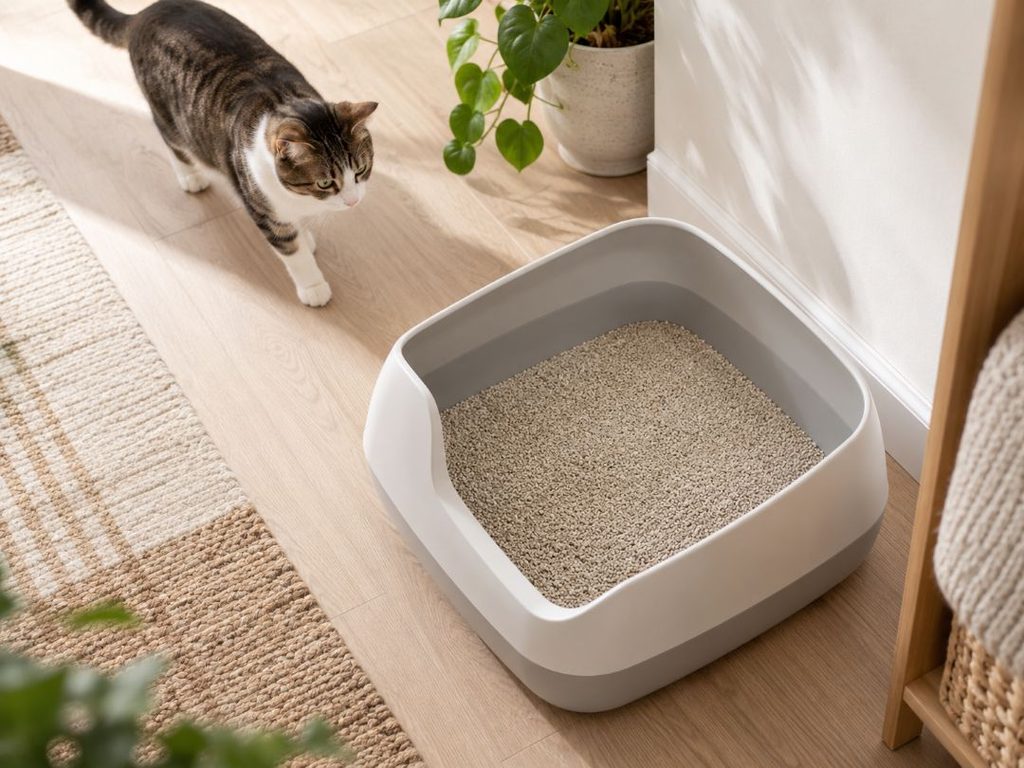
When More Boxes Are Not the Whole Answer
A sudden change in litter box behavior deserves a veterinary call. Cats may eliminate outside the box because urination or defecation has become painful. Bladder inflammation, urinary obstruction, kidney disease, diabetes, constipation, arthritis, and other conditions can change where or how often a cat goes.
Repeated trips to the box, straining, crying, blood in the urine, or producing only tiny amounts of urine are warning signs. A cat that is trying but unable to urinate needs emergency veterinary care, with male cats at especially high risk of urethral blockage.
Do not punish a cat for an accident. Punishment adds stress and does not treat pain, fear, poor access, or an unsuitable litter box.
How to Add Another Box Without Disrupting the Routine
Keep the current box in place and add the new one in a separate, useful location. Fill it with the litter your cat already knows. Scoop both regularly and give your cat time to explore without being carried to the box or forced inside.
Watch which box your cat chooses and what is different about it. Location often matters more than the model. If you want to test two litter types, you can briefly place identical boxes near each other so the litter is the main variable. Those side-by-side test boxes still count as one permanent litter station, so separate them again after the preference test.
The Catsoria Takeaway
For most households, the best answer to how many litter boxes per cat is simple: count your cats and add one. Then spread the boxes out, keep at least one on every regularly used floor, and make each one roomy, quiet, clean, and easy to escape from.
Your cats may not divide the boxes evenly, and that is fine. The extra box is there to provide choice. If accidents begin suddenly or your cat shows signs of pain or difficulty urinating, stop treating it as a setup problem and contact a veterinarian.
Frequently Asked Questions
1. How Many Litter Boxes Should One Cat Have?
The recommended starting point is two litter boxes for one cat. Place them in different locations so your cat has a genuine backup.
2. How Many Litter Boxes Do Two Cats Need?
Two cats should generally have three litter boxes. Spread them through the home instead of placing all three in one room.
3. How Many Litter Boxes Do Three Cats Need?
Begin with four litter boxes for three cats. You may need more if the cats form separate social groups, live across several floors, or have mobility or house-soiling problems.
4. Can Litter Boxes Be Next to Each Other?
They can be next to each other during a short litter-preference test. For everyday use, separate them. Boxes placed together function as one toileting location and can all be blocked by the same cat or stressful event.
5. Is One Automatic Litter Box Enough for Multiple Cats?
An automatic unit is still one box in one location. It may remove waste more quickly, but it does not provide another route or a safe alternative if a cat dislikes the machine, it stops working, or another cat blocks access. Keep additional regular boxes available.
6. How Often Should You Scoop Multiple Litter Boxes?
Scoop every box at least daily. Check more often when several cats use the same favorite box. Cleanliness is judged box by box, so a spotless spare does not make an overloaded favorite acceptable.