
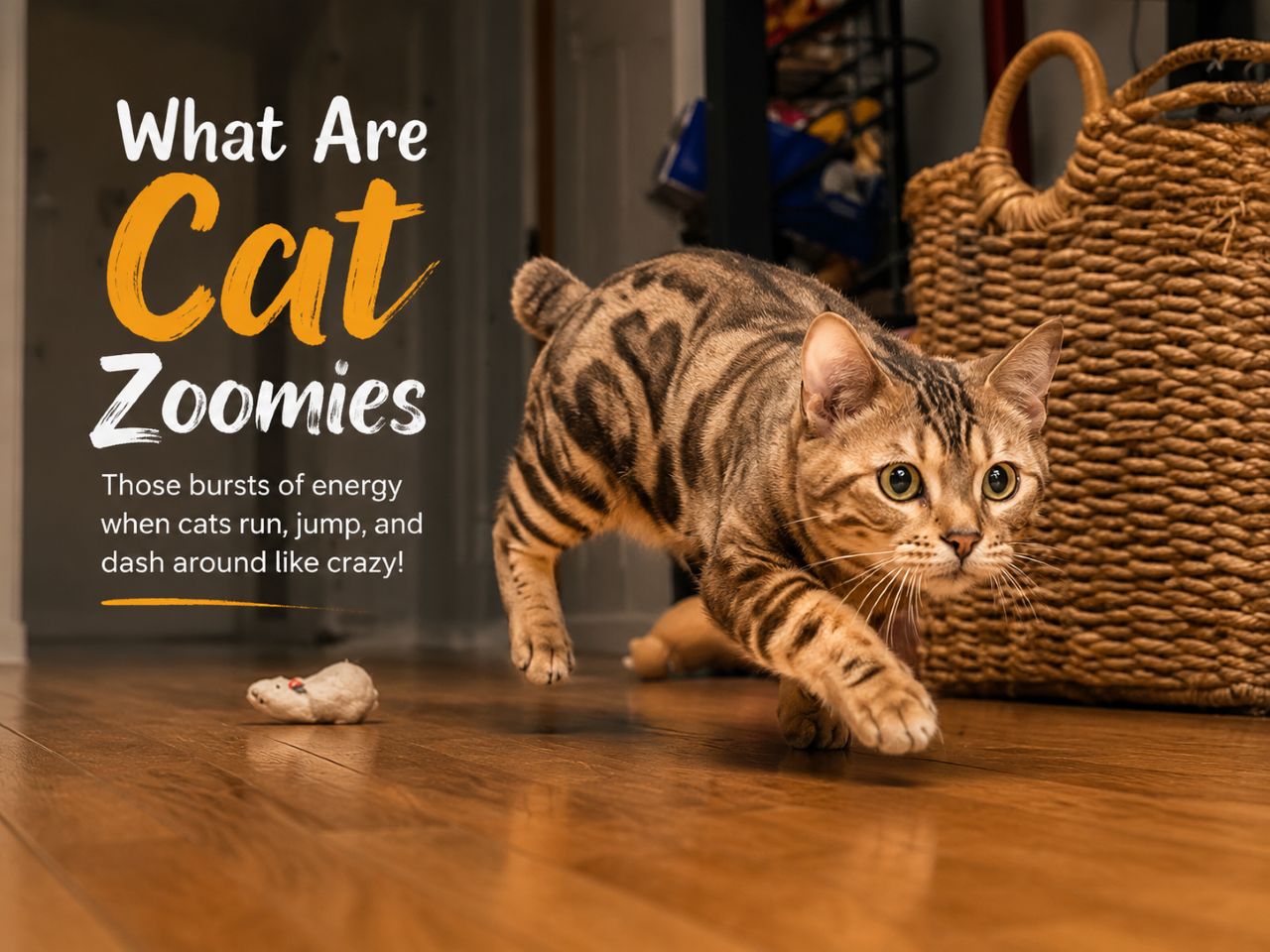
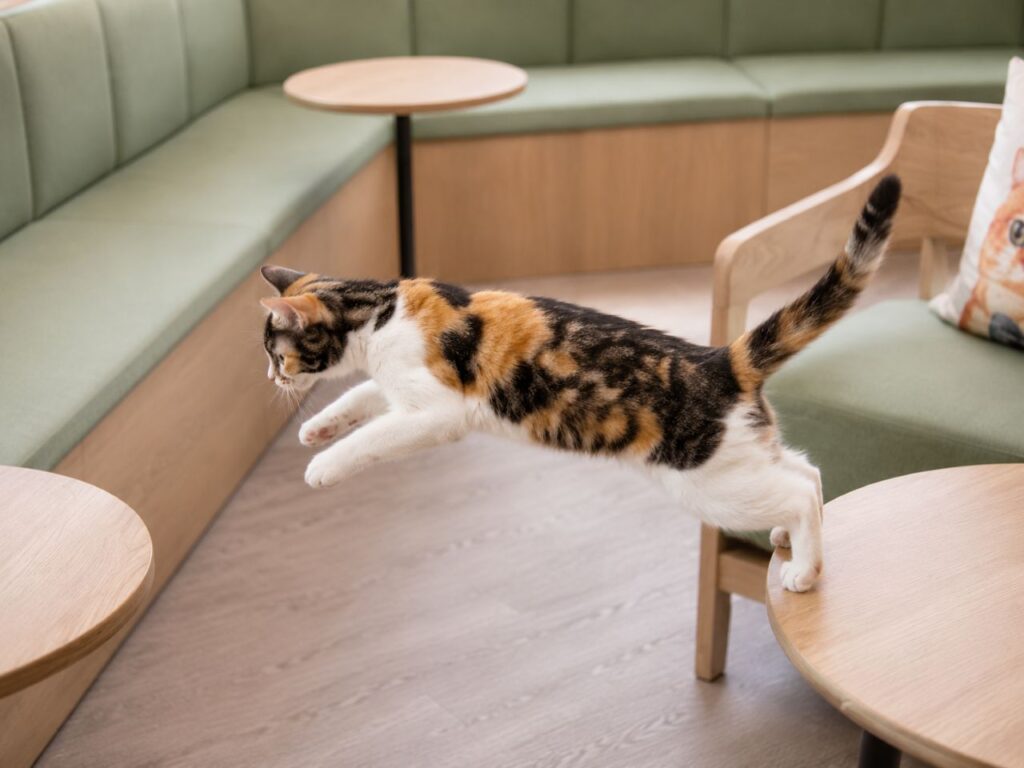
That sudden explosion of speed is known as cat zoomies.
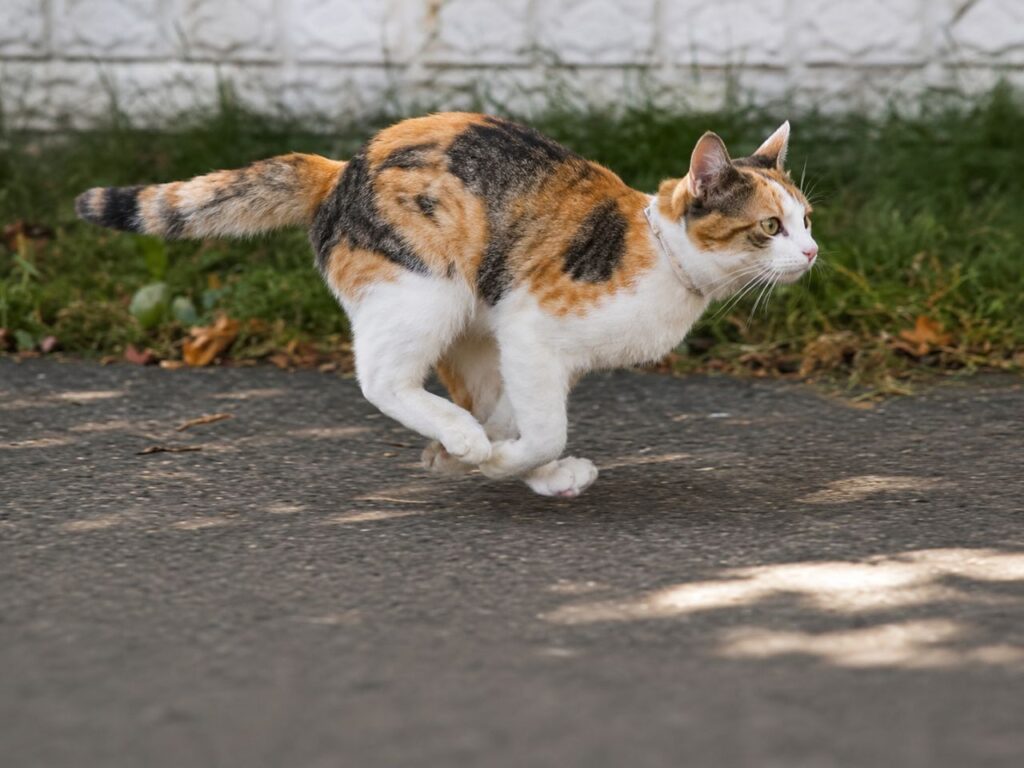
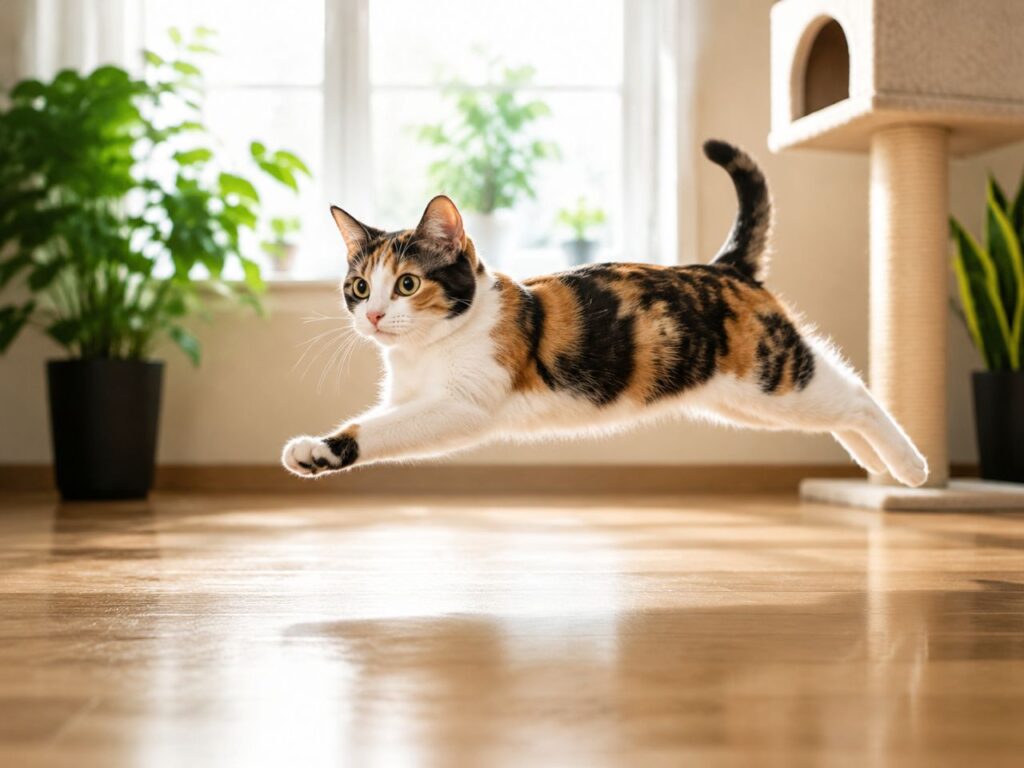
Zoomies are brief bursts of intense activity in which a cat may sprint, leap, pounce, climb, spin, or change direction without any obvious goal. The behavior can look chaotic, but in most cases, it is a normal way for cats to release energy and act out their natural movement patterns.
Veterinary professionals also call these episodes frenetic random activity periods, or FRAPs. They are especially common in kittens, young cats, and indoor cats with energy to burn. Cats may have zoomies after waking up, using the litter box, eating, playing, or simply noticing that the house has finally become quiet enough for a private racetrack.
Most feline zoomies are harmless. A sudden change in how often they happen, or frantic running accompanied by pain, fear, vocalization, litter box trouble, or weight loss, deserves closer attention.
What Are Cat Zoomies?
What does “cat zoomies” mean?
The term cat zoomies describes a short, energetic episode in which a cat suddenly races through the house. A typical zoomie session may include:
- Sprinting between rooms and sliding across smooth floors
- Jumping onto or off furniture and running up and down stairs
- Making sharp turns and climbing a cat tree at full speed
- Pouncing on invisible targets
- Chirping, trilling, or meowing during the run
The episode often starts without warning and ends just as abruptly. Your cat may run at full speed for a minute, stop to groom one shoulder, and behave as though nothing unusual happened.
Zoomies are a little different from ordinary play. During structured play, a cat usually focuses on a toy, another cat, or a person. During a FRAP, the movement may appear less organized. The cat is often running for the sake of running rather than trying to catch a specific object.
Normal, playful zoomies are usually accompanied by loose body language. The ears may point forward or remain neutral, the tail may be upright, and the cat may look alert rather than frightened.
Why are they called FRAPs?
FRAP stands for frenetic random activity periods. The name sounds dramatic, but it describes the behavior rather well:
- “Frenetic” refers to the sudden, intense energy.
- “Random” reflects the unpredictable route and timing.
- “Activity period” means the behavior usually occurs in a short burst.
FRAPs are not limited to cats. Dogs and several other animals can experience similar bursts of activity. In cats, a FRAP may include running, pouncing, climbing, and rapid changes of direction.
Although the term sounds scientific, researchers do not have one proven explanation for every case. Zoomies appear to have several possible triggers, including physical energy, excitement, instinct, stress release, environmental stimulation, and normal developmental play.
Why Do Cats Get the Zoomies? (6 Common Reasons)
People often ask, why do cats get the zoomies when nothing is happening? From a human point of view, the sprint may seem completely random. From the cat’s point of view, the starting gun may have been fired by stored energy, a sound outside, a successful litter box visit, or the ancient urge to chase something small and fast.
1. Releasing built-up energy
Cats spend a large part of the day resting. They may nap, wake briefly, change locations, and go back to sleep. Rest helps conserve the energy needed for short periods of fast, intense movement.
An indoor cat may not get many natural opportunities to sprint. There are no fields to cross, shrubs to investigate, or prey animals to chase. Energy can build quietly until it spills out in one fast lap around the house.
This is why indoor cat zoomies often occur after a long nap or a quiet day. The cat is not necessarily bored or unhappy. They may simply be using the space available to stretch their legs and release stored energy. Still, frequent explosive behavior can be a clue that a cat needs more scheduled play and environmental enrichment. Daily movement gives that energy somewhere more predictable to go.
2. Hunting instincts
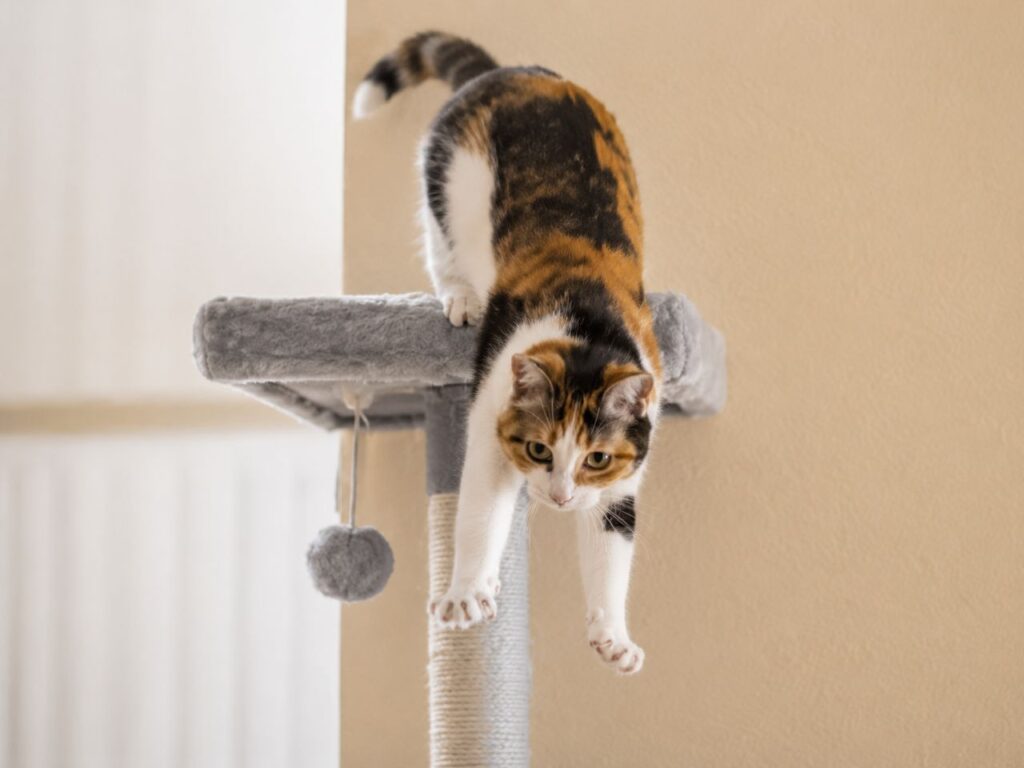
Even a cat who has never stepped outside carries the movement patterns of a predator. Hunting involves waiting, watching, stalking, chasing, turning, pouncing, and grabbing. A zoomie session often contains miniature versions of those actions. The hallway becomes a hunting trail, the rug becomes cover, and the chair leg becomes a tactical obstacle.
A cat may suddenly run after seeing a bird through the window or hearing a faint scratching noise behind a wall. When the real target is unreachable, the cat may redirect that excitement into running around the house.
Interactive toys can give these instincts a safer target. Wand toys, soft mice, rolling balls, and toys that move unpredictably allow cats to stalk and chase rather than directing all that predatory energy toward ankles or curtains. Veterinary behavior sources recognize natural predatory behavior as one likely explanation for the sudden sprints and sharp turns seen during zoomies.
3. Excitement after using the litter box
Some cats burst out of the litter box and sprint through the house immediately after pooping. This is so common that many owners call it the “poop zoomies” or cat zoomies after pooping.
One possible explanation involves the vagus nerve, which plays a role in several automatic body functions. Defecation can stimulate this nerve and may create a feeling of relief. Some cats appear to respond to that physical release with a burst of excitement.
There may also be a simpler explanation. A cat has completed a vulnerable activity and wants to move away from the area quickly. In a healthy cat with normal stools and comfortable litter box habits, post-poop running may be nothing more than an enthusiastic exit.
It should not automatically be treated as a medical problem. Watch the full litter box routine rather than the sprint alone. Straining, repeated trips, crying, hard stools, diarrhea, blood, or a new reluctance to use the box can point to discomfort.
4. Dawn and nighttime activity
Cats are often called nocturnal, but crepuscular is usually the more accurate term. Crepuscular animals are naturally most active around dawn and dusk.
These hours are useful hunting times for small feline predators because birds, rodents, and other prey may also be moving. Domestic cats still carry that activity rhythm, even when dinner arrives in a ceramic bowl.
That is why cat zoomies at night often begin just as the household is settling down. Your cat may have slept through the busiest part of your day and become fully charged by bedtime.
Household routines can shift this pattern. Cats may learn that nighttime brings attention, food, movement under the blankets, or access to a favorite playmate. A cat who receives most of their stimulation after dark may gradually save more energy for those hours.
5. Stress relief and emotional release
Not every zoomie comes from happiness. Some cats run after an emotionally intense event, such as:
- A veterinary visit
- A loud noise
- An unfamiliar guest
- Tension with another pet
- Being handled longer than they wanted
- A sudden change in the home
- Overstimulating play
Movement may help a cat discharge nervous energy. The key is to look at body language. A playful cat usually appears loose, confident, and coordinated. A distressed cat may crouch, flatten the ears, puff the tail, widen the pupils, or scramble as though trying to escape.
Fear-driven running should not be encouraged or chased. Give the cat space, reduce the trigger when possible, and allow access to a quiet hiding place. If these episodes become frequent, discussing them with a veterinarian or qualified feline behavior professional can help uncover the source of the stress.
6. Playfulness in kittens and young cats
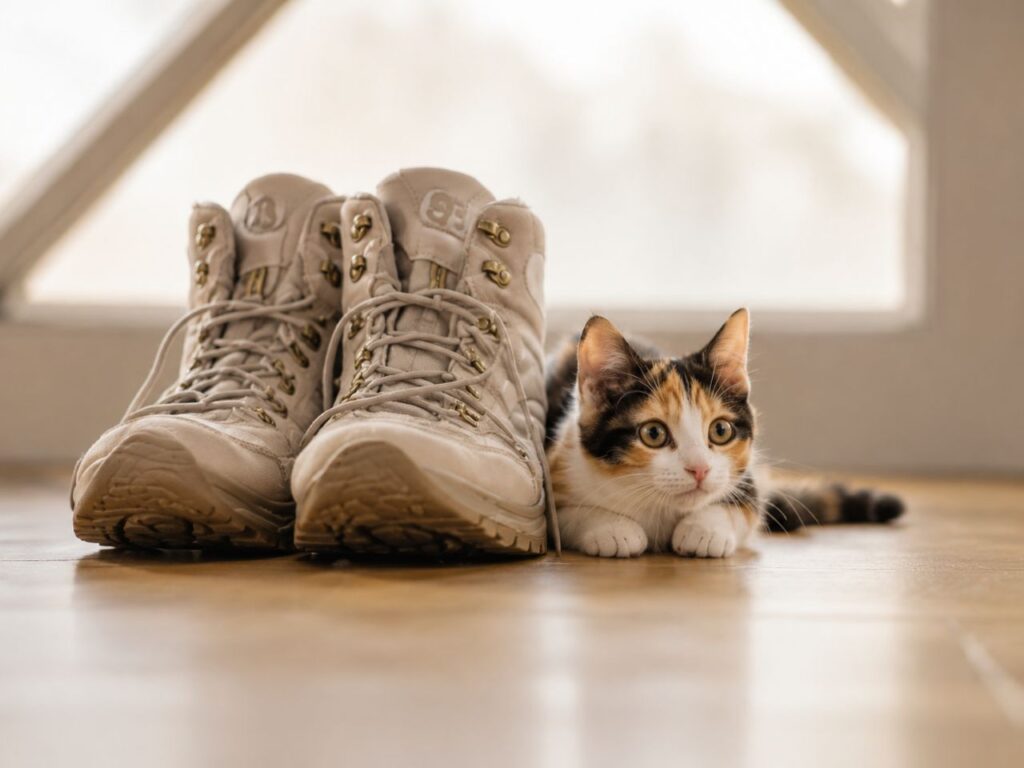
Kitten zoomies can turn an ordinary living room into a tiny motorsports arena.
Young cats have high energy levels, developing muscles, and improving coordination. Running, leaping, skidding, wrestling, and pouncing help kittens practice physical skills they will use throughout life.
Kittens also have less experience regulating their excitement. A short play session can tip directly into a full-speed sprint. One kitten may invite another to chase, producing a synchronized stampede through the house.
As cats mature, the frequency and intensity of zoomies often decrease. Adult and senior cats can still have them, but they may run for shorter periods or choose less ambitious routes. A senior cat who suddenly becomes much more active should be observed carefully, especially when the change appears alongside weight loss, increased appetite, excessive thirst, restlessness, or louder vocalization.
Why Do Cats Zoom Around After Pooping or at Night?
Why do cats zoom after pooping?
A cat may race away after pooping because the bowel movement produced a pleasant feeling of relief. Stimulation of the vagus nerve is one possible explanation, although there is no single confirmed cause for every cat.
Other possibilities include:
- Wanting to leave the litter area quickly
- Feeling lighter or more comfortable
- Responding to the smell or sensation of the litter
- Releasing tension after a bowel movement
- Trying to distance themselves from waste
For a cat who has always done this, has normal stools, and shows no sign of discomfort, cat zoomies after pooping are often just a personal bathroom ritual.
The pattern becomes more concerning when it begins suddenly or appears with constipation symptoms. Watch for dry, hard stools, prolonged squatting, repeated attempts to defecate, crying, blood in the stool, vomiting, appetite loss, or several days without a bowel movement.
Repeated straining can also be mistaken for constipation when a cat is actually having difficulty urinating. Urinary obstruction, particularly in male cats, is an emergency. A cat making frequent unsuccessful litter box trips, producing little or no urine, crying, vomiting, or becoming weak needs immediate veterinary care.
Why do cats get the zoomies at night?
Cats commonly get cat zoomies at night because their internal activity rhythm encourages movement around dusk and dawn. A day filled with naps can also leave an indoor cat ready for action when everyone else wants to sleep.
Nighttime zoomies may be encouraged by:
- Limited daytime exercise
- An early dinner followed by renewed energy
- Attention from people who react to the running
- Outdoor animals visible through a window
- Hunger before breakfast
- Moving feet under blankets
- A quiet house that feels safe to explore
Try scheduling an active play session in the evening. Let your cat stalk, chase, and catch a toy, then offer a small meal. This sequence can fit more naturally with feline behavior and may help some cats settle afterward. Avoid getting out of bed to provide treats every time your cat runs or vocalizes. A clever cat can quickly turn midnight chaos into a working food-delivery system.
Why do indoor cats zoom more often?
Animals experiencing indoor cat zoomies often have fewer outlets for sprinting, climbing, exploring, and hunting. Their environment is safer, but it can also be predictable. The same rooms, scents, furniture, and daily routine do not always provide enough physical or mental variety. When stimulation is limited, stored energy may emerge in concentrated bursts.
That does not mean indoor life is bad for cats. A well-designed indoor environment can be active, interesting, and satisfying. Vertical territory, window views, scratching areas, puzzle feeders, hiding spots, toy rotation, and interactive play can transform a quiet home into a richer feline landscape.
Indoor cats do not need endless entertainment. They need regular chances to make choices, investigate, climb, scratch, stalk, and complete short bursts of physical activity.
When Should You Worry About Cat Zoomies?
Normal zoomies are brief, familiar, and playful. Your cat should recover quickly and return to their usual behavior. The most important warning sign is change. A cat who has always performed one evening lap is different from an older cat who suddenly begins running frantically several times a night.
Signs your cat may be in pain
Pain-related running often looks less playful and more urgent. The cat may seem to be fleeing from a sensation rather than enjoying movement.
Contact your veterinarian when zoomie-like behavior appears with:
- Crying, yowling, growling, or hissing
- Limping or stiffness
- Repeated licking or biting at the back, tail, abdomen, or rear end
- A rippling or twitching back
- Flattened ears and a tense body
- Hiding after the episode
- Sensitivity when touched
- Trouble jumping or climbing
- Straining in the litter box
- Blood in urine or stool
- Vomiting or appetite changes
- Loss of balance or disorientation
Recording a video can be extremely useful. Cats may act normally by the time they reach the clinic, while a video allows the veterinarian to see posture, coordination, sounds, triggers, and episode length.
Conditions that can cause unusual running
Zoomies themselves are not a disease. Some medical problems, though, can create restlessness, discomfort, itching, or bursts of movement that resemble zoomies.
- Hyperthyroidism: Common in older cats and increases the body’s metabolic rate. Affected cats may become unusually active or restless. Other signs can include weight loss despite a strong appetite, increased thirst, increased urination, vomiting, diarrhea, rapid heart rate, and an unkempt coat.
- Pain or digestive discomfort: A cat who runs after pooping may be celebrating relief, but they may also be reacting to discomfort. Hard stools, straining, infrequent bowel movements, reduced appetite, or blood in the stool require veterinary guidance.
- Feline hyperesthesia syndrome: Feline hyperesthesia can cause short episodes of skin rippling, sudden running, enlarged pupils, vocalization, tail chasing, or frantic licking and biting around the lower back and tail. The condition is not fully understood and other medical causes must be ruled out before it is diagnosed.
- Arthritis or mobility pain: A cat with arthritis may move suddenly after changing position or experiencing a painful sensation. Arthritis more commonly reduces activity, but any major shift in a senior cat’s movement pattern deserves attention.
- Skin irritation, fleas, or allergies: A bite, itch, or painful skin sensation can make a cat dart away suddenly. Check for excessive scratching, hair loss, scabs, overgrooming, or repeated biting at one area.
- Neurological problems: Seizures and other neurological conditions can cause unusual movement, confusion, twitching, loss of coordination, or altered awareness. These episodes usually look different from happy, controlled sprinting.
When to contact a veterinarian
Arrange a veterinary appointment when:
- Zoomies begin suddenly in an adult or senior cat
- The episodes become much more frequent or intense
- Your cat appears frightened, painful, or disoriented
- Running is followed by hiding or exhaustion
- Your cat is losing weight
- Eating, drinking, urination, or bowel habits have changed
- You notice skin twitching, self-biting, or sensitivity
- The behavior repeatedly follows difficult litter box visits
Seek urgent veterinary care when your cat cannot urinate, collapses, has trouble breathing, cannot use a limb, suffers a suspected seizure, produces significant blood, or appears to be in severe pain.
How to Manage Cat Zoomies Safely
You usually do not need to stop normal zoomies. The goal is not to eliminate this natural behavior. It is to give your cat safe places and healthy ways to use their energy.
Increase daily interactive play
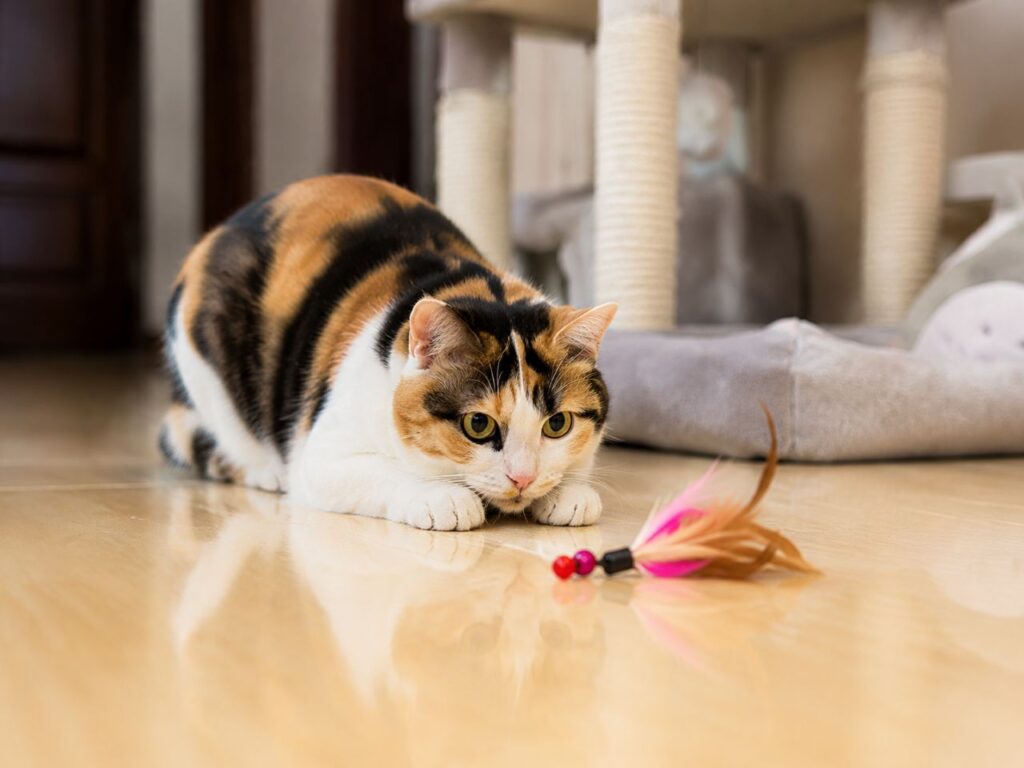
Interactive play allows a cat to chase a moving target while strengthening the bond with their family. Use wand toys, ribbon-style toys designed for cats, soft balls, or small toys that can be tossed along the floor. Move the toy like prey rather than waving it directly in the cat’s face. Let it pause, hide, dart away, and occasionally be caught.
Several short sessions are often more effective than one long session. A young cat may enjoy multiple active play periods throughout the day, while an older cat may prefer gentler movement. Finish by allowing the cat to catch the toy. An endless chase without a successful capture can leave some cats frustrated.
Never leave string, yarn, ribbon, thread, or wand toys unattended. Swallowed string can cause a dangerous intestinal obstruction.
Provide climbing spaces and enrichment
A cat’s usable territory includes vertical space, not just floor area. Cat trees, shelves, sturdy window perches, and furniture arranged for safe climbing give cats more opportunities to move. Scratching posts provide stretching and scent-marking outlets. Boxes and tunnels create places to hide, ambush toys, and rest.
Puzzle feeders can add movement and problem-solving to mealtime. Rotating toys every few days may keep them more interesting than leaving every toy on the floor permanently.
Useful enrichment options include:
- Stable cat trees and window perches
- Scratching posts in several rooms
- Cardboard boxes and tunnels
- Puzzle feeders and treat-dispensing toys
- Safe cat grass
- Supervised outdoor enclosures
- Short training sessions using rewards
Regular exercise and environmental enrichment are widely recommended for supporting feline physical health and emotional well-being.
Keep your home safe during zoomies
A sprinting cat does not stop to review the furniture layout. Secure tall or unstable objects that could tip over. Keep breakable decorations away from common running routes. Use nonslip rugs on slick floors, especially for senior cats or cats with mobility problems.
Check that window screens are secure. Put away sharp objects, dangling cords, plastic bags, and small items that could be swallowed. Make sure cat trees and shelves are stable enough to handle a high-speed landing.
Avoid chasing, grabbing, scolding, or startling your cat during a normal zoomie session. Sudden interference may increase excitement or turn playful running into fear.
When two cats are involved, watch their body language. Mutual chasing usually includes role changes, pauses, and relatively relaxed movement. One-sided pursuit, cornering, screaming, flattened ears, or fur flying suggests conflict rather than shared play.
Final Thoughts
What are cat zoomies? They are one of the livelier parts of sharing a home with a feline. Those sudden hallway sprints can reflect stored energy, hunting instincts, excitement, relief after using the litter box, or the natural activity spike cats experience around dawn and dusk.
For most cats, zoomies are normal and healthy. Give your cat daily play, climbing opportunities, safe running routes, and enough mental stimulation to keep life interesting.
Pay attention when the pattern changes. Frantic movement paired with pain, litter box trouble, weight loss, skin twitching, unusual vocalization, or disorientation may not be an ordinary FRAP. Knowing your cat’s usual routine is your best guide. A familiar evening lap may be harmless feline theater. A brand-new midnight marathon in a restless senior cat deserves a closer look.
At Catsoria, we believe the strange little moments often tell us the most about our pets. Sometimes the message is serious. Sometimes it is simply: clear the hallway, the race is about to begin.
Frequently Asked Questions
Why does my cat suddenly run around the house?
Your cat may suddenly run around the house to release stored energy, practice hunting movements, respond to a sound or visual trigger, express excitement, or follow their natural dawn-and-dusk activity rhythm. Look at what happened just before the sprint. Waking from a nap, watching a bird, finishing a litter box visit, eating, or completing a play session may reveal the trigger. When the cat looks relaxed and returns to normal quickly, the behavior is usually harmless.
Why does my cat zoom after eating?
Some cats become playful or excited after eating. The meal may be part of a familiar routine that predicts attention or play. Eating may also leave the cat feeling comfortable and energized. Another possibility is that the routine loosely resembles a feline behavioral sequence involving hunting, catching, and eating. Occasional running after food is usually not concerning. Speak with your veterinarian when it happens alongside vomiting, diarrhea, abdominal discomfort, coughing, repeated swallowing, or a sudden behavior change.
Can cats have zoomies every day?
Yes. Some healthy cats have zoomies every day, especially kittens, adolescents, and active indoor cats. Frequency alone does not determine whether the behavior is normal. Consider the cat’s age, body language, health, environment, and established routine. Daily zoomies are generally fine when your cat appears playful, runs for a short period, doesn’t get hurt, and returns to normal eating, drinking, and litter box habits afterward. A dramatic increase in frequency or intensity should be discussed with a veterinarian.
Should I stop my cat’s zoomies?
You do not need to stop normal zoomies. Running is a natural form of movement and energy release. Instead, make the environment safer and redirect your cat with a toy when appropriate. Do not use your hands or feet as targets. This can teach the cat that biting and grabbing people are acceptable forms of play. Step in only when your cat is heading toward an unsafe area, attacking another pet, knocking over dangerous objects, or appearing frightened or painful. Use calm redirection rather than punishment.