
Search Results for: Elf

Cat Nutrition

Can Cats Eat Mustard? Risks and What to Do After a Lick

Cats should not eat mustard. The condiment can irritate their mouth and digestive tract, and some recipes contain onion or garlic, which are toxic to cats. A tiny lick of plain mustard is often less concerning than a larger amount, but the ingredients, quantity, and your cat’s condition determine what to do next. Finding mustard on your cat’s whiskers can send you straight to your phone. Before throwing away the food or rinsing the plate, keep the jar or packet. The label will help your veterinarian assess what your cat actually swallowed. My Cat Ate Mustard. What Should I Do? Start by moving the food out of reach. Then work through these steps. Do not try to make your cat vomit. Hydrogen peroxide is unsafe for cats, and salt or mustard is not an appropriate home treatment. A veterinarian can decide whether treatment is needed and provide it safely. For U.S. poison advice, call ASPCA Poison Control at 888-426-4435 or Pet Poison Helpline at 855-764-7661. Consultation fees may apply. Trouble breathing, collapse, or severe weakness requires immediate emergency veterinary care. Why Mustard Can Make Cats Sick The concern involves both mustard’s own ingredients and anything added to the recipe. Mustard

Cat Nutrition

Can Cats Eat Arugula? Vet-Verified Nutrition Facts

Cats can eat a small amount of plain arugula. This peppery salad green, also called rocket, is generally considered non-toxic to cats. A small nibble is unlikely to harm a healthy adult cat, but larger amounts may cause an upset stomach. Dressing, garlic, and onion can change the risk. Arugula is an optional snack. Your cat does not need leafy greens added to a complete and balanced diet, and there is no reason to persuade a reluctant cat to try them. For a cat that has already stolen a bite, start by checking what was on the leaf. My Cat Ate Arugula. What Should I Do? Move the food out of reach, then look at the ingredients. A loose leaf from a bag of greens is a different situation from arugula taken off a dressed salad or a slice of pizza. What your cat ate What to do next A small piece of fresh, plain arugula An otherwise healthy cat can generally be monitored at home. Watch for vomiting, loose stool, or changes in appetite and behavior. Much more than a small nibble, or an uncertain amount Contact your veterinarian for advice, especially for a kitten or a cat with

Cat Breeds

Can Cats Eat Walnuts? Safety Facts and When to Call a Vet

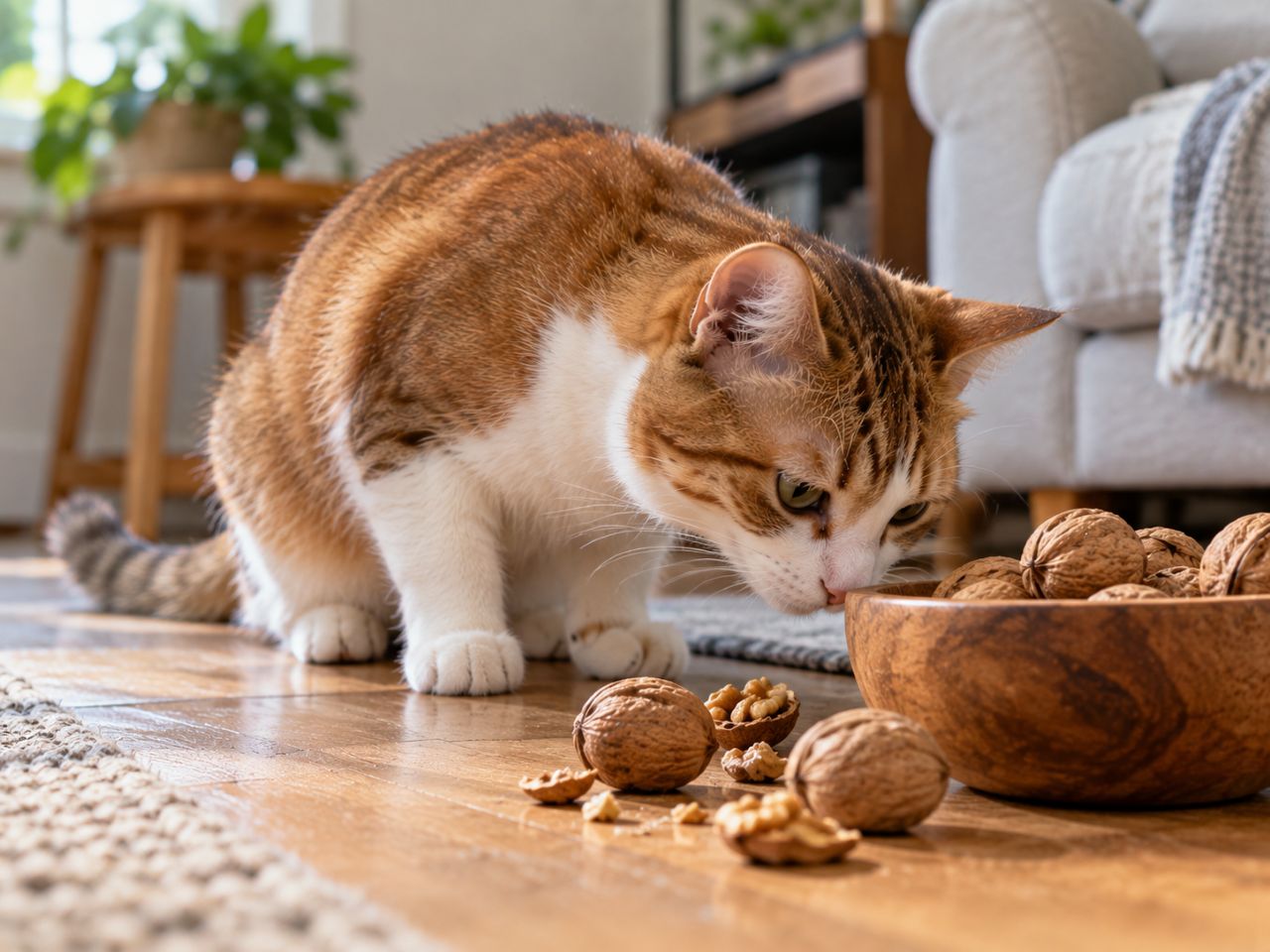
A walnut falls off the cutting board, and your cat gets to it before you do. Now you’re trying to remember whether nuts belong on the list of foods cats should never eat. Cats should not be offered walnuts. A tiny, accidental bite of a fresh, plain, shelled walnut is usually less concerning than eating a shell, a moldy nut, or a chocolate-covered walnut. Still, walnuts can cause digestive trouble and have no necessary role in an already balanced feline diet. What happens next depends on what your cat actually swallowed. The shell, the condition of the nut, and the rest of the ingredients matter as much as the word “walnut.” My Cat Ate a Walnut. What Should I Do? Move the remaining food out of reach and check what is missing. Was it a crumb of walnut meat, a large piece, or part of the shell? Keep the package or recipe, and make a note of when it happened. Use the situation below to decide how quickly to seek help. What happened What to do Your otherwise healthy cat ate a tiny piece of fresh, plain walnut meat and seems normal. This does not automatically mean an emergency. Ask

Health & Care

Why Is My Cat Drinking So Much Water?

Your cat keeps stopping for a drink, but otherwise seems fine. You’re not sure whether they’re actually drinking more or you’re just noticing it more often. Bigger urine clumps in the litter box might be another clue that something has changed. A recent switch to dry food or a warmer house can explain extra thirst. Still, a cat drinking more water than usual may have a health problem before they look or act sick. A clear, unexplained increase is a reason to call your vet, even if your cat is eating well. Keep fresh water available, and mention any changes you’ve noticed in their weight, appetite, or litter box habits. When Does Increased Thirst Need a Vet? You do not need an exact measurement before calling. Describe the change, when it started, and any other symptoms. Your veterinary team can help decide how quickly your cat should be seen. What you’re noticing What to do A modest increase after replacing wet meals with dry food; appetite, energy, and urination otherwise seem normal Keep water available and record the change. Ask your vet if the increase seems substantial or you are unsure the food explains it. Clearly increased drinking without an

Cat Nutrition

Can Cats Eat Dandelions? Nutrition Facts and Safety Tips

Cats can eat a small amount of clean common dandelion, including its leaves and flowers. The plant itself is generally considered non-toxic to cats. A nibble may still cause stomach upset. Call your vet promptly if lawn chemicals may be involved. Dandelions are optional; cats do not need them to stay healthy. Before deciding what to do, check what your cat actually ate. A fresh leaf from an untreated plant, a flower picked beside a public sidewalk, and a bottle of dandelion extract involve different questions. The plant’s identity, its source, and the form your cat swallowed all matter. Are Dandelions Poisonous to Cats? Common dandelion, Taraxacum officinale, appears in the safe category of Cats Protection’s plant guide. That is reassuring when a healthy cat takes a little bite from a correctly identified, untreated plant. Stomach upset remains possible. Even plants classified as non-toxic can cause vomiting or other digestive problems when eaten. Stop access to the plant and contact your vet if your cat becomes unwell. Identification deserves a moment of attention. Common dandelions have a cluster of leaves at ground level and individual flower heads on hollow, unbranched stalks. Those features are useful clues, but a yellow flower

Cat Lifestyle

Why Do Cats Twitch While Sleeping?

You are sitting beside your sleeping cat when one paw begins to paddle. The whiskers flick, an ear jumps, and the tail gives a tiny thump. It can look funny for a second—and worrying the next. Most of the time, a cat twitching in sleep is experiencing a normal part of the sleep cycle, especially REM sleep, the stage most closely associated with dreaming. Small, brief movements of the paws, face, ears, whiskers, or tail are usually harmless when the cat stays relaxed and acts normally after waking. Twitching deserves veterinary attention when it becomes stiff, violent, repetitive, or starts happening while the cat is awake. Drooling, loss of bladder or bowel control, collapse, breathing trouble, or confusion after an episode also point away from ordinary dreaming. why do cats twitch while sleeping? Cats move between lighter sleep and deeper stages throughout the day. During REM sleep, the brain is active even though most of the body remains relaxed. Small signals can still reach muscles in the face, paws, ears, and tail, creating the little flicks and jerks you see. That does not let us know exactly what a cat is dreaming about. Your cat may look as though she

Cat Behavior

Why Do Cats Sit on You? What This Cozy Habit Really Means

You settle onto the couch, and your cat appears before you have even opened your book. They test your legs with one paw, turn in a small circle, and drop their full weight onto you as though your lap had been reserved. So, why do cats sit on you when a bed, blanket, or empty cushion is only a few feet away? Most cats do it because a person offers several good things at once: warmth, security, familiar smells, a comfortable resting surface, and easy access to attention. A cat that curls up, softens their eyes, tucks in their paws, or falls asleep is usually showing that they feel safe with you. That does not mean every lap visit is a declaration of love. Sometimes your cat wants breakfast, relief from a noisy room, or the fuzzy blanket covering your knees. Their body language and the timing of the visit tell you more than the sitting itself. What Is Your Cat Telling You? Look at what happens before and after your cat climbs aboard. These clues can help you read the moment. What you notice What it may mean Loose body, tucked paws, half-closed eyes, or sleep Your cat feels

Health & Care

Why Is My Cat Not Eating? Causes, Warning Signs, and What to Do

Cats may stop eating because of nausea, dental pain, illness, stress, or a change in their food. A sudden loss of appetite deserves a call to your veterinarian. An adult cat that has eaten nothing for about 24 hours needs urgent veterinary attention. Kittens and cats with other symptoms need help sooner. You don’t have to know the cause before making that call. What helps is knowing when your cat last ate a normal amount, how much they’ve eaten since, and what else has changed. A cat licking the gravy off dinner is taking in something. That doesn’t necessarily mean they’re getting enough nutrition. When Does a Cat Not Eating Need Veterinary Care? Start with how your cat is doing overall. The time since their last meal matters, but serious symptoms can make this an emergency long before a full day has passed. What you’re noticing What to do Trouble breathing, collapse, severe weakness, or suspected poisoning Seek emergency veterinary care now. Repeated trips to the litter box with straining and little or no urine Go to an emergency veterinarian immediately. A urinary blockage can be life-threatening, especially in male cats. Repeated vomiting, inability to keep water down, or obvious

Health & Care

Why Is My Cat Losing Hair? Causes, Bald Spots, and Next Steps

Cats can lose hair because of fleas, allergies, ringworm, other skin infections, or repeated licking caused by itchiness or pain. Stress can also contribute to overgrooming. A new bald patch, spreading thinning, or damaged skin deserves a veterinary exam, even when your cat otherwise seems well. Loose fur on your clothes is familiar territory. Seeing more skin through your cat’s coat can be harder to judge. Has the hair fallen out, been licked away, or always looked a little thin there? Those details help a vet work out what’s happening. The location, condition of the skin, and changes in your cat’s daily habits all matter. Is It Normal Shedding or Actual Hair Loss? Normal shedding releases old hairs while the coat remains reasonably even. Cat hair loss, also called feline alopecia, means hair is missing or noticeably reduced where it would usually grow. Alopecia describes the change; it doesn’t tell you the cause. Look at the coat itself rather than judging only by the amount of fur on the couch. A new bare area, an expanding thin patch, or a section of short, broken hairs needs a closer look. Some cats naturally have sparse fur between their eyes and ears.

Cat Nutrition

Can Cats Eat Seaweed? Nori Safety, Risks & Vet Advice

The crinkle of a seaweed snack bag can bring a curious cat into the kitchen almost as quickly as opening a can of tuna. Before you hand over a piece, look at the ingredient list. Most healthy adult cats can eat a tiny piece of plain, unseasoned, food-grade nori once in a while. That does not make every seaweed product cat-safe. Roasted snack sheets may contain salt and flavorings, seaweed salad comes dressed, and kelp can contain far more iodine than you might expect. Seaweed also offers no nutrient that a cat needs to get from a snack. A complete and balanced cat food should already supply the right amounts of iodine, amino acids, vitamins, and minerals. Not All Seaweed Is the Same “Seaweed” is a casual name for many kinds of marine algae. Nori, wakame, kombu, dulse, and kelp differ in texture, mineral content, and preparation. The answer changes again once salt, garlic, sauce, or oil is added. Seaweed product Should cats eat it? What matters Plain nori sheet A tiny piece occasionally Check that seaweed is the only ingredient Salted or flavored seaweed snack No May contain excess salt, garlic, onion, chili, or added oil Kombu or kelp

Scroll to Top