

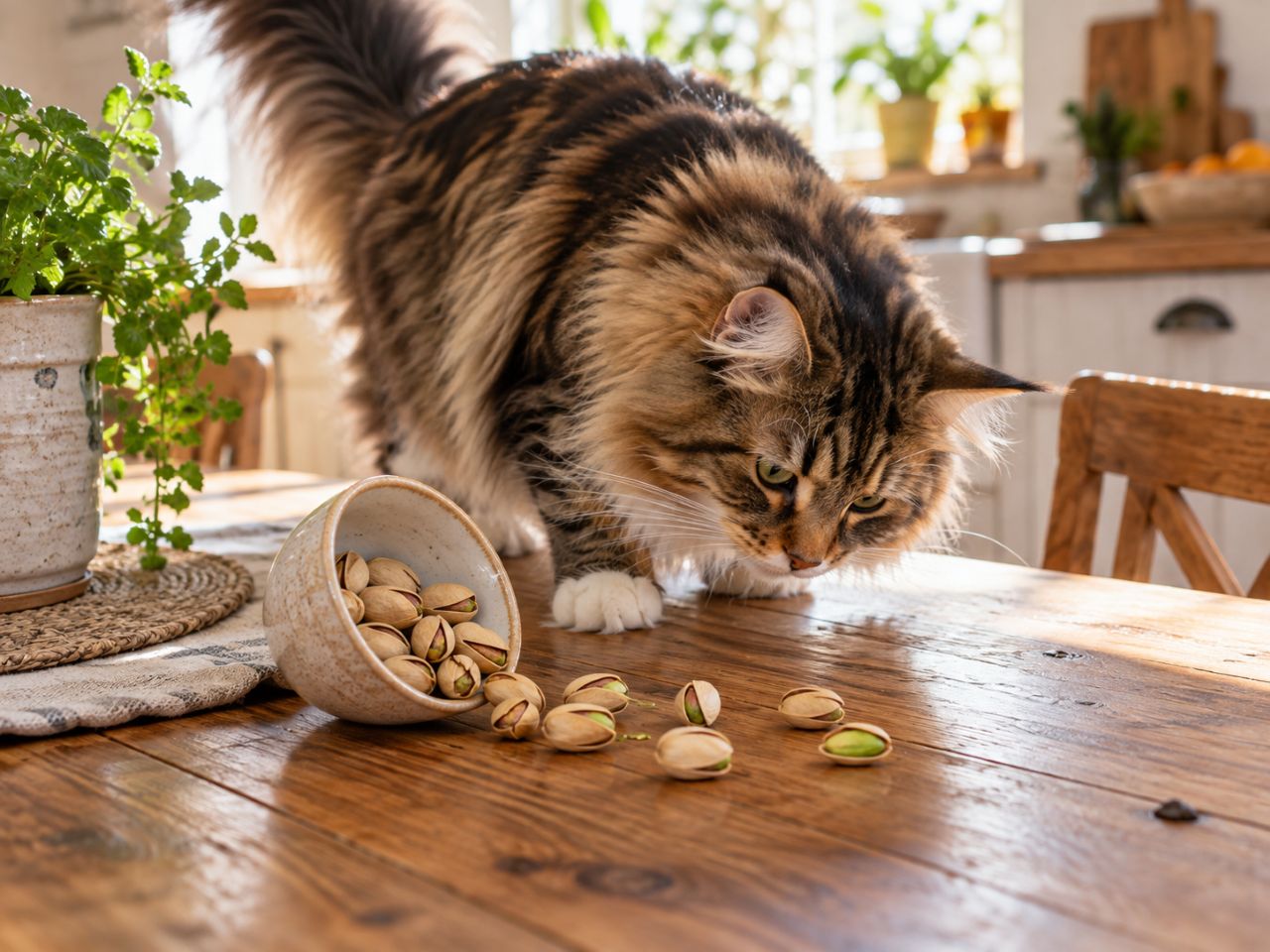
A pistachio drops beside your chair, and your cat gets to it before you do. Now you need to know whether that missing bite matters. Was it just a piece of the green kernel, or did the hard shell disappear too?
Cats should not be fed pistachios as treats. Plain pistachio kernels are not considered inherently poisonous to cats, so a tiny accidental bite is unlikely to cause poisoning. The concerns include digestive upset, swallowed shells, and potentially harmful seasonings. What your cat ate matters as much as how much.
Trouble breathing, collapse, or seizures after eating anything require immediate emergency veterinary care.
My Cat Ate a Pistachio. What Should I Do?
Move the nuts and discarded shells out of reach. Keep the package so you can check the ingredients and describe the product accurately if you need veterinary advice.
Try to establish whether your cat swallowed a kernel, a shell, or both. Note the approximate amount and when it happened. Your cat’s weight, age, medical conditions, and any symptoms will help a veterinarian assess the situation.
| What happened | What to do |
|---|---|
| A healthy adult cat ate a tiny piece of a fresh, plain kernel with no shell | Serious poisoning from the kernel itself is unlikely. Watch for changes in appetite, behavior, vomiting, or diarrhea. Contact your vet if symptoms develop or you are unsure what was eaten. |
| Your cat swallowed a shell or may have swallowed one | Call your veterinarian promptly, even if your cat currently seems comfortable. A swallowed shell needs an assessment of its size, shape, and potential to become lodged. |
| Your cat ate several nuts, an unknown quantity, or a product with concerning ingredients | Call your vet or an animal poison service with the packaging available. Get prompt advice for onion, garlic, chocolate, or suspected mold exposure. |
| Your cat is struggling to breathe, collapsing, having seizures, or repeatedly vomiting and becoming weak | Seek emergency veterinary care immediately. |
For salted pistachios, the amount eaten and salt content matter. A trace of salt on one crumb does not establish salt poisoning. A larger or uncertain exposure deserves professional advice, especially when your cat is small, unwell, or showing symptoms.
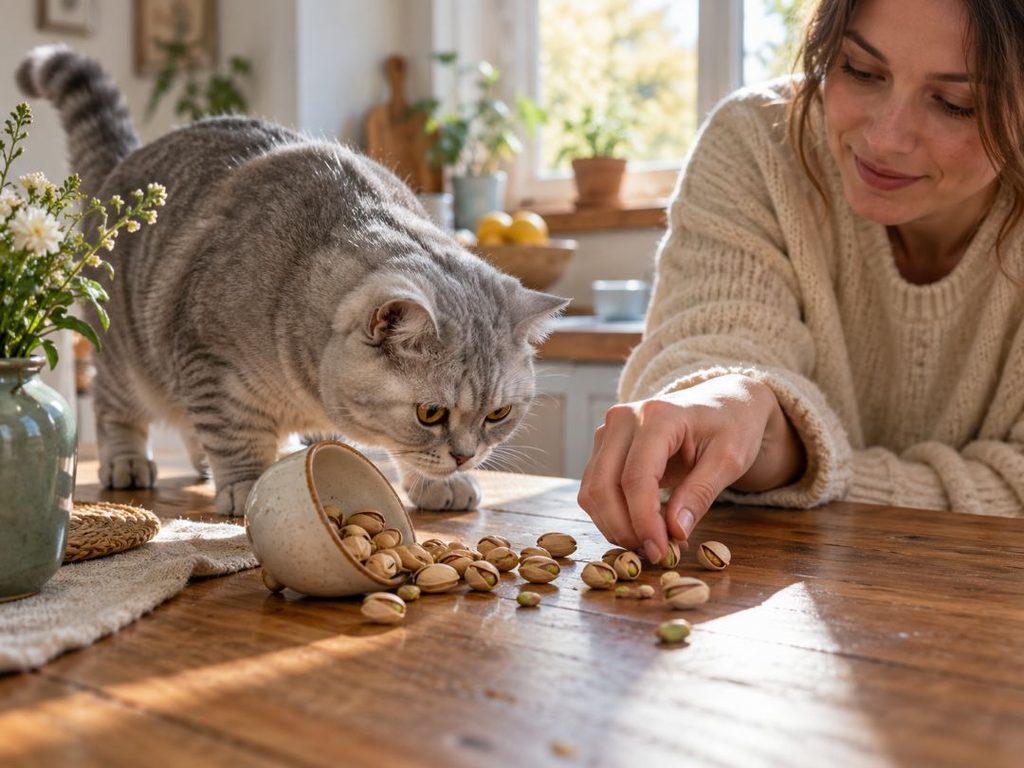
Skip the home remedies
Do not try to make your cat vomit at home. Hydrogen peroxide can injure cats, and salt can cause poisoning. Oil, milk, and other kitchen remedies will not safely remove a swallowed shell or neutralize a toxic seasoning.
Keep fresh water available to an alert cat that can swallow normally, but do not force food or fluids. Ask your veterinarian about feeding if a shell or toxic ingredient may have been swallowed.
In the United States, you can contact the ASPCA Animal Poison Control Center at 888-426-4435 or Pet Poison Helpline at 855-764-7661. Both provide round-the-clock advice and charge consultation fees. A cat with breathing difficulty needs an emergency hospital without delay.
Are Pistachios Toxic to Cats?
The ASPCA identifies pistachios themselves as non-toxic to pets while warning about stomach upset and possible intestinal obstruction when shells are eaten.
That distinction helps put an accidental nibble in perspective. It does not make pistachios a useful addition to a cat’s meals. A fresh, plain kernel and a garlic-coated nut still inside its shell present different problems.
Cats need a complete and balanced cat food appropriate for their life stage. Pistachios do not supply a missing dietary requirement when that diet is already meeting their needs. Their reputation as a nutritious human snack is not a reason to offer them to your cat.
Why Pistachios Are a Poor Cat Treat
The shell can become a physical problem
Pistachio shells are hard material that a cat cannot digest like food. A swallowed piece may pass, but it can also become lodged in the digestive tract. Its size and shape, along with the individual cat, affect the risk.
Watch for vomiting, reduced appetite, unusual tiredness, abdominal discomfort, or difficulty passing stool. These signs can occur with a foreign body and warrant prompt veterinary attention. A veterinarian may recommend imaging to investigate a suspected obstruction.
A shell that seems small in your hand is still worth reporting. Do not wait for it to appear in the litter box before calling.
Seasonings can create a separate poisoning risk
Garlic and onion, including their powdered forms, can damage a cat’s red blood cells and cause anemia. Check flavored nuts carefully; the ingredient list matters more than a name such as “savory” or “barbecue.”
Signs of onion or garlic poisoning can take several days to develop. A cat acting normally immediately afterward still needs an exposure assessment when these ingredients were involved.
Salt is a different concern. Cats need sodium in appropriate dietary amounts, but excessive salt intake can be dangerous. Serious salt poisoning can cause vomiting, poor coordination, tremors, and seizures. Risk depends on the dose and circumstances, so avoid guessing from the taste of a nut or the amount of seasoning you can see.
Rich snacks can upset the stomach and add calories
An unfamiliar food can leave a cat with vomiting or diarrhea. Eating a larger amount of pistachios increases the concern for digestive upset.
Pistachios also contain substantial fat and calories. Cats need dietary fat, but extra snack calories can contribute to weight gain when they are repeatedly added to an otherwise adequate diet. A nut is not a sensible way to improve a balanced meal.
There is no need to offer another taste to see whether your cat tolerates it. A treat made for cats is easier to portion and fit into their daily food allowance.
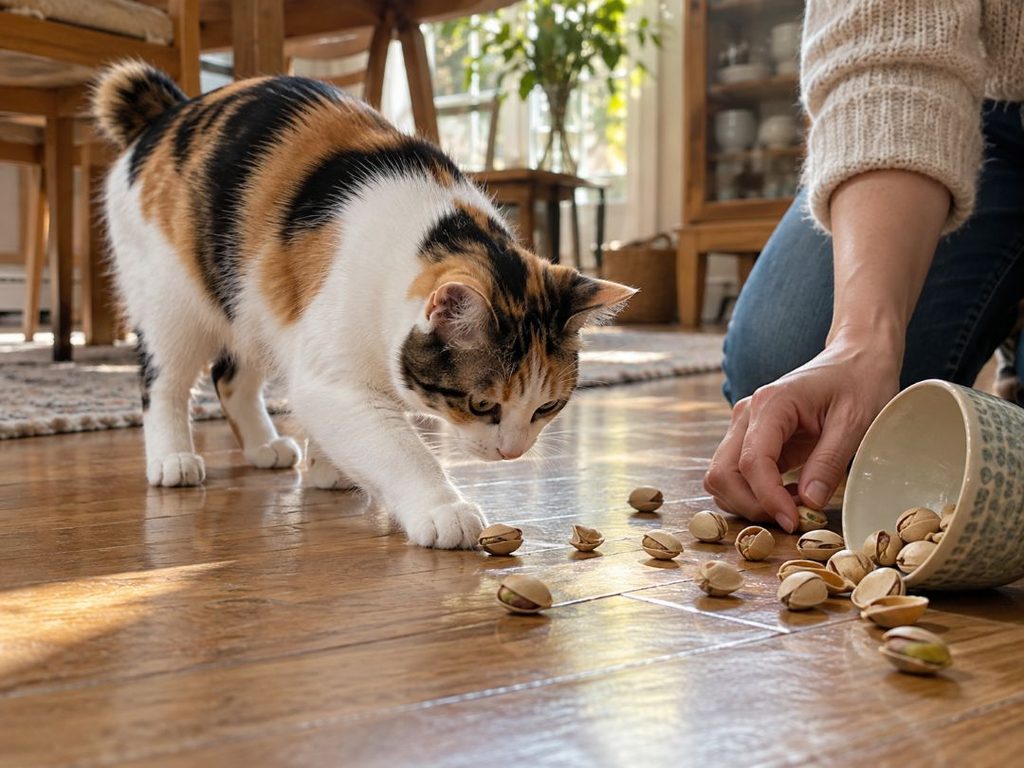
Contamination deserves attention
Pistachios are among the foods that can be contaminated with aflatoxins, substances produced by certain molds. Harmful exposure can damage a pet’s liver. These toxins are not naturally present in every pistachio, and contamination cannot always be identified by appearance.
Keep spoiled nuts and food waste away from pets. Suspected ingestion of moldy or contaminated food is a reason to call your veterinarian. Save the packaging and a sample of the food, out of your cat’s reach, in case they are needed for the assessment.
Can Pistachios Cause Pancreatitis in Cats?
You may see high-fat foods linked directly to pancreatitis in cats. The feline evidence calls for more care than that claim suggests.
The American College of Veterinary Internal Medicine’s consensus statement explains that most feline pancreatitis cases have no identified cause. It also reports a lack of scientific evidence that dietary fat is harmful to cats with pancreatitis, while recommending individual assessment of the diet and any other illnesses.
Those findings do not establish pistachios as safe treats. They mean that assuming a fatty snack caused a cat’s pancreatitis goes beyond the evidence. Vomiting, appetite loss, and lethargy need assessment rather than a diagnosis based on the snack alone.
A cat already being treated for pancreatitis or another digestive condition should follow its veterinarian’s feeding plan.
What About Pistachio Ice Cream, Butter, or Pudding?
Changing the texture does not turn pistachios into an appropriate cat snack. Prepared foods also require a look at the full recipe.
Pistachio ice cream and pudding often contain dairy. Many adult cats have difficulty digesting lactose, which can lead to gastrointestinal upset. The sugar and extra calories offer no useful reason to share dessert. Products containing chocolate introduce an additional toxic ingredient.
A small lick of plain pistachio ice cream containing no toxic ingredients is unlikely to cause serious poisoning, although dairy may upset the stomach. Check the label, estimate the amount, and contact your vet when the ingredients or exposure are uncertain.
Pistachio butter or paste is made without the hard shell but retains the nut’s concentrated calories. Some products also contain added salt, sugar, chocolate, or other ingredients. Do not use nut butter to hide your cat’s medication without checking with the prescribing veterinarian; ask about an appropriate food or medication treat instead.
Treats That Make More Sense for Your Cat
You can include your cat in snack time without sharing your nuts. A few pieces of their usual kibble, set aside from the daily ration, may be enough. A small portion of their regular wet food works too.
For a separate treat, choose a product made for cats with clear calorie information. A tiny piece of plain, fully cooked chicken or turkey can suit many healthy cats. Remove bones and skin, and leave out salt, sauces, butter, onion, and garlic.
Keep treats below 10% of daily calories, consistent with World Small Animal Veterinary Association guidance. The rest should come from complete and balanced food. For a cat whose veterinarian has set a 200-calorie daily allowance, that means fewer than 20 calories from treats altogether. That example is not a calorie prescription for every cat.
Cats eating a therapeutic diet or undergoing a food allergy trial may need stricter limits on extras. Their usual prescribed food is often the simplest reward; check with the veterinary team before adding something new.
Keep the Shell Bowl Out of Reach
Cleanup matters as much as where you store the unopened bag. Put shells into a covered trash container rather than leaving them beside the sofa. Check under chairs and between cushions for dropped nuts before leaving the room.
In a household with several cats, separate them from the spill while you clean up. If you cannot tell which cat ate something, tell the veterinarian that too. A missing shell should not be assigned to one cat just because that cat was nearest the bowl.
At Catsoria, we recommend keeping snack time simple: offer a small, appropriate cat treat and clear away your own food afterward. Your cat can enjoy the attention while the pistachios stay in your bowl.
Frequently Asked Questions
1. Can cats eat unsalted or roasted pistachios?
Neither is a recommended treat. Removing added salt avoids that particular exposure, but the nut remains unnecessary in a balanced cat diet. Roasting does not remove a hard shell or make added seasonings suitable for cats. After an accidental bite, check the ingredients and whether any shell was swallowed.
2. How many pistachios can a cat safely eat?
There is no recommended pistachio serving to add to a cat’s diet. For an accidental exposure, a veterinarian considers the amount, product, shell involvement, symptoms, and the cat’s size and health. A low-risk nibble should not be treated as a daily allowance.
3. Can kittens eat pistachios?
Do not offer them to kittens. Growing cats need food formulated for growth, and hard nuts or shell pieces are unsuitable snacks. Call your veterinarian for advice after a kitten swallows a shell, eats seasoned nuts, develops symptoms, or consumes an uncertain amount.
