

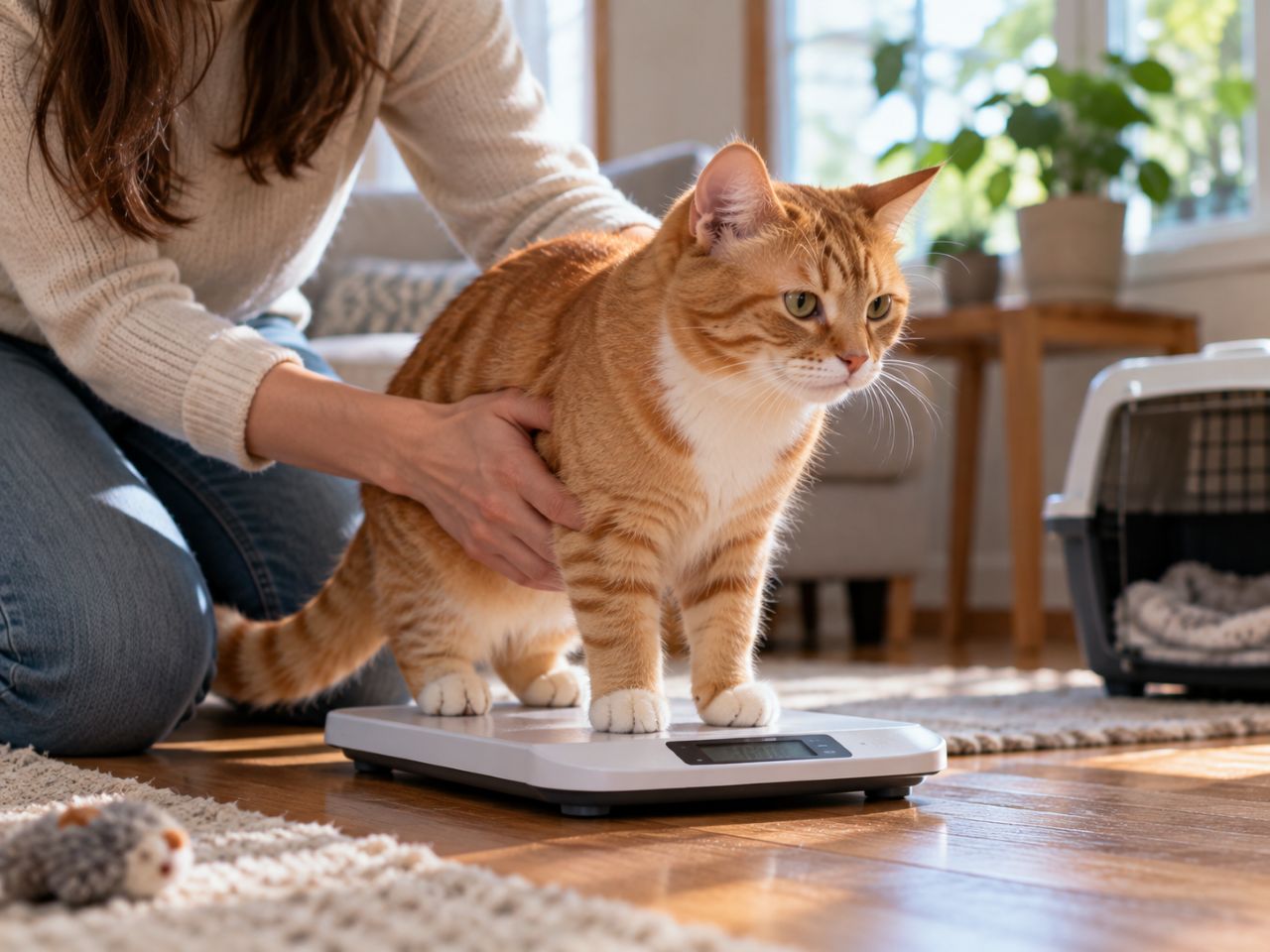
Weighing a cat sounds easy until your cat sees the scale, steps on it with one paw, and leaves.
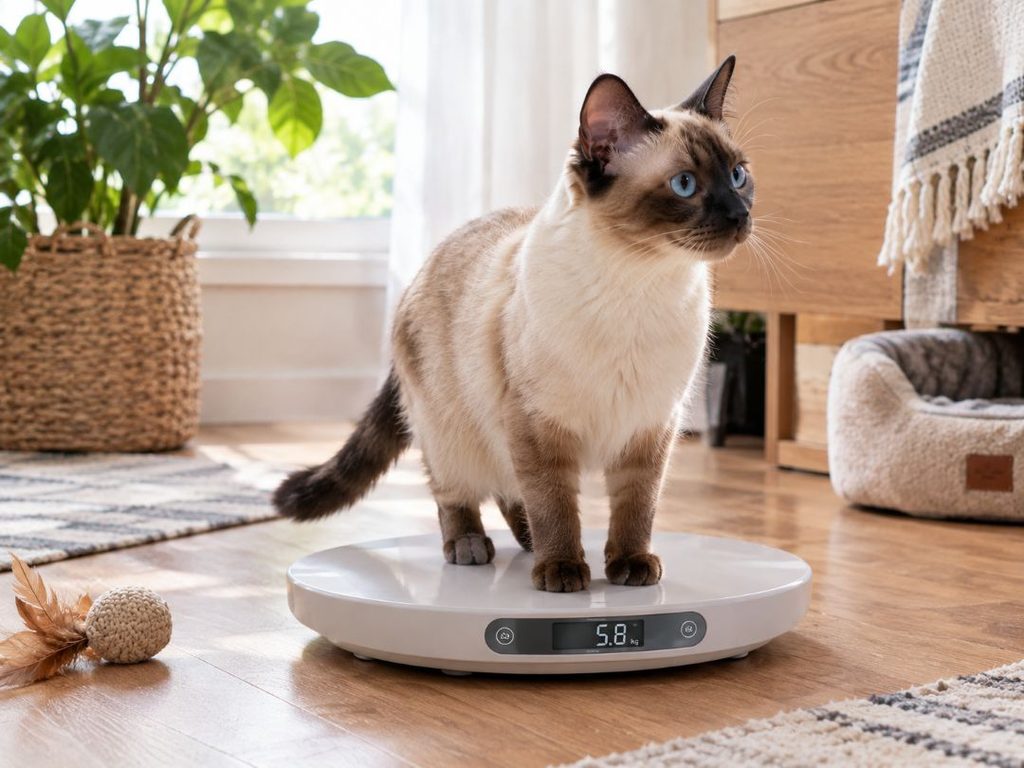
The most accurate home method is to place your cat on a digital pet or baby scale set on a hard, level surface. If you don’t own one, weigh yourself alone, weigh yourself again while holding your cat, and subtract the first number from the second. A carrier or sturdy box can help with cats that won’t sit still.
The number itself is only part of the picture. Recording your cat’s weight regularly can reveal a gradual change that’s easy to miss beneath fur. Pair that number with your cat’s body shape, muscle condition, appetite, and behavior.
Why Weighing Your Cat at Home Is Worth Doing
You see your cat every day, which makes slow physical changes surprisingly hard to notice. A half-pound difference may not look dramatic, but it equals 5% of the body weight of a 10-pound cat.
Veterinary nutrition guidelines treat an unexplained weight change as a reason for further assessment. They also recommend looking at body condition and muscle condition instead of relying on pounds alone.
Regular weigh-ins can help you:
- Notice gradual weight gain before it becomes more difficult to address
- Track progress during a veterinarian-supervised weight-loss plan
- Monitor a kitten’s growth
- Watch a senior cat more closely
- Give your veterinarian a useful record when appetite or behavior changes
- Follow cats with diabetes, kidney disease, thyroid disease, or another condition
Home measurements don’t replace veterinary exams. They give you a baseline and make it easier to recognize when something has changed.
What You’ll Need
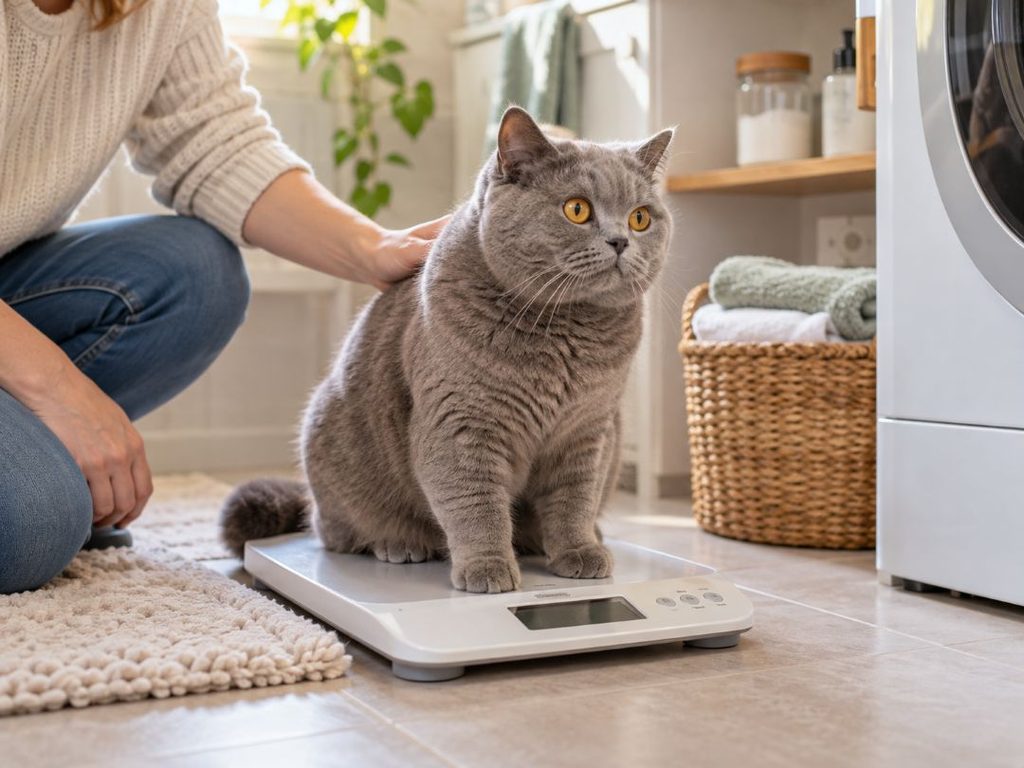
A basic setup may include:
- A digital pet or baby scale
- A thin nonslip mat or folded towel
- A carrier, shallow box, or sturdy container
- Your phone or a notebook
- One small treat if your cat needs encouragement
A pet or baby scale is usually the best choice for regular monitoring because it’s designed to register smaller bodies. The Feline Veterinary Medical Association specifically suggests a scale intended for lower weight ranges, such as a baby scale, when monitoring senior cats at home.
If you don’t have one, that’s fine. A regular bathroom scale can still provide a useful estimate.
| Method | Best for | Main limitation |
|---|---|---|
| Pet or baby scale | Regular, more precise tracking | Your cat must stay still briefly |
| Carrier on a suitable scale | Nervous or restless cats | Carrier weight must be removed |
| Bathroom scale with owner | Occasional checks without special equipment | May miss small changes |
| Veterinary clinic scale | Confirming a concerning change | Requires a clinic visit |
1. Choose the Method Your Cat Will Tolerate
The “best” scale isn’t useful if your cat refuses to go near it.
A relaxed cat may sit directly on a pet scale for a few seconds. A cat that likes cardboard boxes may cooperate inside a shallow box placed on the scale. For a carrier-trained cat, weighing the carrier and cat together can be the least stressful option.
Use the bathroom-scale method if your cat is comfortable being held:
- Weigh yourself and record the number.
- Pick up your cat.
- Step onto the same scale again.
- Subtract your weight from the combined weight.
Don’t place your cat on a narrow human scale and expect them to balance there alone. Avoid hanging your cat from a luggage scale. Even inside a carrier, being lifted off the floor can frighten the cat and create an unnecessary fall risk.
2. Put the Scale on a Hard, Level Surface
Carpet, thick rugs, and uneven floors can change the reading. Place the scale on tile, wood, vinyl, or another firm surface.
Turn it on and check the unit before bringing your cat over. A result of 4.8 may mean kilograms rather than pounds. In that case, the same cat weighs about 10.6 pounds.
Use the same scale and the same location whenever possible. Switching between a bathroom scale, a baby scale, and the veterinary clinic scale can produce slightly different numbers even when your cat’s weight hasn’t changed.
If you’re using a towel, choose a thin one. A large, bunched-up blanket can hang over the platform or make the surface unstable.
3. Zero the Scale With the Towel or Container in Place
Place the towel, box, or empty carrier on the scale. Press the tare or zero button so the display returns to zero.
If the scale doesn’t have that function, write down the container’s weight. You’ll subtract it from the combined measurement later.
For example:
- Empty carrier: 3.2 pounds
- Carrier with cat: 13.9 pounds
- Cat’s weight: 13.9 − 3.2 = 10.7 pounds
Make sure the entire carrier rests on the scale. If one side touches the floor, furniture, or your hand, the result won’t be reliable.
4. Pick a Calm, Repeatable Time
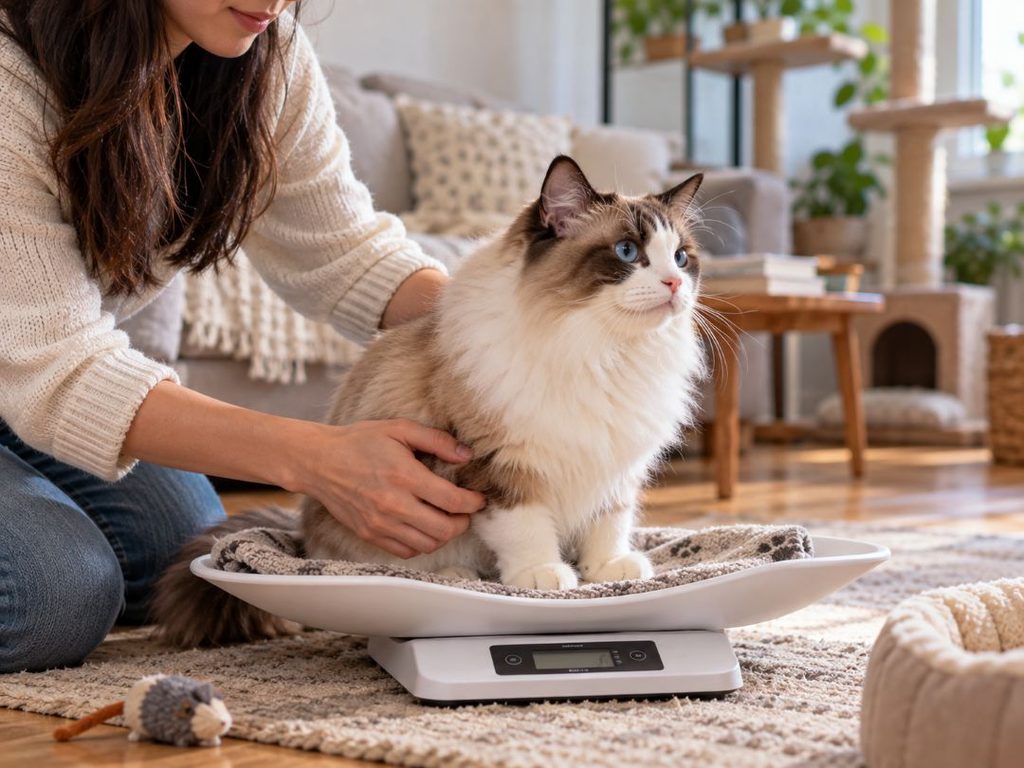
Try to weigh your cat at home under similar conditions each time. The exact hour matters less than consistency.
A useful routine is to weigh your cat:
- Before a regular meal
- After they’ve had a chance to use the litter box
- In the same room
- At roughly the same time of day
Don’t chase a sleeping cat through the house just to keep your schedule. Wait until they’re awake and relaxed. Let them sniff the scale, towel, or box before you attempt a reading.
If your cat is wary of the setup, leave the scale out for a few days. Place treats beside it, then on the towel, without turning every visit into a weighing session. This makes the equipment feel less like a trap.
5. Place Your Cat Safely and Confirm the Reading
When lifting your cat, support the chest with one hand and the hindquarters with the other. Never lift a cat by the front legs or scruff just to obtain a weight.
Set your cat in the center of the scale and remove your hands. Wait for the display to settle. Some digital pet scales have a hold function that captures the number despite slight movement.
Take two readings. If they match or are very close, record the result. If they’re noticeably different, let your cat step away and reset the scale before trying once more.
For the bathroom-scale method, keep the conditions the same for both measurements. Wear the same clothing and don’t pick up a phone, shoes, or another object between readings.
Here’s an example:
- Your weight: 152.8 pounds
- Your weight while holding your cat: 163.4 pounds
- Your cat’s estimated weight: 10.6 pounds
Bathroom scales often round more heavily than pet scales. That makes this method useful for general checks, but less dependable when a veterinarian needs you to monitor small changes.
6. Record the Number—Then Look at the Trend
Write down the date, weight, scale used, and anything unusual that day. A basic cat weight log could look like this:
May 4 — 10.8 lb — baby scale — appetite normal
June 2 — 10.7 lb — baby scale — appetite normal
July 1 — 10.3 lb — baby scale — eating less this week
That pattern tells you more than a single measurement.
You can also calculate percentage change:
Previous weight − current weight
-------------------------------- × 100
        previous weight
A cat dropping from 10 pounds to 9.5 pounds has lost 5% of their body weight. That percentage isn’t a diagnosis or a universal emergency cutoff. It shows why a change that looks small on the scale may deserve attention.
Take an occasional photo of your standing cat from above and from the side. Feline life-stage guidelines recommend these views because they can help owners and veterinarians compare body and muscle condition over time.
How Often Should You Weigh Your Cat?
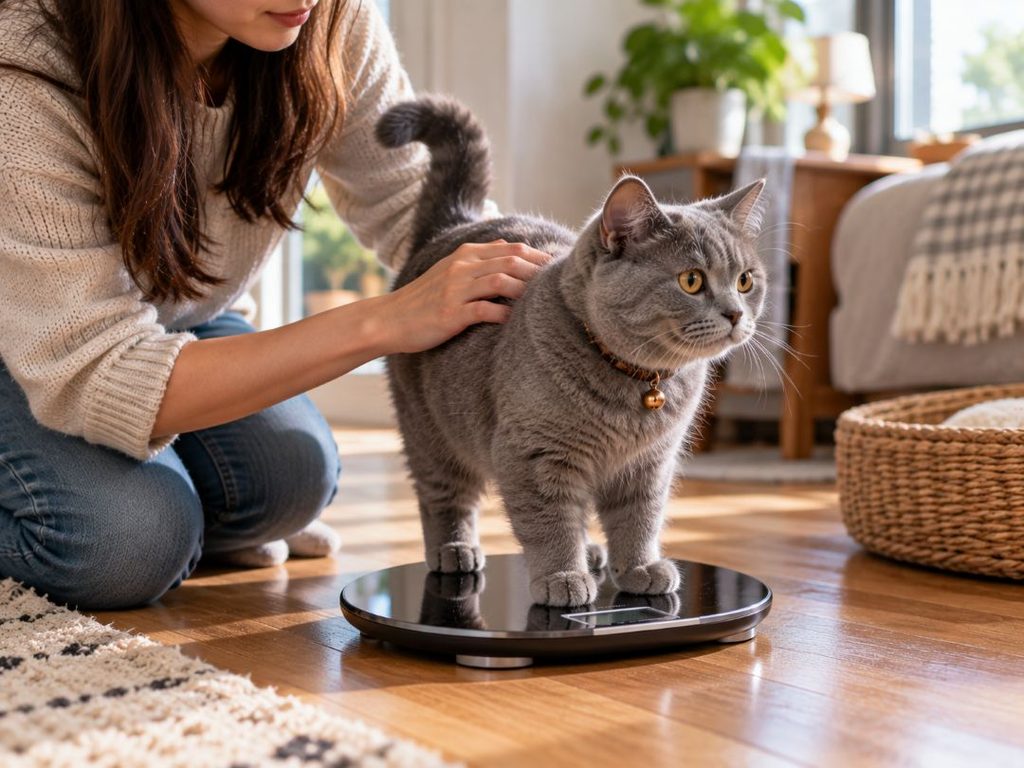
For a healthy adult cat with a stable weight, once a month is a practical home routine.
Cats following a veterinary weight-loss plan may need checks every two weeks. Your veterinarian may choose a different schedule based on the cat’s target, diet, age, or medical history.
Kittens, seniors, and cats with chronic conditions need individualized schedules:
- A growing kitten may require more frequent measurements.
- A senior cat can lose weight or muscle even when the change isn’t obvious.
- A cat with diabetes, kidney disease, or another condition may need monitoring arranged around treatment.
- A cat taking weight-based medication shouldn’t have the dose changed at home unless the veterinarian instructs you to do so.
Daily weighing is rarely useful for a healthy adult. Normal short-term variation and scale error can make the record harder to interpret.
Weight Is Not the Same as Body Condition
There isn’t one perfect weight for every cat. Bone structure, sex, breed, age, and muscle mass all affect the number.
A 12-pound cat might be lean and muscular. Another 12-pound cat with a smaller frame could be carrying excess fat. That’s why veterinarians use a cat body condition score, often called BCS, alongside body weight.
On the WSAVA nine-point chart, a cat near an ideal 5/9 generally has:
- Ribs that are easy to feel beneath a light fat covering
- A visible waist behind the ribs when viewed from above
- Only a small abdominal fat pad
A hanging primordial pouch doesn’t automatically mean a cat is overweight. Feel the ribs and look at the waist rather than judging the lower belly alone.
Muscle condition is assessed separately. A cat can have excess body fat and still lose muscle, especially along the spine, shoulder blades, skull, and hips. WSAVA’s muscle condition system ranges from normal muscle to severe muscle loss.
Your veterinarian can confirm both scores during an exam and help establish a realistic target weight for your individual cat.
When a Weight Change Calls for a Veterinarian
Contact your veterinarian when repeated measurements show unexplained loss or gain. Don’t wait for the number to become dramatic if your cat also seems unwell.
Arrange prompt veterinary advice if a weight change comes with:
- Reduced or absent appetite
- Increased appetite despite weight loss
- Drinking or urinating more than usual
- Repeated vomiting or diarrhea
- Lethargy, weakness, or hiding
- Trouble chewing or dropping food
- Poor grooming or a coat that looks unusually greasy or matted
- Visible muscle loss
- Pain, poor mobility, or difficulty breathing
Weight loss alongside increased appetite, thirst, or urination can occur with conditions such as hyperthyroidism or diabetes, though only a veterinarian can identify the cause.
A cat that has stopped eating needs quick attention. Cornell notes that appetite loss lasting as little as 24 hours can seriously affect an adult cat, with young kittens becoming vulnerable much sooner.
Don’t sharply reduce food because the scale says your cat is overweight. Safe weight loss should be planned with a veterinarian and monitored with body weight, body condition, and muscle condition.
What If Your Cat Won’t Stay on the Scale?
Give up on getting the number that day before turning the session into a wrestling match.
Try a shallow box your cat already enjoys. Place it on the scale, tare it, and let your cat climb in voluntarily. A lick of wet food on a spoon can keep some cats still long enough for the display to settle. Count that food as part of the day’s treats if your cat is on a calorie-controlled plan.
If your cat dislikes being held, use the carrier method instead of the bathroom scale. Leave the carrier open in a familiar room with bedding inside, so it isn’t associated only with stressful trips.
Cats with arthritis, injuries, breathing problems, or strong fear may be safer on a low veterinary scale handled by clinic staff.
Make Each Measurement Useful
A home scale can’t tell you why your cat’s body is changing. What it can do is replace “I think she feels lighter” with a dated record your veterinarian can use.
Choose one safe method, repeat it under similar conditions, and watch the pattern rather than reacting to every tiny fluctuation. Combine the number with body condition, muscle condition, appetite, and behavior. That simple Catsoria routine can make a subtle change much easier to catch.
Frequently Asked Questions
1. Can I weigh my cat on a regular bathroom scale?
Yes. Weigh yourself alone, then weigh yourself while holding your cat and subtract the two numbers. This gives an estimate. A pet or baby scale is better at detecting small changes.
2. How can I weigh a cat without a pet scale?
Use a bathroom scale and the subtraction method, or place your cat in a carrier on a scale that can safely support both. Weigh the empty carrier separately if the scale can’t be tared.
3. Can I use a kitchen scale to weigh a kitten?
Only if the scale has enough capacity and the kitten can rest safely inside a stable container. Keep the scale on a low surface and stay beside the kitten. Ask your veterinarian or rescue coordinator how often a young kitten should be weighed.
4. Should I weigh my cat before or after eating?
Either can work, but use the same routine each time. Weighing before a regular meal often makes comparisons easier and gives you the option of offering breakfast as a reward.
5. What is the most accurate way to weigh a cat at home?
A digital pet or baby scale placed on a hard, level surface usually provides the most useful home reading. Zero the scale with any towel or container already on it, keep your cat centered, and confirm the number with a second measurement.
6. How much weight loss should worry me?
There’s no single home cutoff that applies to every cat. A repeated, unexplained downward trend deserves a call to your veterinarian, especially in a senior cat or when appetite, thirst, urination, digestion, energy, or behavior has changed. AAHA guidelines list any unexplained weight change as a nutritional risk factor requiring further assessment.
Source
https://www.aaha.org/resources/2021-aaha-nutrition-and-weight-management-guidelines/home/
https://www.aaha.org/resources/2021-aaha-nutrition-and-weight-management-guidelines/nutritional-risk-factors/
https://wsava.org/wp-content/uploads/2020/01/Cat-Body-Condition-Scoring-2017.pdf
https://wsava.org/wp-content/uploads/2020/01/Muscle-Condition-Score-Chart-for-Cats.pdf
https://catvets.com/wp-content/uploads/2024/12/FelineVMA_Sr.-Care-Guideline_BW.2.pdf
https://www.vet.cornell.edu/departments-centers-and-institutes/cornell-feline-health-center/health-information/feline-health-topics/obesity
https://www.vet.cornell.edu/departments-centers-and-institutes/cornell-feline-health-center/health-information/feline-health-topics/anorexia
https://www.vet.cornell.edu/departments-centers-and-institutes/cornell-feline-health-center/health-information/feline-health-topics/feline-diabetes
https://www.vet.cornell.edu/departments-centers-and-institutes/cornell-feline-health-center/health-information/feline-health-topics/hyperthyroidism-cats
