
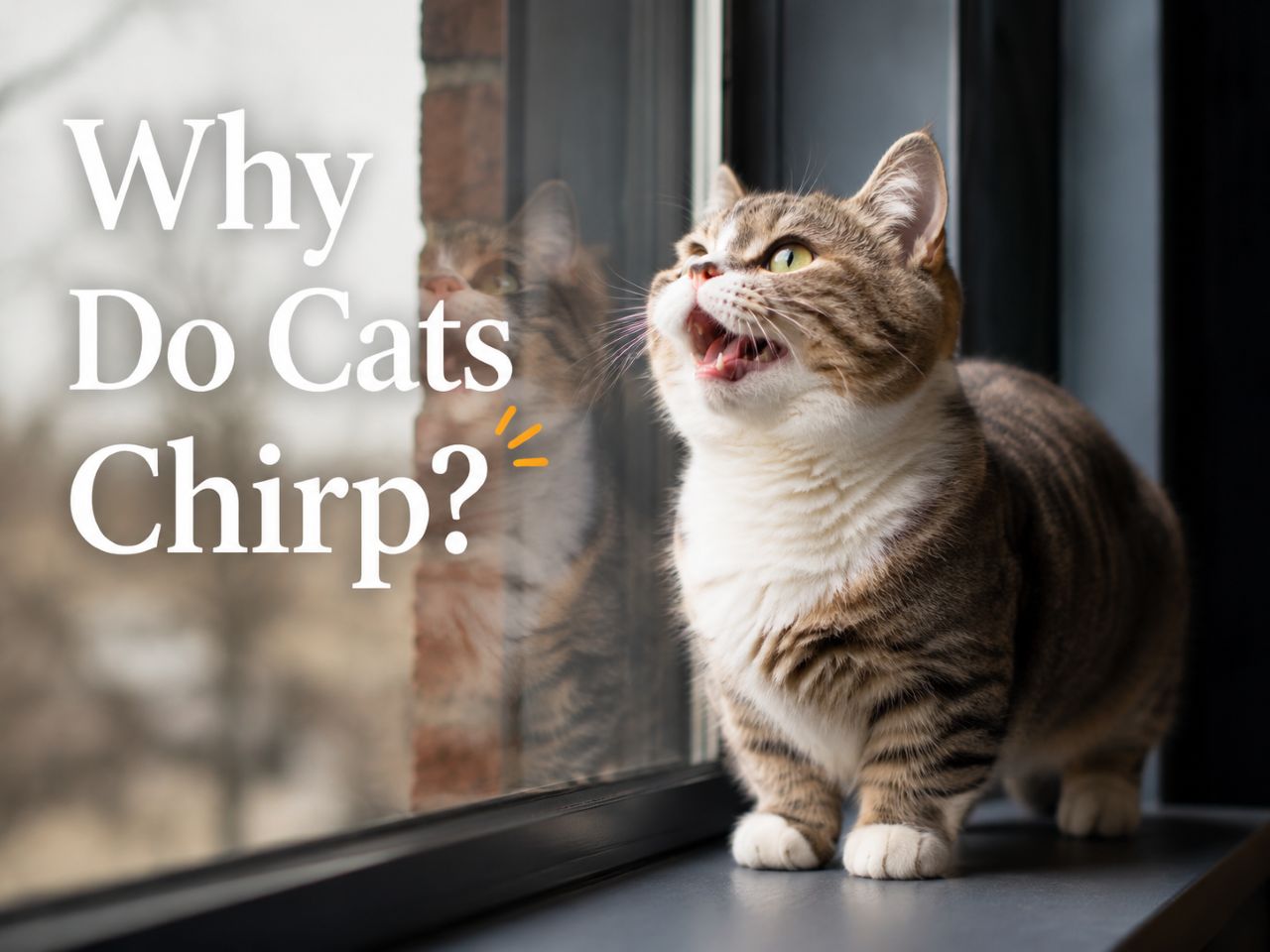
Why do cats chirp?
Cats usually chirp because they are excited, focused, or trying to communicate. The sound often appears when a cat notices birds, squirrels, insects, or moving toys. Cats may also chirp at people as a greeting, an invitation to follow, or a way to ask for attention.
Most chirping is harmless and completely normal. The best clue is not the sound by itself, but what your cat is looking at and how the rest of their body is behaving.
What Does a Cat Chirp Sound Like?
A cat chirping sound is usually short, light, and high-pitched. It may sound like:
- “Prrt!”
- “Mrrip!”
- “Eep!”
- A quick birdlike tweet
- A soft squeak mixed with a purr
Some cats make one neat little chirp. Others release an entire string of chirrups while staring through a window.
The mouth may stay mostly closed, especially during social chirping. When prey is involved, the chirp may blend into clicking teeth, trembling whiskers, or rapid jaw movements.
Cat owners often use the words chirping, trilling, chattering, and twittering interchangeably. The sounds can overlap, but they are not quite the same.
Why Do Cats Chirp?
There is no single explanation that fits every cat. Chirping is more like a small sound with several possible jobs.
The most common reasons include hunting excitement, frustration, greeting behavior, attention-seeking, and learned communication.
Their Hunting Instinct Has Switched On
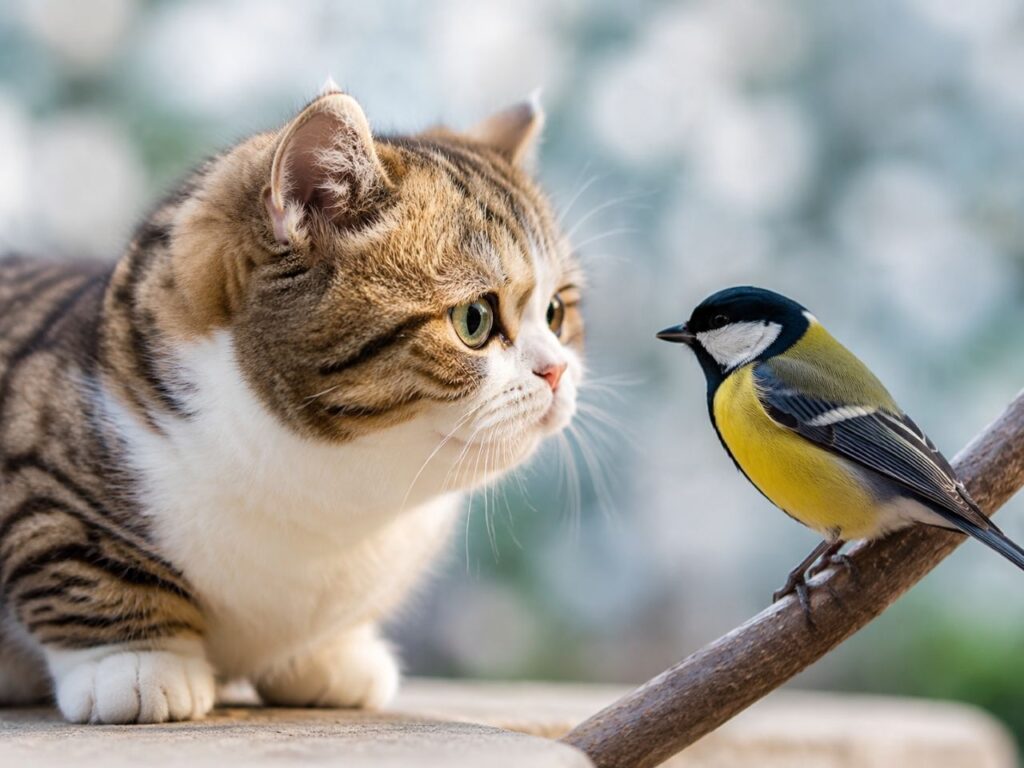
Many cats chirp when they see something that looks chaseable.
A sparrow hopping along a railing, a moth circling a lamp, or a feather toy moving behind the couch can instantly activate a cat’s predatory focus. Even a well-fed indoor cat still carries the behavioral equipment of a hunter.
When this happens, you may notice:
- A fixed stare
- Ears aimed toward the target
- Wide or dilated pupils
- A low crouched body
- A twitching tail tip
- Whiskers pushed forward
- Chirping or clicking noises
The sound may reflect excitement as your cat watches the target and prepares for a chase that never happens.
Veterinary behavior sources commonly connect prey-related chirping with a mixture of intense focus, excitement, and possible frustration when the animal cannot be reached.
They Are Frustrated by Something They Cannot Catch
Imagine seeing your favorite snack behind a locked glass door. That is roughly the situation an indoor cat faces when watching a bird from the safe side of a window.
The bird is visible. It moves like prey. The cat’s brain says, “Catch it.” The window says, “Absolutely not.”
This is why do cats chirp at birds while pacing on a windowsill or pressing their nose against the glass. Chirping may release some of the tension created by wanting to stalk an unreachable target.
Frustration does not mean your cat is emotionally falling apart. A few chirps during birdwatching are generally part of normal feline behavior. A cat who remains agitated long after the bird is gone may need a better outlet for that energy.
They May Be Trying to Mimic Prey
One popular theory suggests that cats imitate the sounds of birds or other prey.
Wild felines have occasionally been observed producing calls that resemble the animals they are watching. This has led to the idea that vocal mimicry might help a predator approach without immediately triggering alarm.
It is an intriguing theory, but it has not been proven as the main reason domestic cats chirp. Your cat may sound uncannily like a sparrow, yet excitement and predatory arousal are still simpler explanations.
Cats do not hand us laboratory notes after a window-watching session, so a little mystery remains tucked inside the chirp.
Mother Cats Use Chirps to Communicate With Kittens
Chirping also has a social history.
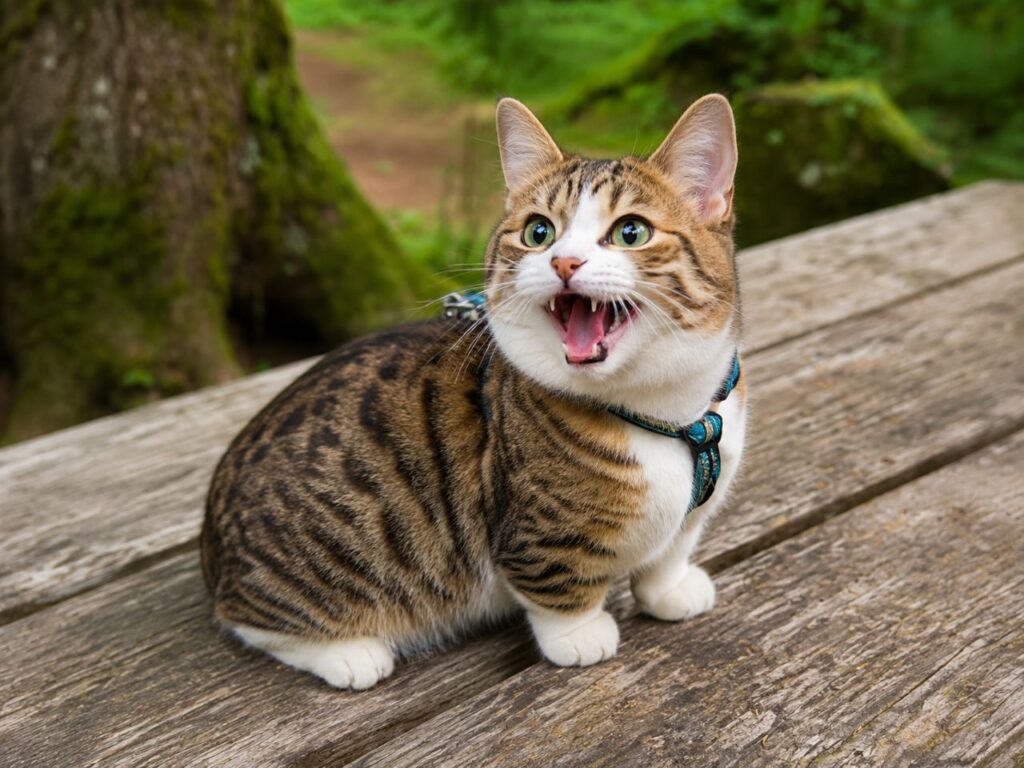
Mother cats may use short contact calls to get their kittens’ attention, encourage them to move, or help keep the group together. Kittens learn that this sound means something close to “Come along” or “Pay attention.”
Adult cats can carry that communication style into their relationships with people and other animals. PetMD notes that mother cats use chirps as contact calls and that adult cats may use similar sounds to attract attention or announce their location.
That background may explain why does my cat chirp at me before walking toward the kitchen, stairs, or favorite toy. Your cat might not be making random noise; they may be asking you to follow.
They Are Greeting You
Some cats meow when their person comes home. Others offer a cheerful little chirp and walk away with their tail held high.
A greeting chirp is usually paired with friendly body language:
- Upright or softly curved tail
- Relaxed ears
- Slow blinking
- Rubbing against your legs
- Walking toward you
- A loose, comfortable posture
In this setting, the cat chirping meaning is often simple: “Hello. You’re back.” Chirping and trilling are commonly associated with greetings, acknowledgment, and friendly social interaction.
Your Cat Wants Your Attention
Cats are remarkably good at discovering which sounds make humans react.
Suppose your cat chirps, you look over, and then you offer a treat or start playing. Your cat has just learned that chirping is a useful button for operating the household.
Later, they may chirp because they want:
- A door opened
- Their food bowl checked
- A toy brought out
- A spot on your lap
- Help reaching something
- Your company in another room
This does not mean the behavior is manipulative in a negative sense. It is communication shaped by experience. Cats repeat what works. Humans do the same, although we usually add emails.
Is Chirping a Sign That a Cat Is Happy?
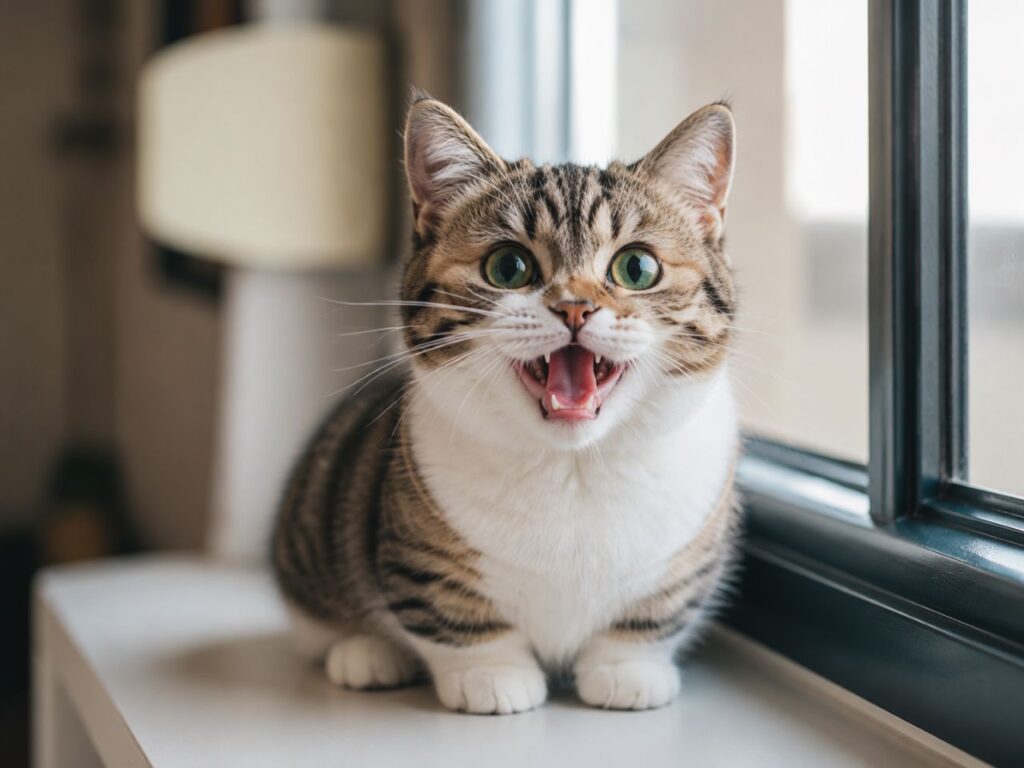
Cat chirping often occurs during positive or highly stimulating moments, but the sound does not automatically mean happiness.
- A cat chirping while greeting you with a raised tail is probably feeling social and comfortable.
- A cat chirping at a toy may be excited and playful.
- A cat crouched tensely at a window may be thrilled by the bird but frustrated that it remains out of reach.
Read the entire scene to evaluate their mood.
Signs the Chirping Is Friendly or Playful
Your cat is likely comfortable when you see:
- Soft eyes or slow blinks
- Ears in a neutral or forward position
- A relaxed back and tail
- Gentle rubbing
- Playful movement
- Normal eating and resting afterward
Signs Your Cat Is Becoming Overstimulated
Your cat may need a break when chirping comes with:
- Hard tail lashing
- Flattened ears
- Skin twitching
- Repeated pacing
- Growling
- Swatting when approached
- Inability to settle after the trigger disappears
Give an overstimulated cat space. Avoid picking them up or placing your hand near their face while their attention is locked on prey.
Chirping vs. Trilling vs. Chattering
These sounds are related, and individual cats blur the boundaries. Still, knowing the basic differences can help you understand what you are hearing.
Chirping
A chirp is a brief, high-pitched peep or squeak. Cats may chirp at prey, people, toys, or other pets. It can signal excitement, interest, greeting, or a request for attention.
Trilling
A cat trill meaning is rooted in friendly connection. A trill is a rolling “brrrup” sound, often produced with the mouth closed. It tends to last slightly longer than a chirp and frequently appears during friendly social interaction. Cats may trill when greeting you or encouraging you to follow them.
Chattering
Cat chirping and chattering often go hand in hand. Chattering involves rapid jaw movement and clicking teeth. It is most often directed at birds, rodents, insects, or other prey animals. The cat may add chirps between the clicks, creating a tiny mechanical-bird soundtrack.
Chattering is more tightly connected with hunting focus, while trilling is more often social. Chirping can belong to either category. PetMD describes chattering as rhythmic jaw movement that frequently occurs alongside chirps during prey watching.
Is Cat Chirping Ever a Cause for Concern?
Ordinary chirping is rarely a medical problem. Pay closer attention when the sound is new, suddenly frequent, unusually raspy, or paired with other changes.
Contact your veterinarian when chirping occurs with:
- Coughing or repeated sneezing
- Wheezing or noisy breathing
- Labored breathing
- Open-mouth breathing
- Gagging
- Loss of appetite
- Hiding or unusual aggression
- Signs of pain
- Confusion or nighttime restlessness
- A major change in vocal behavior
A change in the frequency, pitch, intensity, or pattern of a cat’s normal vocalizations can sometimes be associated with pain, illness, anxiety, or age-related cognitive changes.
A raspy noise that sounds like chirping may come from the throat or airway rather than normal communication. Record a short video for your veterinarian if the sound is difficult to describe.
Emergency Note: Open-mouth breathing, blue or pale gums, collapse, or obvious difficulty getting air should be treated as an immediate medical emergency.
The Catsoria Final Thoughts
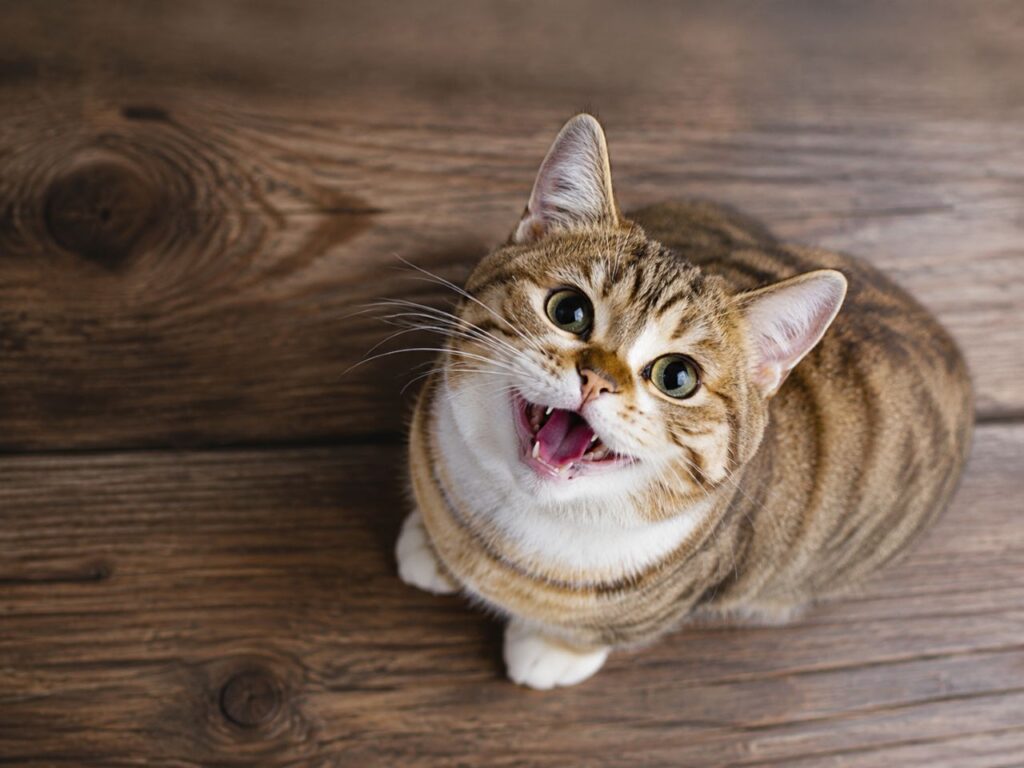
Cats chirp because this small sound can carry several messages. It may appear when hunting instincts flare up, when an unreachable bird becomes irresistible, or when your cat wants to greet you and lead you somewhere important.
Most of the time, cat chirping is normal and simply shows that your cat is alert, engaged, or interested in communicating. Watch the eyes, ears, tail, posture, and surrounding situation. Those details will tell you far more than the chirp alone.
And when your cat chirps at a bird through the window, there is no need to interrupt. Your living room predator is busy conducting very serious feather-related business.
Frequently Asked Questions
1. Why does my cat chirp instead of meow?
Some cats naturally prefer chirps and trills. They may have learned that these softer sounds are effective for greeting people or getting attention. A cat’s preferred vocal style is influenced by personality, experience, and how family members respond.
2. Why does my cat chirp when I touch them?
A quick chirp during petting may be a greeting, acknowledgment, or surprised reaction. Check your cat’s body language. A relaxed cat leaning into your hand is likely comfortable. A cat with twitching skin, pinned ears, or a lashing tail may be asking you to stop.
3. Why does my cat chirp and run away?
Your cat may be inviting you to follow. This behavior can lead to a food bowl, toy, window, closed door, or another object they want you to inspect. It may also be playful. Some cats chirp before racing through the house or beginning a chase game.
4. Why does my cat chirp while looking out the window?
Your cat has probably spotted a bird, squirrel, insect, or moving object. The chirping reflects predatory attention, excitement, or frustration because the target cannot be reached.
5. Do cats chirp when they are happy?
They often chirp during friendly greetings and playful moments, but chirping can also accompany hunting frustration. Look for relaxed ears, soft eyes, an upright tail, and loose movement to judge your cat’s mood.
6. Is it normal for a cat to chirp at night?
Occasional nighttime chirping may happen when a cat sees insects, hears wildlife, or wants attention. New or excessive nighttime vocalization, especially in a senior cat, deserves veterinary attention because pain, anxiety, sensory changes, or cognitive decline may alter vocal behavior.