
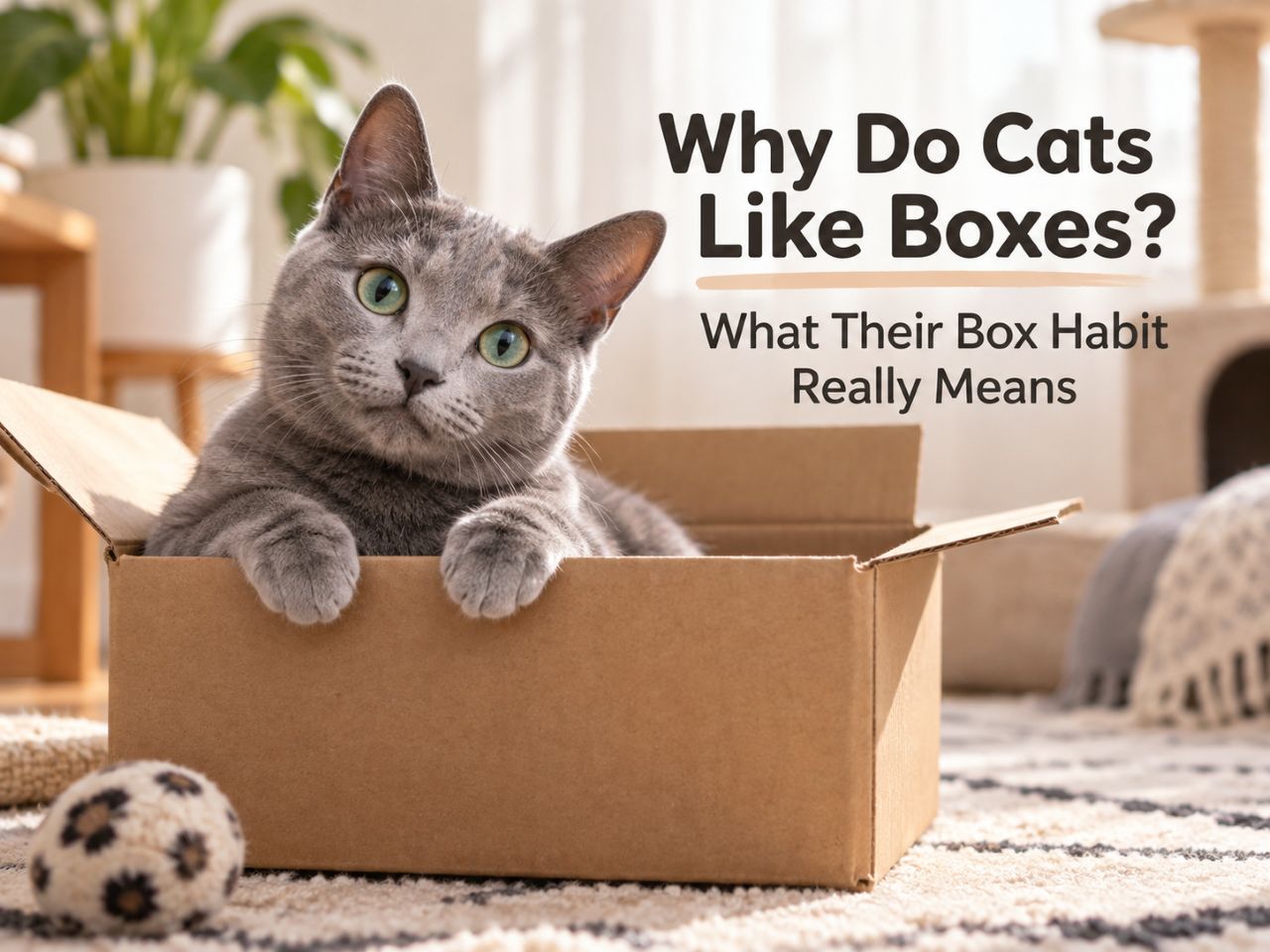
You set a delivery box on the floor, walk away for ten seconds, and come back to find your cat folded neatly inside it. The new cat bed may still have its tag on. The box has already been claimed.
So, why do cats like boxes? A box gives a cat several useful things at once: cover, a clear view through the opening, a warmer resting spot, an ambush point, and something satisfying to scratch. It also gives the cat a choice about when to be seen and when to step away from activity.
No single explanation fits every cat. Age, personality, room temperature, past experiences, and relationships with other pets can all shape the habit.
A Box Gives Your Cat Cover and Control
Cats often rest in places where they can observe without feeling exposed. The sides of a box shield much of the body, while the opening lets the cat keep track of footsteps, other pets, and whatever is happening across the room.
That cover can be especially appealing when guests visit, children are playing, the vacuum is running, or another cat is nearby. Going into a box does not automatically mean a cat is frightened. A relaxed cat may simply be choosing a quieter seat.
Feline veterinary guidance lists a cardboard box as an example of a safe place. It also recommends providing separate retreats in multi-cat homes and giving cats more than one way out when another pet could block the entrance.
Hiding Spaces May Help Cats Settle After Stress
The strongest research around cats and boxes is about hiding, not cardboard itself.
In a randomized study of 23 newly admitted shelter cats, those given hiding boxes reached a lower, steadier behavioral stress score sooner than cats without boxes. The boxes did not prevent weight loss or significantly change adoption rates or length of stay. The study was published in PLOS ONE in 2019.
A 2025 veterinary evidence review assessed five trials and found moderate evidence that hiding boxes can reduce fear or stress in hospitalized cats. The reviewers also identified limitations, including small samples and mixed physiological findings.
Shelter and hospital settings are not the same as an ordinary living room. The research does not prove that every box-loving house cat feels anxious. It does support offering a hideaway after a move, during repairs, or while a newly adopted cat settles in.
Place the box somewhere quiet and let your cat enter and leave freely. Reaching inside and pulling the cat out takes away the control that made the box appealing.
Boxes Fit the Way Cats Stalk and Play
Cats often play through short stalking sequences: watch, crouch, wait, rush, and pounce.
A box provides an edge from which a cat can watch a toy move past. Its walls conceal the small body movements that happen before the leap. A minute later, the same box may become a wrestling mat for a toy mouse or crumpled paper ball.
You can use this interest to make play more engaging. Sweep a wand toy past the opening, pause as though the “prey” has stopped, and let your cat catch it from time to time.
Keep hands and bare feet out of the game. Teaching a kitten that ankles are prey may seem funny until the kitten grows into an adult cat.
Cardboard Can Feel Warm and Comfortable
Corrugated cardboard contains small pockets of air and keeps your cat’s body off a cooler floor. With close walls and a curled sleeping position, the inside may feel better than an open bed in a drafty room.
Warmth probably matters more when a box sits on a cold floor than when it is placed in a sunny room in July.
Cardboard also has a little give. Claws can sink into it, teeth can catch an edge, and the surface makes noise when a cat shifts or scratches. To a cat, that can be more interesting than a smooth plastic container.
A recently delivered package also carries unfamiliar smells worth investigating. After your cat rubs, naps, and scratches inside it, the carton begins to smell familiar.
This mixture of warmth, texture, sound, scent, and novelty helps explain why cats like cardboard boxes without treating every box visit as a sign of anxiety.
Why Do Cats Like Small Boxes?
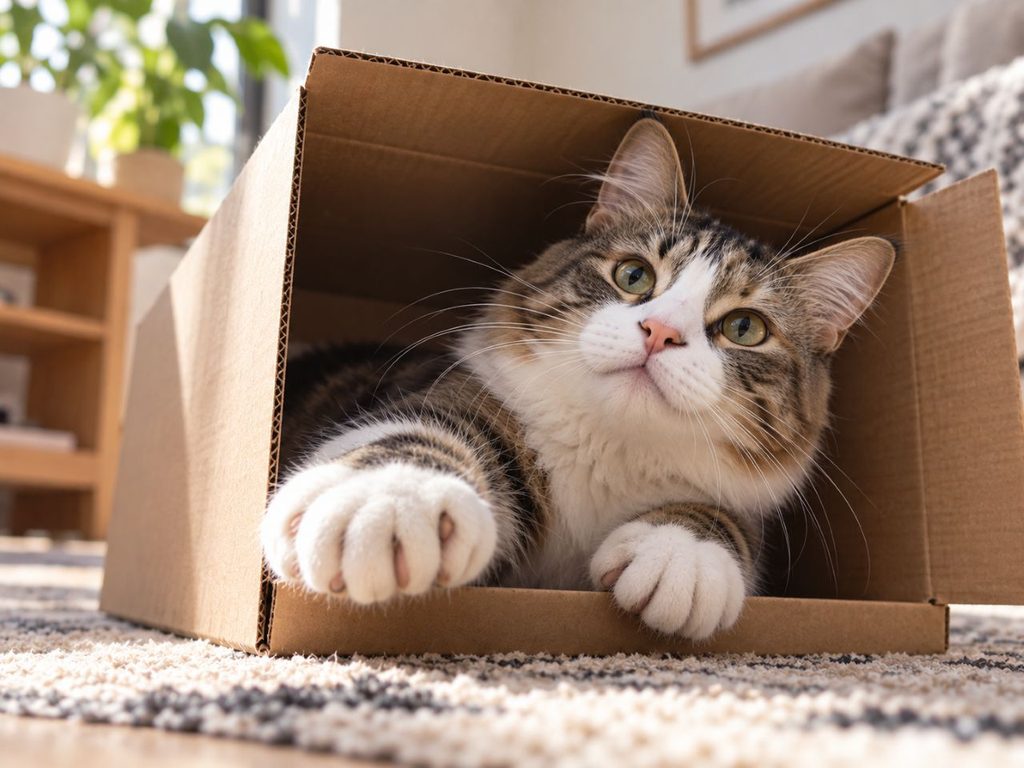
A snug box leaves little open space around the body. It allows a cat to curl up with most of its body covered while still watching through the opening.
Current feline environmental guidance notes that many cats prefer a safe place sized for one cat. This matches what owners often see when their cat ignores a roomy carton and squeezes into the smallest available box.
People sometimes say that a tight box feels like a hug. That is a charming comparison, but it has not been established as the reason cats choose undersized boxes. Close cover and retained warmth are simpler explanations.
The fit must still be safe. Your cat should be able to breathe normally, adjust position, and leave without getting wedged. Never push a cat into a box or close the flaps over them.
Why Does the Box Beat the Expensive Cat Bed?
You buy a plush cat bed, and your cat sleeps in the carton it arrived in. The choice usually says more about the setup than the price.
The bed may be too exposed, too soft, strongly scented from manufacturing, or placed in a busy walkway. The box may sit against a wall where your cat can watch the room. Its new smell and shape also invite an inspection.
Put the bed beside the box instead of immediately removing the winner. You can place a familiar, washable towel inside the box or set the bed itself inside a larger carton.
Watch what your cat chooses over several days. Their behavior will tell you more than a label promising that a bed is “cat approved.”
How to Make a Cardboard Box Safe for Your Cat
Most cardboard boxes for cats need a quick safety check before they become temporary furniture.
- Remove staples, loose tape, peeling shipping labels, plastic wrap, packing peanuts, silica packets, string, and rubber bands.
- Use a clean, dry box that has not held chemicals, raw food, leaking products, or strongly scented items.
- Cut handles and windows wide enough that your cat’s head cannot become trapped.
- Smooth any rough edges after cutting the cardboard.
- In a multi-pet home, consider adding a second doorway so another animal cannot corner the cat inside.
- Set the box on a stable surface away from stairs, fireplaces, hot appliances, and places where it could fall.
- Replace cardboard that becomes wet, dirty, heavily chewed, or too weak to hold its shape.
- Give kittens, senior cats, and cats with mobility problems a low entrance.
- Never use an ordinary cardboard box as a travel carrier. A secure carrier designed for pets is safer.
A box does not need an elaborate makeover. One or two doorways may be enough.
For play, cut a few paw-sized holes in one side and move a toy outside them while you supervise. Do not leave wand strings, yarn, ribbon, or similar objects inside the box after playtime.
Some cats enjoy a towel or thin blanket inside. Others push bedding out because they prefer the feel of bare cardboard. Let your cat decide.
Chewing a Box Is Different From Eating It
Many cats bite an edge, tear off a small piece, and spit it out during play. That behavior is different from repeatedly swallowing cardboard.
Eating cardboard can cause digestive trouble. Persistent consumption of nonfood material may be connected to pica, boredom, an unmet behavioral need, or an underlying medical problem.
Veterinary behavior guidance includes cardboard among the nonfood materials involved in repetitive oral behavior. Medical causes, including gastrointestinal problems, may need to be ruled out.
Remove the box and contact your veterinarian if your cat is swallowing pieces, vomiting, eating less, having difficulty passing stool, or repeatedly searching for cardboard to eat.
When Hiding in a Box May Signal a Problem
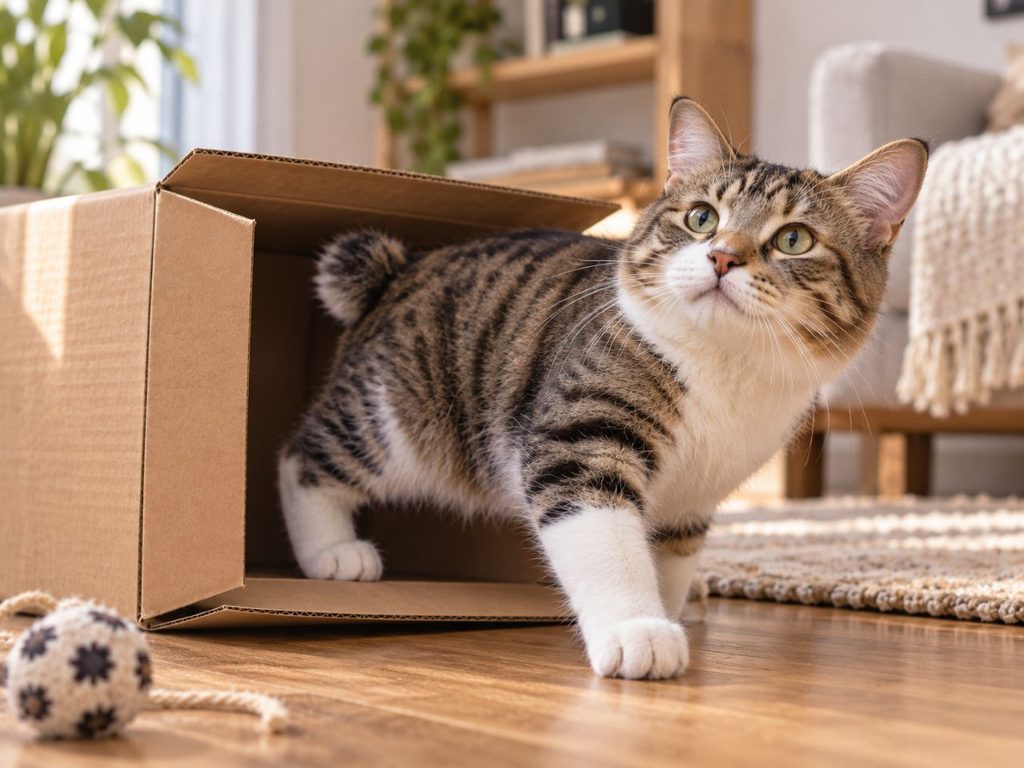
A cat who has always slept in boxes, comes out for meals and play, uses the litter box normally, and interacts in their usual way is probably enjoying a preferred resting spot.
A sudden behavior change carries more information than the box itself.
Contact your veterinarian if a normally social cat begins hiding for long periods or if the behavior appears alongside:
- Reduced appetite
- Vomiting or diarrhea
- Unusual thirst or urination
- Difficulty using the litter box
- Stiffness or limping
- Breathing changes
- Poor grooming
- Unusual tiredness
- Irritability when touched
Stress can change hiding behavior too. Look for recent disruptions such as moving, construction noise, a new pet, unfamiliar visitors, or tension between cats.
Do not assume that stress is the only explanation until pain and illness have been considered, especially with a senior cat.
Do All Cats Like Boxes?
No. Some cats prefer an open carrier, covered bed, tunnel, laundry basket, or high perch. A cautious cat may avoid a new box until it smells familiar. A confident cat might inspect it immediately and leave two minutes later.
Offer several options without forcing your cat to use any of them.
In a multi-cat household, spread resting and hiding places around the home. One popular box in a single location can become a resource that another cat watches or guards.
Each cat should have a place where they can rest without being disturbed.
Frequently Asked Questions
1. Why Do Cats Sit in Boxes When They Do Not Need to Hide?
A box can work as a bed, observation point, play space, scratching surface, or warm resting spot. Hiding is only one part of its appeal. A relaxed cat may use a box simply because the location and texture feel comfortable.
2. Why Do Cats Like Squares Taped on the Floor?
A small 2021 citizen-science study tested real squares, illusory squares, and a control arrangement. Cats responded to the real and illusory contours more often than the control.
Only 30 cats completed all six trials. The result offers an interesting look at feline visual perception, but it does not completely explain why cats love three-dimensional boxes.
3. Are Cardboard Boxes Safe for Cats to Sleep In?
Cardboard boxes are generally safe when they are clean, dry, stable, and free of tape, staples, plastic, string, and contaminated residue.
The box should give your cat enough space to enter, turn around, breathe normally, and leave easily. Replace it when the cardboard becomes wet, dirty, damaged, or heavily chewed.
4. Why Does My Cat Bite and Shred Cardboard?
The texture can turn a box into a scratching surface or prey-like play object. Some cats also enjoy the sound and physical resistance of tearing cardboard.
Occasional shredding is different from swallowing. Remove the box and speak with your veterinarian if your cat regularly eats the pieces or develops appetite or digestive changes.
5. A Simple Box Can Be Useful Enrichment
A cardboard box cannot replace daily play, comfortable sleeping areas, scratching surfaces, or free access to food, water, and litter boxes. It can still offer cover, choice, texture, warmth, and play at almost no cost.
At Catsoria, that is the practical lesson behind the familiar “if I fits, I sits” joke: prepare the box safely, put it in a good location, and let your cat decide what it becomes.