

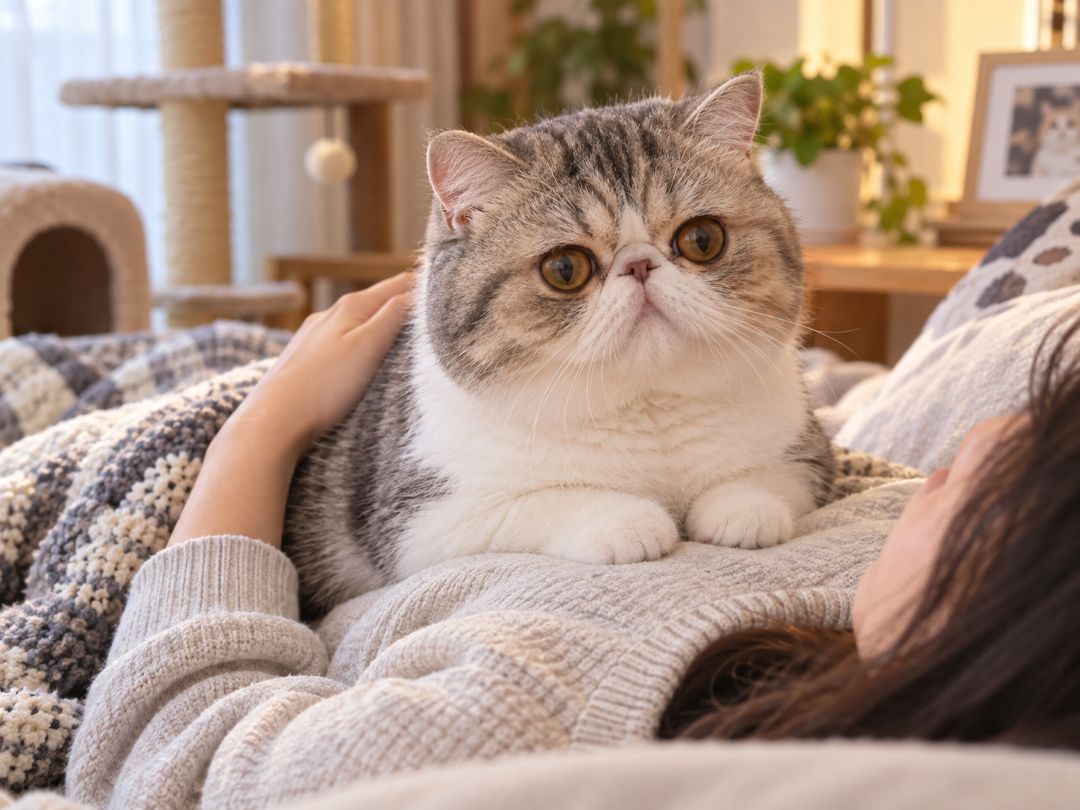
You settle onto the couch, and your cat appears before you have even opened your book. They test your legs with one paw, turn in a small circle, and drop their full weight onto you as though your lap had been reserved.
So, why do cats sit on you when a bed, blanket, or empty cushion is only a few feet away?
Most cats do it because a person offers several good things at once: warmth, security, familiar smells, a comfortable resting surface, and easy access to attention. A cat that curls up, softens their eyes, tucks in their paws, or falls asleep is usually showing that they feel safe with you.
That does not mean every lap visit is a declaration of love. Sometimes your cat wants breakfast, relief from a noisy room, or the fuzzy blanket covering your knees. Their body language and the timing of the visit tell you more than the sitting itself.
What Is Your Cat Telling You?
Look at what happens before and after your cat climbs aboard. These clues can help you read the moment.
| What you notice | What it may mean |
|---|---|
| Loose body, tucked paws, half-closed eyes, or sleep | Your cat feels comfortable and secure |
| Kneading, cheek rubbing, or slow blinking | Relaxation, social contact, and scent sharing |
| Meowing, staring, then walking toward the kitchen | A request for food, water, or another familiar routine |
| Climbing onto you after visitors, thunder, or a loud noise | Reassurance and a safer place to settle |
| Tail thumping, ears turning back, tense muscles, or skin twitching | Your cat may be overstimulated and ready for touch to stop |
| New, persistent clinginess with changes in appetite, movement, or litter box habits | Stress or a health problem may be involved |
A purr often goes with a relaxed visit, but it should not be read by itself. Cats can also purr when nervous, uncomfortable, or in pain. The whole cat—not one sound—gives you the better answer.
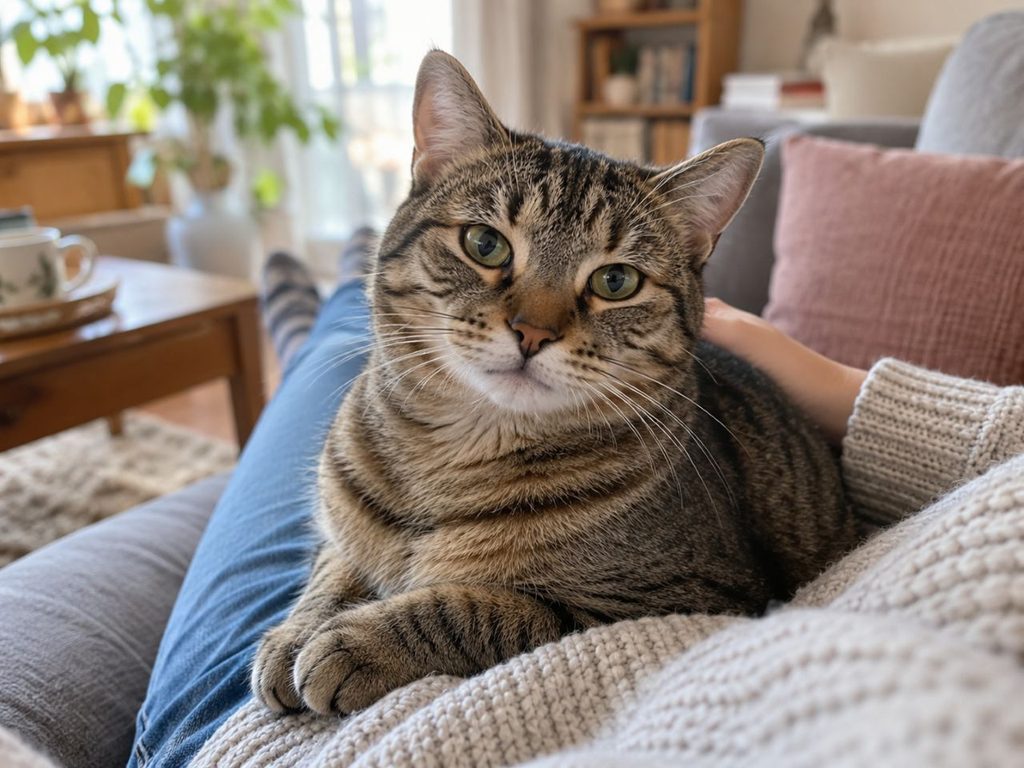
Why Your Cat Keeps Choosing You as a Seat
Several reasons can be true at the same time. Your cat may come for the heat, stay because they feel safe, and return tomorrow because you scratched the exact spot behind their ears.
Your lap is warm and easy to reach
Cats are skilled at locating warmth. Sunlit floors, fresh laundry, laptops, and the space beside a heating vent all have their fans. Your body is another steady heat source, with the added bonus of being soft and familiar.
This explains why cats sit on your lap more often during cold weather or when you have a blanket over your legs. Hairless cats, kittens, lean cats, and some seniors may be especially interested in body heat. Warmth alone does not explain every visit, but it can decide which family member gets picked on a chilly evening.
They feel safe enough to lower their guard
Rest puts a cat in a vulnerable position. Even indoor cats tend to choose sleeping places that feel protected and allow them to relax without constant interruption.
When your cat settles heavily enough to sleep on you, they are taking a small social risk. They expect you not to grab, startle, or hurt them. Research on cat–human attachment has found that many cats use their caregiver as a source of security, so treating a trusted person as a resting place fits what we know about that bond.
They want quiet social contact
Not every affectionate cat wants to be carried around or stroked for ten minutes. Sitting on you lets your cat control the interaction. They can be close, accept a few head rubs, or simply share the room from the best possible seat.
This is why a cat may climb onto your lap and then object when you turn the visit into a full-body cuddle. They chose closeness, but they did not necessarily ask to be restrained. Letting them leave when they want helps keep lap time pleasant.
You smell like home
Scent is woven into a cat’s sense of familiarity. Cats have scent glands around the face and in other areas, including the paws. Friendly cats may rub against one another and exchange scent, creating a shared odor within their social group.
Your clothes, skin, and favorite chair carry a predictable mix of household smells. That familiarity can make you a reassuring place to rest. Cheek rubbing or kneading while your cat settles may add their scent to yours.
This behavior is sometimes described as a cat “claiming” a person. That wording makes it sound more possessive than it needs to be. In a relaxed setting, familiar scent is better understood as part of comfort and social connection—not proof that your cat is trying to dominate you.
Your cat has learned that sitting works
Cats notice patterns. When sitting on your lap leads to petting, conversation, warmth, or an early dinner, the behavior becomes worth repeating.
Watch for the full routine. Does your cat sit upright rather than curl up? Do they meow, tap you with a paw, or jump down and look back? They may be using your lap as the opening move in a request.
There is nothing wrong with answering. Just remember that feeding your cat every time they climb onto you can turn a sweet habit into a very reliable meal-delivery button.
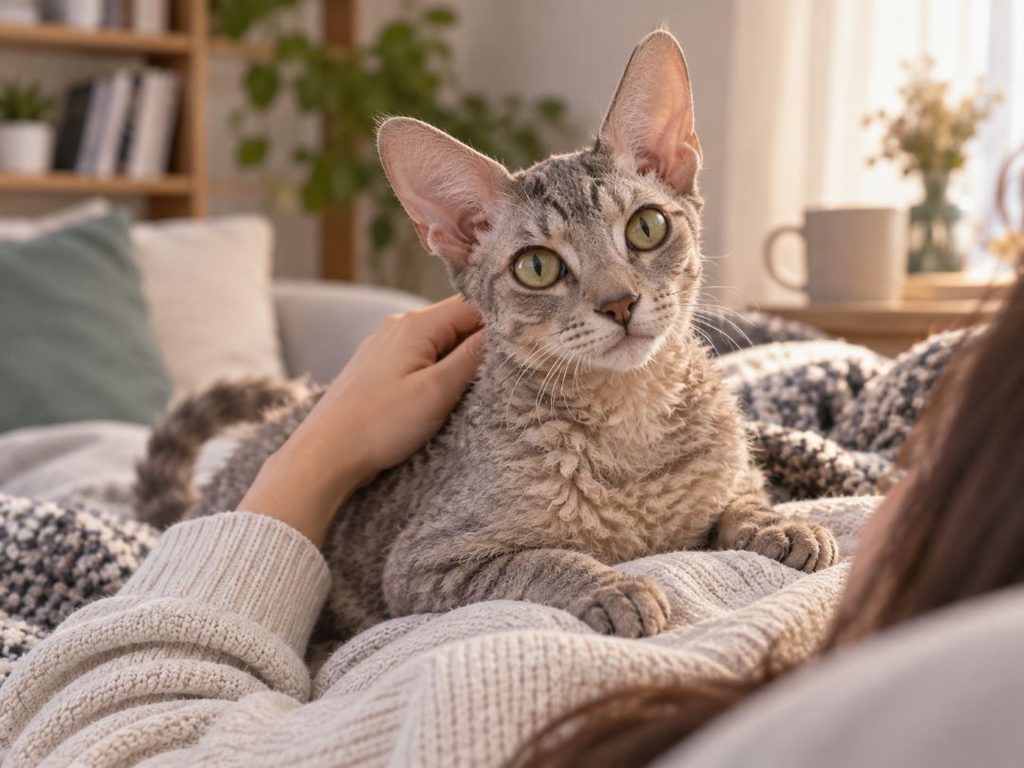
Your breathing and heartbeat may feel settling
This is most relevant when you wonder, why does my cat sit on my chest? A chest is broad, warm, and close to your familiar voice. Its slow movement and the steady sounds underneath may also help some cats settle.
You may hear that a human heartbeat reminds every cat of nursing beside their mother. It is a pleasant idea, but we cannot know that this is what an adult cat is remembering. The safer conclusion is that predictable sounds and movement can become part of a familiar resting routine.
They are looking for reassurance
A cat may seek more physical contact when the house feels different. Visitors, construction, storms, a new pet, a changed work schedule, or the loss of an animal companion can all disrupt familiar patterns.
In that setting, sitting on you may help your cat feel anchored. Give them access to quiet hiding and resting places as well, so contact with you is a choice rather than their only way to escape the commotion.
Why Does My Cat Sit on Me and Purr?
When a cat climbs onto you, curls up, and purrs with a loose body and soft face, contentment is the likely explanation. You are warm, the spot feels safe, and the interaction is going well.
Purring is not a foolproof happiness meter. A comfortable cat may blink slowly, knead, stretch, or drift off. A worried or painful cat may crouch, hide the head, hold the ears back, resist movement, breathe differently, or seem unable to settle.
When the rest of your cat looks relaxed, enjoy the moment. A sudden change in purring paired with other physical or behavioral changes deserves a call to your veterinarian.
Why Does My Cat Sit on Me and Knead?
Kneading begins during kittenhood, when nursing kittens press their paws against their mother. Many cats keep the motion as adults and use it while settling onto soft surfaces.
On your lap, kneading usually works like a bedtime ritual. Your cat is getting comfortable and engaging in a behavior associated with security. Some cats drool or purr at the same time.
Sharp claws can make the experience less charming. Place a thick blanket between your legs and your cat, and keep their nails maintained. Do not punish kneading. When you need them to stop, calmly guide them onto the blanket or a padded bed.
Why Does My Cat Sit on Me but Not My Partner?
Being chosen does not always mean one person is loved more. Cats make practical decisions about laps.
One person may sit still longer, speak more quietly, wear softer clothes, run warmer, or pet the cat in a way they prefer. Past interactions count too. A cat is more likely to return to someone who lets them approach and leave freely than to someone who picks them up whenever they come close.
Routine can make the choice look personal. If you occupy the same corner of the couch each evening, your cat may think of that whole arrangement—you, the chair, the blanket, and the time of day—as one dependable resting spot.
Why Is My Cat Suddenly Sitting on Me All the Time?
A new lap habit can have an ordinary explanation. The weather turned cold. You started working from home. A favorite sleeping spot moved. Your cat discovered that sitting on you produces excellent chin scratches.
Sudden clinginess can also follow stress. Think about recent changes in people, pets, noise, furniture, feeding times, or access to favorite areas.
Health belongs on the checklist because cats often show illness through small changes in routine rather than an obvious complaint. Contact your veterinarian if the new behavior persists or appears with any of these signs:
- Eating less, eating much more, or losing weight
- Drinking or urinating more than usual
- Vomiting, diarrhea, or changes in litter box use
- Hiding, restlessness, unusual vocalizing, or lower energy
- Stiffness, reluctance to jump, limping, or sensitivity to touch
- Fast, labored, or open-mouth breathing
Breathing difficulty is urgent. Call a veterinary clinic right away rather than waiting to see whether it passes.
The reverse change matters as well. A cat that always loved your lap but suddenly avoids being picked up or touched may be stressed or painful. Senior cats with arthritis, for example, may stop jumping onto furniture even though they still want to be near you.
How to Make Lap Time Comfortable for Both of You
Let your cat initiate contact when possible. Sit sideways, keep your hands quiet, and give them room to investigate. A soft blanket can make your lap appealing and protect your skin from claws.
Once your cat settles, pet areas they already enjoy, such as the cheeks, chin, or shoulders. Pause every few strokes. If they lean back into your hand, continue. If the tail starts snapping or the ears rotate backward, give them a break before they feel the need to swat or bite.
When you need to get up, move slowly. Encourage your cat onto the cushion beside you or offer a warm bed nearby. Shoving, scolding, or holding them against their will can turn a safe routine into one they avoid.
What If My Cat Never Sits on Me?
A cat can be strongly bonded to you without becoming a lap cat. Some prefer to sit beside their people, sleep at the foot of the bed, follow them from room to room, greet them at the door, or offer a quick cheek rub before walking away.
Personality, early socialization, past handling, age, and comfort with restraint all shape how a cat likes to be close. Respecting that preference is part of building trust.
You can make your lap more inviting with a blanket and quiet rewards, but do not place your cat there and prevent them from leaving. The goal is to create a spot they choose, not teach them to tolerate being trapped.
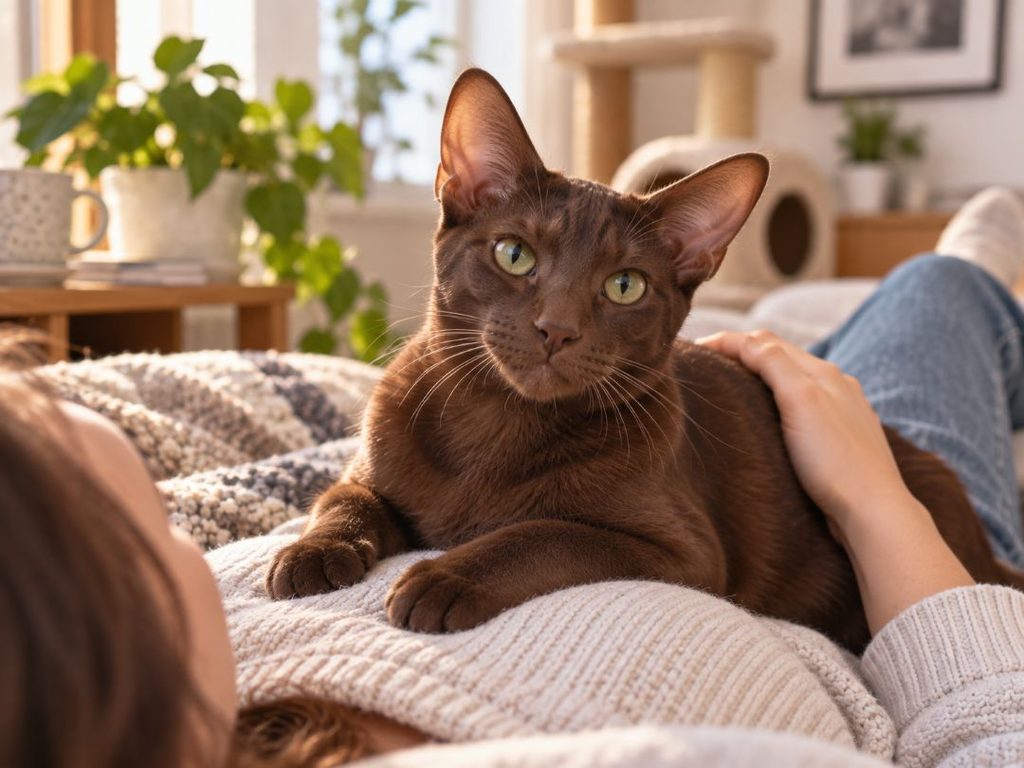
A Warm Seat and a Quiet Vote of Confidence
When your cat chooses you over an empty cushion, the explanation is usually simple: you are warm, familiar, comfortable, and trusted. Some visits are affectionate. Others are requests, habits, or a quick escape from household noise. Most are a blend.
Read the timing and the rest of your cat’s body. A loose, sleepy cat has probably found their safe place for the afternoon. A sudden change accompanied by appetite, movement, breathing, or litter box problems calls for more than a cuddle—it calls for veterinary advice.
At Catsoria, we believe the best bonds grow when cats have control over closeness. Give your cat the choice to arrive, settle, and leave, and your lap is far more likely to stay on their list of favorite places.
Frequently Asked Questions
1. Does a cat sitting on you mean they love you?
It usually indicates trust, comfort, or a desire for social contact. Those are all consistent with a close bond, though no single behavior can measure how much a cat “loves” someone. Look for a wider pattern that includes relaxed proximity, greetings, cheek rubbing, slow blinking, and choosing to sleep near you.
2. Why does my cat sit on my stomach?
Your stomach is warm, soft, and often flatter when you are lying down. It also moves with your breathing, which some cats may find familiar and calming. Move your cat if the pressure hurts or interferes with comfortable breathing.
3. Why does my cat sit on me in the morning?
You have been warming the bed for hours, you are finally awake enough to provide attention, and breakfast may be approaching. Morning lap or chest visits often combine comfort with a well-learned routine.
4. Why does my cat sit on me and then bite me?
Some cats enjoy contact but become overstimulated by prolonged petting. Tail flicking, rippling skin, ears turning sideways or back, and a sudden look toward your hand can appear before a bite. Stop touching at those early signs and let your cat leave. Pain can also make handling less tolerable, so speak with your veterinarian if this reaction is new.
5. Is my cat protecting me by sitting on me?
Your cat may feel secure on you and may stay alert to sounds in the room, but sitting alone does not show that they are guarding you. Comfort, heat, and companionship are more likely explanations.
6. Is it safe to let my cat sleep on my chest?
For most healthy adults, it is fine as long as both person and cat can breathe and rest comfortably. Move the cat if their weight causes pain, worsens breathing trouble, aggravates allergies, or repeatedly disrupts sleep.
