

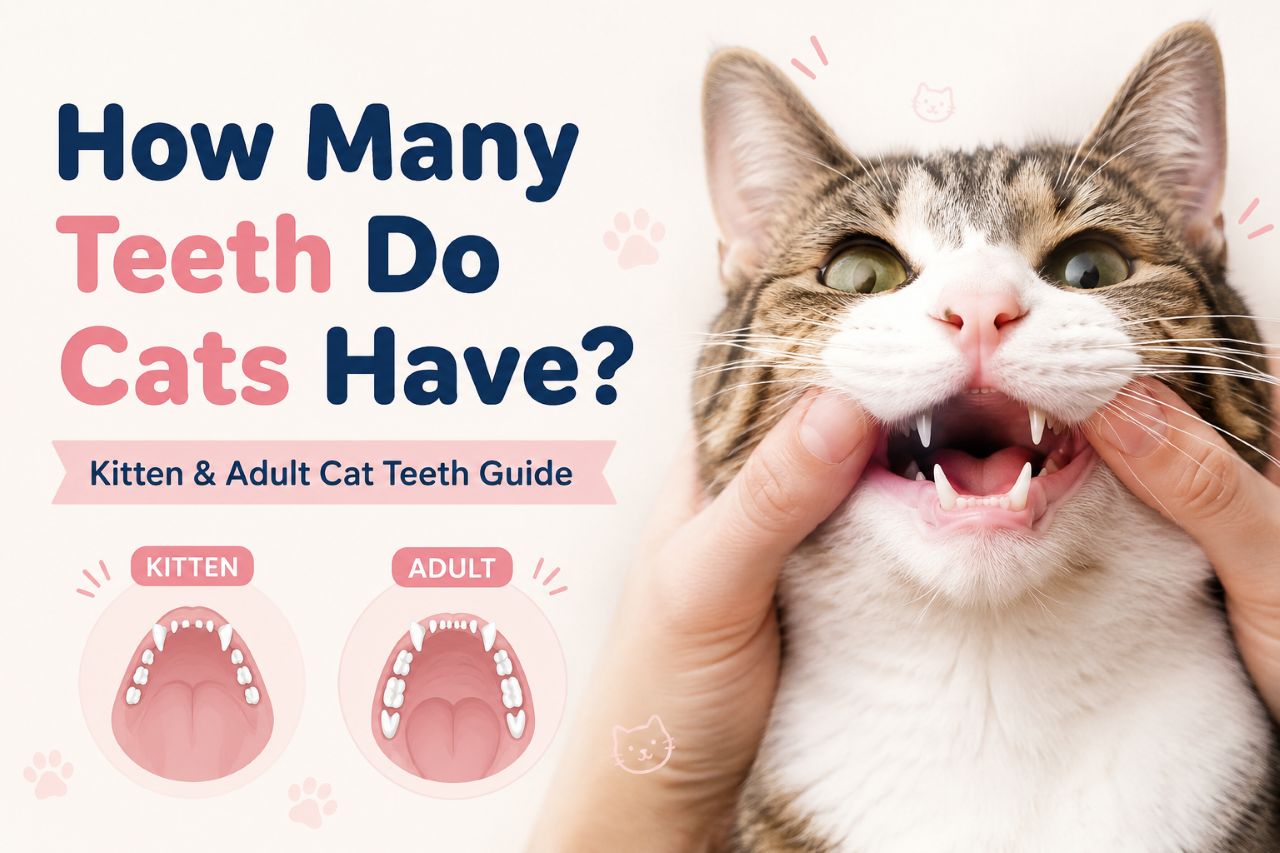
Adult cats usually have 30 permanent teeth. That tiny tiger mouth includes 12 incisors, 4 canine teeth, 10 premolars, and 4 molars. Kittens start with fewer teeth: they have 26 baby teeth, also called deciduous teeth.
So the quick answer to how many teeth do cats have is simple:
- Kittens have 26 kitten teeth (baby teeth)
- Adult cats have 30 adult cat teeth (permanent teeth)
- Most cats have their full cat permanent teeth set by about 6 to 7 months old
That is the clean answer. The more useful answer is a little toothier.
A cat’s mouth is built for grabbing, holding, tearing, and crunching small bites of food. Cats do not chew the way people do. They are not sitting there thoughtfully grinding kibble like tiny philosophers. Their cat teeth are sharp, specialized, and made for a carnivore’s life, even when that “wild hunter” currently lives on a sofa and screams at a closed bathroom door.
Adult Cat Teeth: The Full Breakdown
When people ask how many teeth do cats have, they usually want the number. But knowing what each tooth does helps you spot problems earlier.
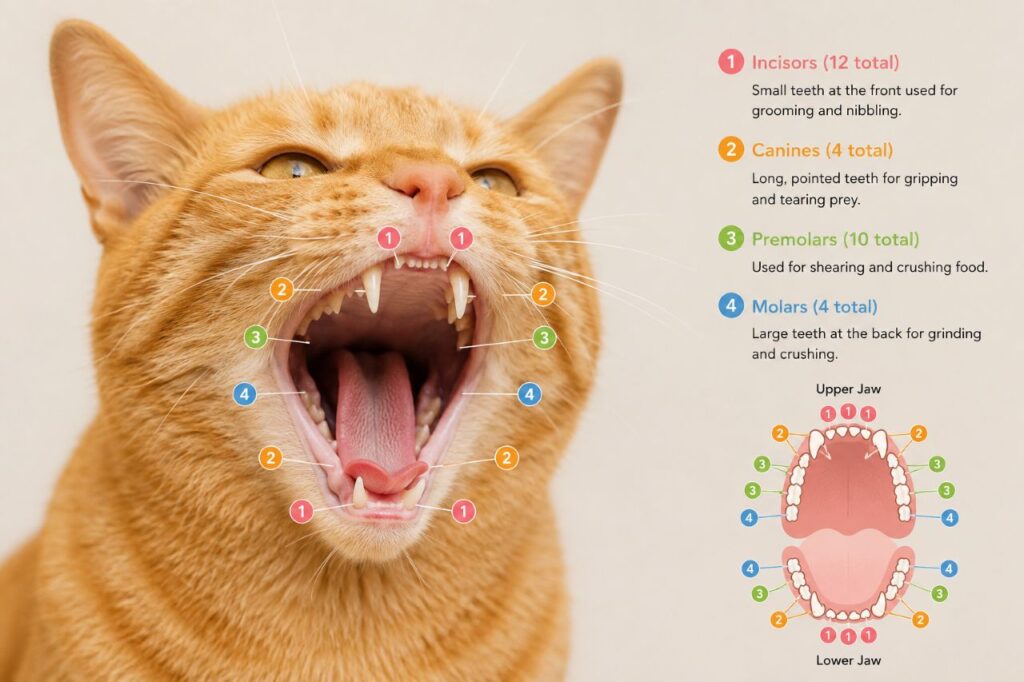
A normal adult cat has:
| Type of Cat Tooth | Number | What It Does |
| Incisors | 12 | Grooming, nibbling, picking up small bits |
| Canines | 4 | Grabbing, holding, defense, biting |
| Premolars | 10 | Cutting and breaking food into pieces |
| Molars | 4 | Crunching harder food |
Purina lists the adult cat dental formula as 12 incisors, 4 canines, 10 premolars, and 4 molars. VCA also notes that adult cats have 16 teeth on the upper jaw and 14 on the lower jaw.
Those tiny front teeth, the incisors, are easy to miss. They sit between the fangs and often look like little grains of rice. Your cat uses them for grooming, small nibbles, and sometimes for those delicate “love bites” that feel cute until they become a needle-party.
The canines are the famous fangs. They help cats grab prey, hold toys, and look slightly dramatic while yawning.
Premolars and molars sit farther back. These are the teeth that help cats break food into smaller pieces. They are also the teeth many owners rarely see unless the cat yawns at just the right angle.
How Many Teeth Do Kittens Have?
Kittens have 26 kitten teeth. These are also called deciduous teeth or cat baby teeth. They are small, sharp, and surprisingly good at turning your fingers into chew toys.
A kitten’s baby teeth usually start coming in around 2 to 3 weeks old. By about 6 weeks, most kittens have their full set of 26 baby teeth.
Kitten teeth include:
- Incisors: 12
- Canines: 4
- Premolars: 10
- Molars: 0
Kittens do not have molars. Molars arrive with the adult teeth later. This is one of the easiest details to forget when writing about kitten teeth. Adult cats have molars; kittens do not.
When Do Kittens Lose Their Baby Teeth?
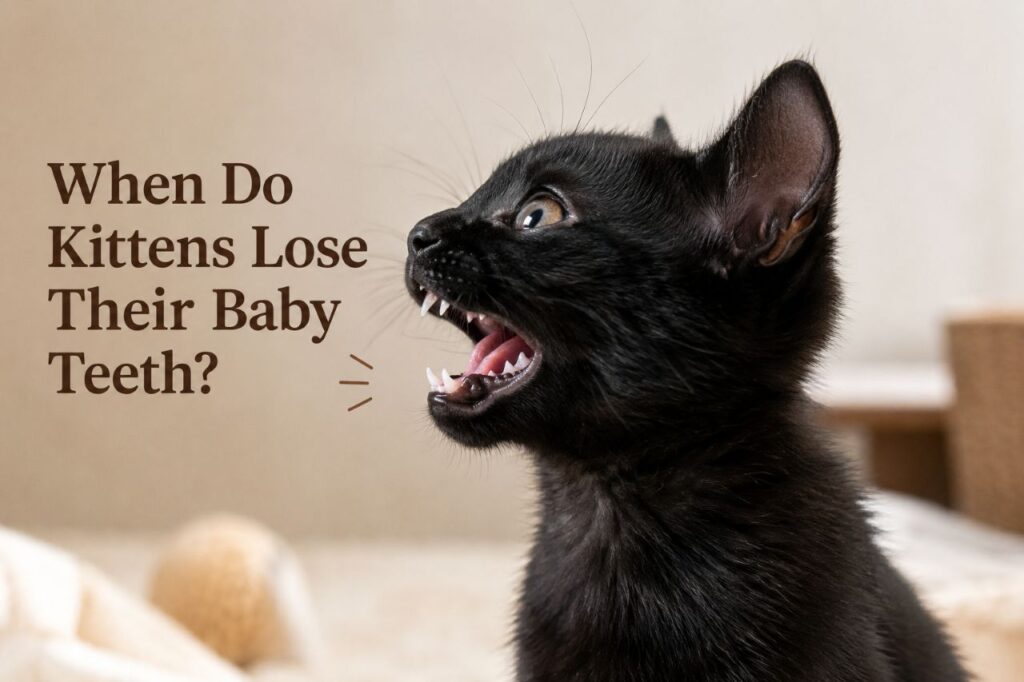
Most kittens start losing baby teeth around 3 to 4 months old. Their adult teeth grow in as the baby teeth fall out. If you are wondering when do kittens lose baby teeth, the timeline is fairly quick: by about 6 to 7 months old, most young cats have all 30 adult teeth.
You may find a tiny tooth on the floor, in a blanket, or near the food bowl. You may also never find one. Many kittens swallow baby teeth while eating, and that is common cat tooth loss.
During teething, your kitten may:
- Chew toys, blankets, or fingers more than usual
- Drool a little
- Have mild gum redness
- Seem fussy with food
- Paw at the mouth
- Leave tiny blood spots on toys or dishes
A little teething weirdness can be normal. Heavy bleeding, strong mouth odor, refusal to eat, swelling, or obvious pain deserves a vet visit. A kitten’s mouth changes fast, and small problems can become a tiny dental traffic jam.
What If My Cat Has More Than 30 Teeth?
A cat with “extra” teeth may not truly have extra adult teeth. The more common issue is a baby tooth that did not fall out. This is called a retained deciduous tooth.
VCA explains that a baby tooth left in place can crowd the mouth, push teeth out of alignment, and increase tartar buildup between crowded teeth.
This matters because crowded teeth are harder to keep clean. Food and plaque settle into tight spaces. The gums get irritated. The mouth becomes a little bacteria apartment complex, rent-free and rude.
Common signs of retained baby teeth include:
- Two teeth sharing one space
- A fang growing beside another fang
- Bad breath in a young cat
- Trouble chewing
- Gum redness around crowded teeth
A vet can check the mouth and decide whether the retained tooth should be removed. Do not try to wiggle or pull a kitten’s tooth at home.
What If My Cat Is Missing Teeth?
Some adult cats have fewer than 30 teeth because of injury, dental disease, past extractions, or tooth resorption. A missing tooth is not always an emergency, but it should not be ignored.
VCA notes that cat tooth loss can happen from dental disease or injury, and missing teeth should be checked by a veterinarian.
Cornell’s Feline Health Center also explains that periodontitis can weaken the tissues that hold teeth in place, which may lead to loose teeth and tooth loss. Tooth resorption is another major cause of tooth loss in cats. Cornell describes it as a destructive process that affects the tooth structure and can be painful.
Cats are talented little actors when pain is involved. Many will keep eating even with a sore mouth. Some simply chew on one side, drop food, hide more, or become crankier.
Watch for these signs of dental issues:
- Bad breath that keeps coming back
- Red, swollen, or bleeding gums
- Drooling or pawing at the mouth
- Dropping food or chewing on one side
- Sudden dislike of dry food
- Loose teeth
- Weight loss, hiding, or irritability
A cat can live well after dental extractions, even with several missing teeth. Many cats eat comfortably once painful teeth are removed. The problem is not always “fewer teeth.” The bigger issue is pain, infection, or untreated disease.
Why Cat Teeth Are So Sharp
Cat teeth are not designed like human teeth. Human molars are broad and flat because we grind food. Cats are obligate carnivores, so their teeth are shaped for grabbing and slicing.
The canines are long and pointed. The premolars are sharp and blade-like. The little incisors help with grooming and small bites. The molars sit far back and help crunch harder pieces.
This is why some cats barely seem to chew. They may bite kibble once or twice, then swallow. Some even swallow small pieces whole. That does not always mean something is wrong. It is part of how a cat’s mouth works.
Still, a sudden change in eating style can signal mouth pain. A cat that used to crunch kibble but now drops it, avoids it, or cries while eating needs a dental check.

Cat Dental Health: Why Those 30 Teeth Need Attention
A full set of adult cat teeth is useful, but maintaining proper cat dental health matters more than a perfect count.
Dental disease is incredibly common in cats. Cornell lists gingivitis, periodontitis, and tooth resorption among major feline dental problems. Periodontitis can become irreversible and may lead to loose teeth, tooth loss, and pain.
The tricky part is that cat dental disease often hides under the gumline. A tooth can look decent from the outside while trouble is brewing below. That is why regular vet exams matter.
AAHA/AAFP feline life stage guidance says cat dental care should start during kitten visits, and cat owners can be taught how to examine the mouth and practice brushing cat teeth. The same guidance also says a complete oral evaluation requires anesthesia, and anesthesia-free dentistry is not appropriate because it only cleans visible tooth surfaces and lacks proper diagnostic ability.
That may sound serious, but the daily side is simple: look, smell, brush when possible, and do not shrug off changes.
How to Care for Your Cat’s Teeth at Home
The best home cat dental care routine is the one your cat will actually tolerate. Some cats accept brushing like polite citizens. Others act personally betrayed by the toothbrush.
Start small. Let your cat sniff pet-safe toothpaste. Offer a tiny taste. Touch the lips gently. Rub the outer gumline with your finger for a few seconds. Build from there. A calm 10-second session is better than a wrestling match that ruins the whole idea for the next six months.
When brushing cat teeth, use only cat-safe toothpaste. Human toothpaste is not safe for cats. Cornell’s brushing guidance specifically lists feline toothpaste as a needed item and warns that human toothpaste is not safe for cats.
Helpful tools include:
- Cat toothbrush or finger brush
- Feline toothpaste
- Dental treats approved by your vet
- Dental diets for cats who will not allow brushing
- Water additives recommended by a veterinarian
Brush the outside surfaces of the teeth when possible. Cats do not need a spa-level mouth polish every night. The goal is to reduce plaque before it hardens into tartar.
Do Indoor Cats Need Dental Care Too?
Yes. Indoor cats still need consistent cat dental health care.
Dental disease does not require outdoor hunting, dirty prey, or wild living. Plaque builds up inside clean houses too. A cat can sleep on a velvet blanket, eat premium food, and still develop gingivitis or tooth resorption.
Indoor cats may also be harder to read because owners assume eating means everything is fine. Many cats keep eating through pain because instinct tells them not to show weakness. That stoic little face can hide a sore mouth.
Check your cat’s mouth during relaxed moments. Lift the lip gently. Look at the gumline. Smell the breath. You do not need to pry the mouth open every day. Just become familiar with what normal looks like for your cat.
Should Cats Get Professional Dental Cleanings?
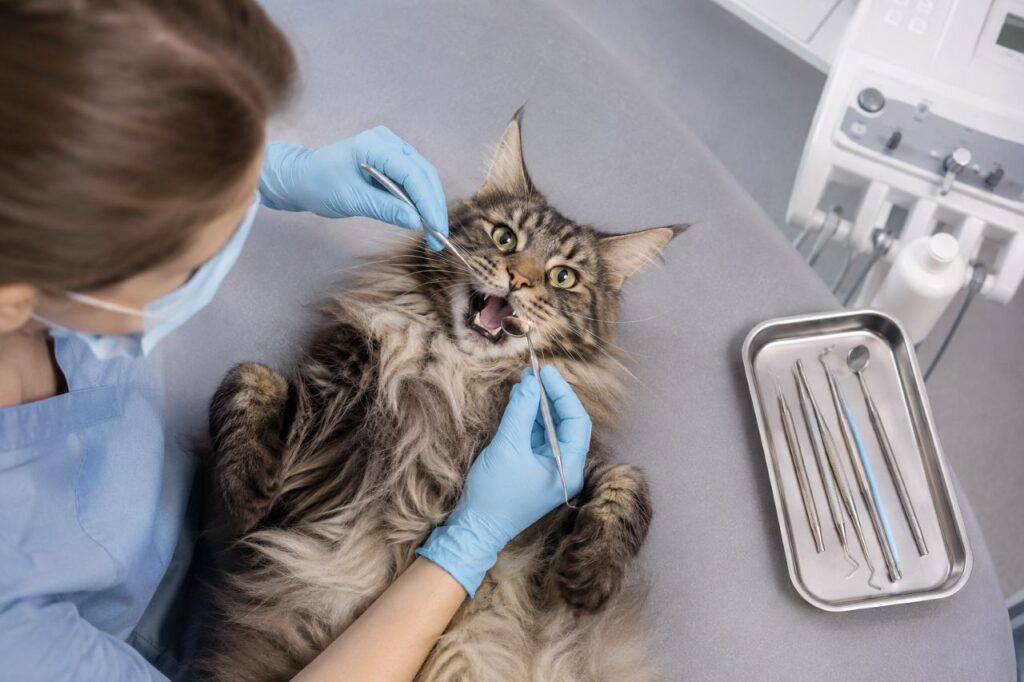
Many cats benefit from professional dental cleanings, especially as they age. Your vet can recommend timing based on your cat’s mouth, age, health, and risk level.
AAHA states that most pets need professional dental cleanings every 1 to 2 years, while cats and some higher-risk pets may need them more often.
Professional cat dental care can include:
- Full oral exam
- Scaling plaque and tartar
- Polishing
- Dental X-rays
- Checking below the gumline
- Treating painful teeth or removing teeth that cannot be saved
A basic look in the exam room can catch obvious problems. Dental X-rays can reveal trouble hidden below the gumline. That hidden zone is where cats love to stash dental drama.
How Many Teeth Do Cats Have Compared With Dogs?
Cats have fewer teeth than dogs. While adult cat teeth total 30, adult dogs have 42 teeth. Knapp Veterinary Hospital gives the simple comparison: dogs have 42 teeth and cats have 30.
That does not mean cat dental care is easier. Cats may have fewer teeth, but feline mouths come with their own problems, especially tooth resorption and gum disease. A cat’s smaller mouth can also make dental issues harder for owners to spot. Those back teeth are tucked away like secret blades in a velvet cave.
Can Cats Eat Without Teeth?
Yes, many cats can eat without some teeth, and some cats do well even after full-mouth extractions when severe disease makes that necessary.
Cats with missing teeth may need softer food at first. Some return to kibble once the mouth heals. Your vet will guide feeding during recovery.
What matters most is comfort. A cat with 20 healthy teeth may feel better than a cat with 30 painful ones. A smaller, pain-free mouth wins every time.
Final Thoughts
So, how many teeth do cats have? Kittens have 26 baby teeth, and adult cats usually have 30 permanent teeth.
That number is useful, but the real magic is knowing what healthy looks like. A clean mouth, comfortable chewing, normal breath, and calm gums tell you far more than a tooth count alone.
Your cat’s teeth may be tiny, but they do big work. Keep an eye on them, practice brushing cat teeth when your cat allows it, schedule vet checks, and treat dental pain early. Your cat may never thank you with words, but a pain-free yawn from a healthy little fang garden says plenty.
Frequently Asked Questions
1. How many teeth do cats have?
Adult cats usually have 30 permanent teeth: 12 incisors, 4 canines, 10 premolars, and 4 molars. Kittens have 26 baby teeth and usually grow their full adult set by about 6 to 7 months old.
2. How many teeth do adult cats have?
Adult cats usually have 30 teeth. These include incisors, canines, premolars, and molars.
3. How many teeth do kittens have?
Kittens have 26 baby teeth. These baby teeth fall out as the permanent teeth grow in.
4. When do kittens get adult teeth?
Most kittens begin losing baby teeth around 3 to 4 months old. By 6 to 7 months old, most have their full adult set.
5. Do cats lose teeth as they age?
Cats can lose teeth from dental disease, tooth resorption, injury, or extractions. Tooth loss is common in older cats, but it should still be checked by a vet.
6. Why does my cat have bad breath?
Bad breath can come from plaque, tartar, gingivitis, infection, tooth resorption, or other health issues. Mild food breath is one thing. Strong, sour, rotten, or constant bad breath needs a dental exam.
