

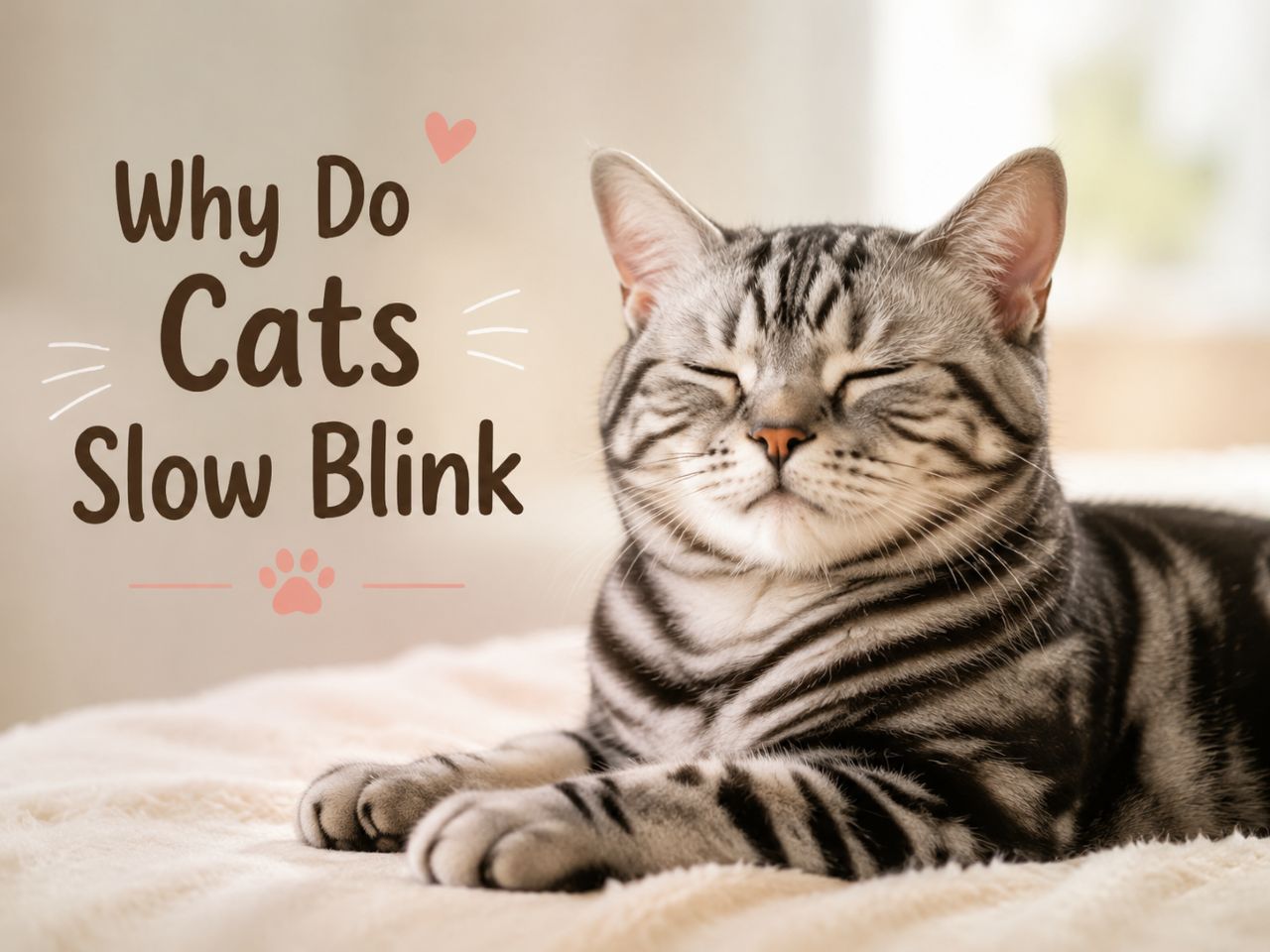
You look across the room and catch your cat watching you. Instead of turning away, they gently lower their eyelids, pause for a moment, and slowly open them again. That soft little blink may not look dramatic, but in cat language, quiet signals often carry the most weight.
Cats usually slow blink when they feel calm, comfortable, and safe enough to relax their guard. A cat slow blink may communicate friendly intentions, trust, or a willingness to interact. Some people call it a “cat kiss,” although it is more accurate to think of it as a peaceful social signal rather than a literal declaration of love.
Scientists have also found that cats respond differently when humans slow blink at them. In controlled experiments, cats showed more eye-narrowing movements after people slow blinked and were more likely to approach a person who had used the expression. However, eye narrowing does not tell the whole story. A sleepy cat, a nervous cat, and a cat with an irritated eye can all appear partially squinty. To understand why your cat slow blinks, you need to look at the rest of their body and the situation around them.
What Does It Mean When a Cat Slow Blinks?
A true slow blink is a gentle, deliberate movement. Your cat’s eyes soften, the lids gradually come together, and the eyes may remain partly or fully closed for a brief moment before opening again. It does not look tight or strained. The face stays loose, the ears are usually neutral or facing forward, and the body is not braced for action.
In many cases, this expression means your cat feels settled around you. They are reducing visual contact instead of holding an intense stare, which makes the interaction feel less confrontational. Cats use their eyes as part of a larger feline body language system. A hard, fixed stare may create tension, especially between unfamiliar cats. Soft eyes and slow eyelid movements send a much quieter message: “I am not looking for trouble.”
A cat slow blink may mean:
- Your cat feels secure in the room.
- They are comfortable with your presence.
- They are signaling peaceful intentions.
- They are open to gentle social contact.
- They are responding to your relaxed facial expression.
It is tempting to translate every blink as “I love you.” Sometimes that interpretation fits beautifully. Other times, the message may be closer to “I feel safe right now” or “We are okay.” That is still a lovely thing for a cat to say.
Is Slow Blinking a Sign of Trust and Affection?
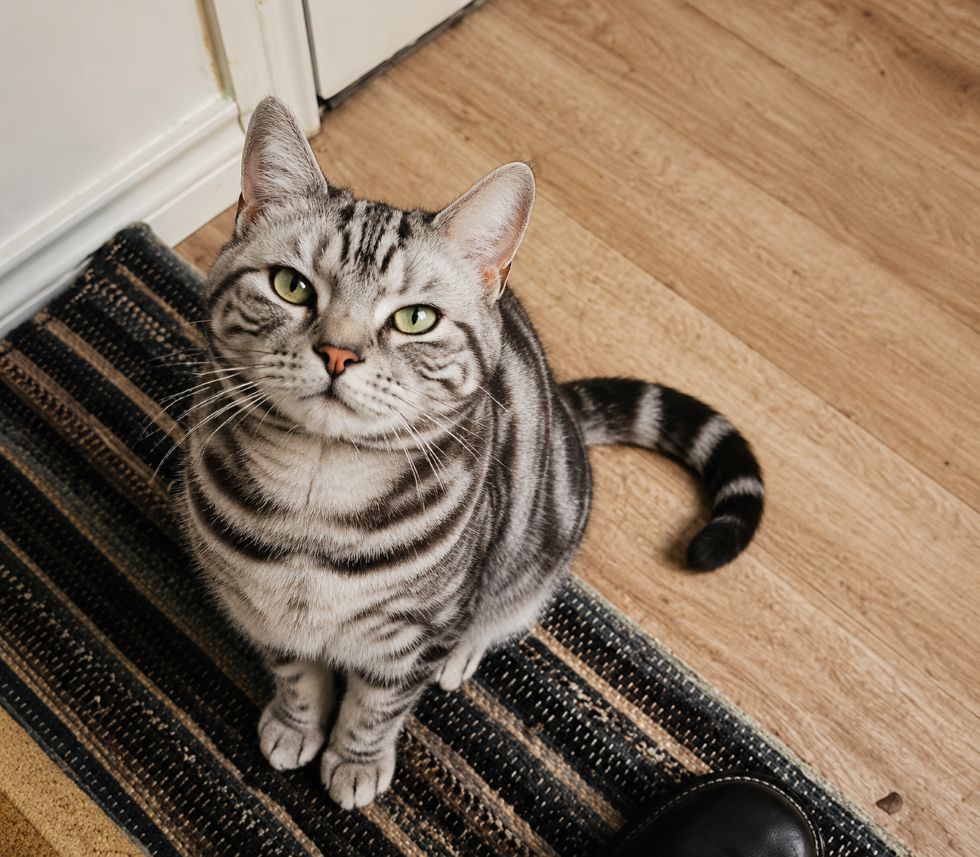
Yes, slow blinking can be a sign of trust and affection, particularly when it happens during a relaxed interaction. Closing the eyes briefly limits a cat’s ability to monitor what is happening nearby. A cat that repeatedly softens or closes their eyes around you is showing that they do not feel an immediate need to remain on high alert.
To understand the context, look at what happens before and after the blink:
- A cat who is resting beside you, purring softly, holding their ears forward, and blinking with both eyes probably feels comfortable.
- A cat crouched beneath a chair with flattened ears and a twitching tail may be using eye narrowing in a very different emotional setting.
Cats Protection notes that slow blinking is often associated with comfort and trust, but it can also appear during stressful situations. The surrounding body language matters more than the blink alone. A cat slow blink is most meaningful when it appears with other friendly cat behaviors, such as:
- A loose body posture
- Neutral or forward-facing ears
- Whiskers resting naturally
- A tail held still or gently curled
- Remaining near you by choice
- Rubbing, kneading, or settling down nearby
Think of the blink as one word in a sentence. The ears, tail, whiskers, posture, and distance fill in the rest.
Why Do Cats Slow Blink at People?
Cats do not communicate with people in exactly the same way they communicate with other cats. Living with humans gives them plenty of time to learn which expressions get our attention and which signals help an interaction go smoothly.
Your cat may slow blink at you for several overlapping reasons:
1. They Feel Safe Around You
A cat that expects danger tends to remain visually alert. Their eyes may stay wide, their pupils may enlarge, and their body may become still or tense. A relaxed cat can afford to soften their gaze. When your cat sits in the middle of the room and slowly closes their eyes while looking at you, they are showing that your presence does not require constant monitoring.
This is especially meaningful with shy cats. A nervous cat may not climb into your lap or greet you at the door. Their first sign of growing trust might be nothing more than choosing to stay in the room and giving you one quiet blink.
2. They Are Communicating Peacefully
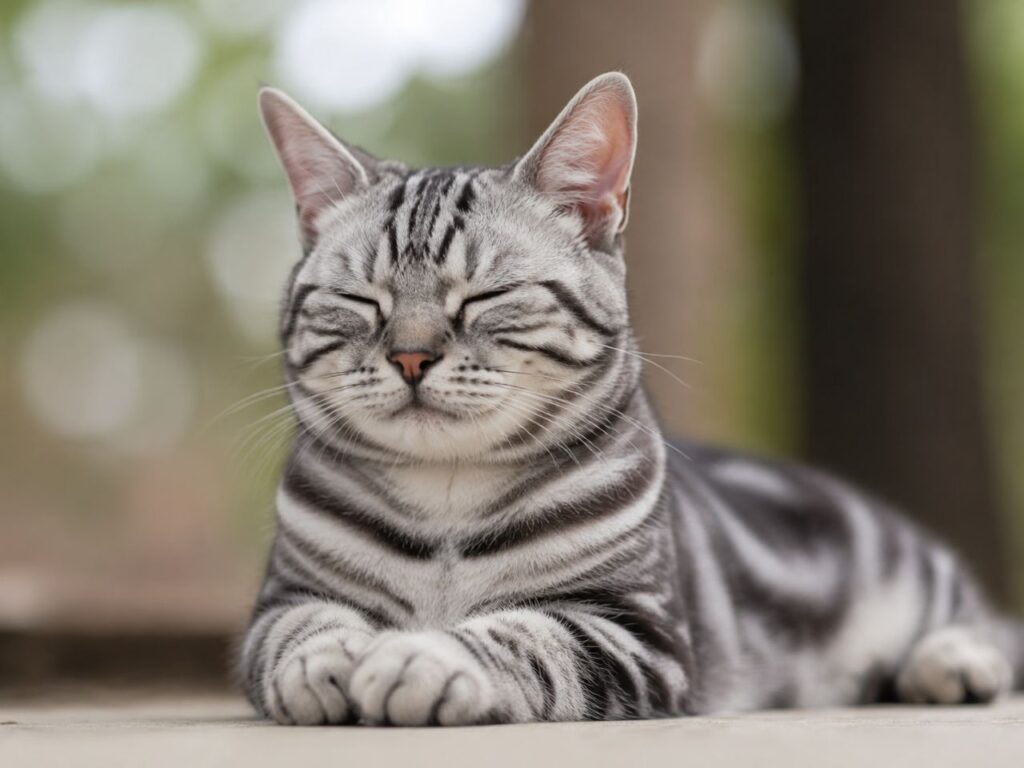
Direct staring can feel intense to cats. In social situations, prolonged eye contact may be interpreted as pressure or a challenge. Slow blinking interrupts that stare. The eyelids lower, the gaze softens, and the interaction becomes less demanding. It functions as a small social peace offering.
This may explain why some cats slow blink at strangers or unfamiliar people who sit quietly and avoid reaching toward them. The person’s calm posture gives the cat room to observe without feeling cornered.
3. They Are Showing Affection
Cats do form meaningful social bonds with people, though they do not all express attachment in the same way. One cat may sleep on your chest; another may follow you into every room. A more reserved cat may prefer to sit several feet away and exchange slow blinks.
When the blink occurs during a warm, familiar interaction, it is reasonable to view it as part of your cat’s affectionate behavior. The Best Friends Animal Society describes slow blinks as a sign that a cat feels safe, happy, and comfortable. The gesture is small, but cats are not known for sending greeting cards.
4. They May Be Responding to Your Body Language
Cats pay close attention to human movement, posture, gaze direction, and tone of voice. Your expression can change how safe an interaction feels. A person leaning over a cat, staring directly, and reaching quickly may seem intimidating. A person sitting sideways, speaking softly, and blinking slowly appears far less threatening.
Your cat may mirror the general softness of your expression. Research suggests that human-initiated slow blinking can encourage similar eye-narrowing behavior from cats. This does not mean every blink is conscious imitation; your cat may simply be responding to the calmer emotional tone you created.
Should You Slow Blink Back at Your Cat?
Yes. Slow blinking back at your cat is a safe, low-pressure way to communicate friendly intentions. It works best when your cat is already calm and has the freedom to move away.
How to slow blink at a cat:
- Sit or stand a comfortable distance from your cat.
- Turn your body slightly to the side rather than facing them head-on.
- Look toward their face without locking them into a hard stare.
- Gently narrow your eyes. Close them for about a second, then open them slowly. You can turn your gaze slightly away afterward.
- Do not exaggerate the movement so much that your face becomes tense. The goal is soft eyes, not an eyelid workout.
Your cat may blink back immediately, blink several seconds later, look away, approach you, begin grooming, or do absolutely nothing. All of those responses are normal.
A slow blink is an invitation, not a command. Avoid moving closer simply because your cat returned the blink. Let them decide whether the interaction continues. You can also offer your hand loosely at their nose level if they approach. When a cat rubs their cheek or forehead against your hand, they are giving much clearer permission for physical contact.
Note: Do not use slow blinking to push through obvious fear. If your cat is hiding, growling, flattening their ears, lashing their tail, or trying to escape, give them space. A blink cannot cancel out an environment that feels unsafe.
What Does Science Say About Cat Slow Blinking?
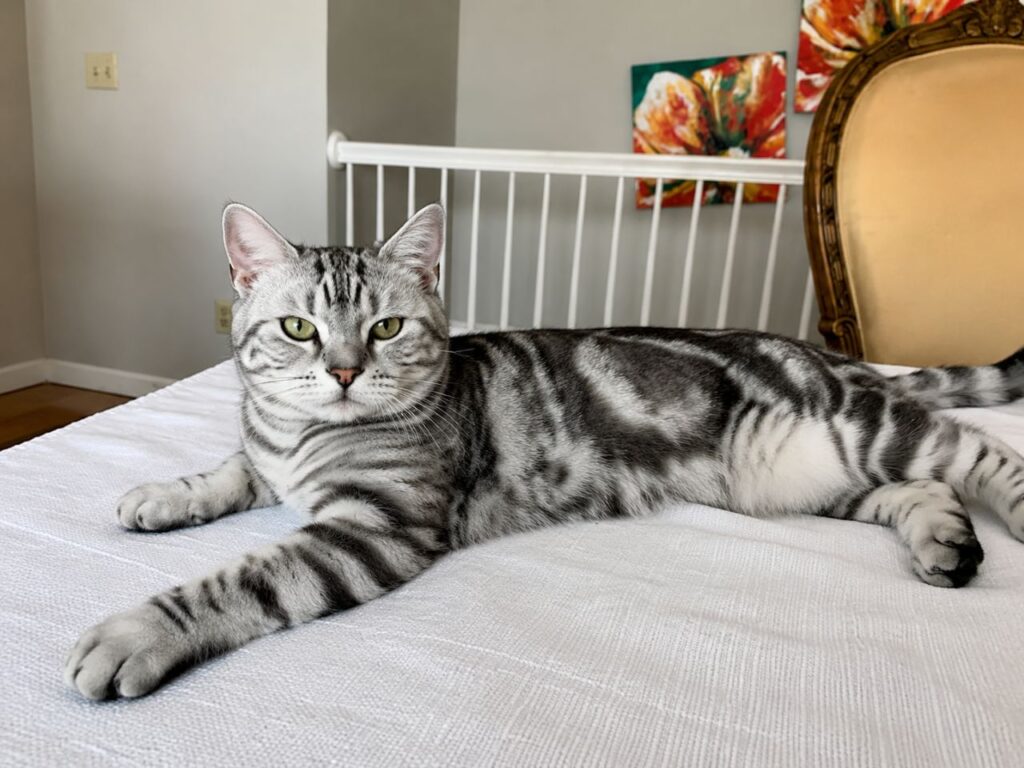
For years, cat owners and behavior professionals described slow blinking as a sign of trust. Experimental evidence arrived much later.
The University of Portsmouth Study
A 2020 study published in Scientific Reports examined whether slow blinking plays a role in communication between cats and humans. The researchers defined a slow-blink sequence as a series of partial blinks followed by prolonged eye narrowing or eye closure.
The study included two experiments:
- Experiment 1: Owners either slow blinked at their cats or remained in the room without directing that interaction toward them. The cats showed significantly more eye-narrowing movements when their owners performed the slow blink.
- Experiment 2: An unfamiliar researcher either slow blinked at the cats or maintained a neutral facial expression. The cats produced more half-blinks and eye narrowing during the slow-blink condition. They were also more likely to approach the researcher’s outstretched hand afterward.
These results suggest that cat eye narrowing functions as a form of positive communication between cats and people. The study did not prove that every slow blink means love, but it did show that cats notice the expression, respond to it, and view a slow-blinking person more positively than someone presenting a neutral face.
How Cats Use Eye Contact to Communicate
A cat’s eyes can change quickly with emotion and arousal. Wide eyes may appear during curiosity, excitement, fear, or surprise. Narrowed eyes may occur during relaxation, social communication, sleepiness, stress, or physical discomfort. Pupil size also changes rapidly with light, activity, fear, and excitement.
This is why cat eye contact must be read alongside the entire body:
- A relaxed cat may look toward you with soft eyelids and then casually turn away.
- A frightened cat may stare with dilated pupils while keeping their body low.
- An irritated cat may narrow their eyes while holding their ears sideways and flicking the end of the tail.
The eye movement is useful, but context does the translation.
When Is Slow Blinking Normal, and When Should You Be Concerned?
A relaxed slow blink and a painful squint can look similar for a second. Watch the pattern, the symmetry, and the rest of your cat’s behavior to tell the difference.
Normal Slow Blinking
Normal slow blinking usually:
- Involves both eyes simultaneously
- Happens during a calm social moment
- Looks soft rather than tight or strained
- Lasts briefly
- Stops when the cat changes activities
- Appears without redness, swelling, or discharge
Your cat may slow blink while lying on the couch, sitting on a windowsill, resting in your lap, or watching you from across the room. They should still be able to open both eyes normally.
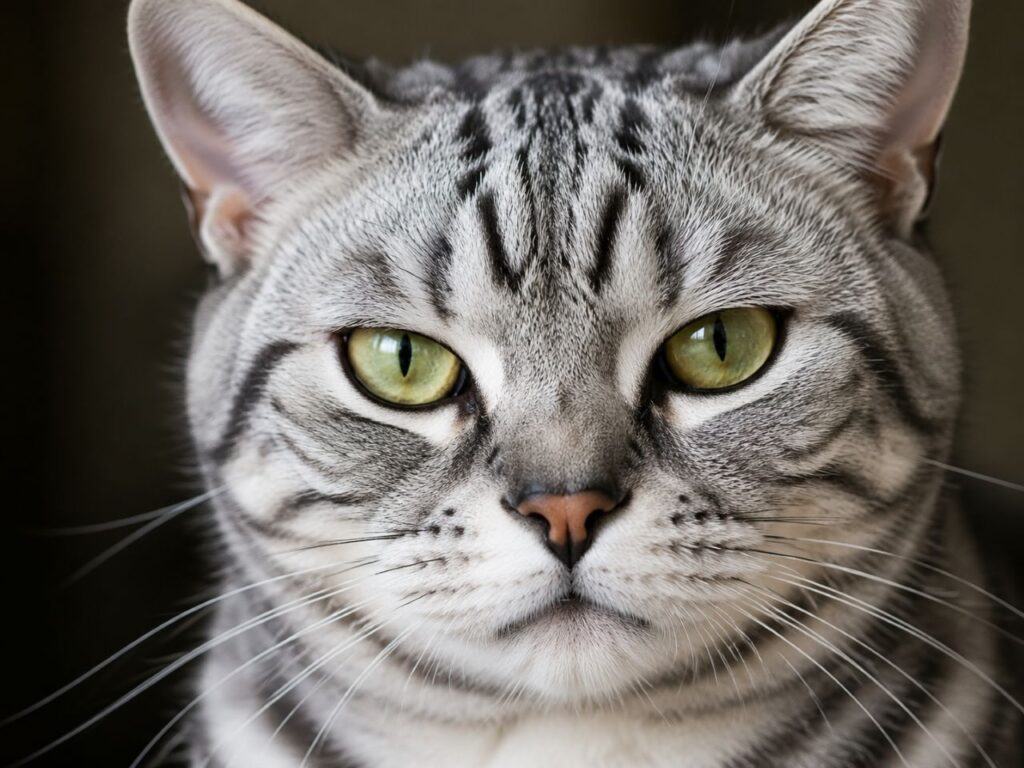
Slow Blinking Caused by Sleepiness
Sometimes a sleepy cat is simply losing an argument with gravity. Cats may hold their eyes partly closed while dozing, purring, resting after a meal, or settling into a warm spot. Their head may gradually lower, and the “slow blink” may turn into a full nap.
Sleepy blinking is usually accompanied by a loose body, relaxed paws, neutral ears, and slow breathing. The cat wakes normally and opens both eyes without signs of irritation. This behavior is not necessarily directed at you, even when your cat happens to be facing you.
Eye Problems That Look Similar
Squinting can be a sign of cat eye pain or irritation, especially when one eye remains more closed than the other.
Conditions like feline conjunctivitis may cause frequent blinking, redness, swelling, tearing, and clear or dark-colored discharge. Corneal injuries, inflammation inside the eye, dry eye, infections, and feline glaucoma can also cause a cat to hold an eye partly closed.
Symptoms of Cat Eye Problems:
- Persistent squinting or keeping one eye closed
- Excessive or rapid blinking
- Red or swollen eye tissue
- Clear, yellow, green, or dark eye discharge
- A cloudy or bluish eye surface
- Pawing or rubbing at the face
- Sensitivity to light
- Unequal pupil sizes
- A visible third eyelid
- Sudden changes in vision or movement
A cat with eye pain may also hide, resist having their head touched, or become unusually quiet.
Warning: Do not apply human eye drops or leftover pet medication unless your veterinarian has instructed you to use that exact product for the current problem. Different eye conditions can look alike, and the wrong medication may cause severe damage.
When to Call a Veterinarian
Contact your veterinarian when blinking or squinting is persistent, new, noticeably one-sided, or accompanied by discharge, redness, swelling, cloudiness, or behavioral changes. Eye problems deserve prompt medical attention because irritation, corneal ulcers, infections, and internal eye pressure can quickly threaten your cat’s comfort or vision.
According to the Cornell Feline Health Center, veterinary evaluation is essential whenever a cat shows apparent eye discomfort or discharge so that more serious conditions can be ruled out. A blink during cuddle time is probably social; an eye that stays shut is asking for help.
Other Signs Your Cat Trusts You
Slow blinking is only one piece of cat affection behavior. Some cats rarely slow blink yet show deep trust in plenty of other ways.
- Head Bunting: This happens when a cat gently presses or rubs their forehead, cheeks, or the side of their face against you. Cats have scent glands around the face, and rubbing allows them to leave familiar scent cues on you, marking you as family.
- Purring: Many cats purr when they are comfortable, especially while resting, kneading, or receiving gentle attention. Always look for a relaxed posture and soft face, as cats can occasionally purr when stressed or in pain.
- Exposing the Belly: The belly is a physically vulnerable area, so rolling over to show their belly means your cat feels incredibly safe. However, treat the exposed belly as a compliment, not an automatic petting permit—many cats will still react defensively if you touch their stomach.
- Following You Around: A cat who follows you from room to room is often seeking companionship. The important detail here is choice; cats naturally choose to spend time near people and places that feel safe or rewarding.
- Sleeping Near You: Sleep leaves a cat vulnerable. Choosing to nap beside you, on your bed, or in the same room reflects immense comfort with your presence.
Final Thoughts
So, why do cats slow blink? Most of the time, a relaxed slow blink means your cat feels comfortable enough to soften their gaze. It is a subtle but powerful way to communicate trust, peaceful intentions, and comfort.
You can easily slow blink back to strengthen your bond. Just remember to read the entire cat: soft eyes, neutral ears, and a loose posture support a friendly message, while persistent squinting or watery eyes point toward a visit to the vet.
Cats rarely deliver their feelings with fireworks. They use quieter things: a forehead against your hand, a nap beside your leg, a tail curling around your ankle, or two eyes slowly closing from across the room. At Catsoria, we think those small moments are worth learning to notice.
Frequently Asked Questions
1. Why does my cat slow blink at me but not other people?
Your cat likely feels safer and more familiar with you. Cats often reserve their most relaxed, vulnerable behaviors for the humans they trust the most.
2. Should I blink back at my cat?
Yes. Slowly close your eyes, pause briefly, and open them again. Keep your facial expression relaxed, avoid a tense direct stare, and let your cat choose if they want to approach.
3. Do kittens slow blink?
Yes. Kittens slow blink when they feel calm and secure in their environment, though they also do a lot of sleepy blinking as they drift off to a nap.
4. Is slow blinking different from squinting?
Yes. A normal slow blink is soft, brief, and involves both eyes. Persistent, tight squinting or holding one eye shut usually indicates pain, irritation, or an underlying medical issue.
5. Why does my cat close its eyes while I’m petting it?
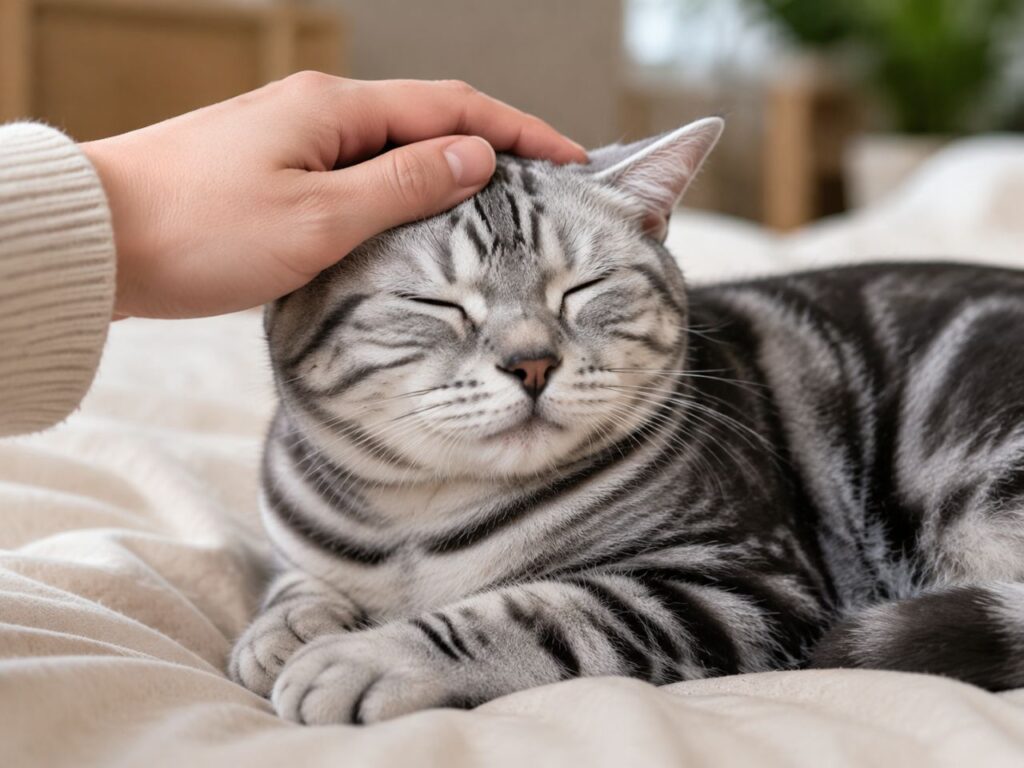
This is a sign that your cat feels relaxed, safe, and is enjoying the interaction. However, always monitor their body language and stop petting if you notice flattened ears, a flicking tail, or sudden body tension.
6. Can sick cats slow blink?
Yes, but illness can also cause lethargy or painful squinting. Contact a veterinarian if your cat’s blinking is accompanied by lethargy, redness, eye discharge, cloudiness, or changes in normal behavior.
