

You just mopped the floor. It looks spotless. Five minutes later, there it is again — a fresh spot of cat urine near the sofa.
Or worse, your cat suddenly decides the bed is the new bathroom.
If you’ve been there, you already know the frustration. Most cat parents try everything: switching litter brands, moving the box, cleaning more often, even yelling (which never works, by the way).
And then comes the viral solution everyone talks about: cat litter attractant sprays or powders.
Some swear it fixed litter box problems in 3 days. Others say their cat completely ignored it… or worse, avoided the litter box even more.
So what’s real and what’s just marketing hype? Let’s break it down with real-world cat behavior logic, not sales talk.
What Is a Cat Litter Attractant, Really?
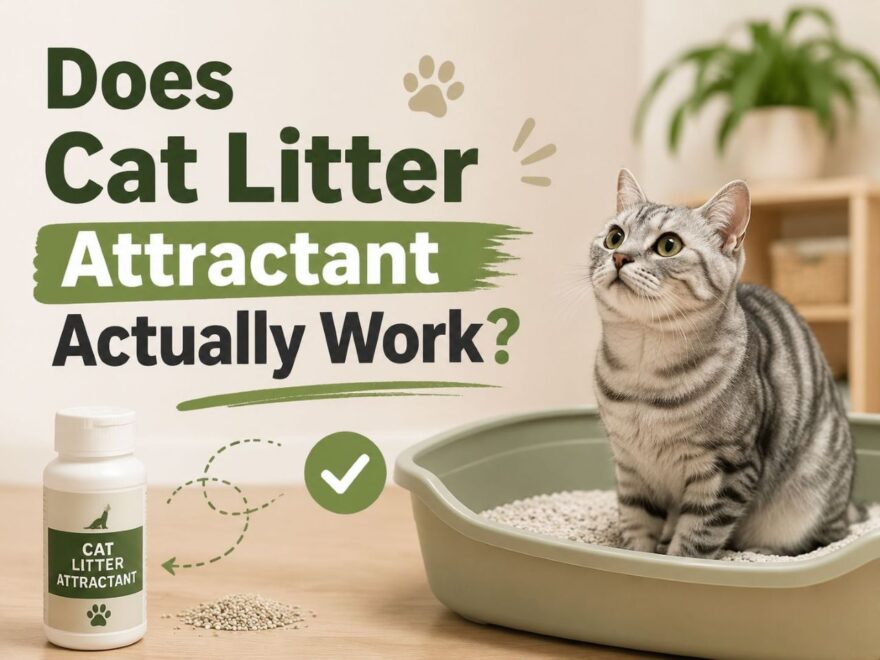
A cat litter attractant (or litter training aid) is a product designed to encourage cats to use the litter box by using scent signals.
In simple terms, it tries to “tell” your cat:
👉 “This is your bathroom spot.”
Most products fall into three categories:
- 1. Synthetic pheromone-based attractants: These mimic natural feline scent markers related to elimination behavior. They basically try to signal safety and territory familiarity.
- 2. Herbal scent blends: Ingredients like catnip, chamomile, or valerian are used to trigger curiosity and positive association with the litter box.
- 3. Commercial odor compounds: Pet-safe fragrance formulas designed specifically for feline olfactory preferences (not human perfume).
Here’s something many cat owners notice: male cats often respond more strongly than females, especially when marking behavior is involved.
But here’s the key point:
👉 A litter attractant doesn’t force behavior. It only increases the likelihood that a cat chooses the litter box.
And that distinction matters more than most marketing claims admit.

So… Do Cat Litter Attractants Actually Work?
Short answer: Yes — but only in specific situations.
There’s limited large-scale research, but behavioral trials and field observations show a clear pattern: When litter box issues are caused by confusion or habit, attractants can help. When the cause is medical or emotional, they usually fail.
When they DO work:
- Kittens still learning litter box habits
- Cats confused after litter or box changes
- Mild inconsistent accidents
- Multi-cat homes with litter box avoidance issues
- Cats that simply lost location association
In these cases, improvement is often seen within 3–7 days.
When they DON’T work:
- Urinary tract infections (UTIs) or bladder pain
- Feline stress or anxiety disorders
- Territorial urine marking (especially unneutered males)
- Dirty or poorly placed litter boxes
- Chronic behavioral stress
This is the part many cat owners miss:
👉 If your cat is sick, stressed, or marking territory, no attractant in the world will fix it. You’re treating a symptom, not the cause.
Why Cat Litter Problems Actually Happen
Cats are not “misbehaving” when they pee outside the box. They are communicating.
Here are the most common real causes behind litter box avoidance:
1. Medical issues (always rule this out first)
Pain changes behavior fast. If urination hurts, cats will associate the litter box with discomfort and avoid it completely.
Watch for:
- Frequent box visits with little output
- Vocalization while peeing
- Blood in urine
- Excessive licking of the genital area
👉 This requires a vet visit, not a spray.
2. Litter box environment problems
Cats are extremely clean creatures. Common triggers include:
- Not enough litter boxes (rule: cats + 1)
- Dirty litter
- Sudden litter type changes
- Loud or high-traffic locations
3. Stress and territorial pressure
Moving homes, new pets, guests, or noise changes can all trigger stress urination. Multi-cat households are especially sensitive — cats may refuse to share a bathroom space.
4. Urine marking behavior
Unneutered cats often spray to mark territory. This is hormonal and behavioral — no attractant will solve it permanently. Neutering is the real solution.
How to Use Cat Litter Attractants Correctly
If you just dump the product into the litter box and hope for magic, you’re likely wasting it. Here is how to apply cat litter training aids properly:
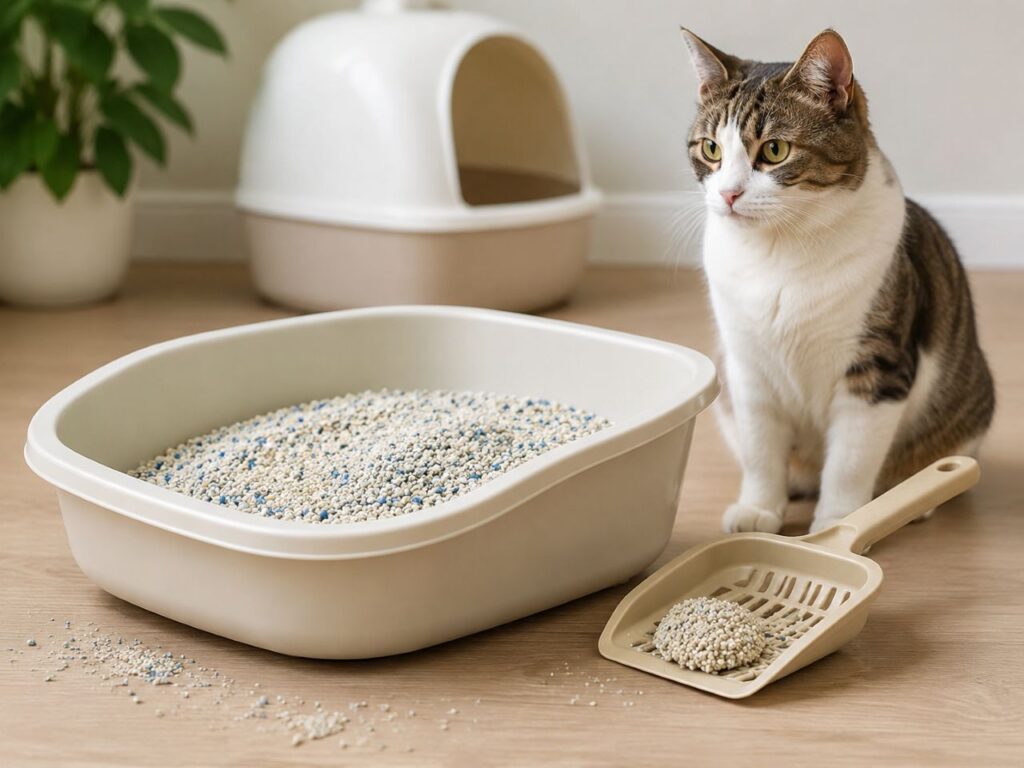
- Powder form: Clean the litter box completely first. Add a small amount of attractant under a thin layer of litter. Do NOT overuse (strong scent can repel cats).
- Spray form: Avoid soaking the litter directly. Lightly apply near (not inside) the box area. Let it dry before use.
- Pre-mixed litter: Easiest option for beginners. No additional products needed.
Pro tip: If your cat already pees in a wrong spot, place a small amount of that scent near the litter box (carefully), so the cat connects location + behavior.
Natural DIY Cat Litter Attractants (Budget-Friendly Options)
If you prefer a natural approach, some household-safe herbs can help act as a natural cat attractant:
- Catnip (best all-around option): Sprinkle a tiny amount on top of litter to encourage curiosity and exploration.
- Chamomile (stress relief support): Helps anxious cats feel calmer around the litter box.
- Valerian (for nervous or aggressive stress cases): Works differently depending on the cat — always test small amounts first.
⚠️ Important: Always use dry herbs only. Never mix wet solutions into litter due to bacteria risks.
The Real Reason Your Cat Is Peeing Outside the Box
Here’s the truth most guides skip: Cat litter attractants are not a permanent solution. They are a training support tool.
If your cat is peeing outside the box, it is not “bad behavior.” It is usually:
- Pain
- Stress
- Confusion
- Territory issues
Every accident is information. Not rebellion.
Final Verdict: Are Cat Litter Attractants Worth It?
Yes — but only as part of the solution. Think of them like training wheels. They help guide behavior, but they don’t fix the bike.
- Best use cases: Kittens learning habits, transition periods (new home, new litter), and mild litter box confusion.
- Not effective for: Medical issues, hormonal marking, and severe stress behavior.
Final Thoughts
Cat litter attractants can absolutely help — but only when used correctly and at the right time. The real breakthrough doesn’t come from a product. It comes from understanding what your cat is actually trying to communicate.
Because cats don’t pee outside the box to annoy you. They do it because something in their world doesn’t feel right. And once that’s fixed, the litter box problem often disappears on its own.
Frequently Asked Questions
1. Do cat litter attractants actually work for litter box problems?
Yes, cat litter attractants work effectively, but only if the issue is behavioral, such as kittens learning habits or cats confused by a new home or litter brand. They will completely fail if your cat’s litter box avoidance is caused by medical pain, chronic stress, or territorial urine marking.
2. Why is my cat suddenly peeing outside the litter box?
When a cat pees outside the box, it is communicating a problem, not misbehaving. The most common causes are medical issues (like UTIs or bladder stones), an uncleaned or poorly placed litter box environment, moving stress, or hormonal urine marking in unneutered cats.
3. How do you use a cat litter training aid correctly?
To use a cat litter training aid properly, avoid overusing the product, as strong scents can repel felines. For powder attractants, sprinkle a small amount under a thin layer of fresh litter. For sprays, lightly mist the area surrounding the box instead of soaking the litter directly.
4. What is a safe, natural DIY cat litter attractant?
Dried catnip is the best natural cat attractant to trigger curiosity and exploration in the box. You can also use dried chamomile to calm anxious cats or valerian for nervous cases. Always use dry herbs only; never mix wet solutions into the litter to avoid bacteria risks.
5. When should I take my cat to the vet for litter box issues?
You must schedule a vet visit immediately if your cat shows signs of urinary pain. Watch for critical red flags including frequent box visits with little to no output, vocalization or crying while peeing, blood in the urine, or excessive licking of the genital area.
