
Have you ever looked at a pure white cat and wondered, “Is this an albino cat?” You are not alone. Many cat owners see a snow-white coat with no markings and immediately assume the cat must be albino.
But that is not always true.
A completely white cat usually falls into one of two categories. One is a normal white cat whose true coat color is simply hidden by genetics. The other is a true albino cat, a rare cat born with a complete lack of melanin. They may look similar at first glance, but their genes, body structure, health risks, and daily care needs are very different.
This guide breaks down what an albino cat really is, how to tell an albino cat vs. white cat apart, the most common albino cat health problems, and how to care for these rare and delicate cats properly.
What Is an Albino Cat?
The genetic cause of albinism in cats
An albino cat is born with a congenital genetic condition caused by an autosomal recessive gene mutation. The main issue is a lack of tyrosinase, an enzyme animals need to produce melanin.
Melanin is not only responsible for coat color. It also affects the skin, eyes, ears, nose, paw pads, and other parts of the body. When tyrosinase does not work properly, the cat’s body cannot produce normal pigment.
For a true albino kitten to be born, both parents must carry the recessive albino gene. This makes true albinism extremely rare in cats. Albino cats make up less than 0.5% of the global cat population, so they are far less common than many people think.
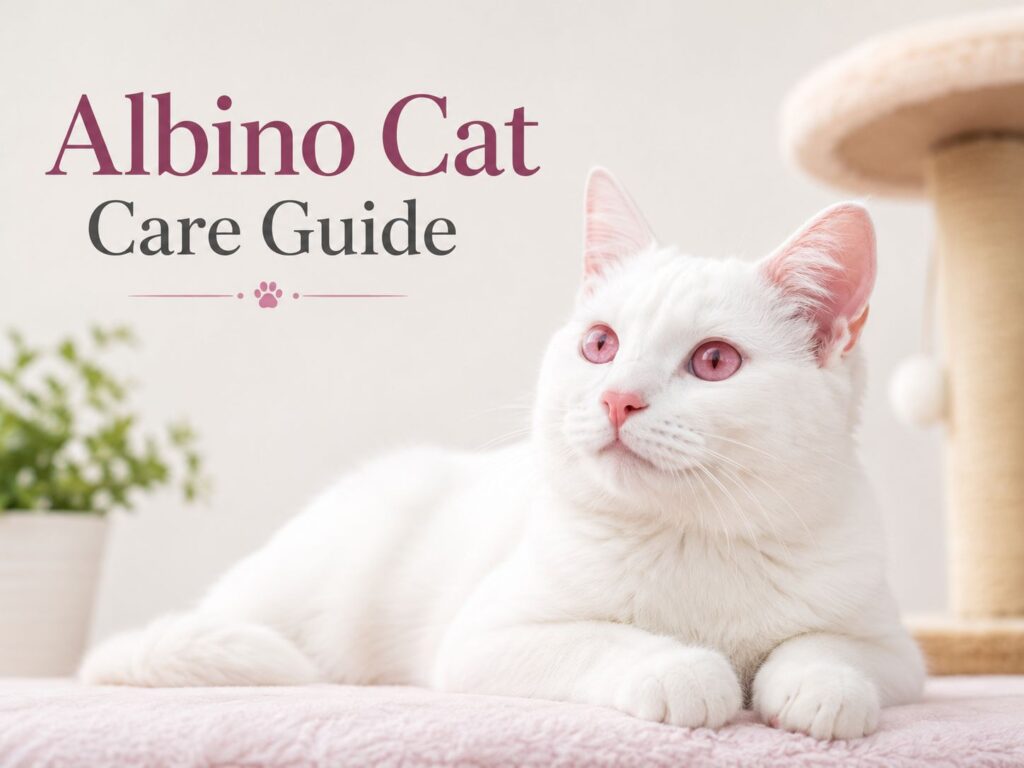
What does a true albino cat look like?
Because melanin is found throughout the body, the signs of albinism are not limited to the fur. A true albino cat usually has:
- A cool, translucent white coat with no cream or ivory tone
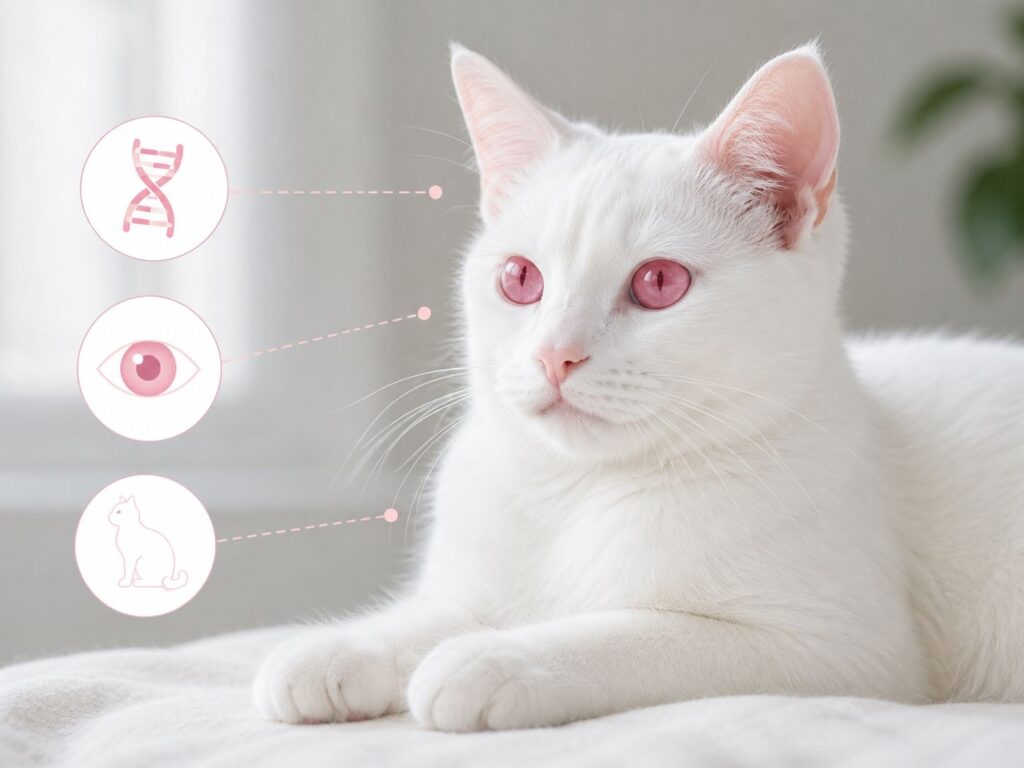
- Pale pink nose, lips, paw pads, and inner ears
- Eyes with little to no iris pigment
- Pinkish eyes in bright light due to visible blood vessels
- Red or pink eye shine in low light
This is different from colorpoint cats such as Siamese cats. Siamese cats can have temperature-sensitive partial pigment loss, but they are not true albino cats. Their genetic mechanism is different.
White Cat vs. Albino Cat: What Is the Difference?
Most pure white house cats are normal white cats, not albino cats. The biggest difference is simple: a white cat still has pigment-producing cells, while an albino cat cannot produce normal pigment at all.
1. Genetic difference
A normal white cat usually carries the dominant white gene, often called the W gene, or a white spotting gene that covers the whole coat. The cat still has normal melanin production. Its body may carry black, orange, tabby, or other color genes, but the white gene masks them.
In simple terms, a white cat has color underneath. You just cannot see it.
An albino cat, on the other hand, carries two recessive albino genes. Its melanin production pathway is broken. The cat does not have hidden coat color in the same way a normal white cat does.
When bred, a normal white cat may produce kittens with different coat colors. An albino cat can only produce albino kittens if the other parent also carries the albino gene.
2. Nose, eyes, skin, and paw pad differences
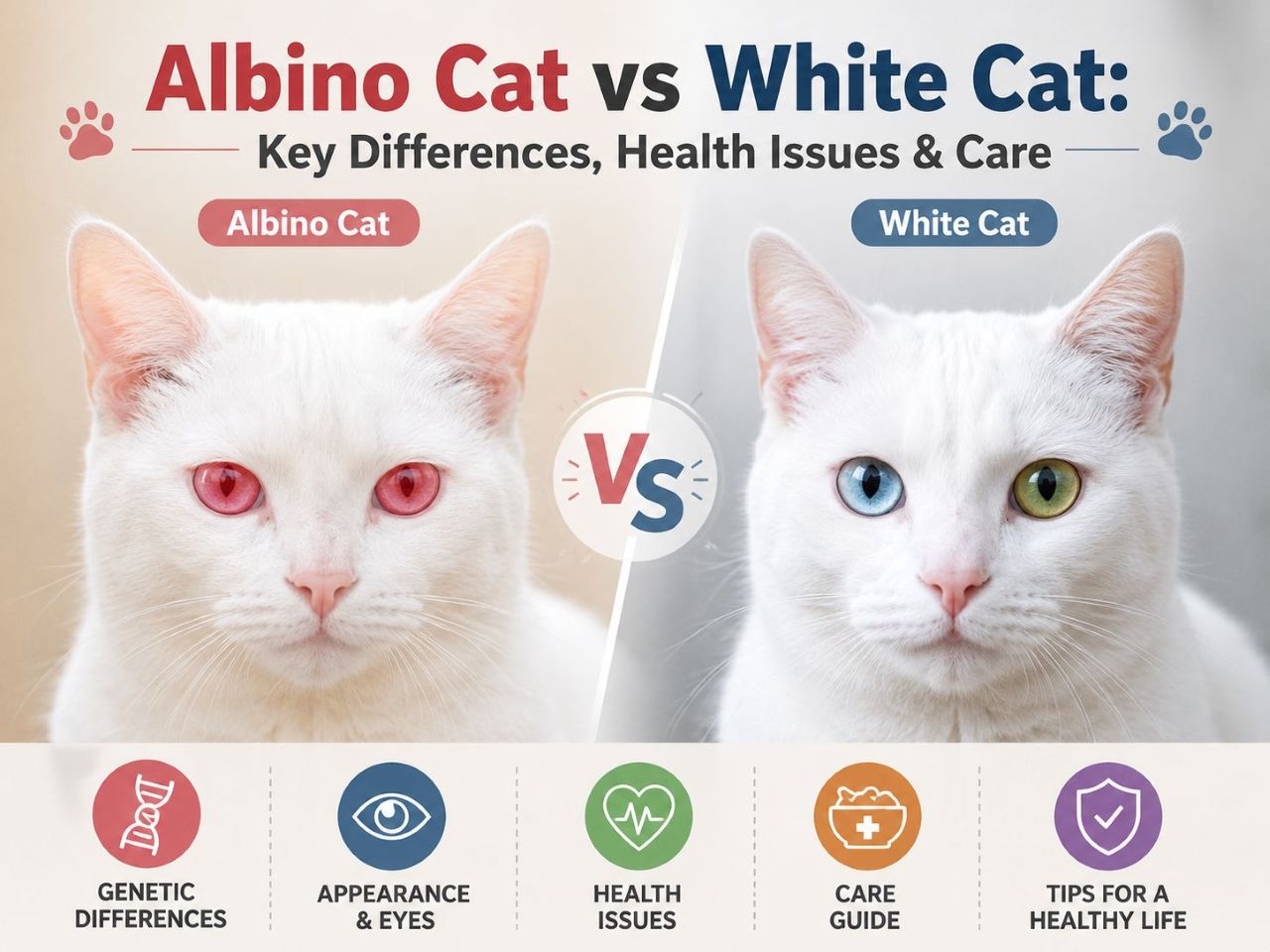
The fastest way to tell an albino cat vs. white cat apart is by looking closely at the face, eyes, and paw pads.
| Body Part | Normal White Cat | Albino Cat |
| Nose, lips, paw pads | Black, deep pink, brick red, or pigmented | Uniform pale pink with no dark pigment |
| Eye color | Blue, green, amber, odd eyes | Very pale blue-pink or pinkish, with little iris pigment |
| Night eye shine | Green or yellow reflection | Red or pink reflection |
| Coat tone | Creamy white, warm white, or natural white | Cool pure white, sometimes slightly translucent in strong light |
One of the biggest myths is that every blue-eyed white cat is albino. That is false. A blue-eyed white cat usually has reduced eye pigment, but the skin and paw pads still have normal pigment. It is a normal white cat, not an albino cat.
3. Hearing differences
Normal white cats can have hearing problems, especially if they have blue eyes. Double blue-eyed white cats have a much higher chance of congenital deafness. Odd-eyed white cats may be deaf on the same side as the blue eye. White coats with yellow or green eyes usually have normal hearing.
This hearing issue is linked to the dominant white gene affecting inner ear development. It is not caused by albinism.
True albino cats are not usually born deaf. Albinism affects pigment production, not the auditory nerve. Most albino cats have normal hearing, which is one hidden clue that helps separate them from ordinary white cats.
4. Physical resilience and environmental tolerance
A normal white cat has some melanin protection in the skin, even if the coat is white. It can usually live like other cats, with no special environmental needs beyond normal cat care.
An albino cat has no natural melanin protection. Direct sunlight can easily cause sunburn, skin inflammation, and long-term skin cancer risk. Albino cats are also highly light-sensitive because their eyes lack normal pigment protection.
Common Albino Cat Health Problems
Albinism is not just a coat color. It is a whole-body genetic condition. A true albino cat may live a good life, but it needs careful daily care to avoid serious complications.
1. Lifelong eye problems
Because the iris has little to no pigment, bright light can hit the retina directly. This makes albino cats extremely light-sensitive. They may squint, tear up, hide from sunlight, or avoid bright rooms.
Over time, strong light exposure may contribute to chronic conjunctivitis, eye tremors, strabismus, and gradual vision decline. Some albino cats also have poor night vision or trouble seeing clearly in dim spaces.
2. Skin damage and higher skin cancer risk
Melanin acts like a natural shield against ultraviolet rays. Without it, exposed areas such as the ears, nose, eyelids, and lips are highly vulnerable.
During sunny months, even short sun exposure may cause redness, peeling, itching, or solar dermatitis. Long-term outdoor exposure can greatly increase the risk of squamous cell carcinoma, especially around the ears. For older albino cats, this can become one of the most serious health threats.
3. Weaker immune response and slower healing
The recessive albino gene may also affect immune function and tissue repair. Compared with normal white cats, albino cats may be more prone to respiratory issues, skin irritation, and seasonal health problems.
Their skin and mucous membranes may heal more slowly after scratches or small wounds, so owners need to prevent injuries as much as possible.
4. Normal hearing, but abnormal eye structure
Albino cats usually do not have inherited deafness, but their eyes may have structural issues. Their eye shine often appears red because of abnormal light reflection inside the eye. Some cats may also have underdeveloped retinal structures.
Strong flashlights should never be pointed into an albino cat’s eyes. This can increase eye stress and discomfort.
Albino Cat Care Guide
Caring for an albino cat is very different from caring for a normal white cat. The main goals are light control, sun protection, eye care, and skin protection.
1. Create a low-light indoor environment
Albino cats should live indoors full time. Windows should have blackout or UV-blocking curtains, especially during the strongest sunlight hours between 10 a.m. and 4 p.m.
Avoid direct bright lamps, camera flashes, or strong spotlights. Cat beds, cat trees, and resting areas should be placed in shaded corners with soft, gentle light.
2. Protect the skin from sun exposure
Albino cats should not roam outdoors or go on outdoor walks. Their skin is too sensitive for direct sunlight.
In spring and summer, apply a pet-safe sunscreen to vulnerable areas such as the ear edges, nose, and eyelids when needed. The sunscreen should be fragrance-free and free of zinc oxide. Never use human sunscreen on cats, since licking it can be dangerous.
If the skin becomes red, flaky, swollen, or irritated, visit a veterinarian quickly. Do not apply human skin medication without veterinary guidance.
3. Take daily care of the eyes
Albino cats often tear more because of light sensitivity. Clean the eye area morning and evening with a cat-safe eye wash or veterinarian-approved product.
If your cat squints often, has red eyes, or shows heavy discharge, ask your vet about proper anti-inflammatory eye drops. Some albino cats may also tolerate lightweight pet eye protection, but it should never cause stress or discomfort.
4. Support immunity through diet and regular checkups
A high-protein diet can help support overall health. Choose quality cat food and supplement with safe options such as freeze-dried meat or plain boiled chicken. Fish oil may help support skin and mucous membrane health.
Avoid salty, greasy treats, since they may worsen tear staining and add unnecessary metabolic stress.
Albino cats should see a veterinarian more often than typical cats. A checkup every six months, including an eye exam and skin screening, can help detect early eye disease or skin changes before they become serious.
5. Reduce stress and sudden environmental changes
Because albino cats often have weaker vision and light sensitivity, many are more cautious, sensitive, or easily startled.
Avoid loud surprises, sudden handling, or placing them in bright areas. A stable home routine helps reduce stress and supports immune balance.
Common Myths About White Cats and Albino Cats
- Myth 1: All blue-eyed white cats are albinoFalse. Most blue-eyed white cats are normal white cats with reduced eye pigment. Their paw pads, nose, and skin still show pigment. True albino cats have pinkish or very pale eyes, not clear deep blue eyes.
- Myth 2: Albino cats are always sick and live short livesFalse. With strict indoor living, sun protection, eye care, and regular vet checks, an albino cat can live around 12 to 15 years, similar to many house cats. Many early deaths happen because owners treat albino cats like ordinary white cats and allow too much sunlight exposure.
- Myth 3: Albino cats should be bred with normal white catsThis is strongly discouraged. Albino cats carry a genetic defect, and their offspring may carry the same recessive gene. Albino cats are also more physically vulnerable, making pregnancy and breeding risky. Responsible breeders and pet professionals generally avoid breeding albino cats.
Final Thoughts
A pure white coat does not automatically mean a cat is albino. Genetics are the real key.
A normal white cat is simply a healthy cat with a special coat color. An albino cat is a rare cat with a lifelong pigment disorder and special care needs. These cats are beautiful, but they are also fragile. They need protection from sunlight, careful eye care, skin monitoring, and a calm indoor life.
Before calling a white cat an albino cat, look at the eyes, nose, paw pads, skin, and light sensitivity. The more you understand the difference, the better you can protect the cat in front of you.
Whether your cat is a common white cat or a rare albino cat, every snow-white feline deserves patient, thoughtful care.
Frequently Asked Questions
1. How can I tell if my white cat is a true albino?
The fastest way to tell them apart is by looking closely at their eyes, nose, and paw pads. A normal white cat will have distinct blue, green, or amber eyes, and pigmented nose/paw pads (often deep pink or black). A true albino cat completely lacks melanin, resulting in translucent pale blue-pink or reddish eyes, along with uniform, pale pink skin, lips, and paw pads.
2. Are albino cats born deaf like many blue-eyed white cats?
No, albino cats are not typically born deaf. Congenital deafness in felines is strictly linked to the dominant white gene (W gene), which affects inner ear development in normal white cats (especially those with blue eyes). Because albinism is caused by a completely different recessive gene mutation that only blocks pigment production, albino cats usually maintain normal hearing.
3. What are the most common health risks for an albino cat?
Due to a total lack of protective melanin, albino cats face severe health risks, including extreme light sensitivity (photophobia) and a high susceptibility to severe sunburn and skin cancer (squamous cell carcinoma). They also tend to have weaker immune responses, meaning they require a strict indoor lifestyle and careful environmental management to stay healthy.
4. Can I take my albino cat outside if I live in a sunny climate?
It is highly discouraged to let an albino cat outside, especially in sunny or high-UV regions. If they must be near a window or travel to a veterinary clinic, you should apply a specialized, vet-approved, zinc-free pet sunscreen to their nose and ear tips. Additionally, installing UV-blocking window films in your home is highly recommended to protect them from ambient solar radiation.
5. Where can I find specialized veterinary care for an albino cat near me?
Because of their complex skin and vision needs, albino cats benefit from checkups every six months. You should look for local, AAHA-accredited (American Animal Hospital Association) veterinary clinics or certified veterinary dermatologists and ophthalmologists in your area. They can provide advanced screenings for early-stage solar dermatitis, skin cancers, and progressive eye conditions.