
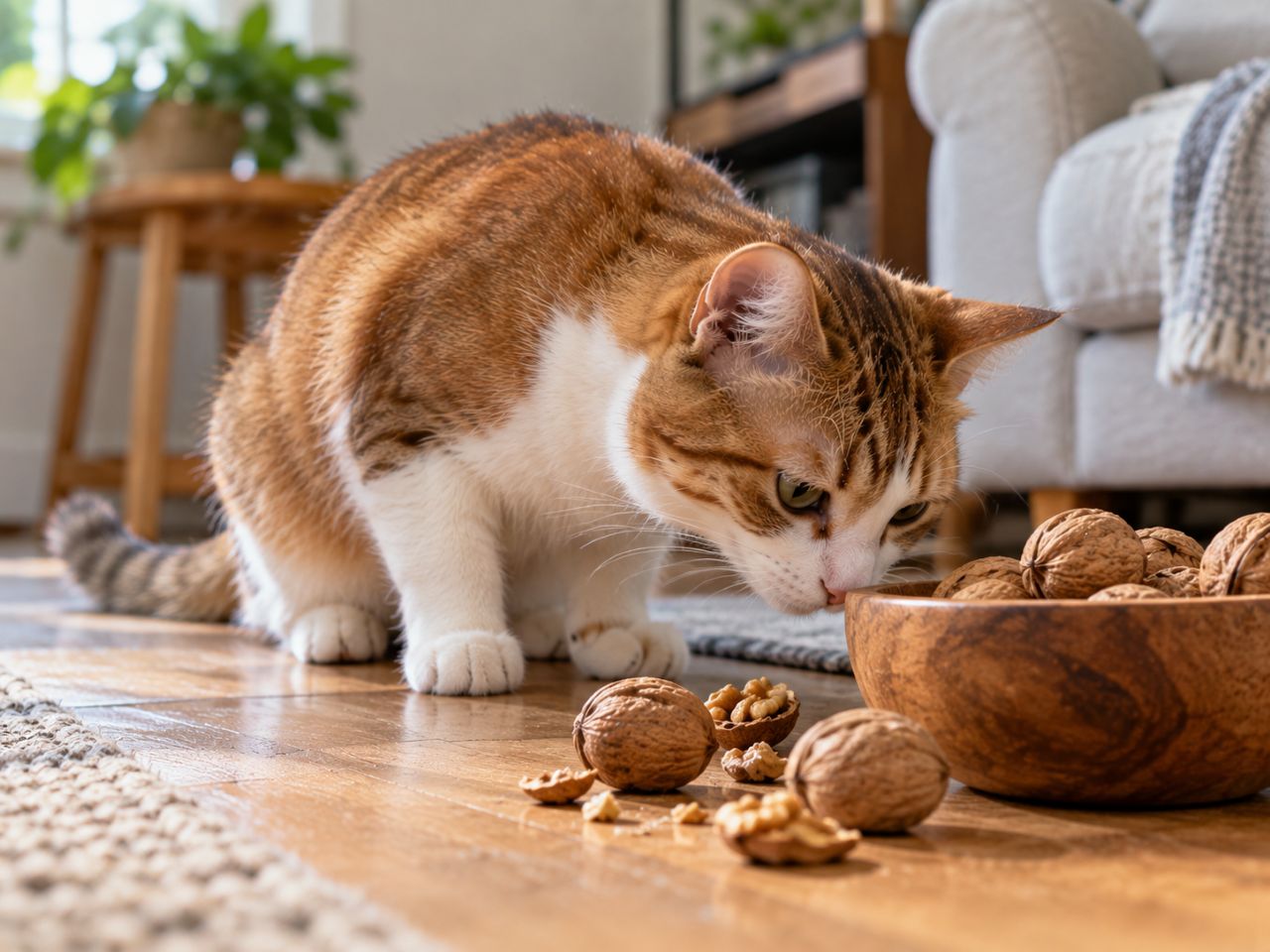
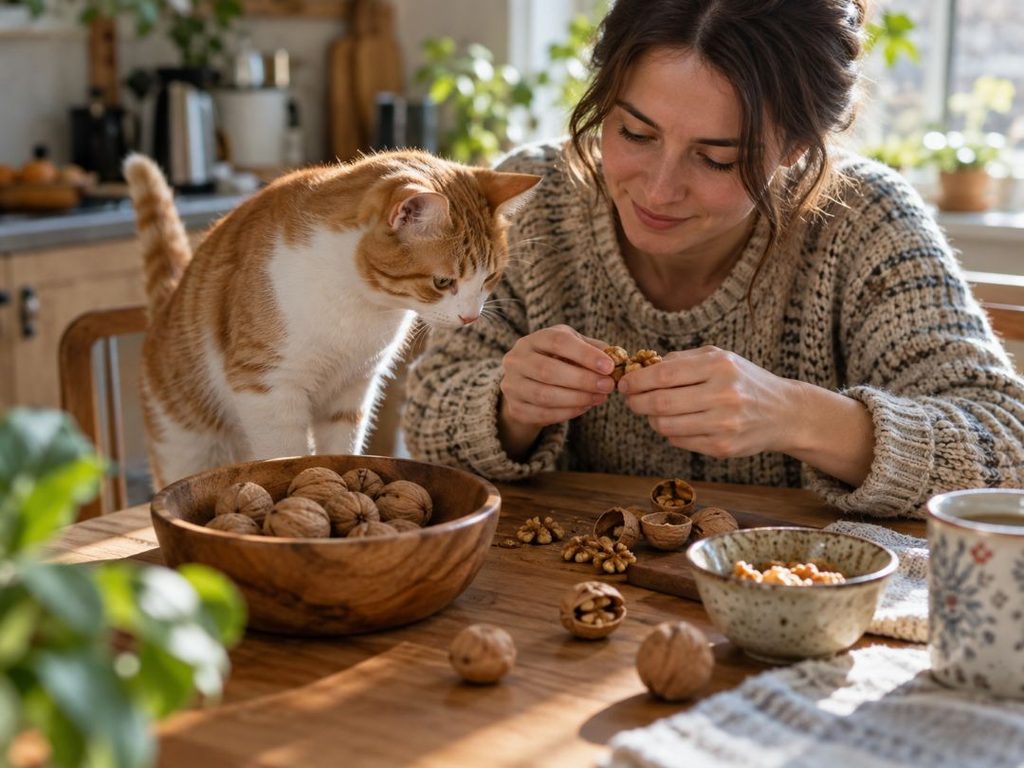
A walnut falls off the cutting board, and your cat gets to it before you do. Now you’re trying to remember whether nuts belong on the list of foods cats should never eat.
Cats should not be offered walnuts. A tiny, accidental bite of a fresh, plain, shelled walnut is usually less concerning than eating a shell, a moldy nut, or a chocolate-covered walnut. Still, walnuts can cause digestive trouble and have no necessary role in an already balanced feline diet.
What happens next depends on what your cat actually swallowed. The shell, the condition of the nut, and the rest of the ingredients matter as much as the word “walnut.”
My Cat Ate a Walnut. What Should I Do?
Move the remaining food out of reach and check what is missing. Was it a crumb of walnut meat, a large piece, or part of the shell? Keep the package or recipe, and make a note of when it happened.
Use the situation below to decide how quickly to seek help.
| What happened | What to do |
|---|---|
| Your otherwise healthy cat ate a tiny piece of fresh, plain walnut meat and seems normal. | This does not automatically mean an emergency. Ask your veterinary team whether home monitoring is appropriate, particularly when the amount is uncertain. |
| Your cat swallowed a shell fragment, a whole nut, or a large piece without chewing. | Call your veterinarian promptly for advice about choking or an intestinal blockage. Don’t wait for symptoms to confirm the problem. |
| The walnut came from compost, the trash, or a moldy batch. | Contact your veterinarian or a pet poison service immediately, even before symptoms appear. |
| The walnut was chocolate-covered, heavily seasoned, or part of a mixed snack or dessert. | Read out the full ingredient list when you call. Other ingredients may change the urgency and treatment. |
For the call, have your cat’s approximate weight, relevant medical conditions, the estimated amount eaten, and any symptoms ready. A photo of the remaining food can help explain what was involved. Keep a sample safely away from pets when possible.
In the United States, ASPCA Poison Control is available at 888-426-4435, and Pet Poison Helpline is available at 855-764-7661. Consultation fees may apply.
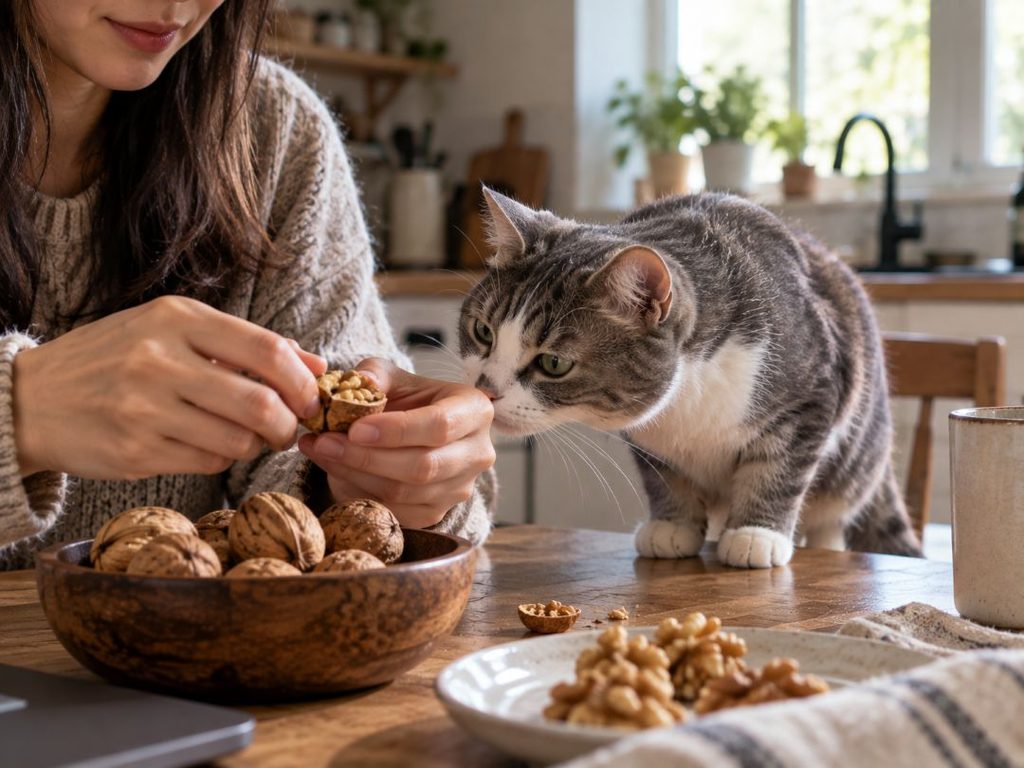
Signs that need urgent veterinary attention
Go to an emergency veterinary clinic for breathing difficulty, collapse, seizures, or pronounced shaking. A cat struggling to breathe needs immediate care; don’t spend time completing an online symptom checklist.
Repeated vomiting, marked weakness, a painful abdomen, or refusal to eat after a suspected ingestion also needs prompt veterinary assessment. These symptoms can have several causes, so they cannot identify “walnut poisoning” on their own.
Follow your vet’s instructions about how long to monitor a cat who can stay home. Looking normal immediately after eating something does not rule out a developing problem.
Do not try to make your cat vomit at home. Hydrogen peroxide can injure a cat’s stomach and esophagus. Salt, oil, and attempts to trigger gagging are unsafe substitutes. A veterinarian should decide whether any treatment to remove the swallowed material is appropriate.
Are Walnuts Toxic to Cats?
Walnuts are a food to avoid, but describing every exposure as the same kind of poisoning is misleading. A small piece of fresh walnut meat presents a different situation from a decomposing nut found outdoors.
The main concerns are digestive upset, swallowed pieces that may lodge or obstruct, harmful added ingredients, and toxins produced by certain molds. A cat who ate a small plain piece may remain well. That possibility is not a reason to add walnuts to the treat rotation.
English walnuts and black walnuts
English walnuts are commonly sold for snacking and baking. Removing the shell and choosing an unsalted product removes some hazards, but the kernel still isn’t a recommended cat treat.
Black walnuts and cats need a little more explanation. The ASPCA lists black walnut, Juglans nigra, as non-toxic to cats. Its warnings for dogs and horses should not be presented as proof of the same poisoning syndrome in cats.
That plant listing does not establish that eating the nut, shell, or decaying hull is harmless. Mold contamination and swallowed foreign material remain separate concerns. For a walnut picked up outdoors, tell your vet where it came from and whether any hull or shell was eaten.
Moldy walnuts are a different concern
Certain molds can produce tremorgenic mycotoxins, substances that affect the nervous system. Veterinary toxicology references identify mold-contaminated food, including walnuts, as a possible source. Cats can be affected, even though many published cases involve dogs.
Possible signs include drooling, vomiting, agitation, an unsteady walk, tremors, and seizures. Suspected mold exposure deserves an immediate call; waiting for shaking to begin can delay needed care.
Keep cats away from compost, fallen nuts, and food waste. A walnut that has been sitting in a damp yard is not comparable to a freshly opened package of shelled nuts. Visible mold is a reason to discard food where pets cannot reach it, rather than trimming away the affected spot and offering the rest.
Why Walnuts Are a Poor Treat for Cats
The risks don’t depend entirely on whether a walnut contains a toxin. Its size, texture, fat content, and preparation can all matter.
Shells and large pieces can get stuck
Walnut shells are hard material that cats should not swallow. Shell fragments or large nut pieces can become lodged or contribute to a digestive blockage. The outcome depends on the size and shape of the material and the individual cat; a shell fragment is not guaranteed to pass safely.
Call your vet after a known shell ingestion. Don’t feed oil, extra food, or a home remedy in an attempt to push it through. When an obstruction is suspected, an examination and imaging may be needed to work out where the material is and how to manage it.
Keep discarded shells in a covered container while you’re cracking nuts. Leaving them beside the snack bowl makes it easy to lose track of a piece.
Rich food can upset the stomach and add unnecessary calories
Walnuts contain substantial amounts of fat and oil. Eating them can lead to vomiting or diarrhea, and regularly sharing calorie-dense snacks can make weight management harder.
Cats do need dietary fat. The problem is adding an unnecessary rich food outside a balanced feeding plan, especially for a cat with digestive sensitivities or a prescribed diet.
Claims about walnuts and pancreatitis in cats also need care. The ACVIM consensus statement on feline pancreatitis reports that an association with dietary indiscretion has not been established in cats. Most cases have no identified cause. A walnut bite should not be described as a proven trigger for this disease.
Persistent poor appetite, lethargy, or vomiting still warrants veterinary attention, whatever the suspected cause. A cat who already has pancreatitis needs an individual feeding plan from their veterinarian.
Coatings and seasonings change the risk
A walnut in a brownie or snack mix comes with more than the nut itself.
Chocolate and cocoa can be toxic to cats. Onion and garlic, including seasonings made from them, can damage red blood cells. Excessive salt intake can also cause poisoning, although finding a few salt crystals on a nut does not establish that a toxic dose was eaten.
Share the ingredient label and estimated amount with your veterinary team. “One bite of dessert” is less useful than knowing what the dessert contained. Don’t assume a product is suitable because it is organic, unsalted, or marketed as a healthy human snack.
Do Cats Get Any Benefits From Walnuts?
Walnuts provide nutrients in a human diet, but that doesn’t make them a useful addition to a cat’s bowl.
Cats are obligate carnivores with specific nutrient requirements. A complete and balanced cat food appropriate for their life stage is formulated to meet those needs. Adding walnuts is not necessary to supply protein, minerals, or fats.
Being an obligate carnivore does not mean a cat is physically unable to digest every plant ingredient. Properly formulated cat foods may include plant ingredients. The relevant question is whether an extra food improves the overall diet enough to justify offering it. Walnuts introduce avoidable concerns without filling a nutritional gap in an already complete diet.
A cat showing interest in your snack is not evidence of a deficiency. Discuss concerns about weight, coat condition, or digestion with your veterinarian rather than trying to correct them with nuts or walnut oil.
Better Treats and Simple Kitchen Habits
For a healthy cat, a few pieces of their regular kibble set aside from the daily allowance can serve as a reward. A small portion of their usual wet food works too.
Other possibilities include an appropriately sized commercial cat treat or a tiny piece of thoroughly cooked, plain, boneless chicken or turkey. Avoid skin, bones, butter, and seasoning. Cats on elimination diets or other prescribed diets should receive treats approved by their veterinary team.
The World Small Animal Veterinary Association recommends that treats provide no more than 10% of a cat’s daily calories. This includes all extras offered by everyone in the household. The allowance is a limit, not a target, and it applies to suitable treats—not to foods that should be avoided.
Catsoria’s approach to everyday treats is to keep them compatible with the cat’s normal diet and easy to portion. Sharing the moment doesn’t require sharing the food on your plate.
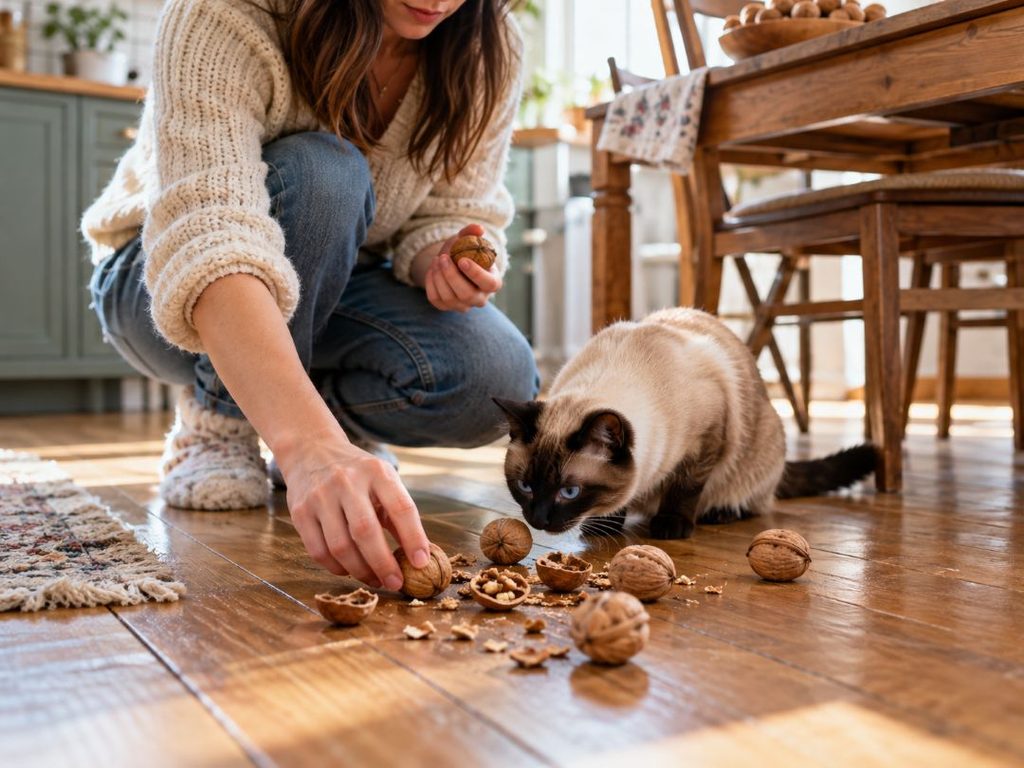
Store walnuts and mixed snacks in closed containers. Clear away baking ingredients before leaving the kitchen, and check the floor after cracking nuts. In homes with several cats, move all of them away from a spill before trying to work out which one ate something.
Frequently Asked Questions
1. Can cats eat roasted or cooked walnuts?
Cooking does not make walnuts a recommended treat. Roasted nuts still contain plenty of fat, and they may have added oil, salt, or seasonings. A walnut baked into another food also needs to be assessed as part of the full recipe.
2. Is walnut butter safe for cats?
Grinding walnuts removes the large kernel pieces, but it does not make the food nutritionally appropriate. Walnut butter is still rich and may contain added ingredients. Choose a treat made for cats instead of using nut butter as a snack or a way to hide medication.
3. Can kittens have a small piece of walnut?
Walnuts should not be offered to kittens. Growing kittens need complete and balanced food suited to growth, and hard pieces or shells are inappropriate treats. For an accidental ingestion, tell the veterinary team the kitten’s age, weight, and what was swallowed.
4. How many walnuts can a cat safely eat?
There is no established serving size to recommend. The condition of the nut, added ingredients, shell fragments, and the cat’s health all affect the situation. Treat an accidental bite as something to assess, rather than using the outcome to decide on a future portion.
This article provides general education. Your veterinarian or a pet poison service can assess a specific ingestion and advise on the care your cat needs.