
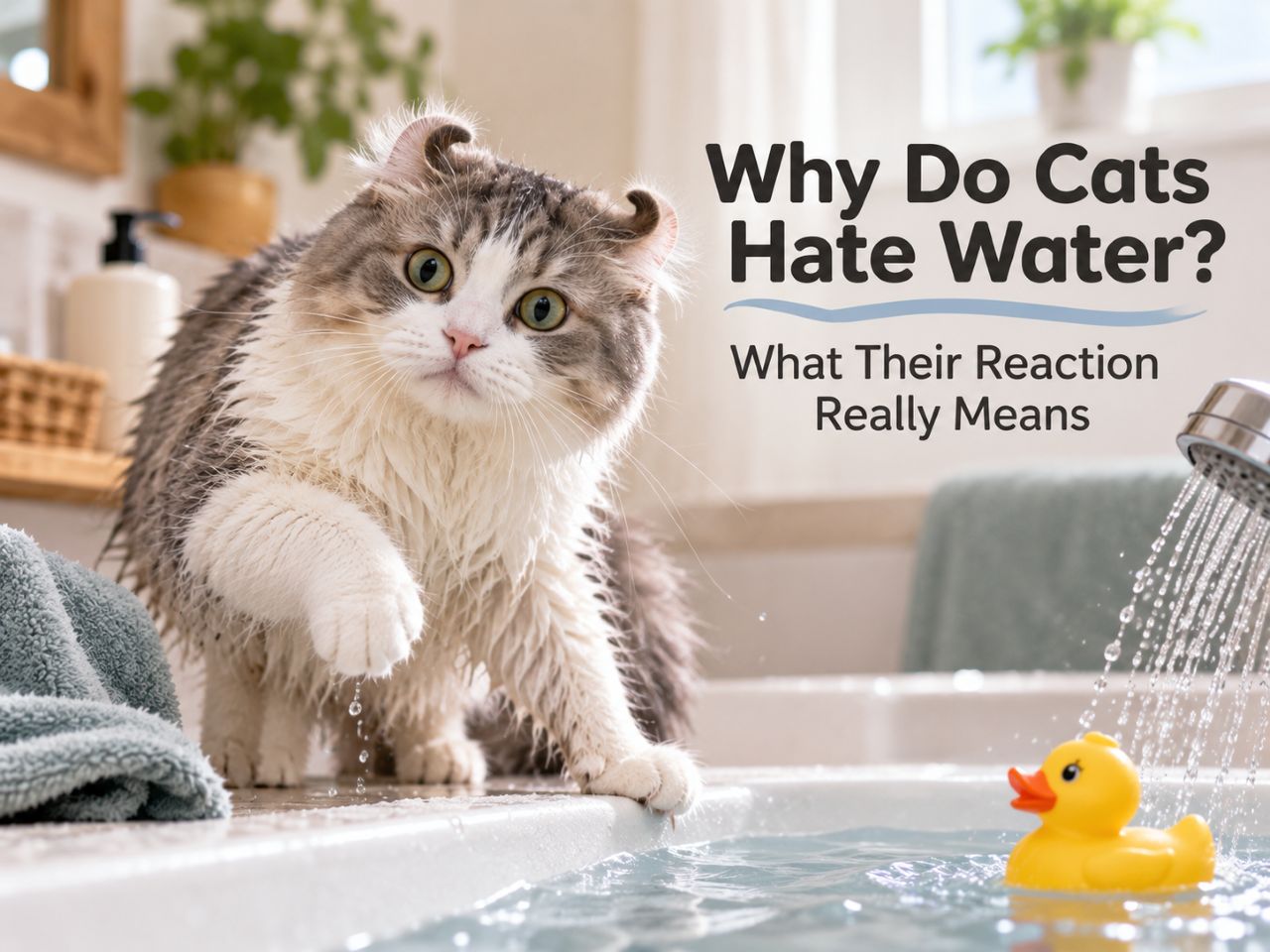
Most cats do not hate water in every form. They may watch a dripping faucet, dip a paw into their bowl, or sit beside the shower. What many cats dislike is having their whole body soaked, especially when they did not choose it.
So, why do cats hate water? Wet fur can feel heavy and cold. A bathtub offers poor footing and few escape routes. Running water is loud, shampoo changes a cat’s familiar scent, and one frightening bath can create a lasting negative association.
There is no single proven explanation. A cat’s reaction probably comes from a mix of physical discomfort, unfamiliar sensations, individual personality, and past experience.
Cats May Dislike Getting Wet, Not Water Itself
A cat playing with a faucet and a cat trying to escape a bath are not behaving inconsistently.
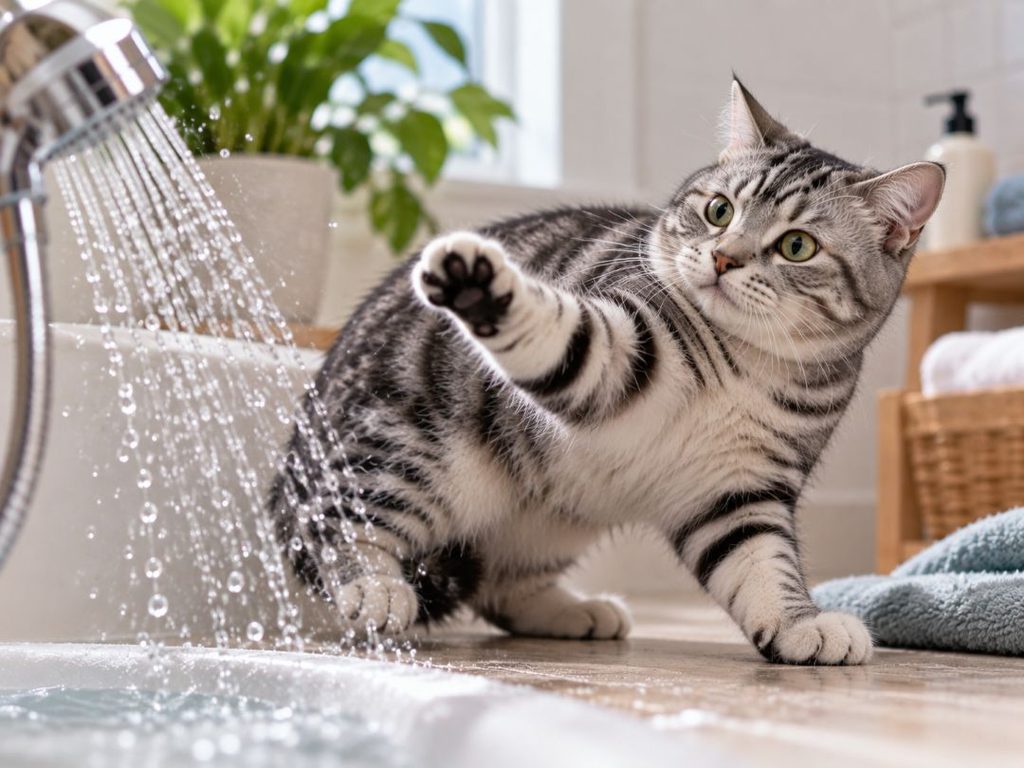
Pawing at a stream lets the cat investigate from a dry, stable position. The cat controls how close it gets and can leave at any moment. Being lowered into a sink is different. Suddenly, water surrounds its paws, the floor feels slippery, and a person may be holding its body in place.
That loss of choice changes the entire experience.
This also explains why some cats enjoy water fountains or ice cubes but still refuse to step into a shallow tub. Curiosity about moving water does not automatically mean a cat wants a swim.
Why Are Cats Afraid of Water?
People often describe the reaction as fear, but discomfort and surprise can look similar. A cat that jumps out of a tub may be responding to several things at once.
Wet Fur Feels Heavy and Awkward
A dry coat allows a cat to move freely. Once the fur becomes saturated, it can cling to the body and add weight. Long, dense coats may take quite a while to dry.
For an animal that depends on quick movement and precise footing, that heavy feeling can be unsettling. Wet fur may also make a cat feel cold, especially in an air-conditioned room or near a draft.
Your cat does not know that a warm towel is waiting nearby. At that moment, the safest response may seem to be getting out of the water as quickly as possible.
A Bathtub Takes Away Control
Cats generally cope better when they can approach something at their own pace. A bath often removes that option.
The cat is carried into an enclosed room, placed on an unfamiliar surface, and held while water is poured over its body. Even gentle restraint can feel threatening when the cat cannot understand why it is happening.
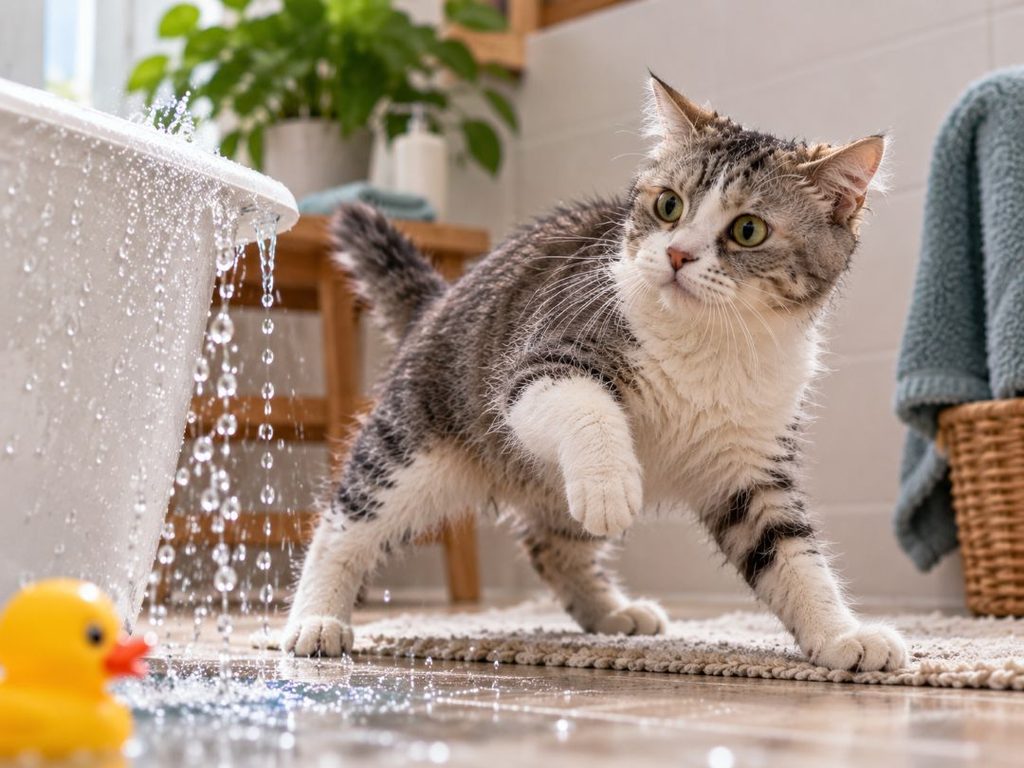
A slick sink or tub makes matters worse. Without a surface to grip, the cat may scramble, spread its toes, or use its claws in an attempt to feel stable. This is not stubborn behavior. The cat is trying to regain control.
Water Changes a Cat’s Familiar Scent
Smell plays a large role in how cats recognize their bodies, surroundings, and other animals. Tap water, shampoo, towels, and human hands can all leave unfamiliar odors on the coat.
After a bath, many cats immediately begin licking themselves. They may be drying and rearranging their fur, but they are also restoring a familiar smell.
Strongly scented shampoos can make this disruption more noticeable. A fragrance that smells clean to a person may be overwhelming to a cat’s sensitive nose.
Bath Time Can Be Noisy and Unpredictable
A bathroom is full of sudden sensory changes. Water rushes from the faucet. A spray nozzle hisses. Sound echoes off hard walls. Droplets hit the cat’s face before it has time to understand what is happening.
Water temperature matters too. Water that feels pleasantly hot to a person may be uncomfortable for a cat, while cold water can be startling.
Pouring water over the head or spraying near the ears may trigger an especially strong response. Cats tend to be more comfortable when their face stays dry and they can see what is happening.
One Bad Experience Can Be Hard to Forget
A cat that once fell into a pool, was sprayed as punishment, or endured a forceful bath may connect water with fear.
The original event does not have to look serious from a human perspective. Slipping in a sink or being surprised by a shower nozzle can be enough. Rescue cats may also have experiences their current families know nothing about.
Repeatedly forcing the issue rarely makes a frightened cat “get used to it.” It can teach the cat that the bathroom, towels, or being picked up predict something unpleasant.
Desert Ancestry Is Possible, but It Is Not the Whole Answer
A common explanation connects water avoidance to the domestic cat’s wild ancestors, which lived mainly in relatively dry regions and had little reason to swim.
The idea is plausible, but it has not been proven as the reason house cats dislike getting wet. Desert ancestry cannot explain every individual cat, and plenty of animals from dry habitats can enter water when needed.
It makes more sense to treat ancestry as one possible influence. The immediate experience—wet fur, poor footing, loud noises, restraint, and past learning—usually tells us more about the cat in front of us.
Do All Cats Hate Water?
No. Some cats are fascinated by water, and a few willingly step into a shallow tub or pool.
Turkish Vans, Maine Coons, Bengals, and Turkish Angoras are often described as more interested in water. Breed tendencies are not promises. One Bengal may play in the shower while another refuses to touch a damp floor.
Personality and experience matter more than a breed label. Cats introduced to water through calm, positive experiences may tolerate it better, but early exposure does not guarantee that a cat will enjoy bathing.
Let your cat’s behavior provide the answer. Loose muscles, normal ears, playful pawing, and an easy willingness to leave or return suggest curiosity. Flattened ears, a tucked body, frantic climbing, growling, or rapid attempts to escape signal distress.
Do Cats Need Baths?
Most healthy adult cats rarely need a full bath. Their tongues, teeth, and paws handle everyday coat care surprisingly well.
A bath may be appropriate when:
- A veterinarian prescribes a medicated shampoo for a skin condition.
- The coat is covered in feces, urine, grease, or another material that cannot be brushed away.
- An older, arthritic, overweight, or sick cat cannot groom certain areas.
- A hairless cat needs a skin-care routine recommended by a veterinarian.
- The cat has a coat type or medical condition that requires additional grooming support.
A suddenly greasy, dirty, or matted coat deserves attention. Cats sometimes stop grooming because of dental pain, arthritis, obesity, illness, or stress. Cleaning the coat may help temporarily, but it does not address the underlying problem.
If your cat gets paint, household cleaner, motor oil, medication, or another unknown substance on its fur, do not let the cat lick it off. Contact a veterinarian or pet poison service before choosing a cleaning method. Some substances require specific decontamination steps.
How to Bathe a Cat That Hates Water
Before preparing a full bath, ask whether brushing or cleaning one small area with a warm, damp cloth will do the job. A spot clean is often easier for everyone.
When a bath really is necessary, preparation makes a noticeable difference.
- Set out everything before bringing in the cat. Have cat shampoo, towels, a washcloth, a small pitcher, and treats within reach. Running around for supplies during the bath makes the experience longer.
- Use a small, quiet space. A sink or shallow basin may feel less overwhelming than a large bathtub. Close doors and remove breakable objects.
- Provide secure footing. Place a rubber bath mat or folded towel on the bottom of the sink. A cat that can grip the surface is less likely to panic.
- Fill the basin in advance. Use only a shallow amount of lukewarm water. Many cats react more strongly to a roaring faucet than to water that is already there.
- Keep the cat upright. Do not drop or fully submerge the cat. Support the body gently while allowing all four paws to make contact with a stable surface whenever possible.
- Wash from the neck down. Use a pitcher or your hand to wet the coat gradually. Keep water and shampoo away from the eyes, nose, and ears. A damp washcloth is enough for the face.
- Use only a product labeled for cats. Human shampoo, baby shampoo, and products made for dogs may irritate feline skin or contain unsuitable ingredients. Follow veterinary directions exactly when using medicated shampoo.
- Rinse and towel-dry thoroughly. Shampoo residue can irritate the skin and may be swallowed when the cat grooms. Wrap the cat in a dry towel and keep it in a warm, draft-free room until the coat is dry.
Keep the bath short. Calm handling is more useful than trying to finish every bit of cleaning at once.
Stop if the cat begins thrashing, biting, open-mouth breathing, or showing intense panic. A veterinarian or cat-experienced professional groomer is the safer choice when the bath cannot be completed without a struggle.
Can You Teach a Cat to Tolerate Water?
Some cats can become more comfortable with water through gradual, reward-based practice. The goal is tolerance, not turning every cat into a swimmer.
Start with a dry sink or tub. Let the cat explore it, eat treats there, or play with a favorite toy. Once that feels ordinary, touch one paw with a damp cloth. A later session might include a small puddle of warm water.
Move forward only while the cat remains relaxed. If your cat stops taking treats, crouches, freezes, or tries to flee, the session has become too difficult. Return to an easier step next time.
These sessions should last a minute or two. Avoid restraining the cat, spraying it unexpectedly, or using water as punishment. Fear-based exposure may produce the opposite of the result you want.
Final Thoughts
A cat running from the bathtub does not necessarily hate every drop of water. It may be reacting to a heavy coat, strange smells, insecure footing, sudden noise, or the feeling of being trapped.
The Catsoria approach is simple: do not turn bath time into a contest. Clean only what needs cleaning, give the cat as much control as the situation safely allows, and use gradual positive experiences when water exposure is necessary.
Your cat may never enjoy a bath. Calm tolerance is already a perfectly good result.
Frequently Asked Questions
1. Can cats swim?
Many cats can paddle well enough to stay afloat for a short time, but that does not mean they feel comfortable or safe in water. Never place a cat in a pool to test its swimming ability. Pools, steep-sided tubs, and open water can be dangerous when a cat cannot find an easy exit.
2. Why do cats hate baths but play with faucets?
Playing with a faucet gives the cat control. It can touch the stream with one paw and step away whenever it wants. A bath wets the entire body and often involves restraint, unfamiliar smells, noise, and slippery footing.
3. Why do cats hate water but like fish?
Liking the smell or taste of fish has nothing to do with enjoying a bath. Domestic cats can eat fish without catching it themselves, and fish should only be offered as part of a nutritionally appropriate diet.
4. Why does my cat lick itself after a bath?
Your cat may be drying its coat, putting the fur back into place, and restoring its normal scent. Vigorous grooming also makes complete rinsing important because any shampoo left behind may be swallowed.
5. Is bathing a cat cruel?
Bathing is not inherently cruel when it is medically necessary or the coat must be cleaned. An unnecessary bath that causes prolonged fear should be avoided. Gentle handling, secure footing, warm water, and a short session make the process less stressful.
6. How often should you bathe a cat?
There is no universal bathing schedule. Most healthy indoor cats rarely need a bath. Follow your veterinarian’s instructions for skin conditions, mobility problems, hairless cats, or any situation requiring frequent washing.