

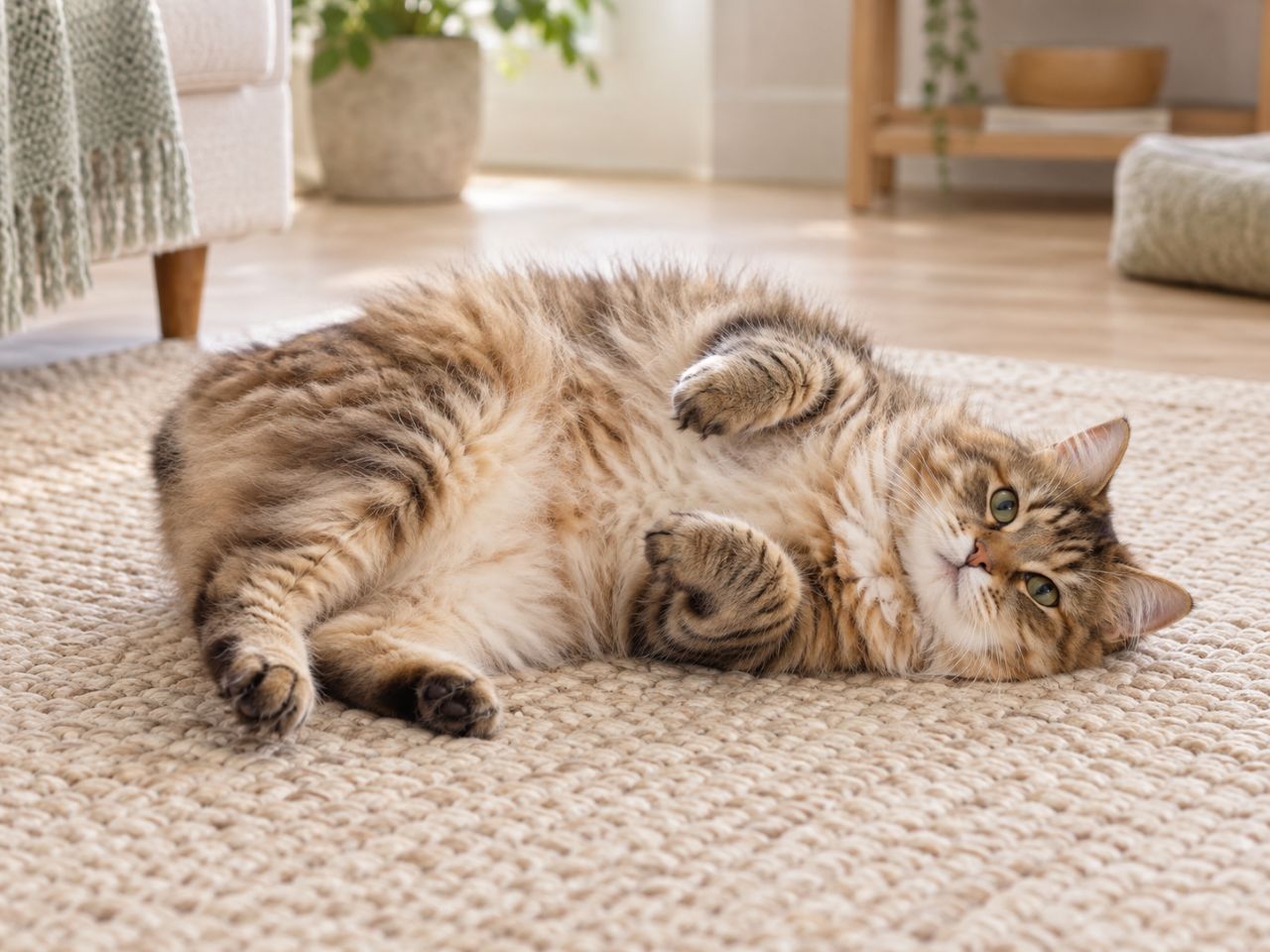
You walk into the room, your cat looks straight at you, and then—flop. One shoulder hits the floor, the paws curl toward the chest, and the belly appears. It looks like a clear request for a tummy rub.
Sometimes it is. Quite often, it is not.
Cats roll over for several reasons, including a friendly greeting, attention, play, stretching, a response to catnip, or hormonal behavior. A tense cat may also roll onto their back to defend themselves, while frequent rubbing and rolling can point to itchy skin. The setting and the rest of the cat’s body language matter more than the exposed belly alone.
A relaxed social roll is loose and unhurried. The ears stay in a neutral or forward position, the paws look soft, and the cat may purr, trill, or rub a cheek along the floor. A defensive roll looks very different: the muscles tighten, the ears flatten, the pupils widen, and the claws may come out.
That distinction can save both you and your cat from an unpleasant misunderstanding.
What Does It Mean When a Cat Rolls Over?
There is no single translation for rolling over. Think of it as one piece of a larger sentence. You need the timing, location, sounds, and body posture to understand the full message.
| What you see | Most likely meaning | How to respond |
|---|---|---|
| Loose body, soft eyes, neutral ears, gentle side-to-side roll | Friendly greeting or relaxation | Speak softly; offer cheek or chin scratches |
| Quick flop in your path, followed by meowing or walking toward a bowl | Attention or a learned request | Check what your cat may need before rewarding the routine |
| Rolling beside a toy, grabbing, kicking, or pouncing | Play | Use a wand or kicker toy, not your hands |
| Rolling and rubbing after catnip or silver vine | Plant-induced response | Let the episode pass; supervise the play area |
| Frequent rolling, loud calling, rear raised when touched | Heat in an unspayed female | Keep her securely indoors and speak with your veterinarian about spaying |
| Stiff body, flattened ears, wide pupils, hissing, claws ready | Fear or defense | Stop approaching and give the cat space |
| Repeated hard rubbing with scratching, licking, scabs, or hair loss | Itching or skin discomfort | Arrange a veterinary exam |
| Falling or rolling uncontrollably, head tilt, eyes flicking side to side | Balance or neurologic problem | Seek veterinary care promptly |
Your Cat May Be Giving You a Friendly Greeting
If your cat rolls over when you come home, get out of bed, or enter a familiar room, you may be seeing a social roll. International Cat Care uses this term for a friendly greeting in which a cat rolls from one side of the body to the other while exposing the belly.
The movement often comes with other welcoming signals: an upright tail before the flop, a small trill, relaxed whiskers, or a cheek rubbed against the carpet. Your cat is comfortable enough to adopt an exposed position in your presence. That can reflect trust, but it does not mean the belly is now available for handling.
Try answering in a way most cats find easier to accept. Crouch nearby instead of leaning over them, offer a hand to sniff, and stroke the cheeks or under the chin if they move toward you. A cat who wants more contact will usually stay close, press into your fingers, or come back after you pause.
Some cats never perform a social roll. They may greet you by raising their tail, rubbing your legs, slow-blinking, or simply sitting nearby. A cat does not trust you less because they keep all four paws on the floor.
Rolling Can Be a Successful Way to Get Your Attention
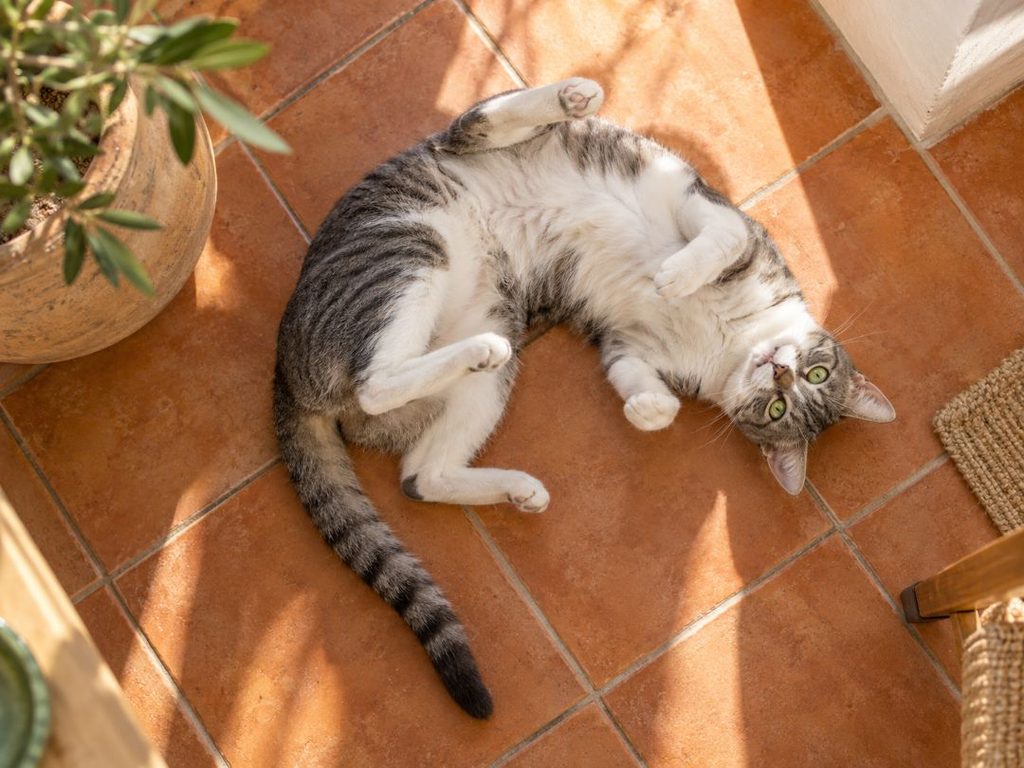
Cats notice what works. If every dramatic flop makes you stop walking, speak to them, open the treat jar, or start a game, the roll can become a reliable way to summon you.
The clue is repetition. Your cat may roll in the same hallway when you arrive home, beside the food cabinet before dinner, or next to the toy drawer in the evening. After getting your attention, they may stand up and lead you somewhere.
Before assuming the cat wants petting, watch what happens next. A glance at the empty water bowl, a walk toward a closed door, or a paw placed near a favorite toy tells you more than the roll itself.
You do not need to ignore a friendly cat. Just avoid teaching an unwanted schedule by handing out food every time the performance appears. Offer conversation, a short play session, or affection in a spot your cat already enjoys. If the rolling reliably starts an hour before breakfast, keep meals on your chosen schedule rather than moving them earlier each day.
A Loose Roll Often Means Play
Kittens and playful adult cats may roll onto a side or back while wrestling with a toy or another cat. From that position, they can hold an object with the front paws and kick it with the hind legs. This is the familiar bunny kick.
Research on social play in cats has found belly-up postures in wrestling, friendly interaction, and conflict. In other words, being on the back does not tell you by itself whether the moment is fun. Look at how the exchange flows.
Healthy play usually includes loose, bouncy movement, brief pauses, and some switching of roles. One cat may chase and then become the one being chased. The room is mostly quiet. Both cats choose to return after a pause.
Step in when one cat keeps trying to escape, hides and will not come back, screams, growls, or is repeatedly cornered. Do not reach between fighting cats. Use distance and a solid visual barrier, such as a large piece of cardboard, and let everyone cool down separately.
When a solo cat rolls over and reaches for you, move a wand toy or toss a soft kicker toy within reach. Wrestling with bare hands teaches the cat that human skin is part of the game. That lesson is cute with a small kitten and much less charming when the same cat has adult teeth and claws.
Sometimes It Is Simply a Good Stretch
A cat who has just woken from a nap may stretch one front leg, twist through the spine, roll partly onto the back, and lengthen the hind legs. The whole movement can take only a few seconds.
You may also see relaxed rolling on a warm rug, a patch of sunlight, or a cool hard floor. The cat is not necessarily delivering a message. The surface may feel good against the back, and the position may be comfortable in that moment.
There is no need to interrupt. Let the stretch finish and see whether your cat approaches you afterward. Reaching down mid-roll can turn a peaceful moment into an overstimulating one.
Catnip and Silver Vine Can Trigger Rolling
Place a catnip toy on the floor and a sensitive cat may sniff it, rub the face against it, roll, kick, lick, or race away. Silver vine can produce a similar response. Not every cat reacts, and the intensity varies.
This is more than an internet-cat cliché. A 2021 study of domestic cats and other felids documented face rubbing and rolling in response to plant iridoids. The researchers found that rubbing transferred the active compound from silver vine onto the fur around the face and helped repel mosquitoes. The work does not mean your house cat consciously rolls for bug protection; it shows that the familiar plant response may have a practical biological benefit.
Keep catnip sessions easy to manage. Put the toy in an open area away from stairs or fragile objects, and give cats space if they become highly aroused. Remove the item if play turns tense between cats. Catnip is not a good explanation for unexplained rolling when no catnip, silver vine, or related product is present.
An Unspayed Female May Roll Because She Is in Heat
An intact female cat who suddenly rolls more often, rubs on furniture, calls loudly, and becomes unusually demanding may be in estrus, commonly called heat. She may also raise her hindquarters, move her tail to one side, and tread with her back feet when stroked along the spine.
Heat is a normal reproductive state, not an illness, but it creates a strong drive to find a mate. Keep doors, windows, and screens secure. A cat who has never tried to escape may become surprisingly determined, and pregnancy can occur during the heat cycle.
Do not give human medication or try online hormone remedies. Ask your veterinarian about the right time to spay your cat. If a cat believed to be spayed develops recurring heat-like behavior, schedule an exam; retained ovarian tissue is one possible cause that requires veterinary evaluation.
Rubbing the Floor May Involve Scent—But Do Not Overread It
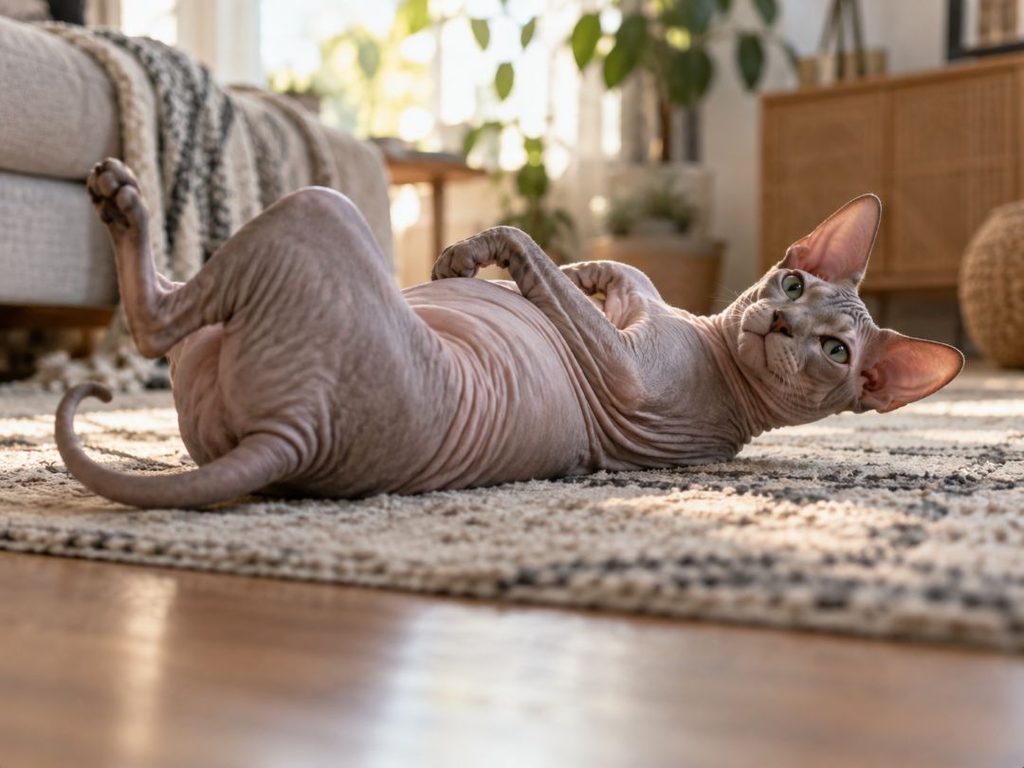
You may notice a cat press a cheek to the carpet or furniture during a roll. Cats have scent-producing structures around the face and use rubbing in chemical communication. A familiar-smelling environment can help a cat feel secure.
It is reasonable to say that scent may be part of a roll that includes obvious face or body rubbing. It is less accurate to claim that every belly-up flop means, “This floor belongs to me.” Researchers cannot ask a cat what a single movement means, and the same posture appears in several emotional contexts.
Watch the behavior you can actually see. A relaxed cat rubbing a cheek, purring, and settling down is having a very different experience from a cat frantically rolling and biting at the skin.
A Cat on Their Back May Be Preparing to Defend Themself
A frightened cat does not always run. When escape feels difficult, a cat may roll onto the back so the teeth, front claws, and powerful hind feet all face the threat. This is not a surrender pose and definitely not a request for touch.
Warning signs include:
- A rigid or tightly curled body
- Ears pressed sideways or backward
- Very large pupils
- Fast tail lashing or a tail tucked close
- Hissing, growling, spitting, or showing teeth
- Paws held ready with claws visible
Stop moving toward the cat. Turn your body slightly to the side, avoid staring, and provide a clear route to a hiding place or elevated perch. Do not pick the cat up or punish the reaction. Punishment adds another threat to a cat who already feels unsafe.
In a multi-cat home, pay attention to what is outside the frame. A second cat may be blocking the hallway, staring from a doorway, or controlling access to food and litter boxes. The cat on the floor may not be playing at all.
Why Does My Cat Roll Over and Then Bite Me?
Usually, the cat did not change their mind. The person changed the interaction.
Your cat may have offered a greeting, exposed the belly, and expected you to admire the pose or scratch the cheeks. When your hand moved into a sensitive area, the cat grabbed it to stop the contact. Another cat may have been playful from the beginning and treated the moving hand like prey.
Look for the brief warnings that come before the bite: the tail tip starts snapping, the ears rotate back, the skin twitches, the pupils enlarge, or the cat turns their head sharply toward your hand. Stop at the first change. Waiting for a growl or swat means you have missed several quieter requests.
If a bite breaks the skin, wash it promptly with soap and running water and seek medical advice. Cat bites can push bacteria deep into tissue, especially on the hand.
Does a Cat Showing Their Belly Want a Belly Rub?
Belly exposure is not automatic consent to touch the belly. It may show that the cat feels safe enough to relax, while the cat still prefers contact around the face, chin, shoulders, or back.
Use a simple consent check:
- Offer your fingers near the cat’s cheek rather than reaching straight down to the stomach.
- Give two or three gentle strokes in a familiar favorite spot.
- Pause and keep your hand still.
- Continue only if the cat leans in, rubs your hand, or clearly returns for more.
Some cats genuinely enjoy brief belly contact from a trusted person. If yours has a long, calm history of asking for it, use light strokes and stop before the body becomes tense. Children should not test whether a cat likes belly rubs, especially with an unfamiliar cat.
When Rolling Over May Point to a Health Problem
An occasional happy flop is normal. A sudden change, repeated distressed movement, or loss of balance deserves a closer look.
Rolling and rubbing with signs of itching
Cats may press or roll against a surface to reach an itchy back. Check for frequent scratching, chewing, overgrooming, dandruff, scabs, redness, hair thinning, or flea dirt. Fleas, mites, allergies, fungal disease, pain, and other skin problems can produce similar signs, so guessing from appearance alone is unreliable.
Arrange a veterinary visit if the behavior is frequent, interrupts eating or sleep, damages the skin, or makes your cat react painfully to touch. Use only parasite products labeled for cats and recommended for your cat’s age and weight. Some dog flea treatments are toxic to cats.
Rippling skin over the back, sudden frantic grooming, tail chasing, dilated pupils, or extreme sensitivity near the tail base also warrants an exam. These signs can occur with feline hyperesthesia, but veterinarians first need to rule out more common causes such as fleas, allergies, fungal infection, spinal pain, and arthritis.
Rolling because the cat cannot stay upright
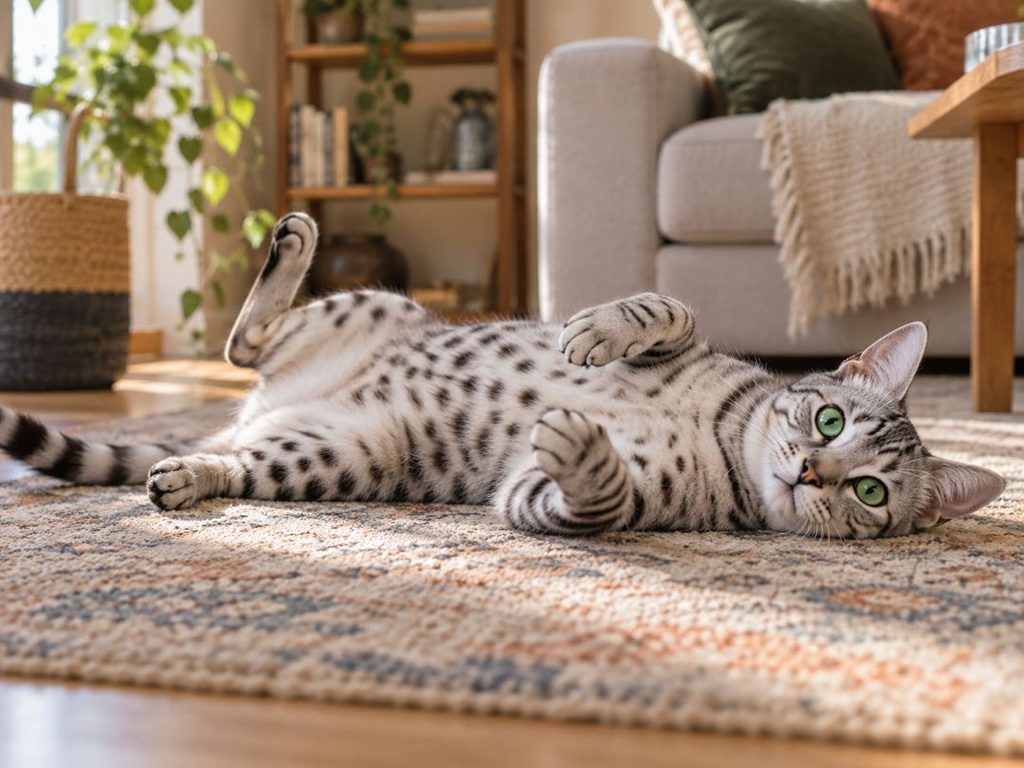
Voluntary rolling looks controlled: the cat chooses to flop, pauses comfortably, and stands normally afterward. Falling or repeatedly rolling to one side is different. A head tilt, stumbling, circling, vomiting, facial droop, or eyes flicking rapidly from side to side can accompany a vestibular or neurologic problem.
Contact a veterinarian promptly if your cat cannot balance or the rolling appears involuntary. Keep the cat in a quiet, padded space away from stairs while arranging care. Do not force food, water, or medication into a disoriented cat unless a veterinarian tells you to do so.
Call your veterinarian as well if a new rolling behavior comes with pain, a swollen abdomen, trouble breathing, weakness, loss of appetite, repeated vomiting, or a major change in litter box habits.
How to Respond the Next Time Your Cat Rolls Over
Pause for a second before reaching for the belly. Notice where the cat is, what happened just before the roll, and whether the body looks soft or braced.
For a relaxed greeting, answer with your voice and offer contact around the cheeks or chin. For playful rolling, reach for a toy. Give a frightened cat space. If the pattern is new or looks uncomfortable, record a short video for your veterinarian; the moments before and after the roll can be especially useful.
At Catsoria, we like the belly-up flop because it rewards observation. The better you become at reading the whole cat—not just the cutest visible part—the easier it is to respond in a way that feels safe to both of you.
Frequently Asked Questions
1. Why does my cat roll over when they see me?
A loose, comfortable roll when your cat sees you is often a friendly greeting or a request for attention. Neutral ears, soft eyes, relaxed paws, purring, and cheek rubbing support that interpretation. Offer a cheek scratch or let the cat approach instead of assuming they want their belly rubbed.
2. Why does my cat roll on the floor and meow?
Your cat may want attention, food, play, or access to something. In an unspayed female, frequent rolling combined with loud calling, increased affection, and raised hindquarters commonly occurs during heat. Distressed vocalizing or a sudden behavior change should be discussed with a veterinarian.
3. Why does my cat roll over when I pet them?
They may be enjoying the interaction, repositioning for cheek or side scratches, becoming playful, or asking you to stop. Continue only while the body stays relaxed. Tail lashing, skin twitching, ears turning back, or a quick head turn toward your hand means it is time to pause.
4. Is rolling over a sign that my cat trusts me?
It can be. A calm cat who performs a social roll in a familiar setting is showing comfort and may feel secure around you. A cat can also roll for play, defense, itching, catnip, or heat, so the posture is not proof of trust on its own.
5. Why does my cat roll over but not let me touch them?
The roll may be a visual greeting rather than a request for physical contact. Respecting that boundary helps preserve trust. Speak softly or slow-blink, then let your cat decide whether to come closer.
6. Should I worry if my cat suddenly starts rolling a lot?
Look for other changes. Repeated rolling with scratching, hair loss, scabs, pain, or frantic grooming needs a veterinary check. Involuntary rolling, falling to one side, head tilt, abnormal eye movement, or trouble standing calls for prompt veterinary care.
