
Search Results for: Siamese

Cat Behavior

Why Is My Cat Meowing So Much?

Cats may meow more because they want food or attention, feel stressed, are in heat, or have a health problem. The most useful clue is a change from your cat’s usual behavior. A familiar conversation before dinner is different from sudden, persistent crying, especially with changes in appetite, weight, movement, or litter box habits. You know the sound of your cat asking for breakfast. You may also know the little greeting you get when you come home. But when the meowing keeps going after you’ve checked the food, water, and litter box, figuring out what to do gets harder. Start with what’s different: the timing, the sound, or the cat making it. How Much Meowing Is Normal? There isn’t a daily number that separates a talkative cat from a cat with a problem. Some cats regularly greet people, ask for company, and comment on closed doors. Siamese cats are known for being vocal, though personality varies within every breed. Compare your cat with their own usual behavior. Are these familiar sounds in familiar situations? Do they settle afterward? Are they eating, moving, and using the litter box as usual? A change in vocalization matters more than how your cat compares
Cat Behavior

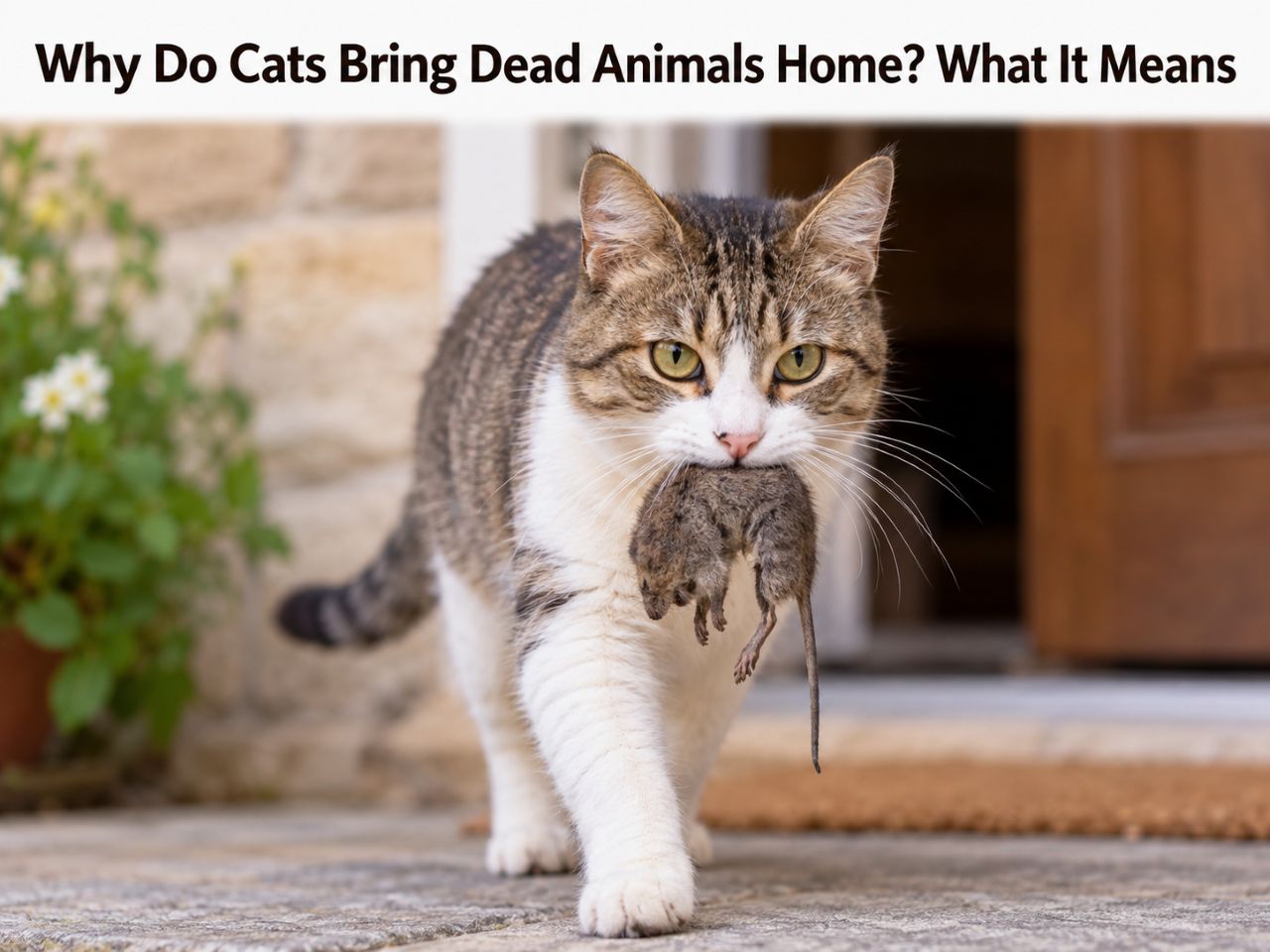
Why Do Cats Bring Dead Animals Home? What It Means

You walk into the kitchen and stop. There is a mouse on the floor, your cat is sitting nearby, and neither one of them appears nearly as bothered as you are. It is easy to read this scene as a message. Maybe your cat brought you a gift. Maybe they think you are a terrible hunter. Those explanations are popular, but feline behavior is rarely that tidy. Cats bring dead animals home mainly because hunting is a natural behavior and home is a familiar, secure place to carry captured prey. A cat may return there to eat, store, inspect, or abandon the catch without competition from another animal. Mother cats do carry prey to kittens, so teaching or sharing may play a role in some cases. We cannot know that this is what a pet cat intends when they leave a mouse beside your shoes. The behavior is usually normal. It is not revenge, a warning, or proof that your cat is underfed. A Full Food Bowl Does Not Switch Off the Hunt Domestic cats do not hunt only when they need dinner. Fast movement, rustling grass, and the high-pitched sounds made by small animals can start the sequence of

Cat Lifestyle

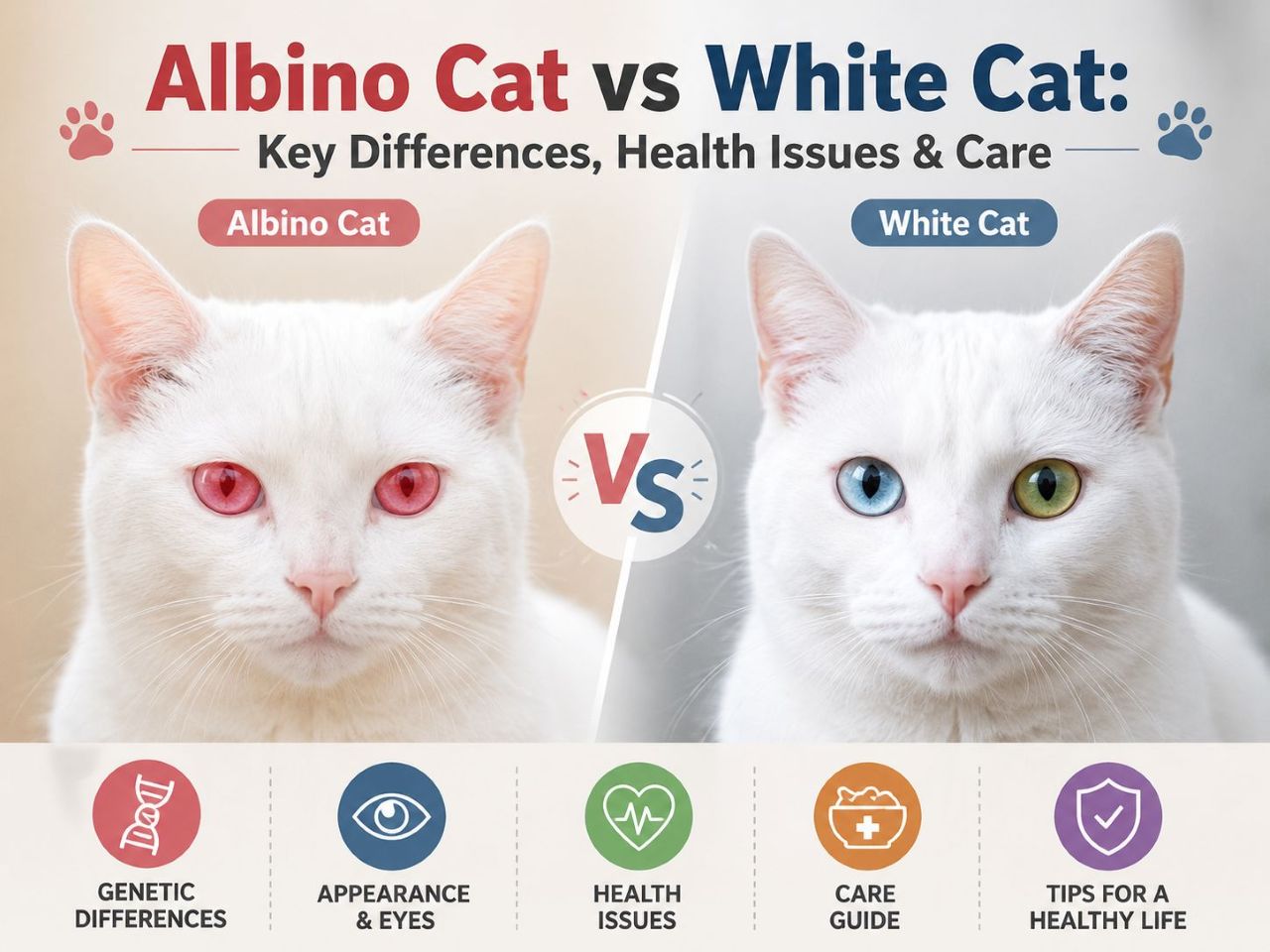
Albino Cat vs White Cat: Key Differences, Health Issues & Care

Have you ever looked at a pure white cat and wondered, “Is this an albino cat?” You are not alone. Many cat owners see a snow-white coat with no markings and immediately assume the cat must be albino. But that is not always true. A completely white cat usually falls into one of two categories. One is a normal white cat whose true coat color is simply hidden by genetics. The other is a true albino cat, a rare cat born with a complete lack of melanin. They may look similar at first glance, but their genes, body structure, health risks, and daily care needs are very different. This guide breaks down what an albino cat really is, how to tell an albino cat vs. white cat apart, the most common albino cat health problems, and how to care for these rare and delicate cats properly. What Is an Albino Cat? The genetic cause of albinism in cats An albino cat is born with a congenital genetic condition caused by an autosomal recessive gene mutation. The main issue is a lack of tyrosinase, an enzyme animals need to produce melanin. Melanin is not only responsible for coat color. It also

Scroll to Top