
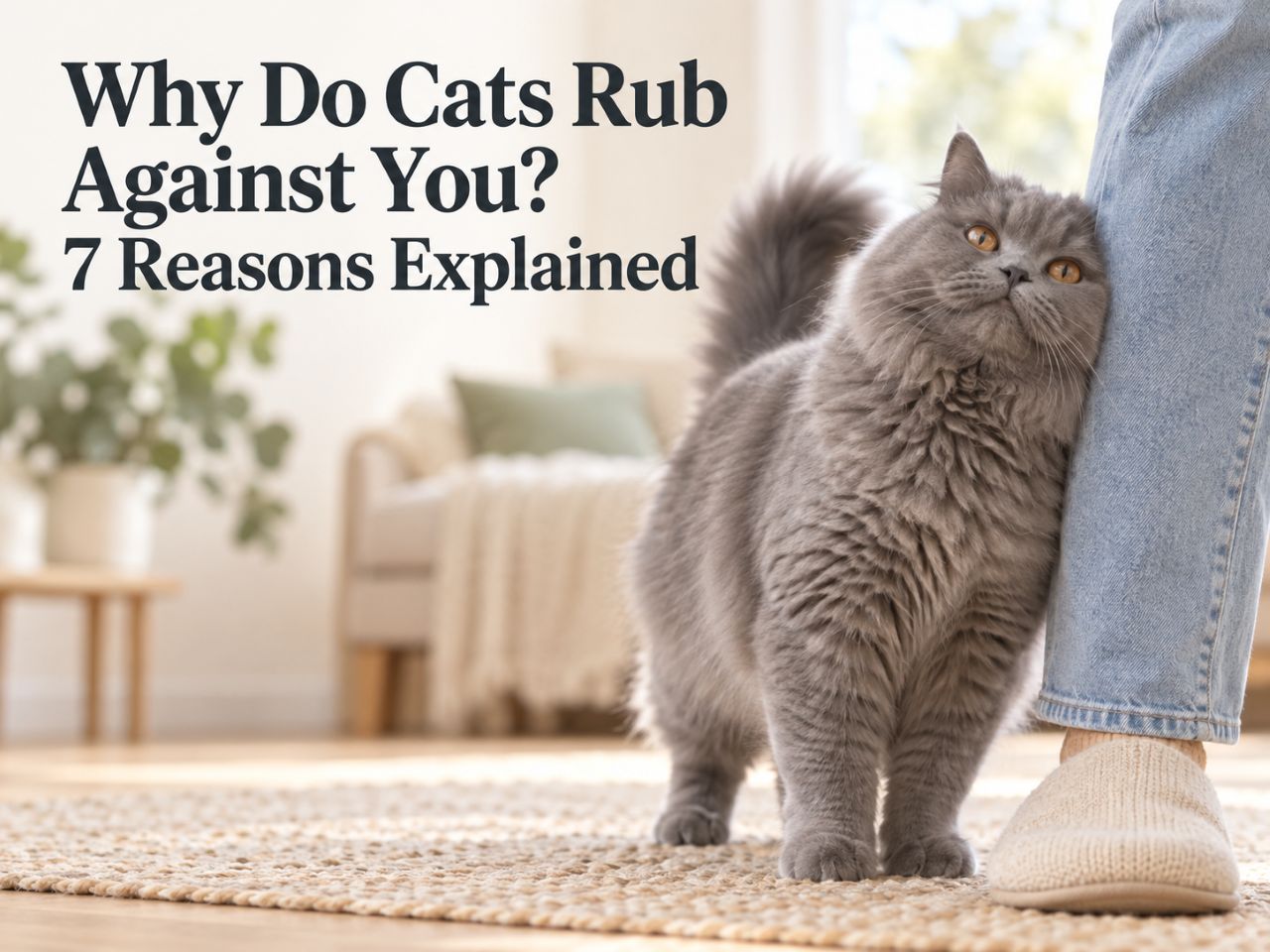
Why Do Cats Rub Against You? 7 Reasons Explained
You walk through the door, and your cat immediately loops around your ankles. A cheek brushes your leg, the tail curls past your calf, and then the whole routine starts again. It can feel like affection, a demand for dinner, or a carefully planned attempt to trip you. Most of the time, cats rub against you as a friendly greeting and a way to maintain a familiar social connection. The contact can also leave scent signals, get your attention, or lead you toward something they want. One rub may carry several of those meanings at once. The rest of your cat’s body tells you which meaning fits. An upright tail, relaxed muscles, soft eyes, and an easy approach usually point to a comfortable social interaction. A low body, flattened ears, twitching tail, or quick retreat tells a different story. What Is Cat Rubbing Called? People often call any firm head nudge a “headbutt,” but cat bunting is the more useful term. Bunting usually involves the forehead, temple, cheek, or side of the face. A cat may press into your hand and then turn their head so your fingers slide across the cheek. When a cat rubs their head or body