

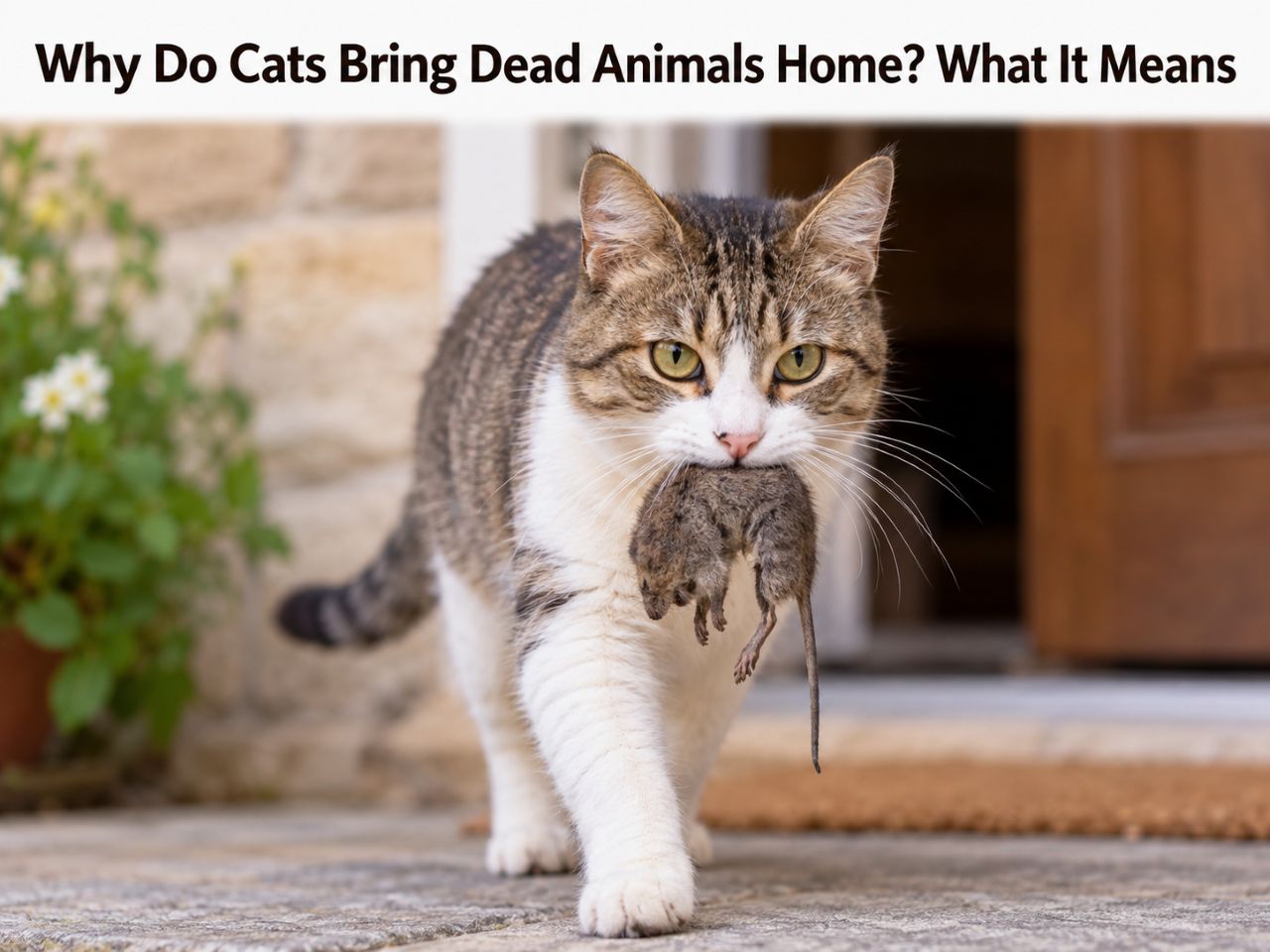
You walk into the kitchen and stop. There is a mouse on the floor, your cat is sitting nearby, and neither one of them appears nearly as bothered as you are.
It is easy to read this scene as a message. Maybe your cat brought you a gift. Maybe they think you are a terrible hunter. Those explanations are popular, but feline behavior is rarely that tidy.
Cats bring dead animals home mainly because hunting is a natural behavior and home is a familiar, secure place to carry captured prey. A cat may return there to eat, store, inspect, or abandon the catch without competition from another animal. Mother cats do carry prey to kittens, so teaching or sharing may play a role in some cases. We cannot know that this is what a pet cat intends when they leave a mouse beside your shoes.
The behavior is usually normal. It is not revenge, a warning, or proof that your cat is underfed.
A Full Food Bowl Does Not Switch Off the Hunt
Domestic cats do not hunt only when they need dinner. Fast movement, rustling grass, and the high-pitched sounds made by small animals can start the sequence of watching, stalking, chasing, pouncing, and biting.
Hunting and eating are related, but they are not controlled by one simple hunger switch. A well-fed cat may catch an animal and leave it uneaten. Some cats will even interrupt a meal to chase prey, then return to their regular food.
This is why serving a larger breakfast rarely fixes the problem. Your cat may have enough calories and still have a strong feline hunting instinct. Age, early experience, personality, outdoor access, season, and the wildlife near your home can all affect how often a cat hunts.
Why Cats Carry Their Catch Home
No study can tell us what every cat is thinking at the door. A few explanations fit what researchers know about cat hunting behavior better than others.
Home is their safest base
A mouse caught in a yard can be stolen by another cat or larger predator. The struggle itself can also attract unwanted attention. Carrying prey back to a quiet, familiar area gives the cat more control over what happens next.
For a pet cat, that safe base may be the kitchen, porch, garage, or bedroom. You happen to live there too. The animal may look as though it was carefully delivered to you when your cat was really returning to the center of their territory.
Catching prey does not always lead to eating it
The different parts of a hunt do not have to end with a meal. Your cat can be strongly motivated to chase and kill, then lose interest once the movement stops. The result is an animal carried indoors and left behind.
This also explains why a cat may eat part of one catch but ignore another. It does not mean the second animal was rejected as food for being unhealthy, nor does it mean your cat saved it especially for you.
Mother-cat behavior offers a clue, not a complete answer
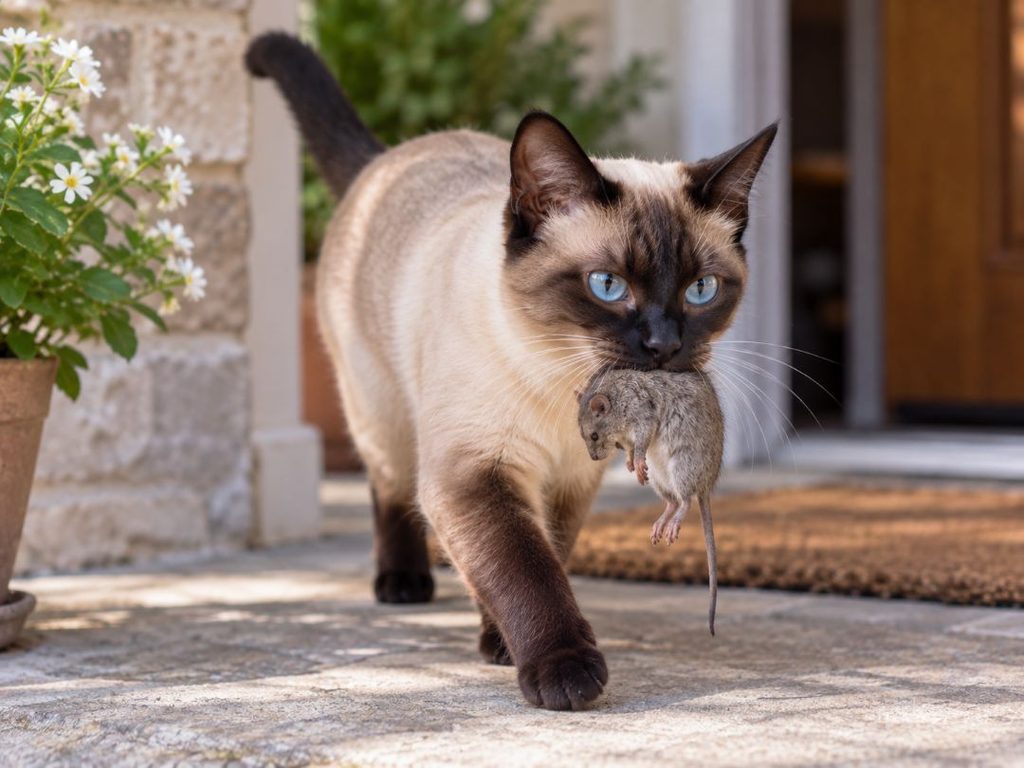
Queens naturally introduce kittens to prey. They may bring dead prey to younger kittens and later provide live or injured prey as the kittens develop hunting skills. This real maternal pattern probably helped create the familiar idea that cats bring animals home to teach their humans.
It is possible that an individual cat carries some version of that behavior into a human home. There is no reliable way to prove that your cat sees you as a helpless kitten or has planned a hunting lesson. Male cats and females without kittens bring prey home too, so maternal behavior cannot explain every delivery.
Your response may become part of the routine
The first catch starts with instinct. What happens afterward can still shape the routine. A cat who drops a mouse and instantly gets shouting, running, doors opening, or a long chase has triggered a large response from the household.
That does not mean the cat caught the animal solely for attention. It may help explain why some cats become very theatrical when they arrive or why a cat that already carries toys around begins presenting those too.
Is the Dead Animal Really a Gift?
Calling it a gift is a warm human interpretation, not a settled scientific fact. Cats form close social bonds, but they are usually solitary hunters rather than pack hunters that routinely bring food back for the group.
The delivery can still tell you something positive. A cat that brings vulnerable, valuable prey into the house probably regards the home as safe. That is different from intentionally choosing a present to express love, but it does mean your cat trusts the place they share with you.
Try not to take the mouse personally. Your cat is not commenting on your ability to hunt, your usefulness, or the quality of the food you serve.
Why Does My Cat Bring Live Animals Into the House?
Sometimes the hunt is not finished. The cat may have grabbed the animal without delivering a killing bite, or may be moving it to a safer place before approaching it again. A struggling rodent can bite, so a cat may repeatedly release and recapture it while trying to avoid an injury. What looks like casual play can be a cautious way of handling dangerous prey.
Mother cats also bring live prey to older kittens, but a live mouse in your living room is not proof that you have been assigned a lesson. The safer explanation is that your cat transported an unfinished catch.
Why the Bed, Doorstep, or Food Bowl?
The spot often reflects convenience and security more than symbolism. A doorstep is the route inside. A bedroom is quiet and smells strongly of familiar people. The area around a food bowl is already associated with eating.
If your cat leaves prey in the same place each time, look at how they enter the home and where they normally carry favorite toys. That pattern may explain the location without turning it into a secret feline message.
What to Do When Your Cat Brings Home an Animal
Stay calm and keep your hands away from the prey. Then take these steps:
- Move your cat, other pets, and children into another room. Close the door so your cat cannot reclaim the animal while you clean.
- If the animal is alive or injured, do not grab it with bare hands. Confine it to one room if possible and contact local animal control or a licensed wildlife rehabilitator for advice. Wildlife rules differ by state.
- For a dead rodent, put on disposable gloves. If droppings, urine, or nesting material are present, wet the contaminated area thoroughly with an appropriate disinfectant and follow the product’s contact-time directions. Do not sweep or vacuum dry rodent waste.
- Pick up the animal with paper towels, tongs, or a small shovel. Seal it in a bag and follow local waste-disposal guidance. Wash reusable tools and disinfect the surface.
- Wash your gloved hands before removing the gloves, then wash your bare hands with soap and warm water.
- Check your cat for punctures, swelling, bleeding, limping, eye injuries, or anything caught in the mouth. Small bite wounds can hide under fur.
Do not let your cat continue eating the animal. Wild prey can carry parasites and bacteria, and a rodent may have consumed poison before being caught.
Treat a bat differently
If your cat brings in a bat, keep people and pets away and do not release or discard the bat before getting advice. In the United States, call your local health department or animal control because the bat may need to be tested for rabies. Call your veterinarian as well, even if your cat’s rabies vaccination is current. Bat bites can be hard to see, and public-health officials need the intact situation to assess possible exposure.
Anyone who may have touched the bat, been bitten or scratched, or had bat saliva contact their eyes, mouth, or broken skin should seek prompt medical guidance.
When your cat needs veterinary care
Contact your veterinarian promptly if your cat has a bite or puncture wound, seems painful, or may have eaten poisoned prey. Vomiting, diarrhea, drooling, weakness, pale gums, trouble breathing, wobbliness, seizures, loss of appetite, or unusual sleepiness after a hunt also need veterinary advice.
Wild birds deserve extra care. H5N1 avian influenza has infected domestic cats, and contact with wild birds is a recognized risk. A cat that becomes lethargic, stops eating, develops breathing trouble, or shows neurologic changes after bird contact should be kept away from other animals while you call a veterinarian. Do not handle a sick cat’s saliva or discharge with bare hands.
Outdoor hunters should have veterinary-recommended flea, tick, and internal-parasite protection, along with a current rabies vaccination.
How to Stop a Cat From Bringing Dead Animals Home
You cannot punish away a predatory instinct. You can change how much access your cat has to prey and give the hunting sequence a safer outlet.
Move from roaming to controlled outdoor time
Keeping a cat indoors or providing only supervised outdoor access is the most dependable way to prevent wildlife kills. A secure catio, a well-fitted harness, or an enclosed yard system can offer fresh air without unrestricted hunting.
Make the change gradually if your cat is accustomed to roaming. Add climbing shelves, window perches, scratching surfaces, hiding places, and short play sessions before reducing outdoor access. A bare room will not feel like a fair trade for a yard full of movement and scent.
If full containment is not possible, reduce unsupervised time outside, especially overnight and during periods when local prey is most active. Keep bird feeders away from shrubs, fences, and other places a cat can use as cover.
Let indoor play end with a catch
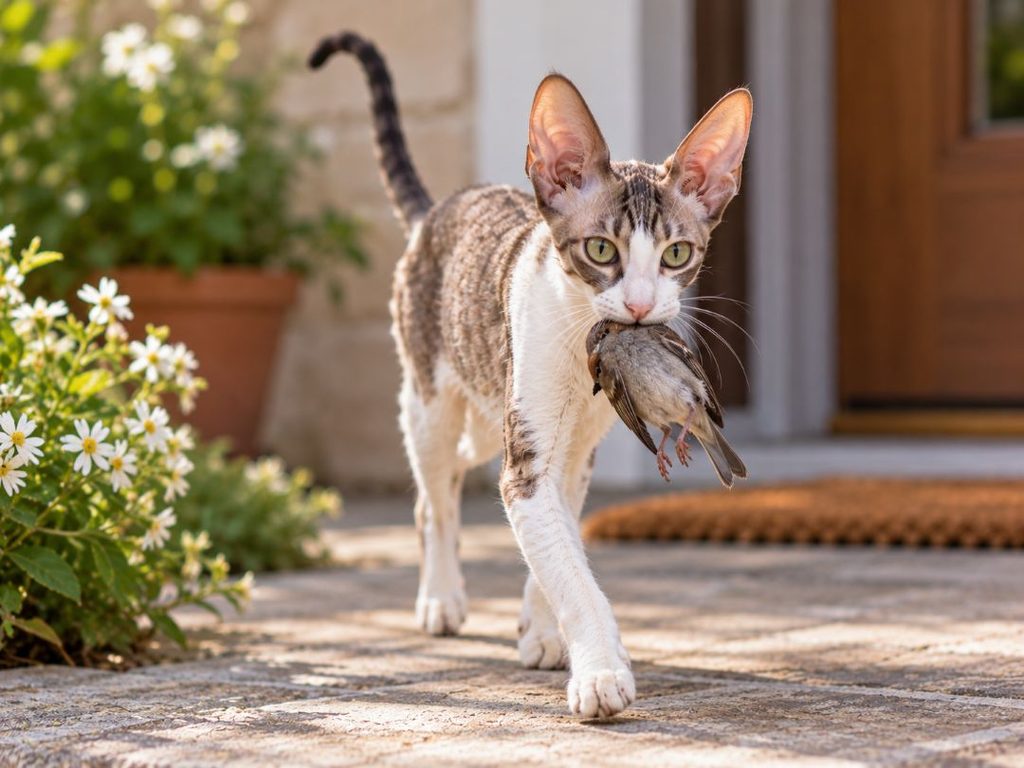
Move a wand toy like prey rather than waving it in your cat’s face. Let it disappear behind furniture, pause, dart away, and occasionally get caught. Five to ten minutes of focused play can be more satisfying than leaving a pile of motionless toys on the floor.
In a controlled trial involving cats that regularly hunted, five to ten minutes of daily object play was associated with 25% fewer animals being captured and brought home. The owners used a feather toy for stalking and chasing, then gave the cat a toy mouse after the final catch. That result is promising, though it measured prey returned home rather than every animal killed outdoors.
Try play before a meal, allow a real capture at the end, and put string or wand toys away afterward. Unattended cords can be swallowed.
Feed for health, not as a quick hunting fix
Another group in the same study received a complete commercial food high in meat-derived protein and brought home 36% fewer prey animals. This finding does not mean that every cat needs a grain-free diet, extra meat, or more calories. It also does not support feeding raw meat.
Choose a complete and balanced food appropriate for your cat’s age and health. Ask your veterinarian before making a major diet change, especially if your cat has kidney disease, food allergies, digestive trouble, or another medical condition. Simply filling the bowl more often can lead to weight gain without stopping the chase response.
Do not rely on a bell alone
Research on collar-mounted deterrents has produced mixed results. In the same trial, a brightly colored collar cover reduced the number of birds brought home but did not have a clear effect on mammals; bells showed no detectable effect. Other studies have reported benefits from bells, so an individual cat’s results may differ.
Any outdoor collar should have a quick-release safety mechanism and fit correctly. A collar or colorful cover is an added precaution, not a substitute for controlled access.
Check for prey inside the house
An indoor cat bringing home a mouse may be alerting you to an infestation rather than roaming behavior. Look for droppings, gnaw marks, gaps around pipes, damaged screens, and openings under doors. Seal entry points and use a licensed pest-control service when needed.
Tell the provider that pets live in the home. Avoid leaving rodenticide where a cat can reach it, and remember that a cat may be poisoned by eating a rodent that consumed bait.
Do Not Scold Your Cat
Your reaction happens after the hunt, often long after the cat first spotted the animal. Yelling, spraying water, or pushing your cat toward the carcass will not explain which part of the sequence you disliked. It can make your cat afraid to approach you without removing the urge to hunt.
Use a calm voice, move the cat away, clean up, and make prevention changes later. There is no need to praise the delivery or exchange it for a treat. Save rewards for scheduled play and coming indoors when called.
Living With the Hunter Behind the House Cat
A dead mouse on the rug is unpleasant, but it is not a sign that your cat is cruel, hungry, or unhappy with you. In most cases, a natural hunting sequence ended in the place your cat considers safest.
Catsoria’s practical rule is simple: remove the animal calmly, check for health risks, and prevent the next catch through controlled outdoor access and realistic play. Your cat still gets to stalk, chase, and pounce. The neighborhood wildlife—and your bedroom floor—get a better chance at staying undisturbed.
Frequently Asked Questions
1. Why does my cat bring me dead animals but not eat them?
Catching and eating do not always happen together. Movement may trigger the hunt even when your cat is not hungry. Once the prey stops moving, your cat may lose interest or carry it to a safe place and leave it there.
2. Does my cat think I am a bad hunter?
There is no good evidence that a pet cat has assessed your hunting skills and decided to train you. The idea comes partly from the real way mother cats introduce kittens to prey. It is a possible story, not something we can confirm about an individual cat.
3. Is bringing a dead animal a sign that my cat loves me?
It is not a love letter in the human sense. Bringing prey into your shared home does suggest that the cat sees the area as secure. Affection may be part of your relationship, but instinct and safety explain the prey delivery more directly.
4. Why does my cat bring dead animals to my bed?
Your bed is quiet, protected, and saturated with familiar scent. It may feel like a safe place to leave or handle a catch. The location does not prove that the prey was selected as a personal gift for you.
5. Are female cats more likely to bring home prey?
Mother cats carry prey to their kittens, which is why this behavior is often linked to females. Male cats, spayed females, and cats that have never raised kittens also bring animals home. Sex alone does not reveal a cat’s motive or predict every hunter.
6. Will feeding my cat more stop the hunting?
Usually not. Well-fed cats still hunt because prey drive is not the same as hunger. Extra food may add excess calories, so do not increase portions unless your veterinarian recommends it.
